$290M Hits Aave V3 On Mantle As DeFi TVL Doubles
Key Points
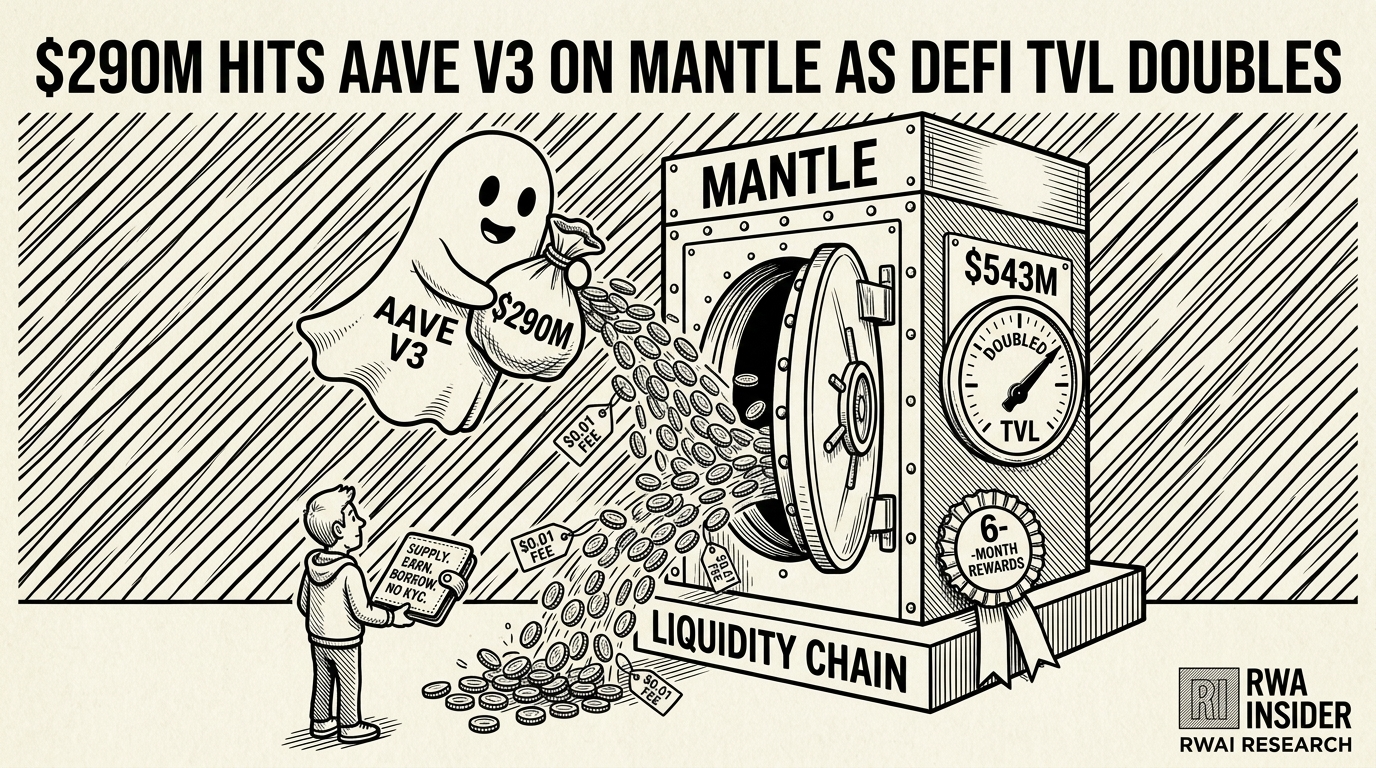
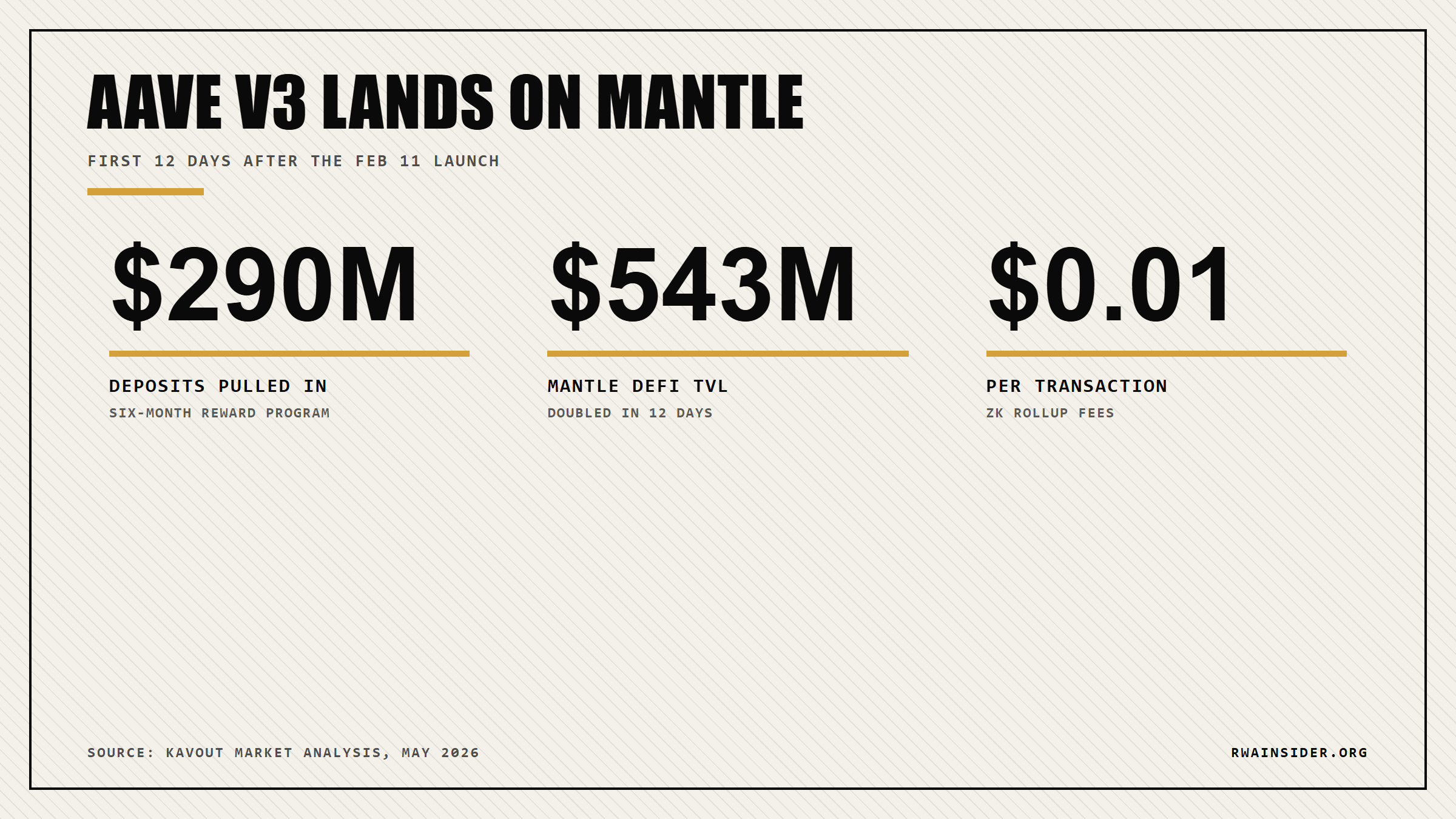
- Aave V3 launched on Mantle Network on February 11, 2026, and its six-month reward program pulled in more than $290 million in deposits.
- Those inflows doubled Mantle’s DeFi total value locked to over $543 million in 12 days, lifting the combined market size past $800 million.
- Any wallet can supply stablecoins into Aave V3 on Mantle today for incentive-boosted yield, with no KYC and fees near $0.01.
Aave V3 went live on Mantle Network in February, and the deposits have not slowed: a six-month reward program has pulled more than $290 million onto the chain. A Kavout market analysis published this week tracked Mantle’s DeFi total value locked doubling to over $543 million in the program’s first 12 days. Aave founder Stani Kulechov calls the protocol’s current phase a “revenue-led protocol strategy.” For a wallet holder, the signal is simple: a blue-chip lending market now runs on a ZK rollup with sub-cent fees, and the rewards are still live.
Aave V3 Draws $290M To Mantle In 12 Days
Aave V3, the most widely used lending market in DeFi, went live on Mantle Network on February 11, 2026, routed through the Bybit exchange and wrapped in a six-month incentive program.
That program did the heavy lifting, pulling in over $290 million in deposits and lifting Mantle’s DeFi total value locked above $543 million in 12 days.
For an on-chain user, this is concrete. Mantle is an Ethereum layer-2, and Aave V3 there works the way it does on mainnet: supply an asset, earn yield, borrow against it.
The reward program tilts the math further, layering extra incentives on top of the base lending rate for anyone who supplies stablecoins into the market.
The difference is cost. Mantle settles transactions for around $0.01, so the gas that eats small positions on Ethereum mainnet barely registers here.
Mantle’s $4.2B Treasury Funds The RWA Push
Behind the deposits sits the balance sheet. Mantle holds a community-owned treasury worth about $4.2 billion, one of the largest in the industry and up 54% year over year.
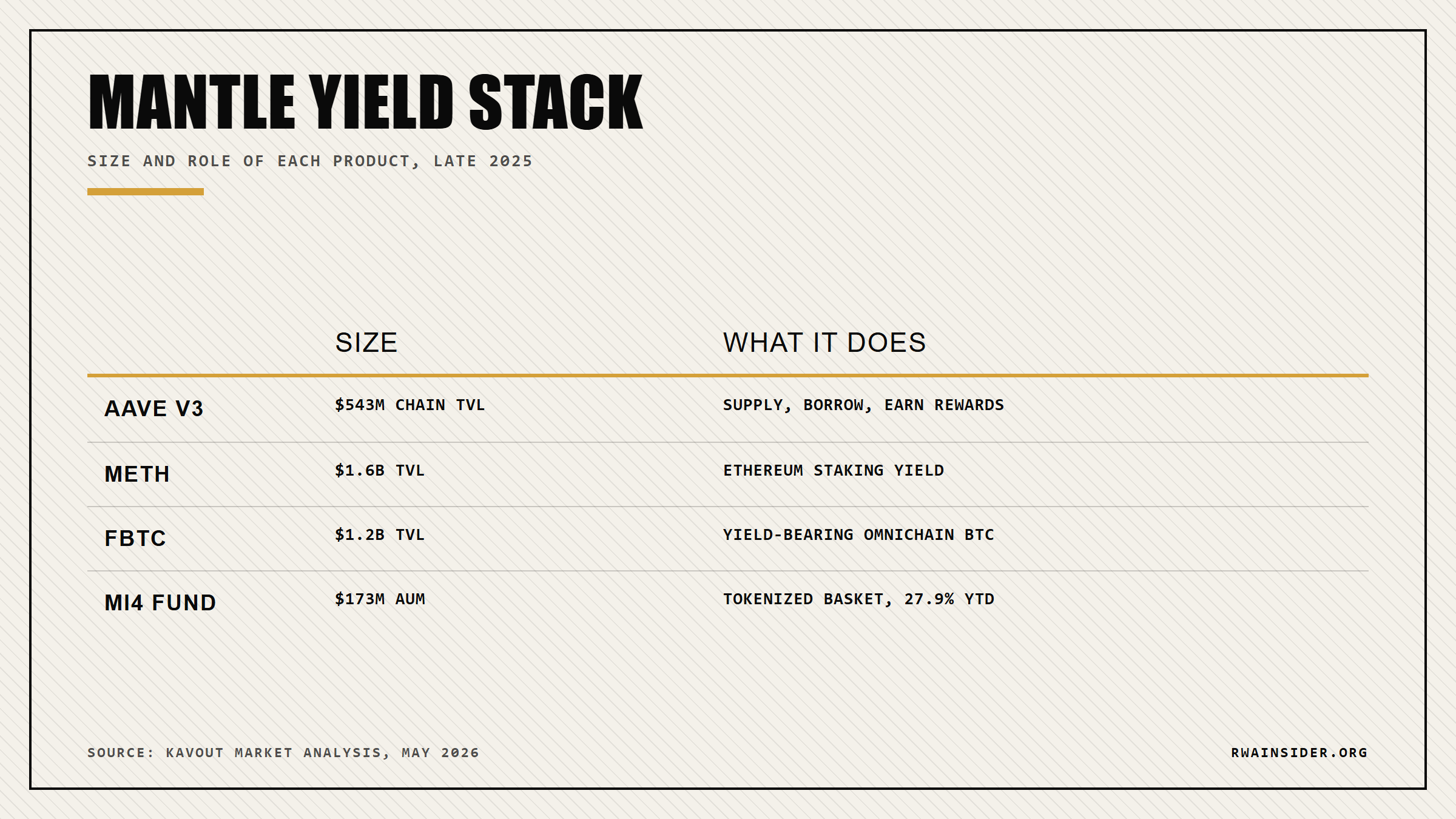
That capital is not idle. It seeds the Mantle Index Four fund, a tokenized basket that held $173 million in assets and returned 27.9% by the end of 2025.
The yield stack runs deeper than one fund: Mantle’s mETH liquid staking protocol holds over $1.6 billion and passes Ethereum staking yield to holders, while Ignition FBTC turns Bitcoin into a yield-bearing, omnichain asset with $1.2 billion locked.
Strip away the treasury headline and this is really about whether a $1,000 wallet can stack lending rewards, staking yield, and tokenized fund exposure in one place without paying Ethereum mainnet gas.
The RWA rails are already laid.
Partnerships with Securitize, Anchorage, and Backed have put tokenized U.S. Treasuries and corporate bonds on the chain, the collateral DeFi lending markets have spent two years trying to source.
You can track the wider yield gap across tokenized treasuries as more of that supply lands on-chain.
The Reward Cliff And A 90% Drop In Active Wallets
Not everything points up. The deposits arrived on the back of incentives, and incentives expire.
Aave founder Stani Kulechov has pushed the protocol toward a revenue-led strategy, prioritizing fees the market actually pays over mercenary deposits chasing rewards.
On that test, Mantle’s reward-driven $290 million is exactly the kind of liquidity that has to prove it can stay.
The warning sign is already in the data: Mantle’s daily active addresses fell 90.1% quarter over quarter by the end of 2025, a gap between capital parked and people transacting.
There is also a governance thread worth watching.
Mantle tokenholders approved a credit facility of up to 30,000 ETH for the Aave DAO, earmarked to cover potential bad debt from an earlier rsETH exploit.
The two protocols are now financially entangled.
Mantle also fights for that liquidity against Arbitrum, Optimism, and Polygon, each running its own incentive playbook to pull deposits the other way.
The access question comes first. Aave V3 on Mantle is permissionless, so any address can supply and borrow today without KYC.
The tokenized Treasuries moving through Securitize and Anchorage are not. What is live right now is the lending market, not the RWA collateral behind it.
Whether the $543 million holds depends on what happens when the rewards run out, and the next quarter will tell. Until then, the lending market is open, the RWA collateral behind it is not, and your wallet gets to act on only one of those.
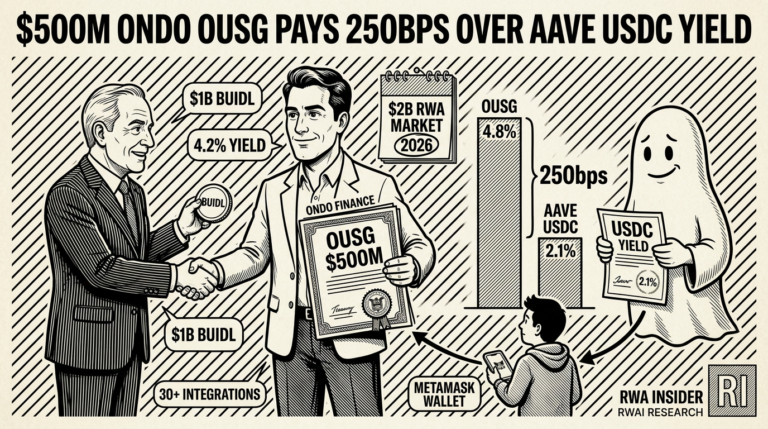
For a closer look at where tokenized Treasury yield already beats DeFi-native stablecoin rates, see our breakdown of how Ondo’s OUSG pays a premium over Aave USDC.
Frequently Asked Questions
What is Aave V3 on Mantle?
Aave V3 is the latest version of the Aave lending market, and in February 2026 it deployed on Mantle Network, an Ethereum layer-2. Users can supply assets to earn yield or borrow against them, with transaction fees near $0.01 instead of Ethereum mainnet gas.
Can I use Aave on Mantle without KYC?
Yes. Aave V3 on Mantle is permissionless, so any wallet can supply or borrow without identity checks. The tokenized U.S. Treasuries flowing onto Mantle through Securitize and Anchorage are gated, but the lending market itself is open to any address.
How much money is in Mantle’s DeFi ecosystem?
Mantle’s DeFi total value locked passed $543 million within 12 days of the Aave V3 launch, roughly doubling. The wider ecosystem includes the mETH staking protocol at over $1.6 billion and Ignition FBTC at $1.2 billion.
Is the yield on Mantle sustainable?
It is incentive-driven, which is the main risk. The deposits arrived through a six-month reward program, and Mantle’s daily active addresses fell 90.1% quarter over quarter by late 2025, so the liquidity has to prove it stays once rewards normalize.