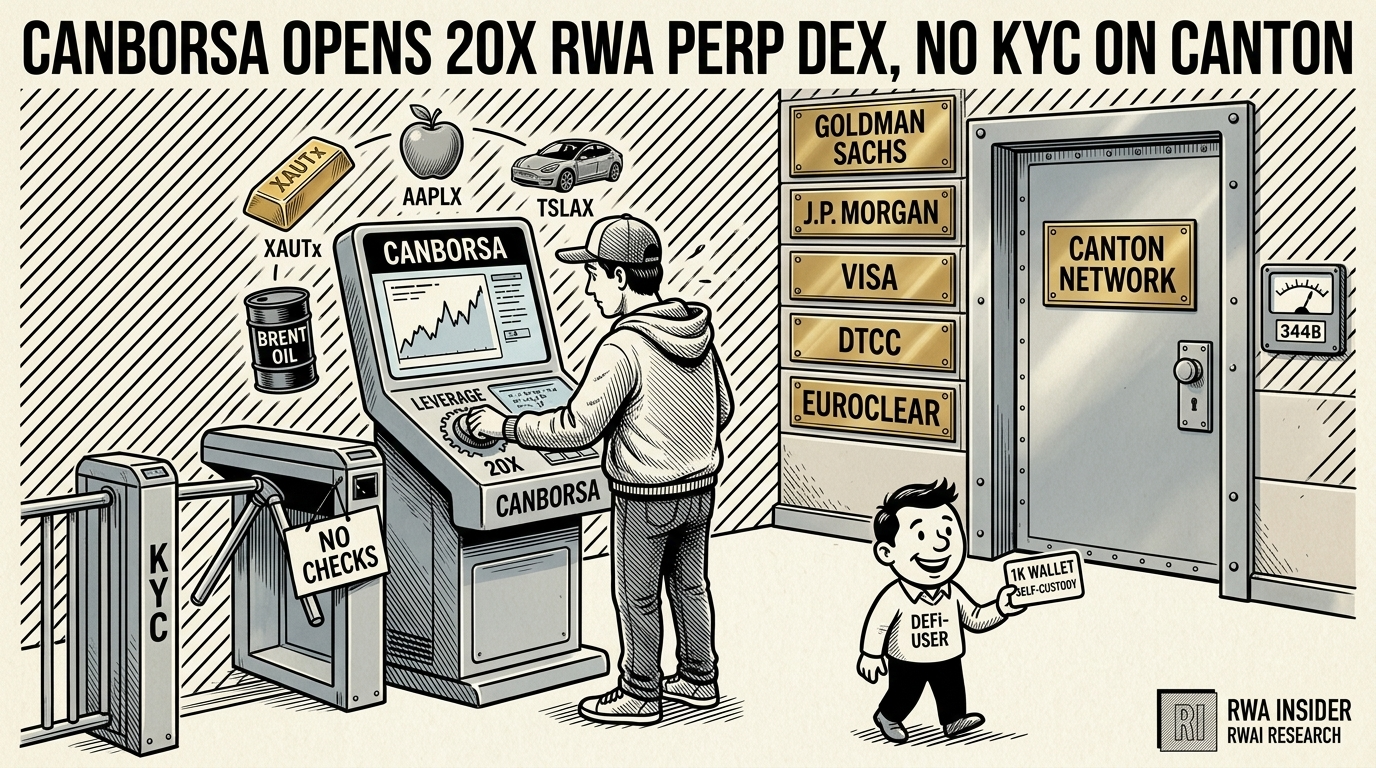
Canborsa Opens 20x RWA Perp DEX, No KYC On Canton
Key Points
- Canborsa launched the first perpetual RWA DEX on Canton Network, with up to 20x leverage on tokenized stocks, gold, oil, and crypto.
- Canton Network represents over $344 billion in asset value and cleared $66.6 million in protocol fees in April 2026, with Goldman Sachs and JPMorgan aboard.
- A self-custodial wallet can long or short Apple, Tesla, and gold 24/7, with no broker, no KYC, and no market-hour limits.
Canborsa has launched the first perpetual decentralized exchange for real-world assets on Canton Network, opening tokenized stocks, gold, oil, and crypto to onchain trading at up to 20x leverage. The beta went live on May 29, and in the launch statement chief executive Pavel Shter said “the next step for DeFi is access to real assets.” For a wallet holding $1,000, that means you can go long or short on Apple, Tesla, or gold from a self-custodial app, with no broker account, no KYC, and no closing bell.
Canborsa Lists Apple, Tesla, And Gold As Onchain Perps
The launch drags a market that normally sits behind brokerage accounts onto a public chain. Canborsa opened its beta on May 29 with three products: a self-custodial wallet, onchain swaps, and perpetual contracts on real-world assets and crypto.
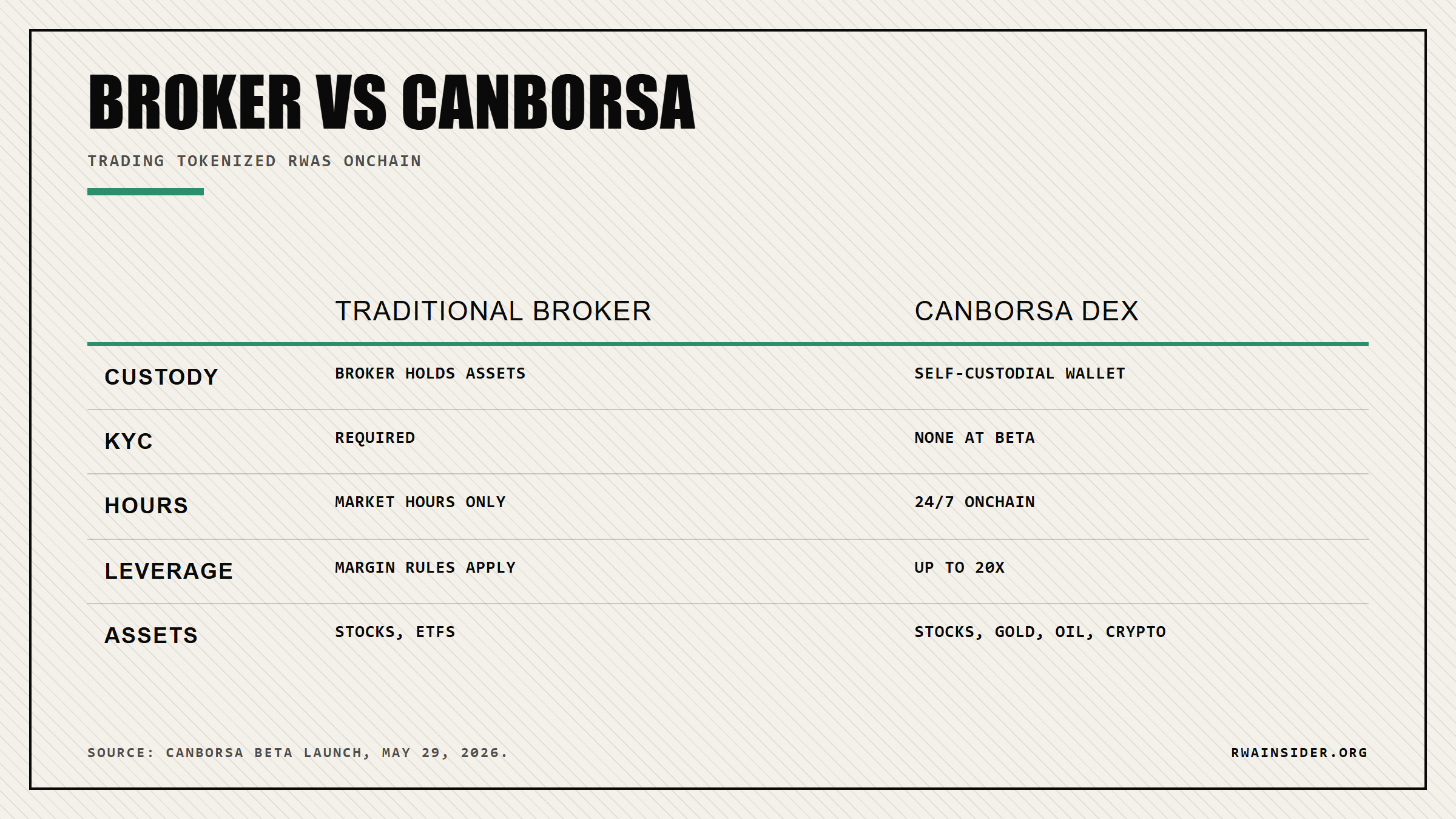
At beta, traders can take perps on Bitcoin and Ethereum, on tokenized Apple, Nvidia, and Tesla, and on gold, silver, and Brent oil, all settled in USDT or USDC.
Every position is non-custodial. You hold your own keys, route trades through the DEX, and never hand assets to a broker or an exchange desk that can freeze them.
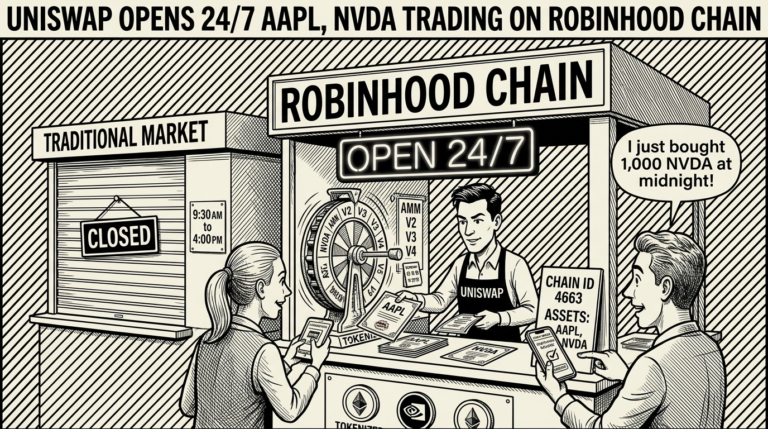
There is no KYC check and no market clock. A token tracking Tesla can be shorted at 2 a.m. on a Sunday, which is not something a Robinhood account allows.
That is the pitch in one line: the assets people actually care about, gold and blue-chip stocks, traded the way crypto already trades.
20x Leverage On Canton’s $344B Institutional Rails
The leverage is the draw and the trap. Canborsa offers up to 20x on its perps, so a $1,000 margin position controls about $20,000 of exposure, and a move of roughly 5% against you can liquidate it.
What makes the venue unusual is the chain underneath it. Canton Network is a privacy-enabled blockchain built for institutional finance, where trade details are visible only to the parties involved and settlement is atomic across every counterparty at once.
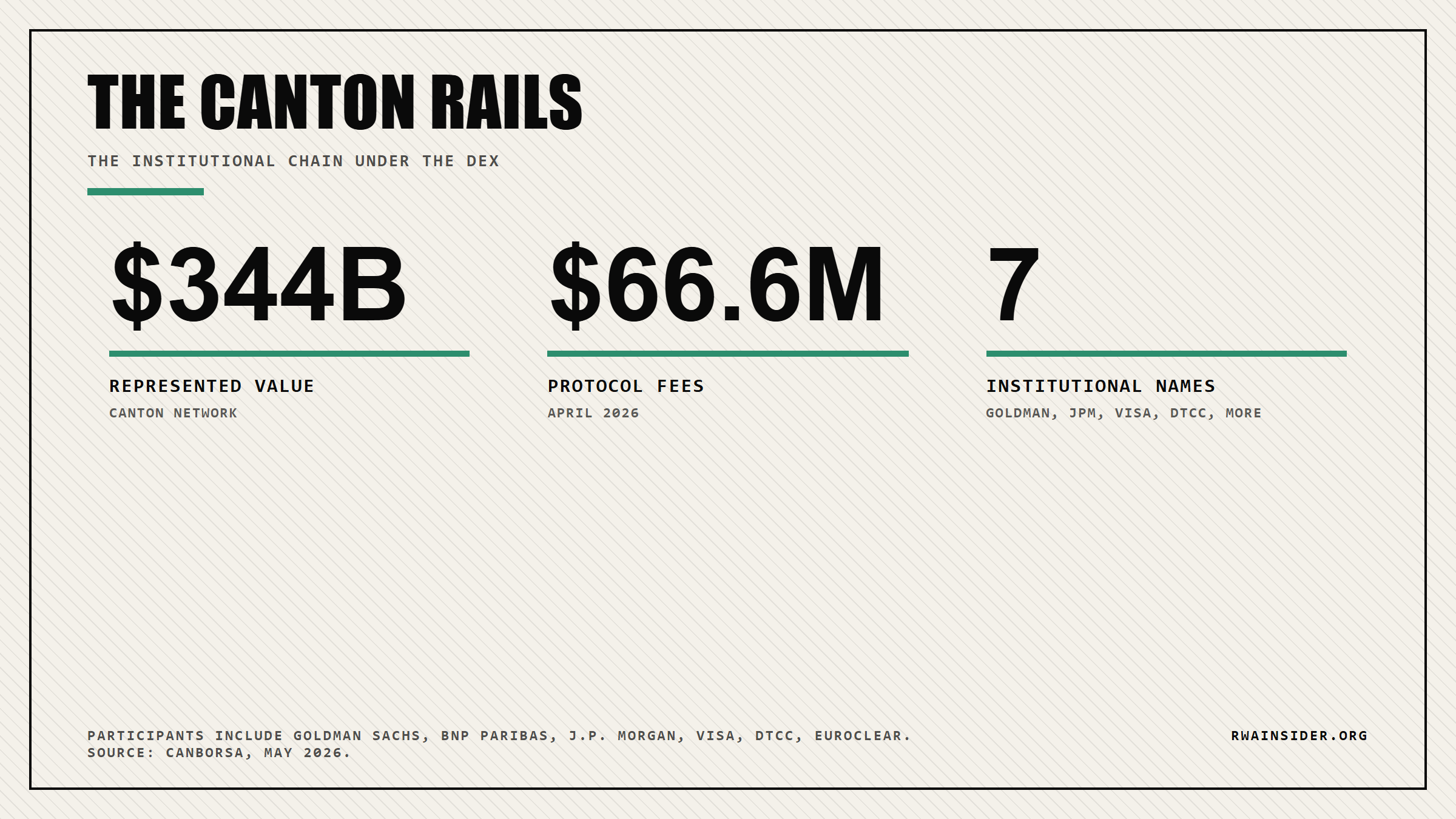
Canton is not a fringe network. It represents more than $344 billion in asset value and cleared $66.6 million in protocol fees in April 2026 alone.
Its participant list reads like a clearing-house roster: Goldman Sachs, BNP Paribas, J.P. Morgan, Visa, DTCC, and Euroclear all run on it.
Strip away the institutional pedigree and this is really about whether a $1,000 wallet can short Tesla at midnight without asking anyone for permission.
That is a different bet from earning a fixed rate on a stablecoin. You can compare how tokenized assets are reaching onchain markets as more of them open up to self-custody and active trading.
A No-KYC DEX On A Chain Built For Goldman And JPMorgan
The pitch comes straight from the founder. Pavel Shter, Canborsa’s chief executive, said gold, stocks, and real estate are “the markets that actually matter to most people, and they have never been accessible onchain in a way that lets you actively trade them.”
That ambition runs straight into the nature of the chain. Canton was designed so institutions could keep trades private from each other, and now it hosts a venue that lets anonymous wallets take 20x leverage with no identity at the door.
The risk sits in the gaps. This is a beta, and liquidity, oracle pricing on tokenized equities, and how a Tesla perp behaves when Wall Street is shut are all untested.
A points program rewarding wallet connections, swaps, and referrals is live from day one, which can inflate volume well before real order-book depth shows up.
The team is not anonymous either: Canborsa says it was built by more than ten people with backgrounds in exchange integrations and DeFi products shipped on Ethereum and BNB Chain.
Whether self-custodial RWA perps hold up depends on liquidity and on whether the oracle prices stay honest while Wall Street sleeps. The institutions already settle on Canton; whether retail wants to trade on the same rails is what the next few months decide.
For the other side of this trade, see how RWA Insider tracked where tokenized US stocks are already changing hands across onchain venues.
Frequently Asked Questions
What is Canborsa and how does it work?
Canborsa is the first perpetual DEX for real-world assets, built on Canton Network. It gives a self-custodial wallet onchain swaps and perpetual contracts on tokenized stocks, gold, oil, and crypto, with up to 20x leverage and no intermediary holding your assets.
Can I trade tokenized stocks on Canborsa without KYC?
Yes. At beta, Canborsa imposes no KYC and no market-hour limits, so any wallet can go long or short on tokens tracking Apple, Nvidia, Tesla, gold, silver, and oil around the clock. You hold your own keys the whole time.
What does 20x leverage on Canborsa mean for a $1,000 position?
Up to 20x leverage lets a $1,000 margin position control about $20,000 of exposure. That cuts both ways: a move of roughly 5% against the position can liquidate it, so the leverage magnifies losses as fast as gains.
Is Canton Network safe for trading real-world assets?
Canton is a privacy-enabled chain used by institutions including Goldman Sachs, JPMorgan, and Visa, and it represents over $344 billion in asset value. It keeps trades private and settles atomically, but Canborsa itself is in beta, so its liquidity and oracle pricing are still unproven.