Kraken Opens 1:1 USDC Bridge To Canton With USDCx
Key Points
- Kraken now supports USDCx deposits and withdrawals on Canton Network, a stablecoin minted 1:1 against USDC parked in Circle’s xReserve.
- Every USDCx is backed one for one, so its supply on Canton can never exceed the USDC sealed in Circle’s reserve on Ethereum.
- USDCx trading pairs are not yet liquid, so a $1,000 wallet still gets more from plain USDC, which earns roughly 2% supplied to Aave.
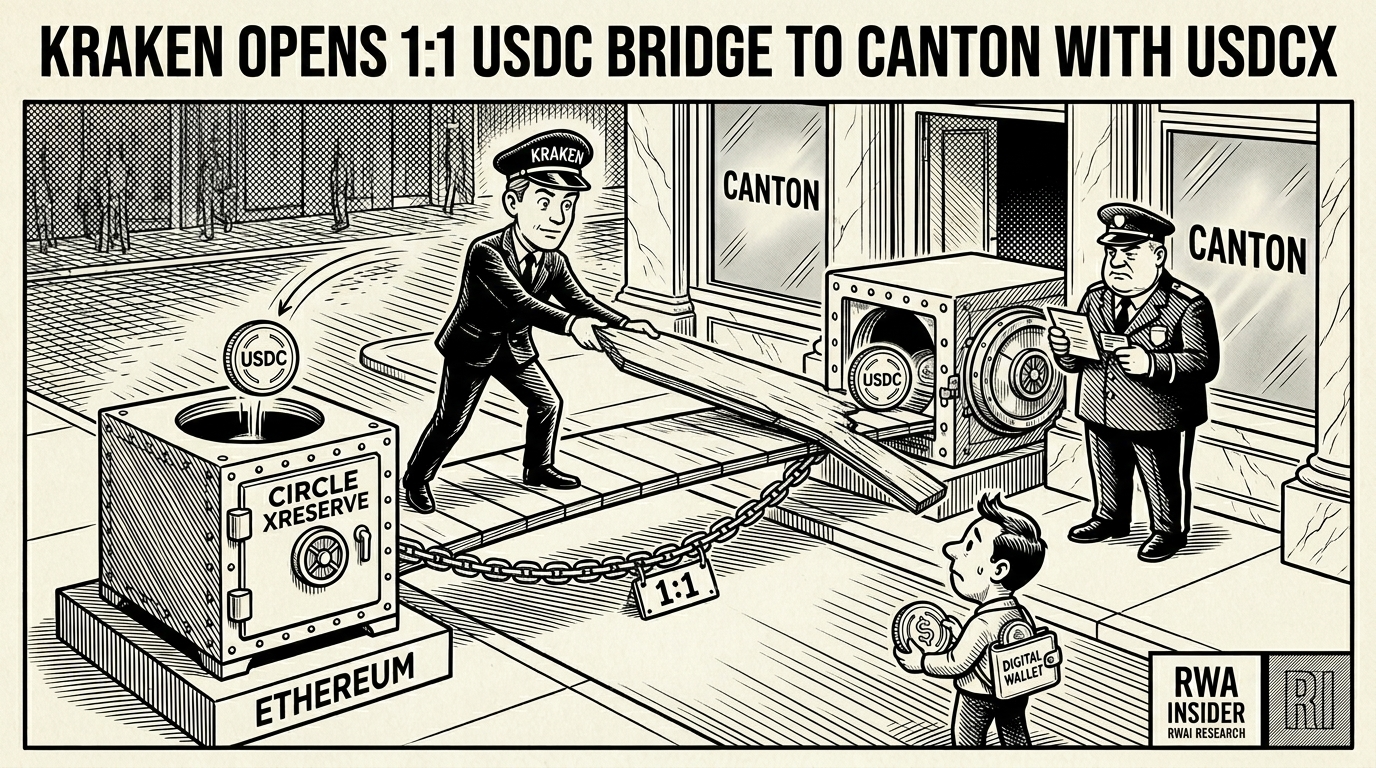
Kraken has switched on deposits and withdrawals of USDCx on Canton Network, opening an exchange route to a stablecoin built for institutional settlement. According to Kraken’s announcement, USDCx is “backed 1:1 by USDC held in Circle’s xReserve,” minted on Canton whenever USDC is locked on Ethereum. For a wallet holder, the headline is not the new token but the plumbing behind it. The USDC you already hold stays the permissionless asset, while USDCx lives on a privacy-first chain aimed at regulated firms, not your MetaMask.
Kraken Wires USDCx Onto Canton, Backed 1:1 By Circle
Kraken has enabled deposits and withdrawals of USDCx, a Canton-native stablecoin, handing exchange users a way in and out of an asset built for private institutional settlement.
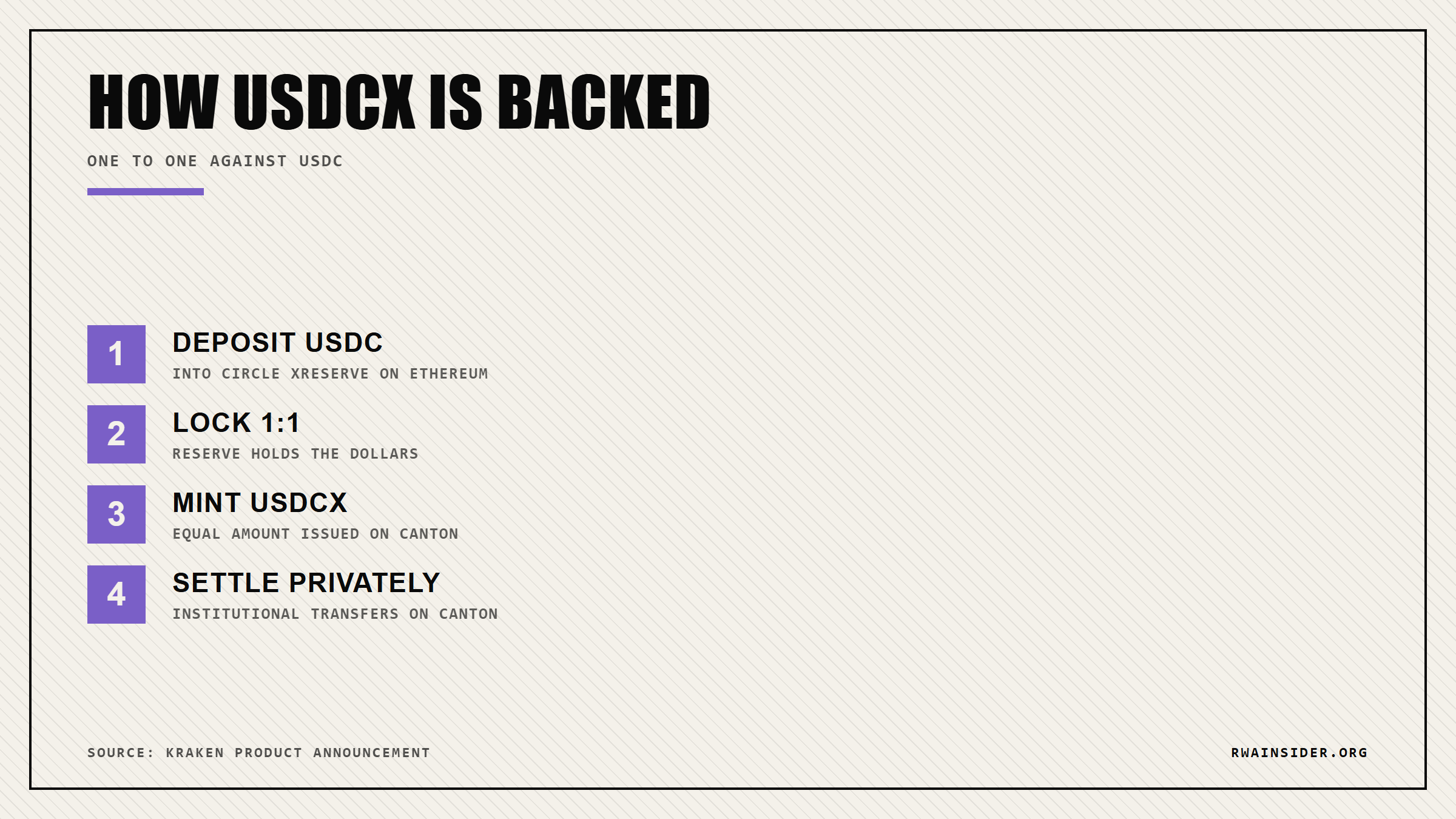
The mechanics are plain. Deposit USDC into Circle‘s xReserve on Ethereum, and an equal amount of USDCx mints on Canton.
That one-to-one link is the entire pitch. USDCx is not a fresh bet, it is a wrapper that carries dollar value onto a chain regulated firms can actually use.
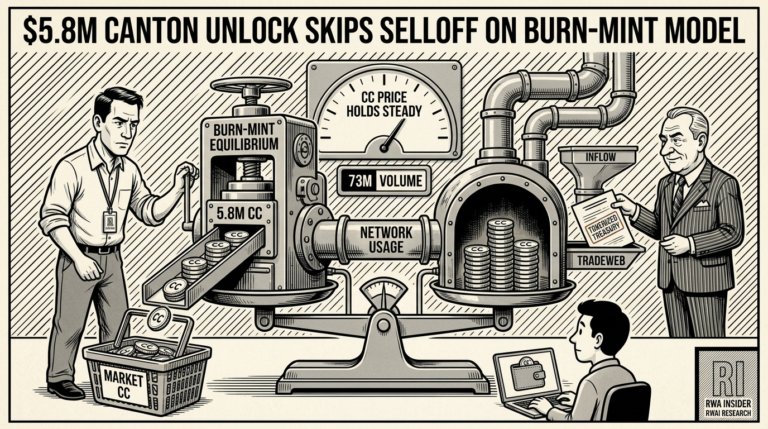
Canton is a Layer 1 built for banks and tokenized real-world assets, not for retail traders hunting the next pool.
It runs its own token, CC, which pays transaction fees and validator rewards, so USDCx sits inside that system as a dollar liquidity asset rather than a speculative one.
Kraken frames the move as exchange support for an institutional settlement asset, which is a polite way of saying it is plumbing, not a trade.
For an on-chain user, the takeaway is narrow. A major exchange just wired itself to an institutional chain, but the asset it bridged is not one a wallet can put to work today.
Where The USDC Bridge Leaves A $1k Wallet
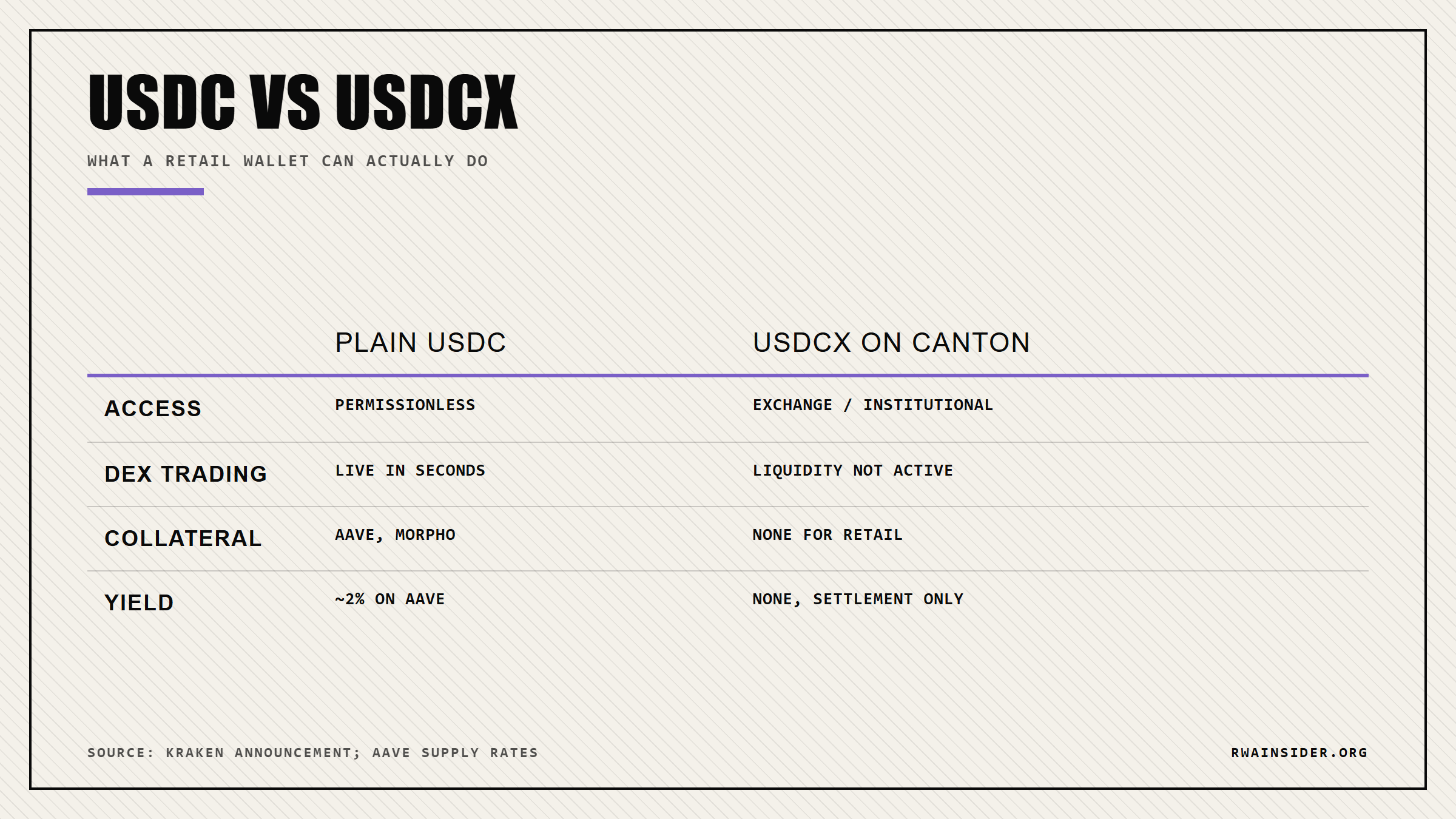
Here is the honest read for a $1,000 wallet. USDCx is not yet something you can trade or farm.
Kraken flags that liquidity for USDCx pairs is not fully active and will lean on market makers and institutional demand to fill out over time.
Cross-network transfers are also unforgiving. The exchange warns that depositing over an unsupported network can mean lost tokens, a risk plain USDC users rarely think about.
So the asset that actually works for you is the one feeding the bridge. Plain USDC trades on any DEX in seconds and posts as collateral across DeFi.
Supplied to Aave, USDC earns somewhere around 2% with no lockup and no onboarding form to sign.
Strip away the privacy pitch and this is really about whether the USDC in your wallet ever needs a Canton-native twin to do anything useful.
For now it does not, though it pays to track how tokenized dollars are spreading across chains before chasing any new wrapper.
USDCx carries no native yield. It is a settlement asset, a way for institutions to move dollars quietly, not an income token built for retail wallets.
Canton’s Privacy Pitch Splits From Permissionless DeFi
Canton’s selling point is sub-transaction privacy. Trade details show only to the parties involved and to selected regulators, not to the whole network by default.
That solves a real problem for banks. They want shared settlement infrastructure without broadcasting sensitive positions to every other participant on a public ledger.
It is also the demand Kraken is plugging into. RWA Insider’s earlier reporting traced how Digital Asset, the firm behind Canton led by chief executive Yuval Rooz, pitched the network to Wall Street after a $355 million raise.
The exchange is less a token lister here than a bridge between retail accounts and an institutional settlement chain.
Whether USDCx matters comes down to two questions: how deep its liquidity gets, and whether financial firms actually build on Canton.
The split it represents is becoming the real story. Public chains sell open access and permissionless trading, while Canton sells privacy and compliance to firms that cannot expose every move.
For retail, there is nothing to rush. The permissionless dollar you already hold does almost everything USDCx promises, minus the privacy that only institutions truly need.
Whether USDCx becomes more than institutional plumbing depends on liquidity that does not exist yet, and the next few months will show if market makers bother to build it. Until they do, it is a bridge with light traffic.
Watch the liquidity, not the launch. A 1:1 wrapper is only as useful as the market willing to trade it.
Frequently Asked Questions
What is USDCx and how is it backed?
USDCx is a Canton-native stablecoin backed one for one by USDC held in Circle’s xReserve. Each token mints on Canton only when an equal amount of USDC is locked on Ethereum, so its supply can never run ahead of the reserve.
Can I trade USDCx without KYC?
Not in practice yet. Kraken supports deposits and withdrawals, but it notes USDCx trading pairs are not fully liquid, and Canton is built for regulated institutions rather than permissionless wallets.
Should I move my USDC into USDCx?
For most retail wallets, no. Plain USDC stays permissionless, trades on any DEX in seconds, and earns roughly 2% supplied to Aave, while USDCx is a settlement asset with no retail yield path today.
What is Canton Network and why does its privacy matter?
Canton is a Layer 1 for banks and tokenized real-world assets, with sub-transaction privacy so trade details show only to the parties and selected regulators. Its CC token pays transaction fees and validator rewards.