$2.8B Solana RWA Surge Bets Speed Beats Ethereum Liquidity
Key Points
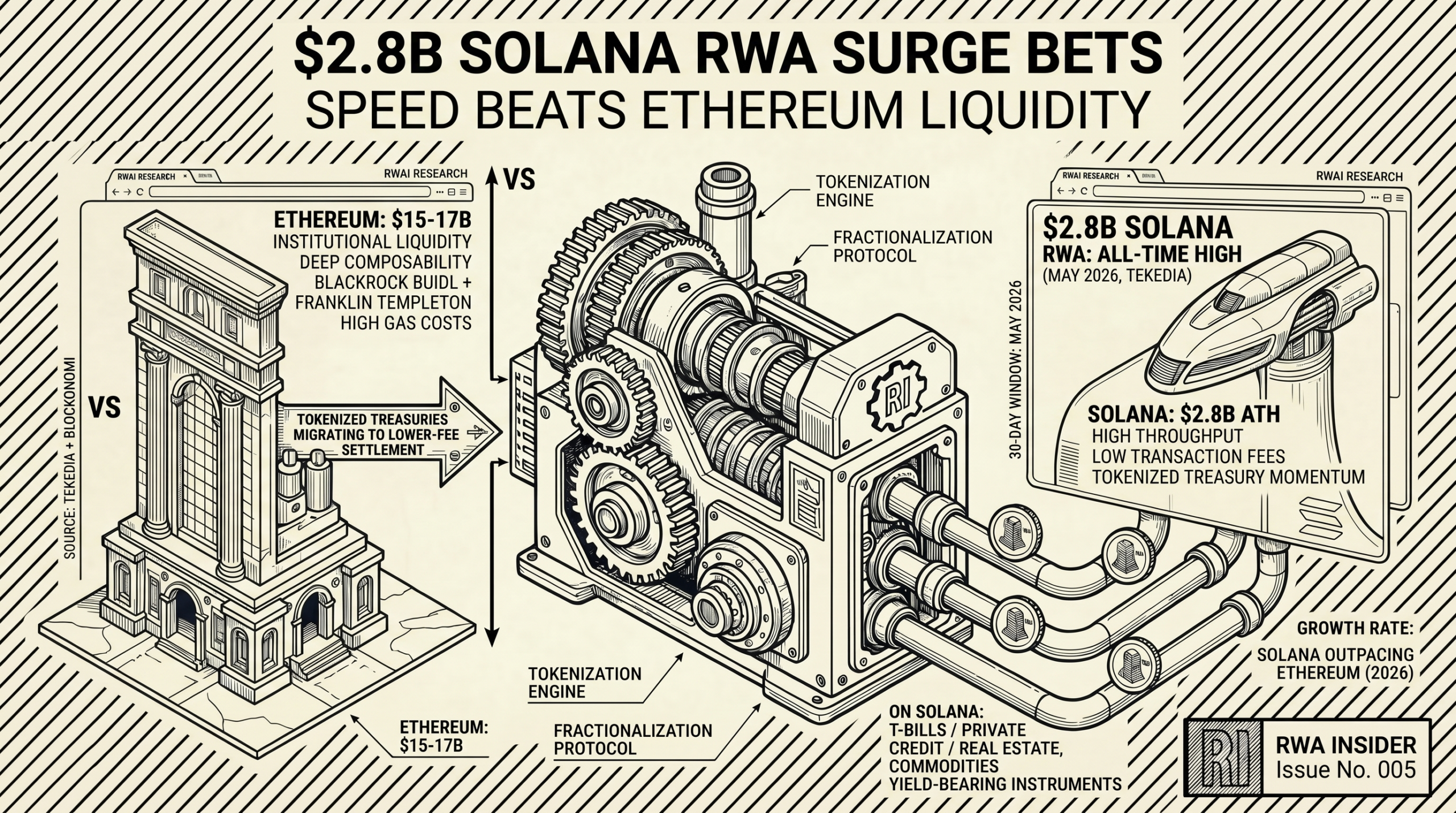
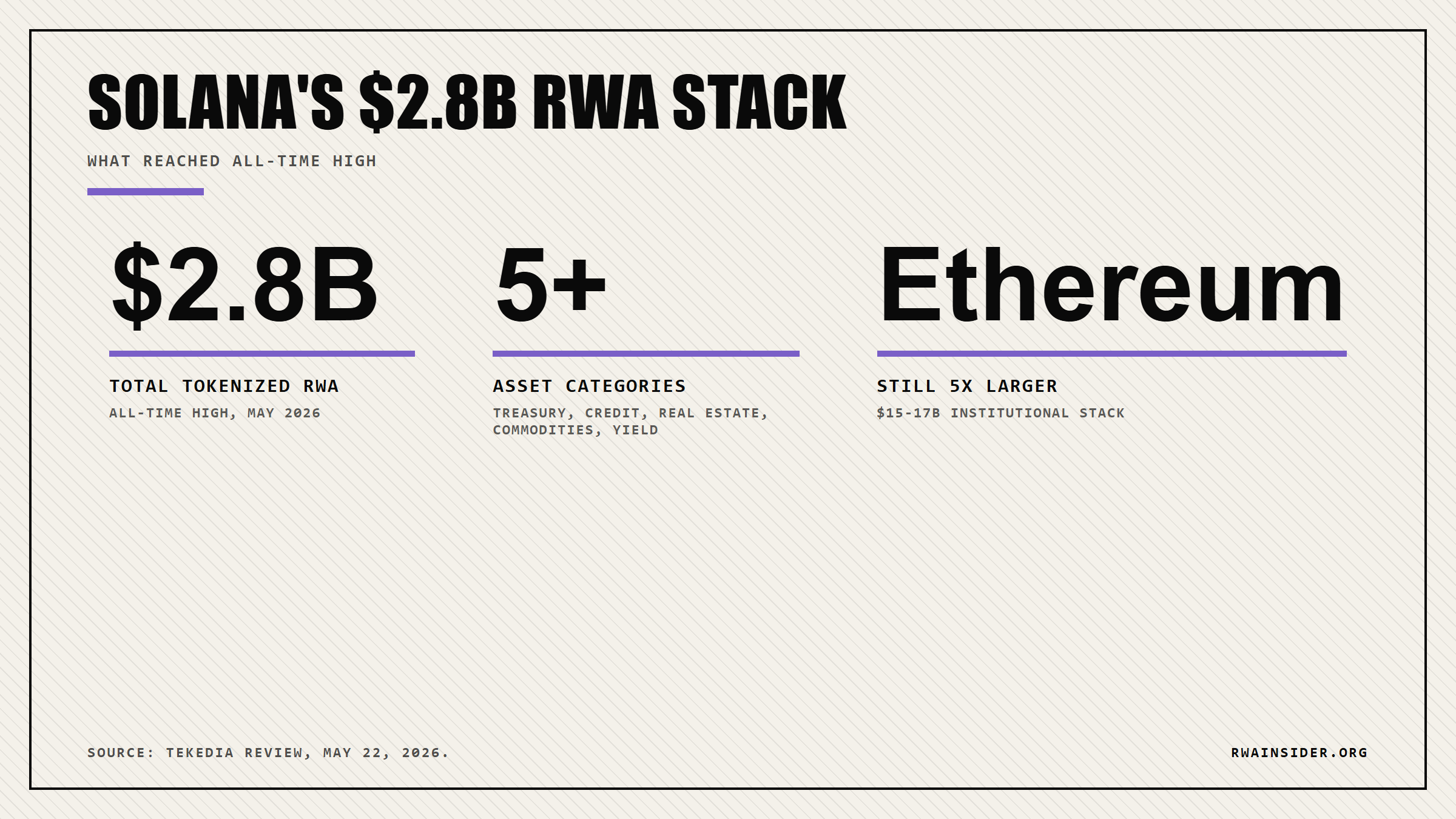
- Solana’s tokenized real-world asset ecosystem hit an all-time high of $2.8 billion in May 2026, per Tekedia’s review.
- Solana’s high throughput and low transaction costs are attracting tokenized Treasury bills, private credit, and yield-bearing instruments to the chain.
- DeFi users can now access more tokenized Treasury products on Solana with lower transaction fees than the equivalent instruments built on Ethereum.
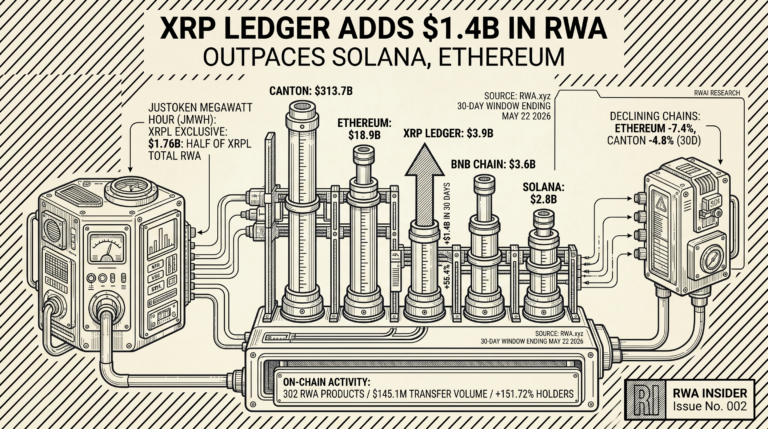
Solana’s tokenized real-world asset ecosystem crossed an all-time high of $2.8 billion in valuation, marking what Tekedia called a measurable shift from theory to financial infrastructure in the chain’s RWA push. Tekedia framed the milestone on May 22, 2026, attributing it to Solana’s high throughput, low transaction costs, and the expanding pull of tokenized Treasury products. For DeFi users weighing where to deploy stablecoin capital, the question is whether Solana’s speed-and-cost edge can keep pulling tokenized assets from Ethereum’s liquidity gravity, or whether the $2.8 billion plateau marks a temporary ceiling.
$2.8B All-Time High Marks Solana’s RWA Stage Shift
Tekedia framed the milestone as evidence that “tokenized finance is entering a new stage of adoption” on Solana.
The ecosystem now hosts tokenized Treasury bills, private credit, real estate, commodities, and yield-bearing instruments per Tekedia’s accounting.
The $2.8 billion all-time high is the latest measured peak in a sector that Tekedia describes as moving from experimental status to a market connecting traditional financial assets with decentralised infrastructure.
Solana’s RWA push sits inside a multi-chain race where Ethereum still anchors institutional liquidity but where speed-and-cost networks are positioning for the high-volume use cases.
Solana’s $2.8 billion stack covers more categories than a single-product wager. The mix is broader, even if individual product depth has not yet caught Ethereum’s tokenized fund infrastructure. Twelve months ago the figure would have looked unreachable; the move from theory to measurable balance has run faster than most chain forecasts.
Why Throughput And Low Fees Attract Tokenized Treasury Products
Two technical features anchor Solana’s RWA pull: high throughput and low transaction costs, both critical for financial applications that need constant settlement.
Traditional finance operates at volume that exceeds what most public chains can absorb without high fees.
Solana’s infrastructure handles activity efficiently, which makes it a more comfortable host for tokenized Treasury wrappers and yield-bearing stablecoin products.
Tekedia attributed Solana’s recent stability to “stronger reliability, deeper liquidity, and growing developer confidence” after years of intermittent outage concerns.
Strip away the chain-tribalism takes and this is really about whether a $1k wallet can buy tokenized T-bills with lower fees on Solana than the equivalent product on Ethereum.
Readers can compare RWA infrastructure across chains to track which lane each chain is currently winning.
Tokenized stablecoin yield products and money market wrappers are the most replicated category on Solana. Both depend on cheap, frequent settlement to stay cost-competitive against on-chain alternatives.
The tokenized Treasury angle is the most direct DeFi user touchpoint. These instruments offer near-traditional yield exposure but with on-chain transferability, programmable composition, and lower transaction friction than legacy settlement.
Ethereum Still Anchors Institutional Conversations, For Now
Solana’s $2.8 billion milestone does not displace Ethereum’s institutional dominance, Tekedia noted directly.
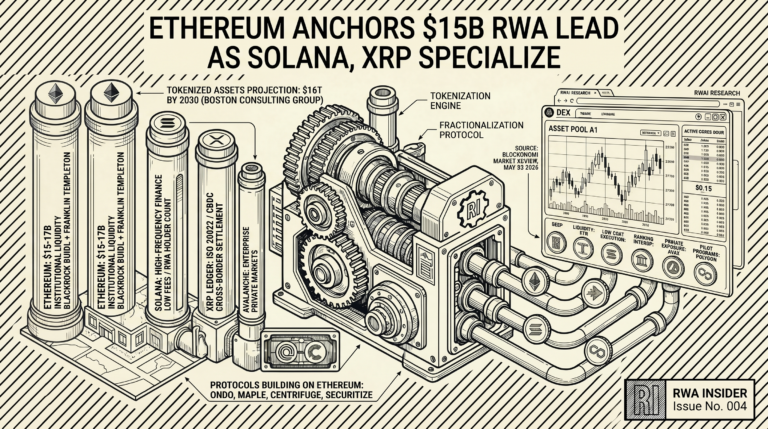
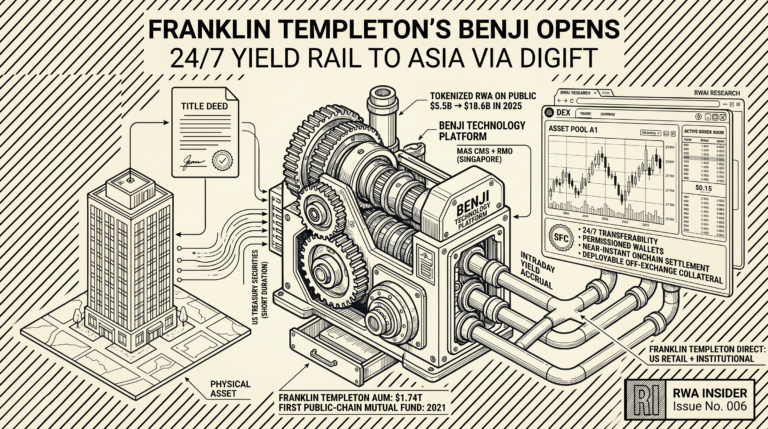
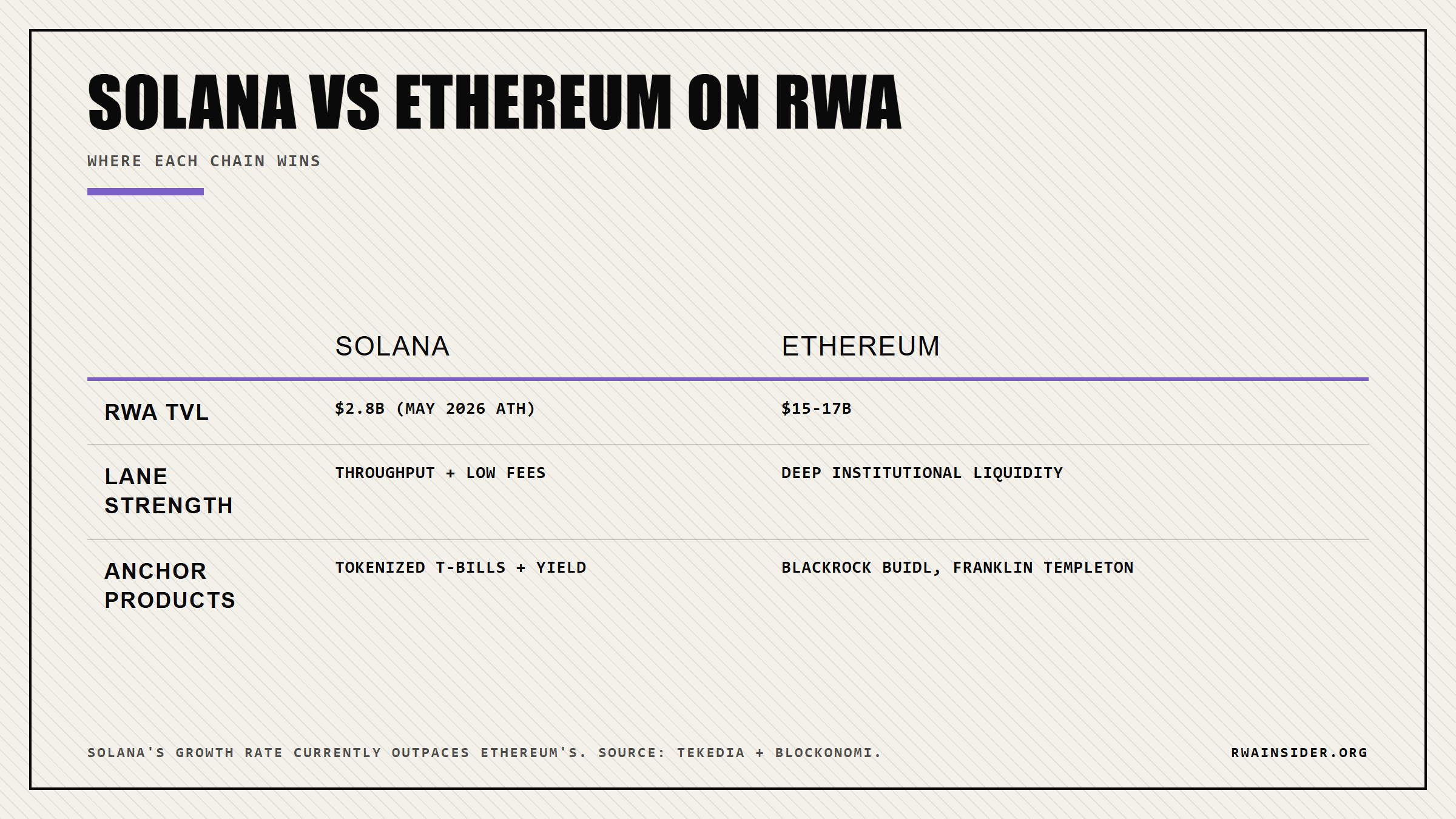
Ethereum still anchors most institutional RWA conversations and remains the home of the largest tokenized funds, including BlackRock’s BUIDL and Franklin Templeton’s tokenized money market products.
But Solana’s growth shows that “scalability and user experience matter deeply” in tokenized finance, per the Tekedia framing.
Our earlier read on Ethereum’s $15B RWA lead and the multi-chain landscape set the framing; this update zooms into Solana’s specific $2.8 billion moment in that race.
The competitive picture is fragmentation by use case rather than a single-winner outcome. Ethereum holds liquidity; Solana wins on cost and speed.
For wallets actively deploying capital, the practical move is to map yield opportunities against transaction fee budgets. A $1k position pays a different effective yield on Solana versus Ethereum once gas costs are factored in.
Solana’s $2.8 billion plateau is fresh ground, not a peak. Tokenization moves quickly when institutional inflows pick up speed, and the figure would have looked stretching only twelve months ago.
Whether Solana’s $2.8 billion holds depends on whether tokenized Treasury issuers keep choosing the chain or whether new product launches gravitate back to Ethereum. The next 30-day snapshot will tell.
Track more Protocol Battles coverage from RWA Insider as the chain rankings reshuffle.
Frequently Asked Questions
What is Solana’s tokenized RWA value as of May 2026?
Solana’s tokenized real-world asset ecosystem reached an all-time high of $2.8 billion in May 2026, per Tekedia’s review. The ecosystem includes tokenized Treasury bills, private credit, real estate, commodities, and yield-bearing instruments.
Why are tokenized Treasury products choosing Solana over Ethereum?
Solana’s high throughput and low transaction costs make it more efficient for high-frequency settlement than Ethereum, which has higher gas costs at peak times. For tokenized Treasury wrappers that need constant transferability, the fee differential matters at scale.
Can a DeFi user with $1k actually use Solana tokenized RWAs?
Yes for most tokenized stablecoin and Treasury products on Solana that trade permissionlessly. KYC requirements vary by issuer, and some private credit or real estate products remain gated. Check the specific product’s issuer requirements before bridging stablecoins to Solana.
How does Solana’s $2.8 billion compare to Ethereum’s RWA stack?
Ethereum still holds roughly $15 to $17 billion in tokenized real-world assets, including BlackRock’s BUIDL fund and Franklin Templeton’s tokenized products. Solana’s $2.8 billion is roughly one-fifth of Ethereum’s, but Solana’s growth rate is outpacing Ethereum’s in 2026.