$100M Gold Vault Fills In 24h, Theo thUSD Targets 12% Yield
Key Points
- Theo launched thUSD, a gold-yield stablecoin, and its $100 million Genesis Vault closed at its cap within 24 hours of opening.
- The cash-and-carry strategy behind thUSD returned 8.27% in 2025, and co-founder Ari Pingle targets 5% to 12% depending on gold markets.
- After one identity check, any wallet can hold thUSD or post it on Morpho for RWA lending, while Aave USDC pays close to 2%.
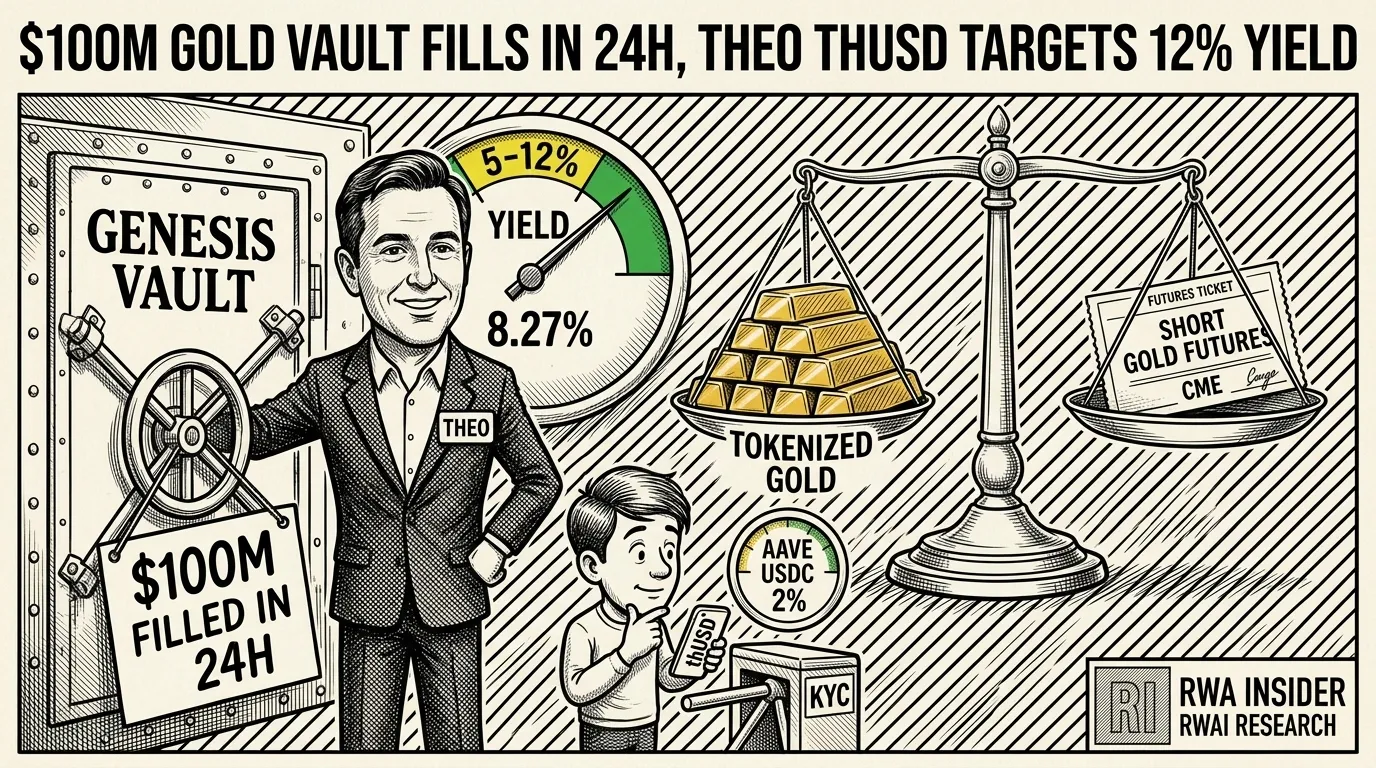
Theo has launched thUSD, a dollar-pegged stablecoin that earns its yield from a gold futures trade instead of bank reserves, and its $100 million Genesis Vault filled to the cap within 24 hours of opening. Co-founder Ari Pingle said the design keeps thUSD clear of the GENIUS Act yield ban: “Products structured around tokenized assets or separate financial primitives can generate yield differently.” For a wallet earning about 2% on Aave USDC, that is a gold-backed dollar tied to a strategy that returned 8.27% last year, redeemable on-chain after a single identity check.
Theo Shorts Gold Futures To Mint thUSD Yield
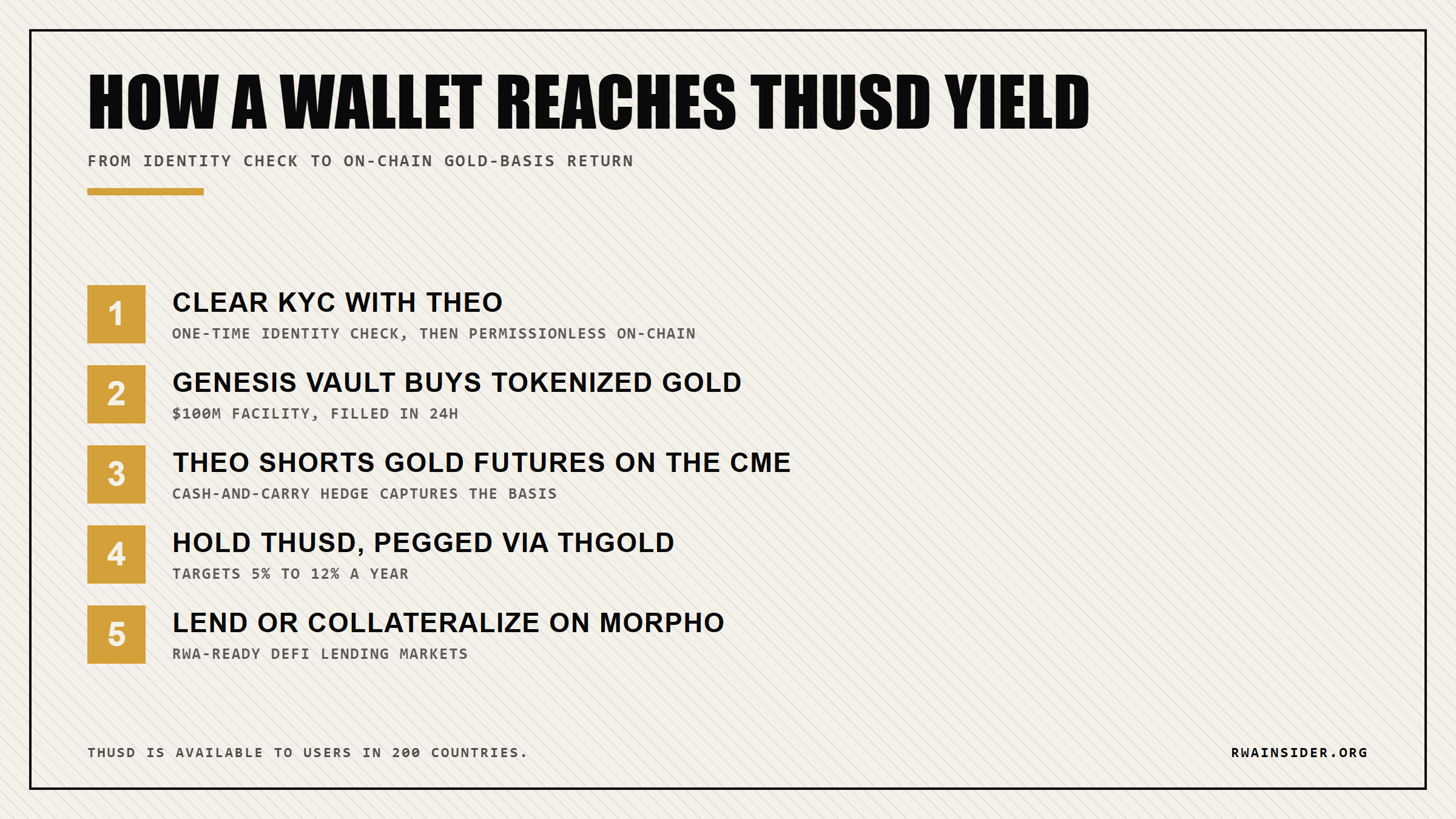
Theo, a tokenization platform, launched thUSD this week, and its $100 million Genesis Vault filled to the cap within 24 hours of opening.
The vault buys tokenized gold. At the same time, Theo shorts gold futures on the CME to cancel out price swings in the metal.
That move is a cash-and-carry trade. It pockets the spread between spot gold and futures gold without taking a directional bet on the price.
So thUSD pays holders the futures basis, not the Treasury interest that backs most yield-bearing dollar tokens.
The peg itself rests on reserves of thGOLD, a sister token Theo launched in January that is backed by secured lending to gold retailers, including Singapore’s Mustafa Gold.
Once minted, thUSD lives on-chain and is built to plug into real-world-asset lending markets like Morpho.
Where The 8.27% Gold Yield Comes From
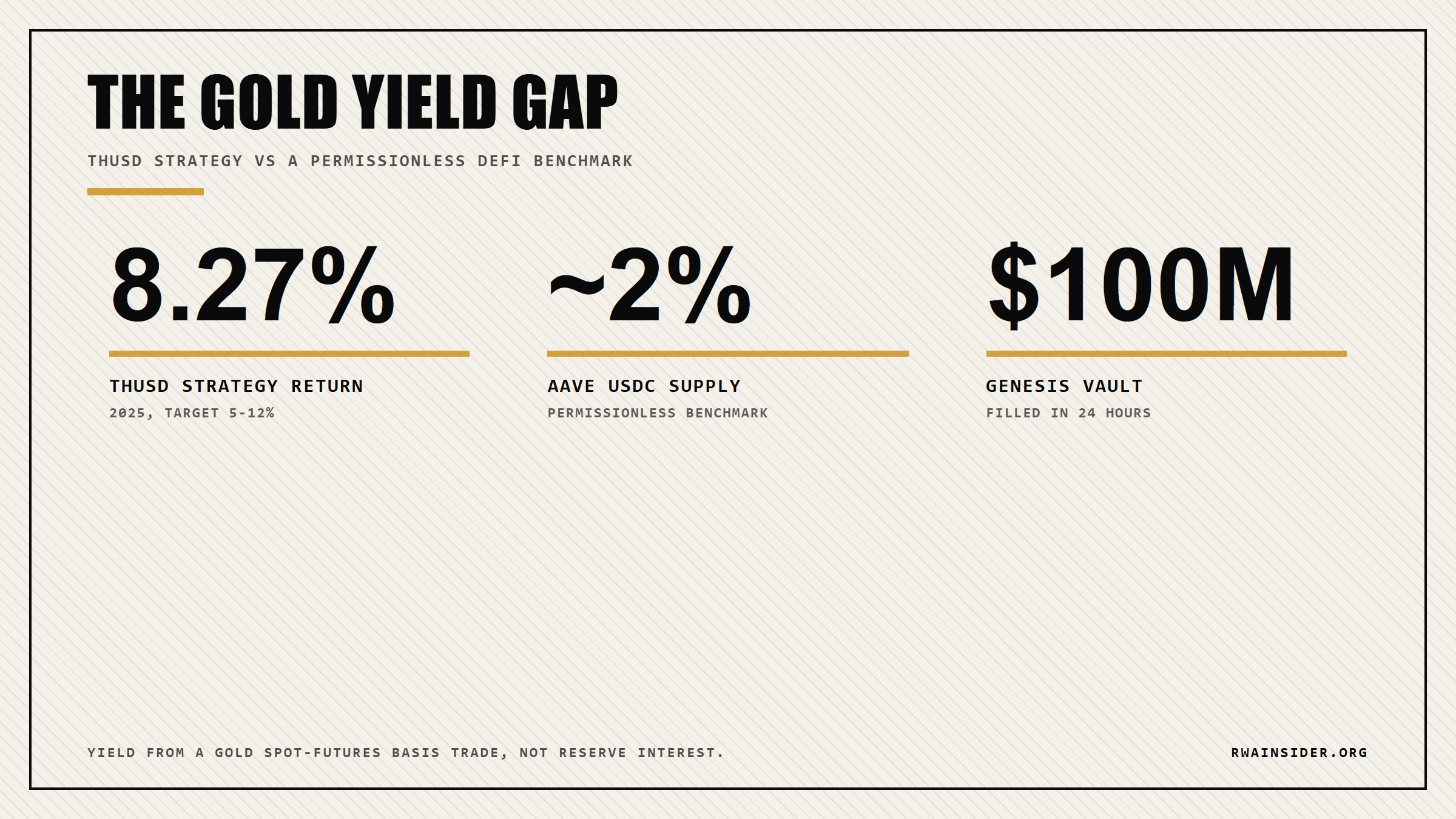
The strategy behind thUSD returned an average 8.27% in 2025. Co-founder Ari Pingle said the firm now targets 5% to 12%, depending on gold market conditions.
Chief investment officer Iggy Ioppe said Theo also plans to short gold futures on crypto-native venues like Hyperliquid.
He estimates that on-chain leg could push annualized yields toward 10%.
Set that against a wallet supplying USDC to Aave, which pays roughly 2% today. The spread is the whole pitch.
A $1,000 position in thUSD would book that gold-basis return in a single token, where the same dollars on Aave would sit in USDC earning the lower permissionless rate.
It is also a spread the GENIUS Act tries to close for ordinary stablecoins, which are barred from sharing the Treasury yield sitting in their reserves.
Strip away the gold-vault packaging and thUSD is a basis trade in a stablecoin’s clothes, paying the spot-futures gold gap rather than reserve income.
Access still runs through a one-time identity check. After that, Ioppe said the token works permissionlessly across the 200 countries where it is live.
To track how that gap plays out across tokenized assets, compare rates in our yield-gap coverage.
Why Morpho And The GENIUS Act Decide thUSD’s Reach
The whole yield model leans on a regulatory bet. The GENIUS Act bars payment-stablecoin issuers from paying interest on reserves such as Treasury bills.
Pingle argues thUSD escapes that line because its return comes from the trade itself, not from reserve income handed to holders.
Lawmakers and banking groups remain split over whether any third party should pay yield on stablecoin balances at all.
Iggy Ioppe, Theo’s chief investment officer, said gold retailers like Mustafa Gold gain from the setup because it lets them hedge price exposure while continuing normal production.
The backers add weight. Theo counts Hack VC and Anthos Capital among its investors, with angels from Jane Street, Optiver, and JPMorgan.
Its first product, the tokenized money-market fund thBill, launched last July.
The catch for a wallet is real.
The 5% to 12% range only holds while the gold spot-futures spread stays positive, and depth on Morpho will decide how easily thUSD can be borrowed against or exited.
Whether that 5% to 12% holds depends on the gold spot-futures spread staying positive and Washington leaving third-party yield alone, and the next few months of CME and Hyperliquid prints will tell.
For how on-chain traders already turn gold into yield, see our breakdown of how traders earn gold and silver yield on Hyperliquid.
Frequently Asked Questions
What is Theo’s thUSD and how does it pay yield?
thUSD is a dollar-pegged stablecoin from tokenization platform Theo. Its yield comes from a gold cash-and-carry trade, buying tokenized gold while shorting gold futures on the CME, rather than from Treasury reserves. The strategy returned 8.27% in 2025.
Can I hold thUSD without passing KYC?
No. Theo requires a one-time identity check to access its products. Once minted, the firm says thUSD works permissionlessly on-chain and is available to users in 200 countries.
How does thUSD get around the GENIUS Act stablecoin yield ban?
Co-founder Ari Pingle says thUSD’s return comes from its trading structure, not from passing reserve income to holders, so it falls outside the GENIUS Act ban on payment-stablecoin issuers sharing yield. Lawmakers and banks remain divided on the question.
Where can I use thUSD in DeFi?
Theo built thUSD to work with real-world-asset lending markets like Morpho. After clearing KYC and minting it, a wallet can lend the token or post it as collateral, though available liquidity will shape how easily it trades.