7% Bond Fund: Baillie Gifford Launches BAGEY On Ethereum, Solana
Key Points
- Baillie Gifford launched BAGEY, the Enhanced Yield Fund, a tokenized bond fund issued on Ethereum and Solana that currently yields about 7%.
- BNY runs the tokenization and wallet rails, while the 118-year-old manager opens BAGEY to eligible investors in three jurisdictions.
- A $1,000 wallet cannot buy BAGEY yet, but its 7% sits on Ethereum and Solana, where supplying USDC to Aave pays closer to 2%.
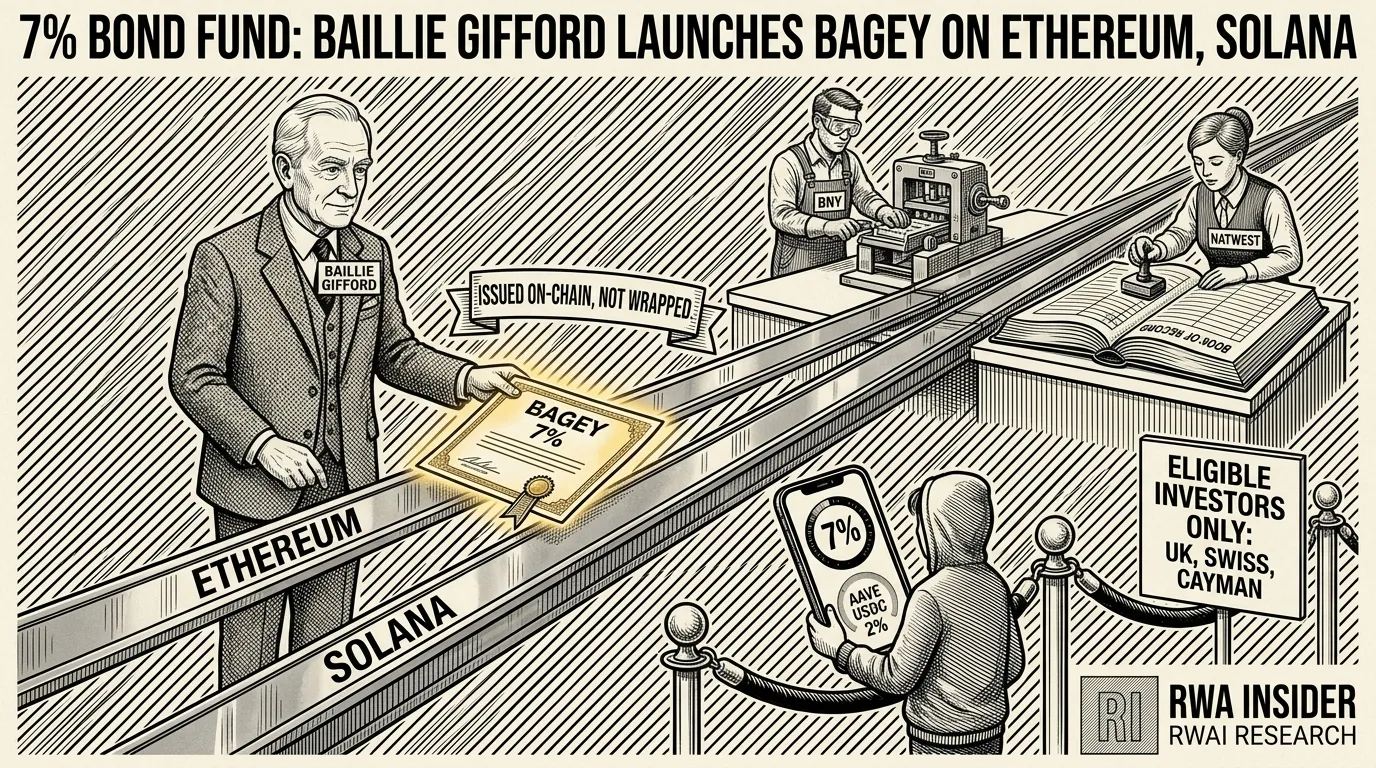
Baillie Gifford, the 118-year-old UK asset manager, has launched BAGEY, a tokenized bond fund built on Ethereum and Solana that currently yields about 7%. The Baillie Gifford Enhanced Yield Fund is issued directly on the blockchain, with BNY providing the tokenization and wallet infrastructure, and the firm’s head of digital assets Theo Golden said it is “not a token wrapped around a fund, but a fund issued on-chain.” For a wallet earning roughly 2% supplying USDC to Aave, that is a regulated 7% bond yield sitting on the two chains DeFi already runs on.
Baillie Gifford Issues BAGEY Straight On-Chain
Baillie Gifford launched the Baillie Gifford Enhanced Yield Fund, ticker BAGEY, this week, and CoinDesk reported the move on June 22.
The fund is built on Ethereum and Solana, with BNY supplying the tokenization and wallet infrastructure.
It holds a dollar-denominated portfolio of short-term public corporate bonds, is actively managed, and currently pays a yield of about 7%.
The structural detail is the actual news here. BAGEY is not a token layered on top of a conventional fund.
Instead, the fund is issued directly on-chain, with the blockchain serving as the official book of record.
That means investors hold the fund itself and have a direct claim on it, not a derivative IOU sitting one step removed from the bonds.
The distinction is more than wording. A direct on-chain claim makes the token the record of ownership, which is what lets a fund like this eventually plug into DeFi rails.
There is a catch up front. BAGEY is open only to eligible investors, not to any wallet that wants in.
Where The 7% Yield Beats Aave USDC
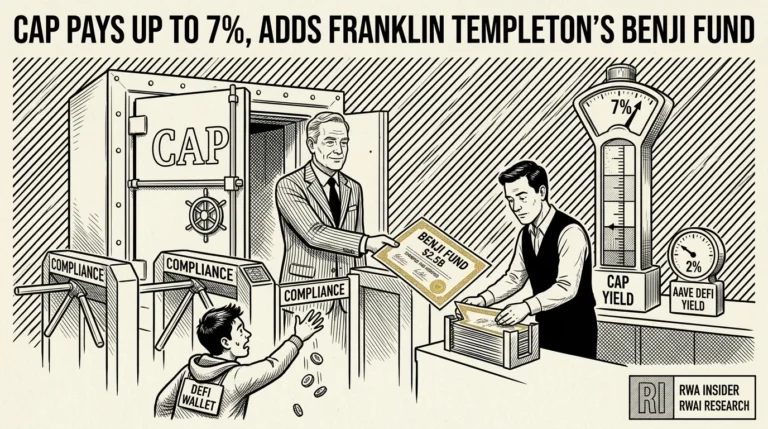
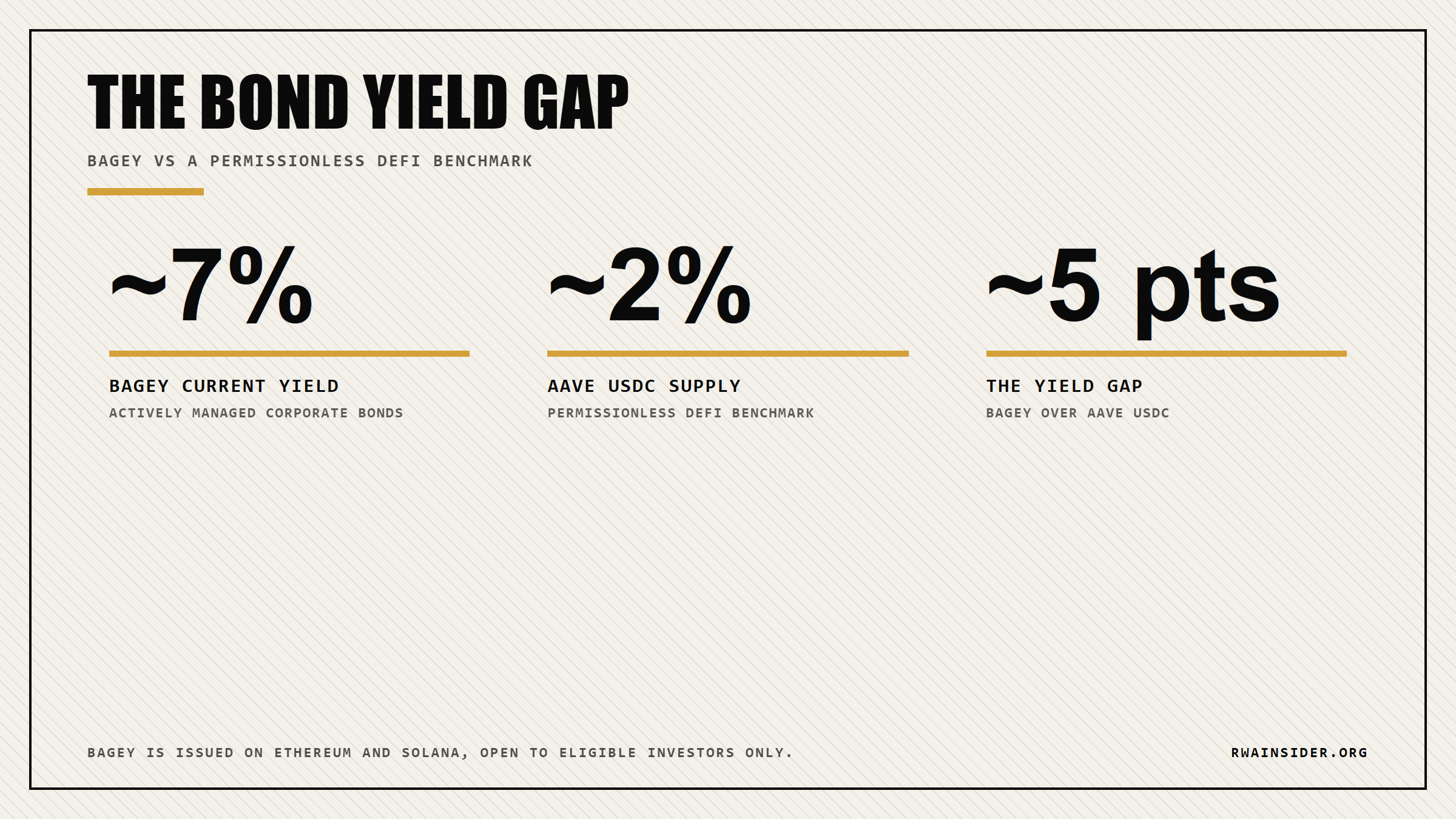
The pitch for a DeFi wallet is the spread. BAGEY currently yields about 7%, set against the roughly 2% a wallet earns supplying USDC to Aave today.
That gap is the whole story, but it does not come for free.
BAGEY holds short-term corporate bonds, which carry more credit and duration risk than the Treasury bills behind most tokenized money-market funds.
Tokenized Treasury wrappers on Ethereum tend to pay around 4%, so BAGEY’s extra yield is the market pricing in that added corporate-bond risk.
Put plainly, BAGEY pays more because corporate bonds can default in ways short-dated government paper rarely does, and active management is meant to earn that premium.
For a DeFi user, this matters less as a fund launch than as a regulated 7% dollar yield now living natively on Ethereum and Solana.
A $1,000 position in BAGEY would book that managed bond return in a single on-chain instrument, where the same dollars on Aave would sit in USDC at the lower permissionless rate.
The rate is only half the question. To track how that spread moves across tokenized fixed income, access is the part that decides who actually earns it.

Why Eligible-Investor Gating Limits BAGEY’s Reach
BAGEY is structured as a UK-regulated open-ended investment company, available to eligible investors in the UK, Switzerland and the Cayman Islands, subject to local rules.
That leaves a $1,000 retail wallet on the outside for now, behind the same wall that fences off most institutional tokenized funds.
Theo Golden, Baillie Gifford’s head of digital assets and tokenization, frames the design as a break from that pattern.
He says the fund is issued on-chain rather than wrapped, so holders carry a direct claim instead of an exposure to a separate off-chain record.
NatWest Trustee and Depositary Services acts as the fund’s depositary, while BNY runs the tokenization and wallet rails.
The forward question is composability. A bond fund issued natively on Ethereum and Solana is one approval away from becoming collateral or a token that trades on a DEX.
If Baillie Gifford widens eligibility, or a permissionless wrapper forms around BAGEY, that 7% moves within reach of any wallet.
Until then, the launch lands most clearly as a signal that Ethereum and Solana are now where a 118-year-old manager chooses to issue a regulated fund.
Whether that 7% ever reaches a $1,000 wallet depends on Baillie Gifford widening access or DeFi building a wrapper around it, and the next few months of on-chain issuance will show which way it breaks.
For how tokenized fixed income already pays yield on the same rails, see our look at how tokenized Treasuries pay yield on Ethereum.
Frequently Asked Questions
What is Baillie Gifford’s BAGEY fund?
BAGEY is the Baillie Gifford Enhanced Yield Fund, a tokenized bond fund from the 118-year-old UK asset manager. It invests in short-term dollar-denominated corporate bonds and is issued directly on the Ethereum and Solana blockchains, with BNY providing the infrastructure.
How much yield does BAGEY pay?
BAGEY currently offers a yield of about 7% from an actively managed portfolio of short-term public corporate bonds. That compares with roughly 2% for supplying USDC to Aave, though the corporate-bond fund carries more credit risk than a stablecoin deposit.
Can I buy BAGEY without being an eligible investor?
Not yet. BAGEY is a UK-regulated fund open only to eligible investors in the UK, Switzerland and the Cayman Islands. A retail DeFi wallet cannot buy it directly today, though issuing it on Ethereum and Solana leaves the door open for future on-chain access.
How does a fund issued on-chain differ from a wrapped fund?
Baillie Gifford says BAGEY is issued on-chain rather than wrapped, meaning the blockchain is the fund’s official book of record and holders have a direct claim on the fund. A wrapped fund instead issues a token that represents a claim on a separate, off-chain fund record.