Xash Pays PAXG Gold, Not Yield, For PYUSD Use On Kamino
Key Points
- As of Oct. 12, Xash’s open beta splits a monthly pool of PAXG gold among Solana users who put stablecoins to work in DeFi.
- CEO Kevin Huynh said PayPal put up $2.9 million to target a roughly 6% PYUSD yield in a Kamino vault, figures Unchained could not verify.
- A $1,000 Phantom or Solflare wallet can route PYUSD through Xash into Kamino now, but Xash has published no gold reward rate yet.
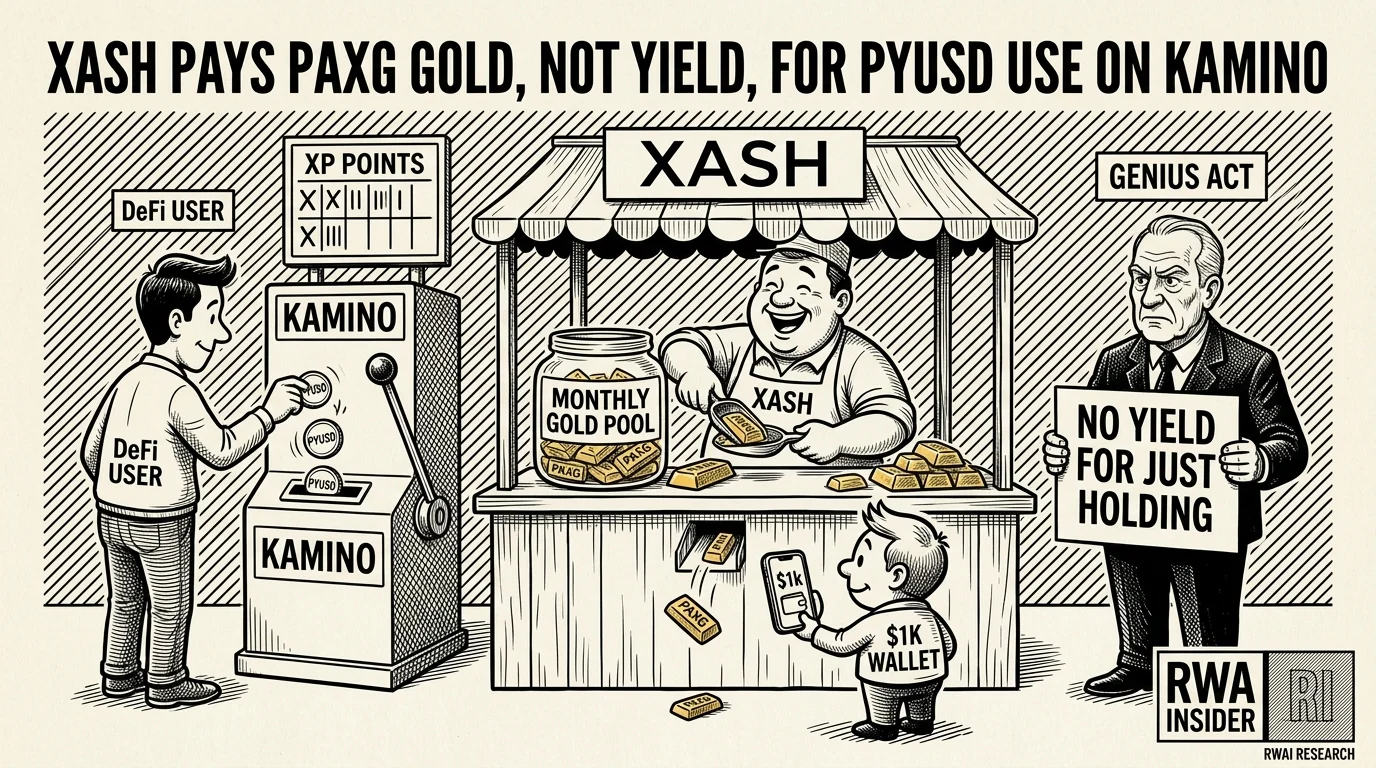
Xash wants stablecoin issuers to fund tokenized gold rewards for users who put their dollars to work in DeFi, instead of paying yield for simply holding a token. “The issuer is our customer,” co-founder and CEO Kevin Huynh said on Unchained Premium, in an interview recorded Oct. 1 and published Oct. 13. For your wallet, the pitch is plain: connect a Solana wallet, route stablecoins into venues such as Kamino, and collect a monthly cut of gold, a reward built around the GENIUS Act ban on yield for just holding.
Xash Routes Solana Stablecoins Into Kamino For Gold
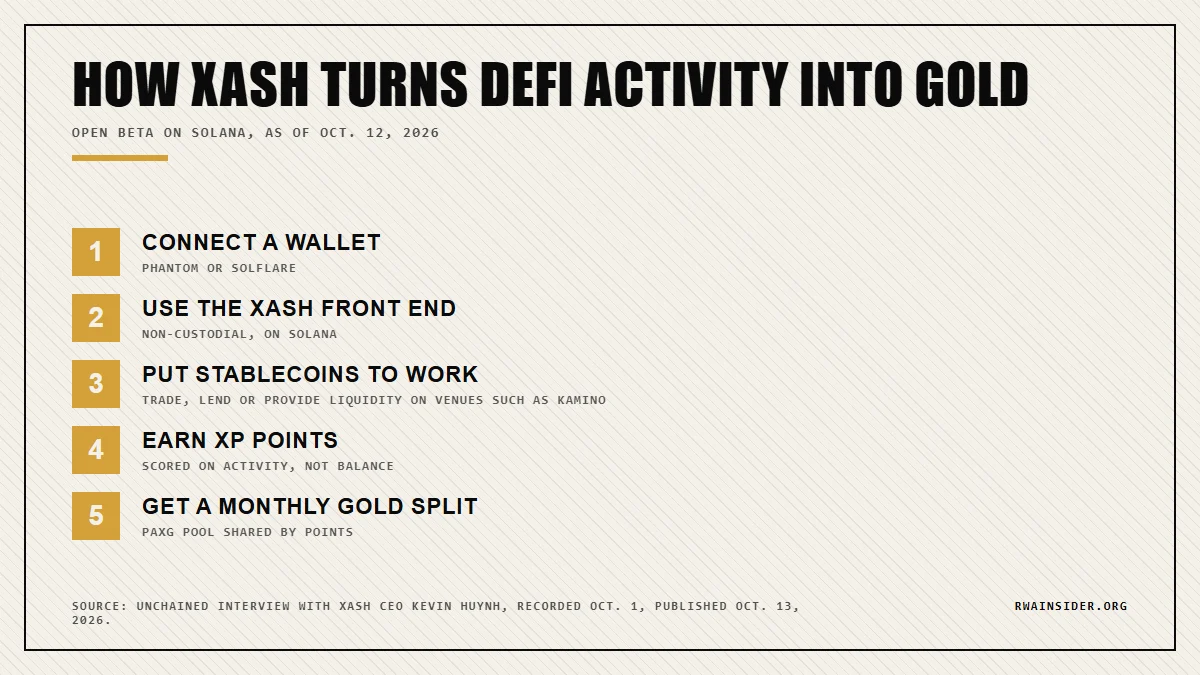
Xash runs a non-custodial front end on Solana. You connect a Phantom or Solflare wallet and send stablecoins to outside DeFi venues.
Huynh named Kamino as one of them. There, users trade, lend or provide liquidity, and Xash never holds the funds.
Xash scores that activity in points it calls XP. At the end of each month, it splits a pool of gold among users by points.
The gold is Paxos Gold, the PAXG token. “It’s currently Paxos Gold on Solana,” Huynh said.
When the show was recorded, Xash was in closed beta. As of Oct. 12, its website called the program an open beta and said PYUSD activity earns gold.
The rewards land in PAXG, not in more stablecoins, so what you receive is a gold token rather than a dollar balance.
That puts the program within reach of a $1,000 Solana wallet holding PYUSD today.
Where The PAXG Reward Money Comes From
For now, Xash pays for the gold itself. It buys PAXG from what Huynh called a market development fund.
He described it as “using venture capital money to test the hypothesis that we can use this gold reward.”
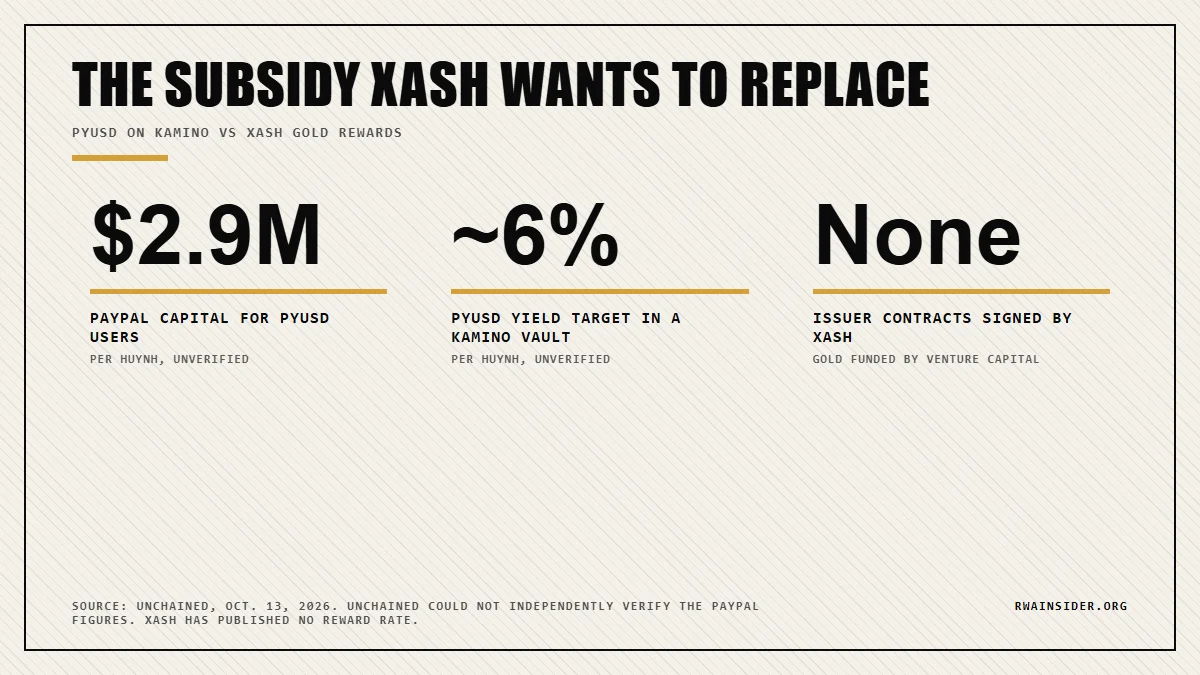
Xash is “intentionally not working directly with any stablecoin provider,” Huynh said. It is in talks with several issuers, but “we’ve not struck any contracts.”
That leaves the reward budget, for now, in Xash’s own hands.
His benchmark is PayPal USD. Huynh said PayPal had “put up their own $2.9 million of capital to try to hit this rough 6% yield” for PYUSD users in a Kamino vault.
Unchained could not independently verify those figures. Treat the 6% as Huynh’s account, not a posted rate.
Xash has published no gold reward rate, so there is no like-for-like yield comparison yet. Your PAXG share depends on your XP and the size of each month’s pool.
Strip away the issuer pitch and this is really about whether a monthly slice of gold can out-earn the subsidized yield your stablecoins already chase.
Before you route PYUSD anywhere, compare stablecoin and tokenized gold yields across DeFi.
GENIUS Act Yield Ban Shapes Xash’s Gold Design
Regulation explains the design. The GENIUS Act bars issuers from paying holders interest or yield solely for holding, using or keeping a payment stablecoin.
Huynh said paying yield on idle balances is “not the direction that stablecoins are headed, given government pressure and where the government’s really headed as well.”
Laura Shin, host of Unchained, said that under the proposed Clarity Act rules, “the yield was contingent on activity, not just the balance.”
That bill stalled when a Senate cloture vote failed on Sept. 15. Huynh said Xash’s design, “irrespective of Clarity, would solve the problem that issuers were having.”
The same activity-versus-balance line runs through our report on the idle stablecoin yield ban.
Xash first planned a gold-backed synthetic dollar, then chose to keep the stablecoin and the reward separate.
Tether had already tried a gold-backed dollar. It announced on June 17 that it would wind down aUSDT and its Alloy platform, with a Sept. 17 deadline for holders to return it.
Watch for the first issuer contract. Until one signs, venture money fills the gold pool, and a test budget is not a lasting rate.
If an issuer signs on and funds the pool, gold rewards become a real rival to subsidized stablecoin yield. Until then, the PAXG you earn is a venture-funded experiment.
Weighing where to park PYUSD? The Yield Gap desk tracks which stablecoin rewards pay, and who funds them.
Frequently Asked Questions
What is Xash and how does it work?
Xash is a non-custodial front end on Solana. You connect a Phantom or Solflare wallet and route stablecoins to DeFi venues such as Kamino to trade, lend or provide liquidity. Xash scores that activity in XP points and splits a monthly pool of PAXG gold among users by points.
Can I earn PAXG gold with PYUSD on Solana?
As of Oct. 12, Xash’s website called the program an open beta and said PYUSD activity earns gold. The reward is Paxos Gold on Solana. Xash has not published a reward rate, so your share depends on your points and the size of each month’s pool.
Who pays for the gold rewards?
For now, Xash buys the gold from a market development fund backed by venture capital, CEO Kevin Huynh said. It is talking to several stablecoin issuers but has not signed any contracts. Its goal is for issuers to fund the rewards.
Do gold rewards get around the GENIUS Act yield ban?
The GENIUS Act bars issuers from paying yield solely for holding, using or keeping a payment stablecoin. Xash ties rewards to DeFi activity rather than balances, and Huynh says the design works with or without the Clarity Act. That is his view, not a regulator’s ruling.