CLARITY Act Keeps Idle Stablecoin Yield Ban, Draft Delayed
Key Points
- Senator Thom Tillis delayed the CLARITY Act stablecoin yield draft this week, pushing a timeline that already slipped past its end-of-2025 target.
- The current draft keeps the 2025 GENIUS Act framework, banning rewards on idle stablecoin balances while permitting yield from transactional activity.
- DeFi users who lend or supply liquidity stay on the permitted side; parking stablecoins for a flat exchange reward faces the ban.
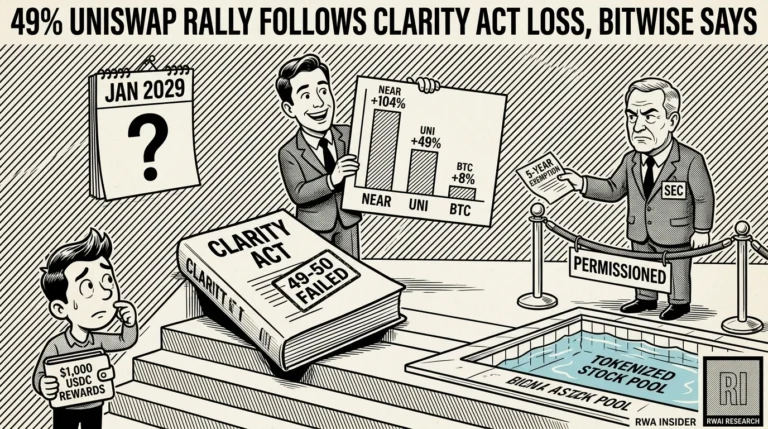
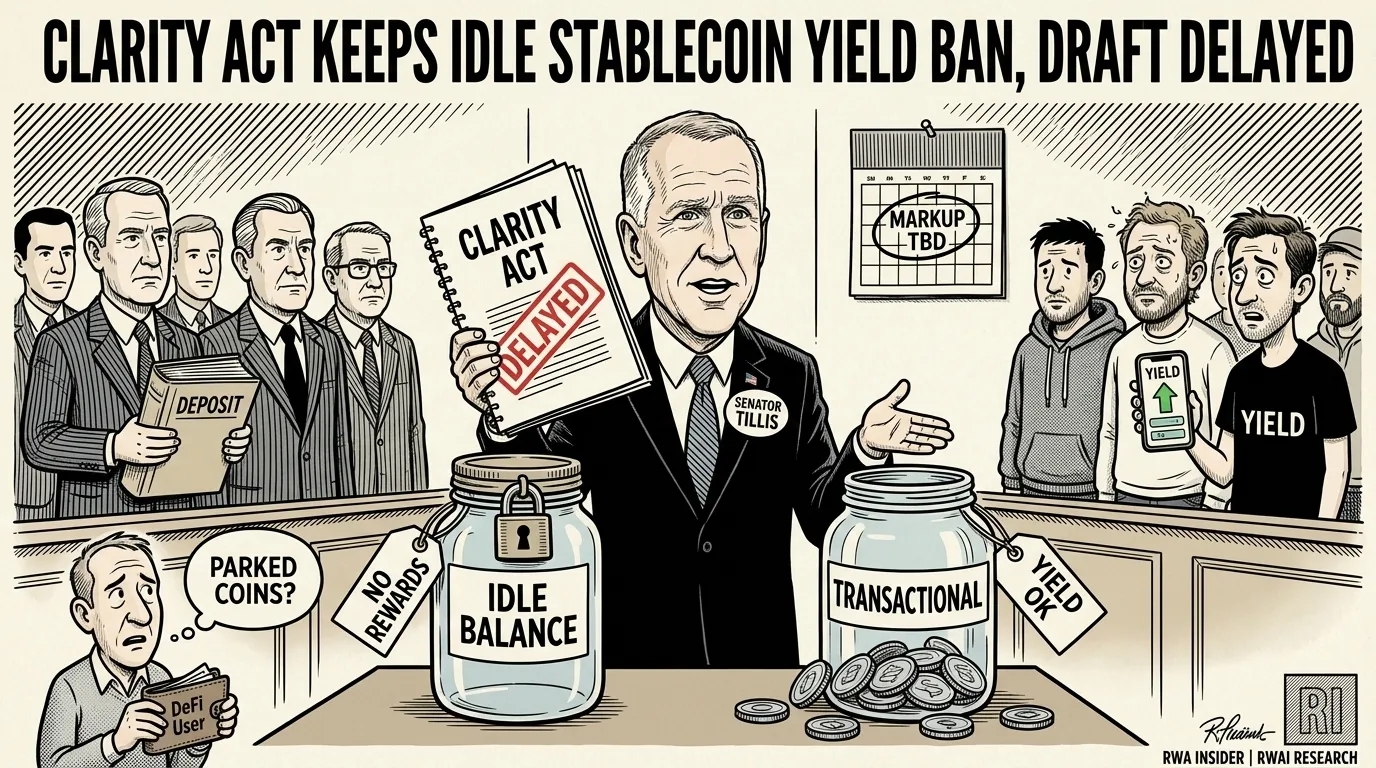
Senator Thom Tillis has delayed the latest CLARITY Act draft on stablecoin yield, holding the text back until the timing of a Banking Committee markup becomes clear. Politico reported the delay, and people briefed on the talks told The Block that the language still bans “rewards on idle stablecoin balances held in accounts” while permitting “yield generated through transactional activity.” For anyone parking stablecoins to earn a passive payout, that single line decides whether the reward survives, or whether your coins now have to work to pay you.
Why Tillis Pulled The CLARITY Act Yield Draft
Tillis had told Politico he planned to release the draft this week, signalling the text was nearly ready.
He pulled it back instead, citing a need for clarity on when the Senate Banking Committee will schedule its markup before he publishes the language.
A person familiar with the discussions told The Block that the text remains under revision, with the legislative team still meeting bank trade associations and crypto companies.
The same source added that substantive changes at this stage would be difficult to make, a sign the idle-balance ban is close to locked in.
The stablecoin yield fight has become the single most contentious issue blocking the bill, which aims to set comprehensive US digital asset rules and already blew past its end-of-2025 target.
Tillis has worked with Senator Angela Alsobrooks to break the deadlock, so far without a public breakthrough.
How GENIUS And CLARITY Split Idle From Active Yield
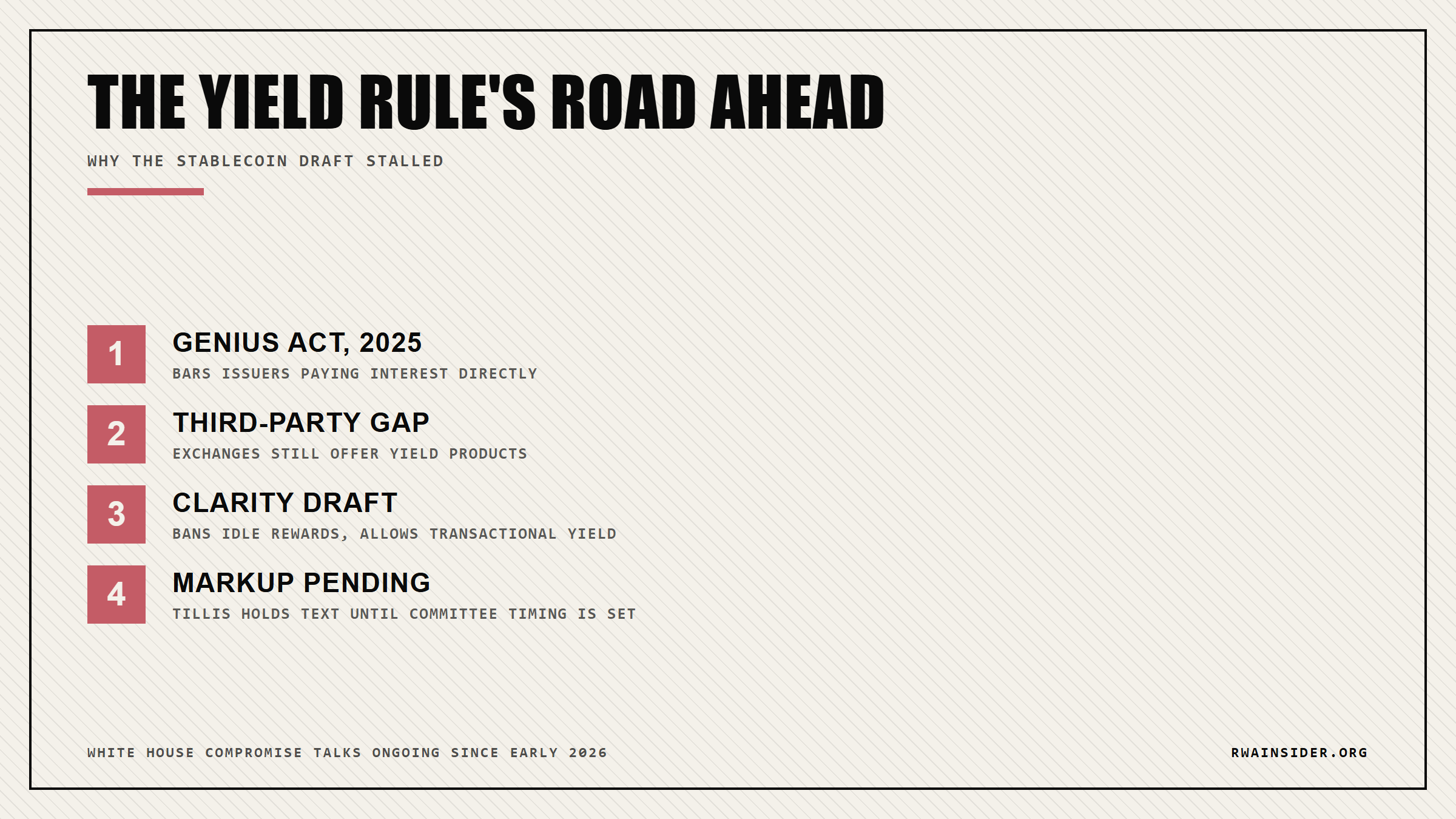
The 2025 GENIUS Act set the floor.
It bars stablecoin issuers from paying interest directly to holders, yet it does not stop third-party platforms, such as exchanges, from running yield products.
The CLARITY Act goes further. Its yield provisions decide whether that third-party channel stays open at all.
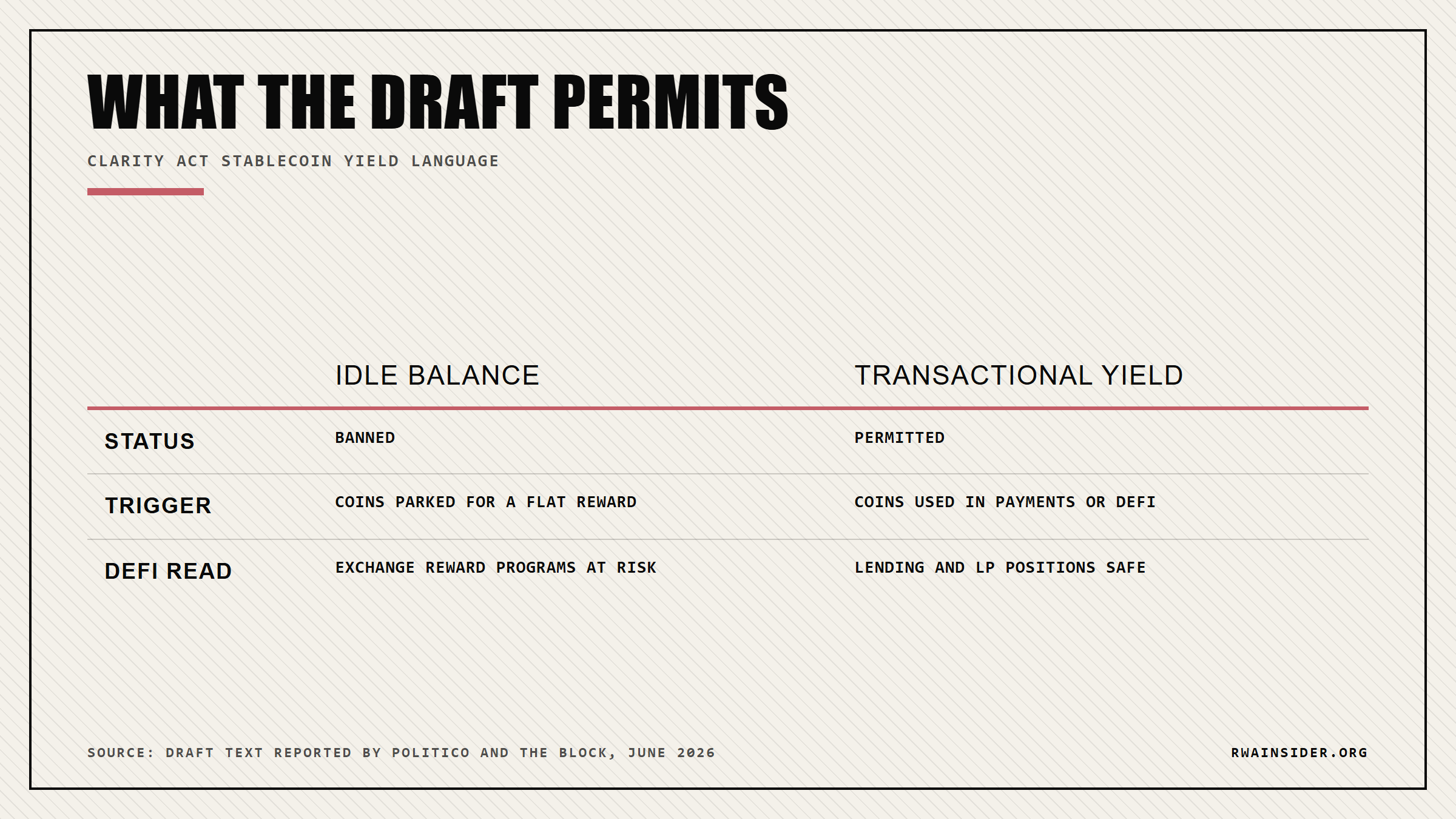
The draft draws its line between idle and transactional. Rewards on coins that simply sit in an account are blocked, while yield earned through activity is allowed.
Transactional activity, in plain terms, covers coins that move: payments, swaps, settlement, or capital deployed into a protocol.
Strip away the statute and this is really about which of your stablecoin habits keep paying: parking coins for a passive payout looks blocked, while putting them to work stays permitted.
For a $1,000 wallet, that distinction is practical, not theoretical.
Supplying USDC to a lending market or adding it to a liquidity pool reads as transactional activity, the kind the draft leaves alone.
An idle balance held on an exchange purely to collect a flat reward is exactly what the language targets.
That split is why the rule matters well beyond Washington, and you can follow how stablecoin rules keep reshaping on-chain yield as the markup nears.
Banks And Coinbase Dig In While The White House Mediates
US banks argue that letting stablecoins pay yield would pull large deposits out of traditional institutions.
Crypto firms, including Coinbase, counter that banning the rewards would choke innovation.
They also argue the shift could open fresh revenue for banks rather than hurt them, reframing the fight as an opportunity the lenders are missing.
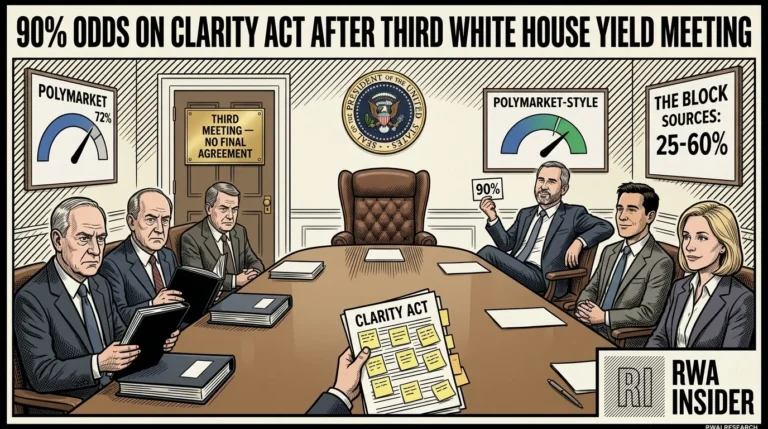
The White House has run multiple closed-door meetings since the start of the year to broker a deal, with no agreement so far.
Both sides remain fixed in their positions, and the bill keeps stalling.
Exchanges that pay rewards on parked stablecoins have the most to lose if the idle-balance ban survives the markup.
Senator Tillis (R-N.C.), who leads the talks with Senator Angela Alsobrooks (D-Md.), now ties the draft’s release to the markup calendar.
Until that date is set, the language nobody has finished arguing over is the language that will govern your stablecoin rewards.
Whether your idle stablecoins keep earning now rests on a markup date that Tillis has not set. Until the draft lands and the committee votes, the passive payout stays in limbo while transactional yield keeps running.
For the backstory on how these negotiations reached a standoff, revisit our read on how the CLARITY Act odds shifted after the White House meetings.