MIM Crashes To $0.50, Abracadabra Hikes Cauldron Rates
Key Points
- Abracadabra’s MIM stablecoin crashed to about $0.50 on Wednesday, roughly half its $1 peg and a 36% drop in 24 hours.
- Abracadabra suspended Curve bribes and is raising rates across every Cauldron after a $100,000 liquidity injection on June 15 failed to hold the peg.
- Holders face a steep discount to exit MIM through thin DEX liquidity, while reserve-backed USDC pays about 2% on Aave with no depeg risk.
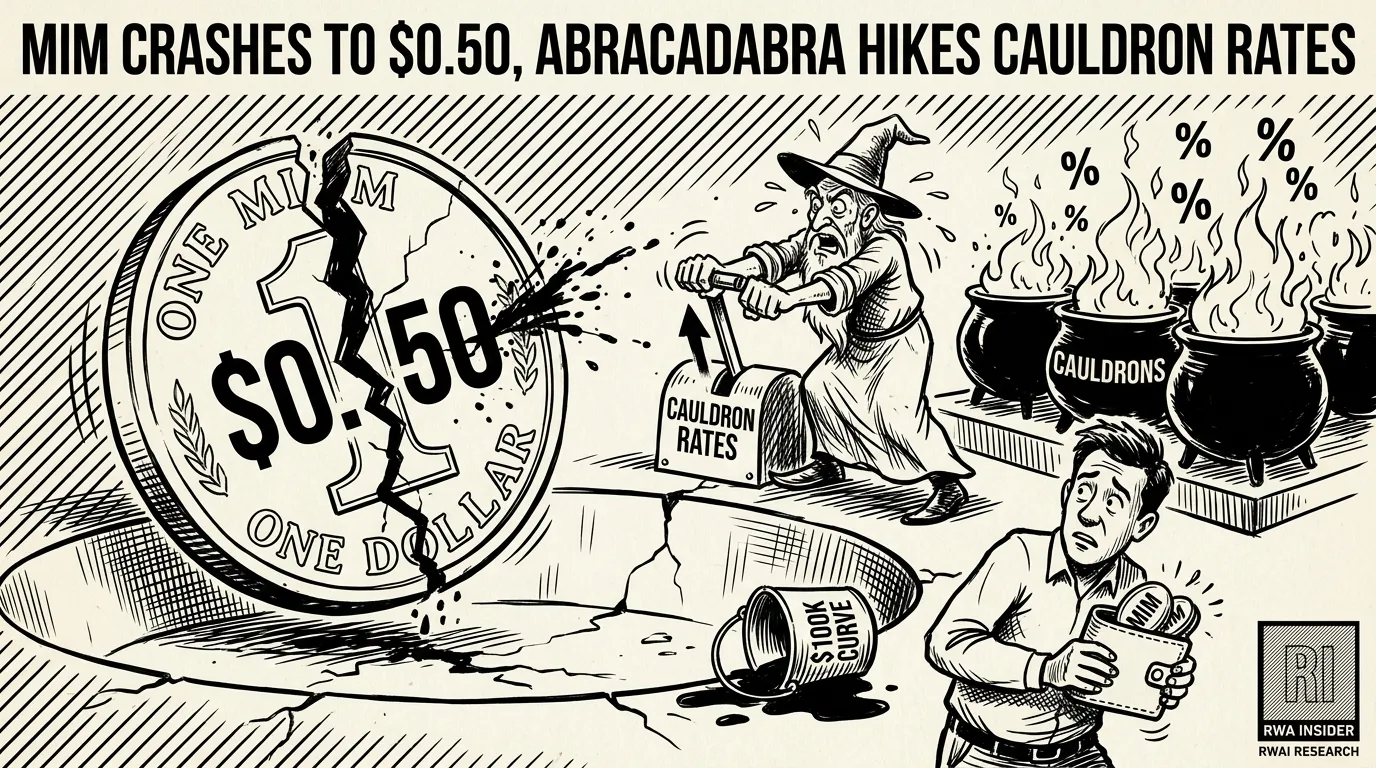
MIM, the dollar-pegged stablecoin from DeFi lending protocol Abracadabra, crashed to around $0.50 on Wednesday, roughly half its $1 target and a drop of about 36% in 24 hours. Abracadabra said it was “taking emergency action,” gradually raising interest rates “across all Cauldrons, including deprecated markets,” to force borrowers to repay and shrink MIM supply. For anyone holding the token or borrowing against it, the squeeze cuts both ways: sell into thin liquidity at a steep discount, or watch your debt get more expensive by the hour.
MIM Crashes Near $0.50 As Abracadabra Declares Emergency
MIM, or Magic Internet Money, is the dollar token of Abracadabra, a protocol where any wallet can mint the stablecoin against yield-bearing collateral.
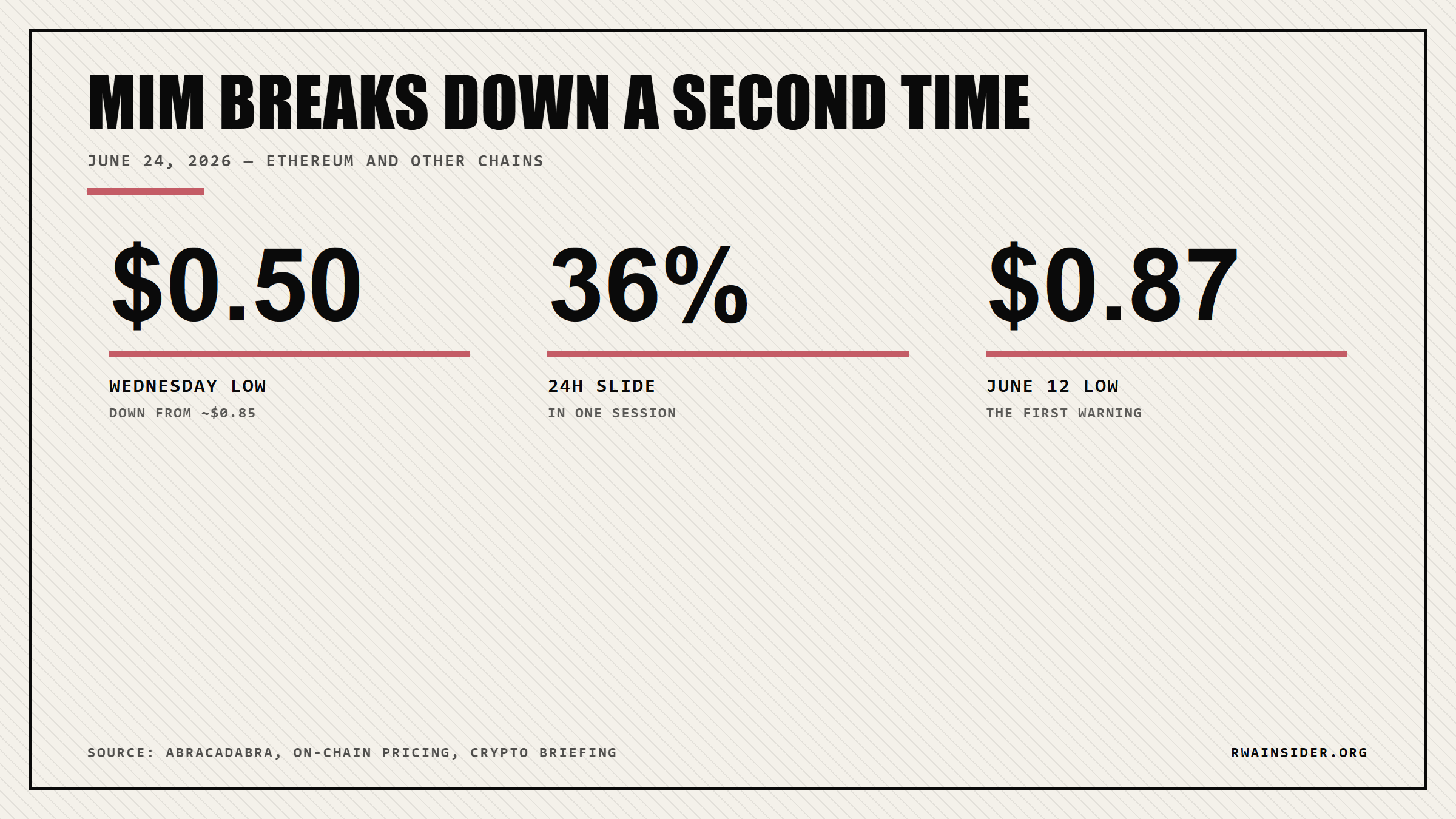
On Wednesday it broke hard, trading near $0.50 on Ethereum after holding the $0.85 to $0.88 range for days. That is a slide of about 36% in 24 hours.
This was not a hack. Abracadabra and outside trackers tied the break to liquidity draining out of MIM’s trading pools, the same pressure that pushed the token to $0.87 two weeks ago.
This time it went twice as deep.
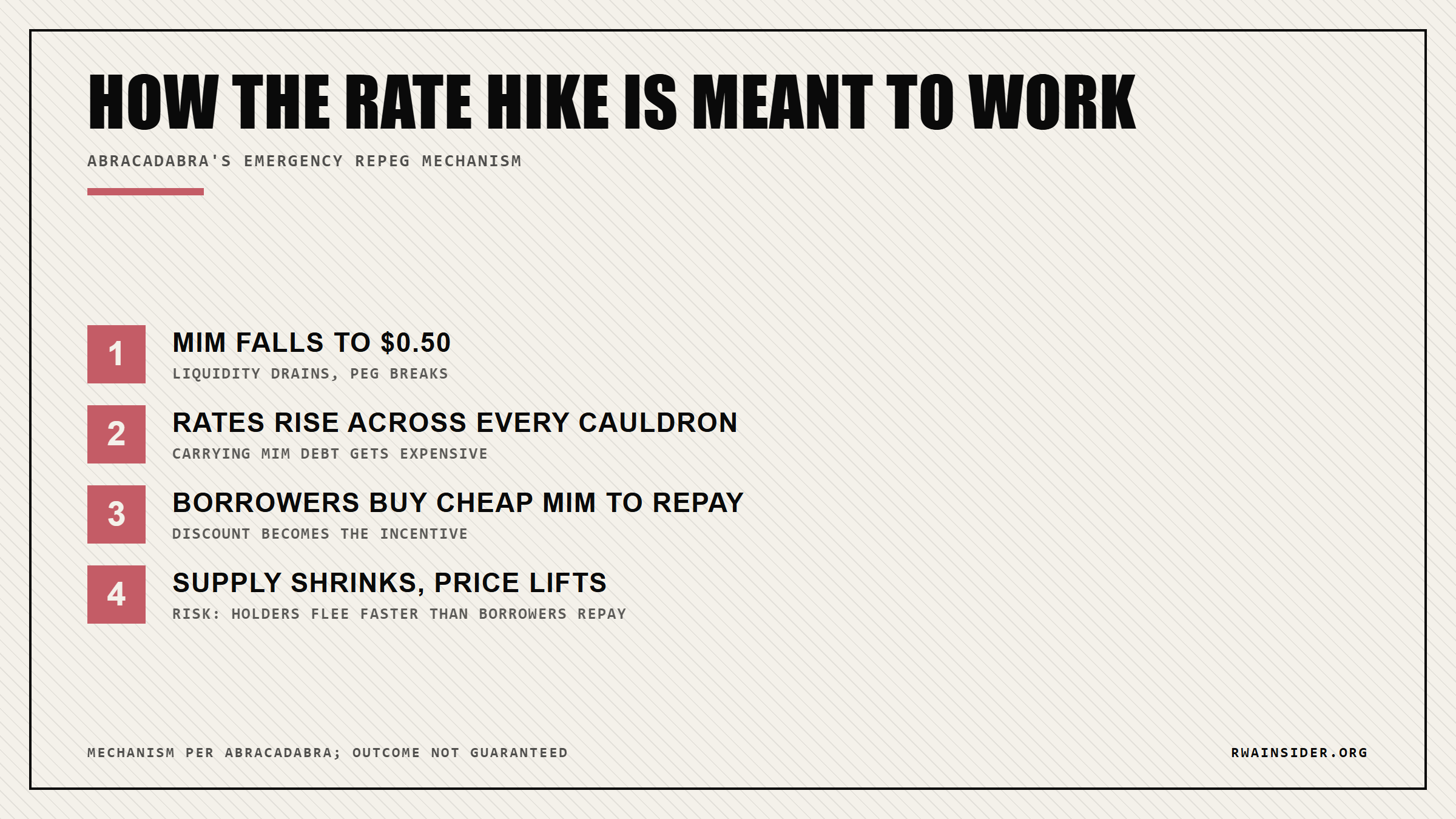
The response was blunt: make holding MIM debt painful enough that borrowers buy the token back to close their loans.
By late Wednesday the hikes had begun to bite, with one tracker putting MIM near $0.95, though the peg was nowhere near secure.
The $100K Curve Fix Failed, So Rates Went Up
Abracadabra tried the obvious fix first. On June 15 it injected $100,000 into a Curve liquidity pool to steady the price.
It was not enough. Within days MIM was cracking again, and this time the protocol escalated.
Alongside the Cauldron rate hikes, Abracadabra suspended direct incentives and Curve bribes until MIM trades at a dollar again, pointing every resource at the peg instead of growth.
The mechanism is a gamble. Higher rates push borrowers to buy discounted MIM and repay, which lifts the price and shrinks supply.
But if holders panic faster than borrowers repay, those same rates can deepen the spiral, forcing distressed sellers into an already thin market.
For a borrower the math is now ugly: keep a MIM loan open and pay rising interest, or buy MIM at a discount to close it and book the gap.
Strip away the emergency-measures language and this is a protocol trying to inflate its way out of a run by charging its own users to unwind.
A reserve-backed dollar like USDC, the kind a wallet earns roughly 2% on through Aave, never needs this maneuver. Every token is redeemable for a dollar in the bank.
RWA Insider keeps watch on which dollars actually stay redeemable when liquidity leaves the room.
Blockaid Already Flagged MIM’s Liquidity Risk
None of this should surprise anyone who watched the first crack.
When MIM slipped to $0.87 on June 12, security firm Blockaid traced that break to thin and imbalanced pool liquidity, not a contract exploit.
RWA Insider flagged the same shallow order book then, in its breakdown of the $0.87 slide. The deeper crash two weeks later is the same problem, left unfixed.
Abracadabra also carries scars. It lost $6.5 million in a January 2024 exploit and roughly $1.7 million in a 2025 incident, so its users already price in risk.
The difference now is that the damage is self-inflicted by design, not the work of an attacker.
For a wallet, the read is simple. Hold MIM, and your exit runs through thin DEX liquidity at a discount the rate hikes are trying to close.
Owe MIM, and the clock is now running against you, because every hour of higher rates makes that debt heavier to carry.
Whether the Cauldron rate hikes repeg MIM or simply accelerate the unwind depends on one race: borrowers buying back discounted debt faster than holders head for the exit. The next few days of pool depth, not the press release, will settle it.
The next time a stablecoin offers a yield that looks too clean, ask what holds the peg when liquidity leaves the room.
Frequently Asked Questions
Why did MIM crash to $0.50?
Abracadabra and outside trackers blamed liquidity draining out of MIM’s trading pools, not a hack or insolvency. With shallow pools, even moderate selling pushed the price to roughly half its dollar peg before recovery efforts began.
Can I still sell MIM, and what will I get for it?
Yes, but you sell into thin liquidity at a discount. MIM traded near $0.50 at its worst and clawed back toward $0.95 as the rate hikes took hold, and selling size into shallow pools pushes the price down further.
What are Abracadabra’s Cauldron rate hikes meant to do?
Cauldrons are Abracadabra’s lending markets, and raising their interest rates makes carrying MIM debt expensive. The goal is to push borrowers to buy back discounted MIM and repay, which lifts the price and shrinks circulating supply.
Is MIM as safe as USDC or USDT?
No. MIM is minted against volatile collateral and depends on pool liquidity to hold its peg, so it can break under stress. USDC and USDT are backed by reserves and redeemable roughly one-to-one, which is why they rarely depeg this way.