
£20K Cap Gone: Bank Of England Sets £40B Stablecoin Ceiling
Key Points
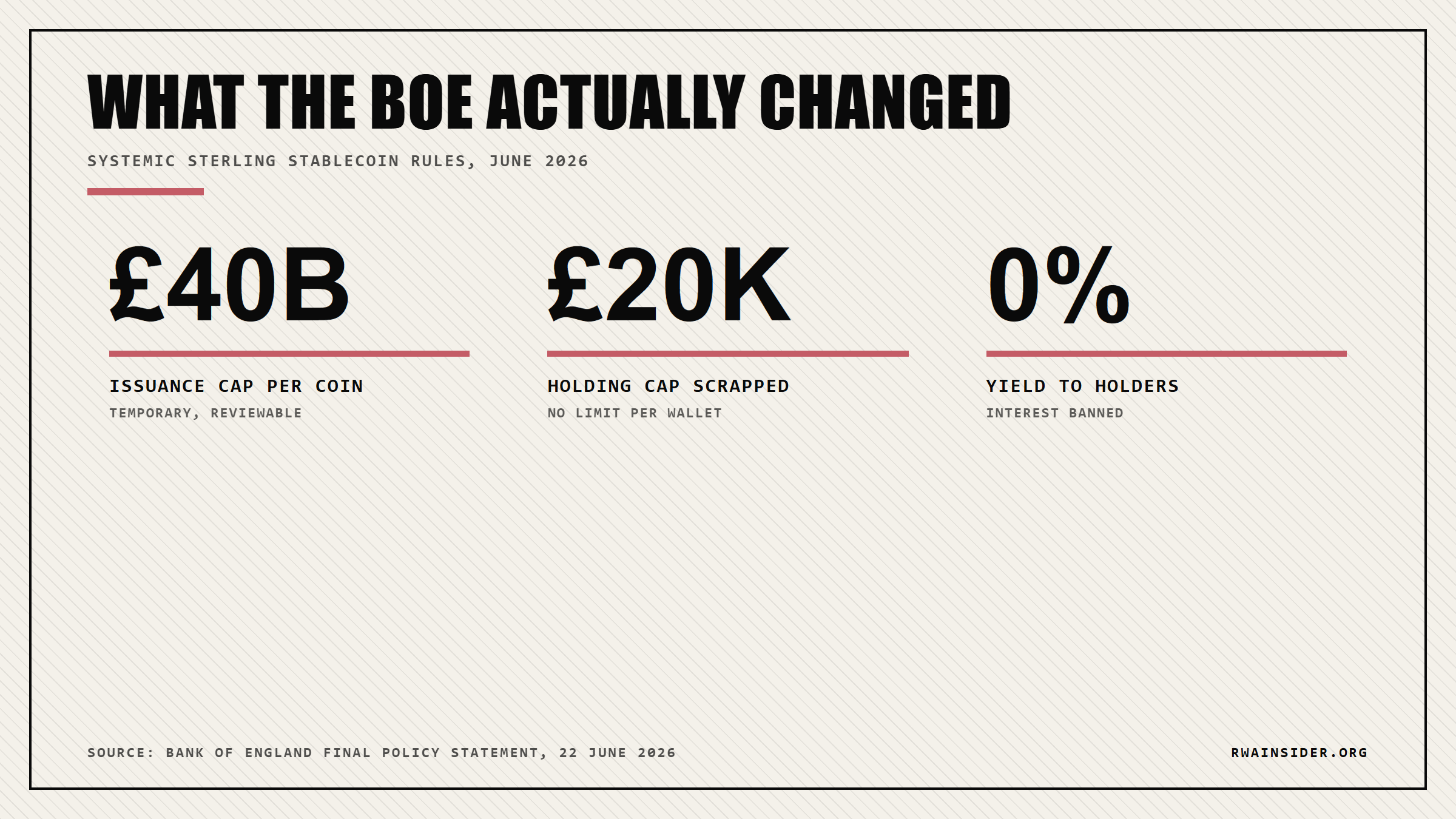
- The Bank of England scrapped its proposed £20,000 per-person stablecoin holding cap, replacing it with a single £40 billion issuance limit per systemic sterling coin.
- Issuers must back coins one-for-one, hold 70% in short-term UK gilts and 30% at the Bank, redeem within 24 hours, and pay holders no yield.
- USDC and USDT sit outside the rules, so any wallet can still hold them uncapped and earn roughly 2% supplying USDC to Aave today.
The Bank of England has dropped the most feared part of its stablecoin plan. On Monday it published final rules for systemic sterling stablecoins, scrapping a proposed £20,000 per-person holding cap and replacing it with a £40 billion issuance ceiling per coin, with no limit on what any wallet can hold. Deputy Governor Sarah Breeden called the new regime “truly world-leading.” For a DeFi user, the real signal sits lower down: regulated sterling coins still cannot pay you a penny of yield, so the dollar stablecoins already in your wallet remain the only ones that earn.
The £20K Cap Dies, £40B Ceiling Arrives
On Monday the Bank of England published its final policy statement and draft Code of Practice for systemic sterling stablecoins.
The headline move: it scrapped the proposed £20,000 per-person holding cap, plus a £10 million business cap, and swapped both for a single £40 billion issuance ceiling per coin.
No wallet faces a limit now. The Bank says the supply-side cap is “cheaper and easier to implement” while “allowing unrestricted use by households and businesses.”
Here is the catch for DeFi. The rules cover only “systemic” coins, so the dollar stablecoins you hold, Tether’s USDT and Circle‘s USDC, stay outside, still under FCA supervision.
That distinction is the whole story for a $1,000 wallet. None of this touches USDC or USDT today; it builds a future lane for regulated pound-pegged coins that do not yet exist.
The 70/30 Split And Your Missing Yield
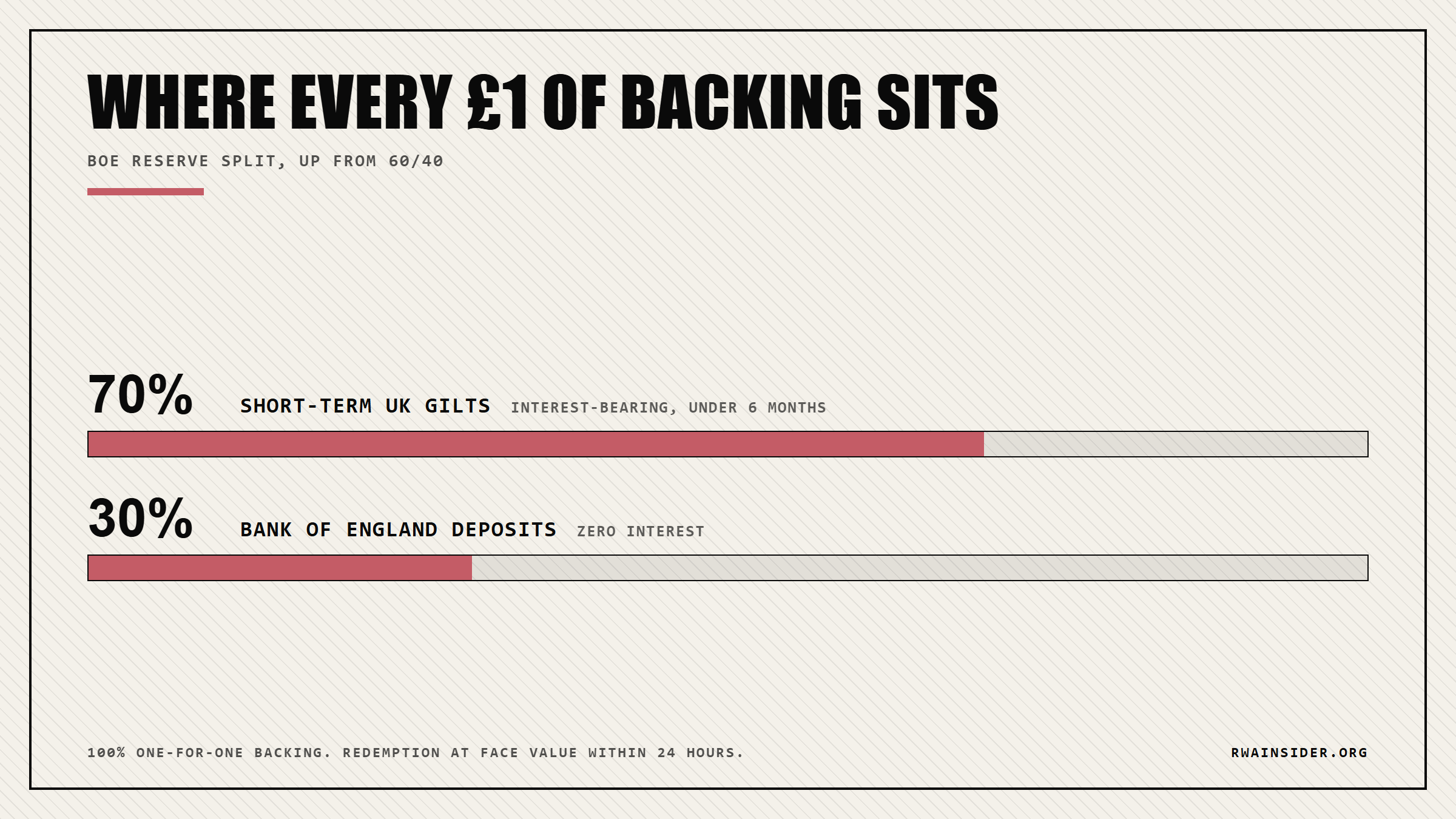
The reserve math is now specific. Issuers must back every coin one-for-one, holding up to 70% in short-term UK gilts and at least 30% in non-interest-bearing deposits at the Bank.
That 70/30 mix, lifted from a proposed 60/40, moves roughly £4 billion into yield-earning assets at full scale. It is the gap between a viable business and a dead one.
Coins must redeem at face value within 24 hours, sit in two separate statutory trusts, and never touch commercial bank deposits.
Here is what issuers keep and you never see: yield. The framework bars any sterling stablecoin from paying interest to holders, mirroring the GENIUS Act and MiCA.
Strip away the press release and a regulated GBP coin is less a savings tool than a payment chip. Supplying USDC to Aave still pays close to 2%, and tokenized Treasuries sit nearer 4%.
So the question every yield-seeker asks answers itself. A coin that legally cannot pay you is not where idle stablecoins should sit while on-chain venues still do.
Three Years Behind MiCA, What DeFi Watches Next
The industry reaction was mixed. Gareth Lodge, principal analyst at Celent, framed the stakes as sovereign rather than technical.
If stablecoin activity grows in other currencies, Lodge warned, “your position in the global economy is diminished as a result.”
Joey Garcia, chief policy officer at Xapo Bank, welcomed the reset but pushed for speed, arguing Britain must “maintain pace” with the US and EU.
Mark Fairless, CEO of ClearBank, was blunter, cautioning that sterling coins risk losing out to dollar and euro rivals while 30% of reserves earn nothing.
The clock is the bigger risk. MiCA has governed EU stablecoins since June 2024 and the GENIUS Act since July 2025, leaving the UK’s 2027 launch target roughly three years behind.
That gap matters because dollar coins already hold about 99% of global supply, and a US-based issuer can freeze funds on command.
You can track how each new rulebook reshapes stablecoin risk while the consultation runs to 22 September and final rules land by end-2026.
Whether sterling stablecoins ever compete depends on issuers swallowing a yield they can never pass on, and 2027 is still a year of consultation away.
The UK is borrowing a yield ban the US already wrote, and DeFi found the workaround fast. See how stablecoins kept paying holders despite the GENIUS Act.
Frequently Asked Questions
Did the Bank of England ban people from holding stablecoins?
No. It dropped the proposed £20,000 per-person and £10 million business holding caps entirely. The only ceiling now is a £40 billion limit on how much of each systemic sterling stablecoin can exist in total, which no individual wallet ever touches.
Do the new UK rules apply to USDC and USDT?
No. USDT and USDC are treated as non-systemic and stay under the Financial Conduct Authority, not this Bank of England regime. UK wallets can still hold and trade them on-chain without a holding cap today.
Can a regulated UK stablecoin pay me yield?
No. The framework bars issuers from paying any interest to holders, the same line the GENIUS Act and MiCA drew. To earn on stablecoins, DeFi users still rely on lending markets like Aave near 2% or tokenized Treasuries closer to 4%.
When will sterling stablecoins actually launch?
The consultation closes on 22 September 2026 and final rules are expected by the end of 2026. Regulated sterling stablecoin issuance is targeted for 2027, once HM Treasury designates a coin as systemic.