$175M Raise Backs Morpho’s $6.9B Lending Network
Key Points
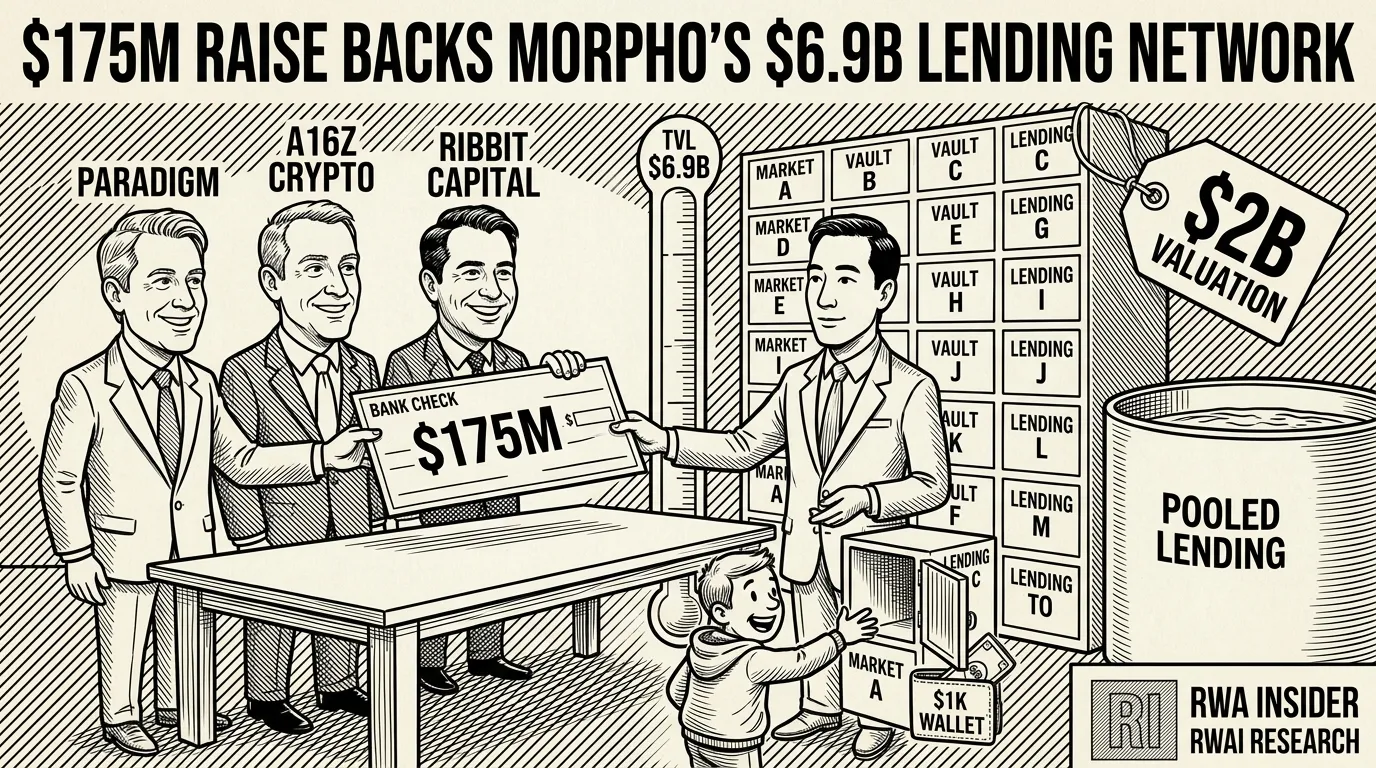
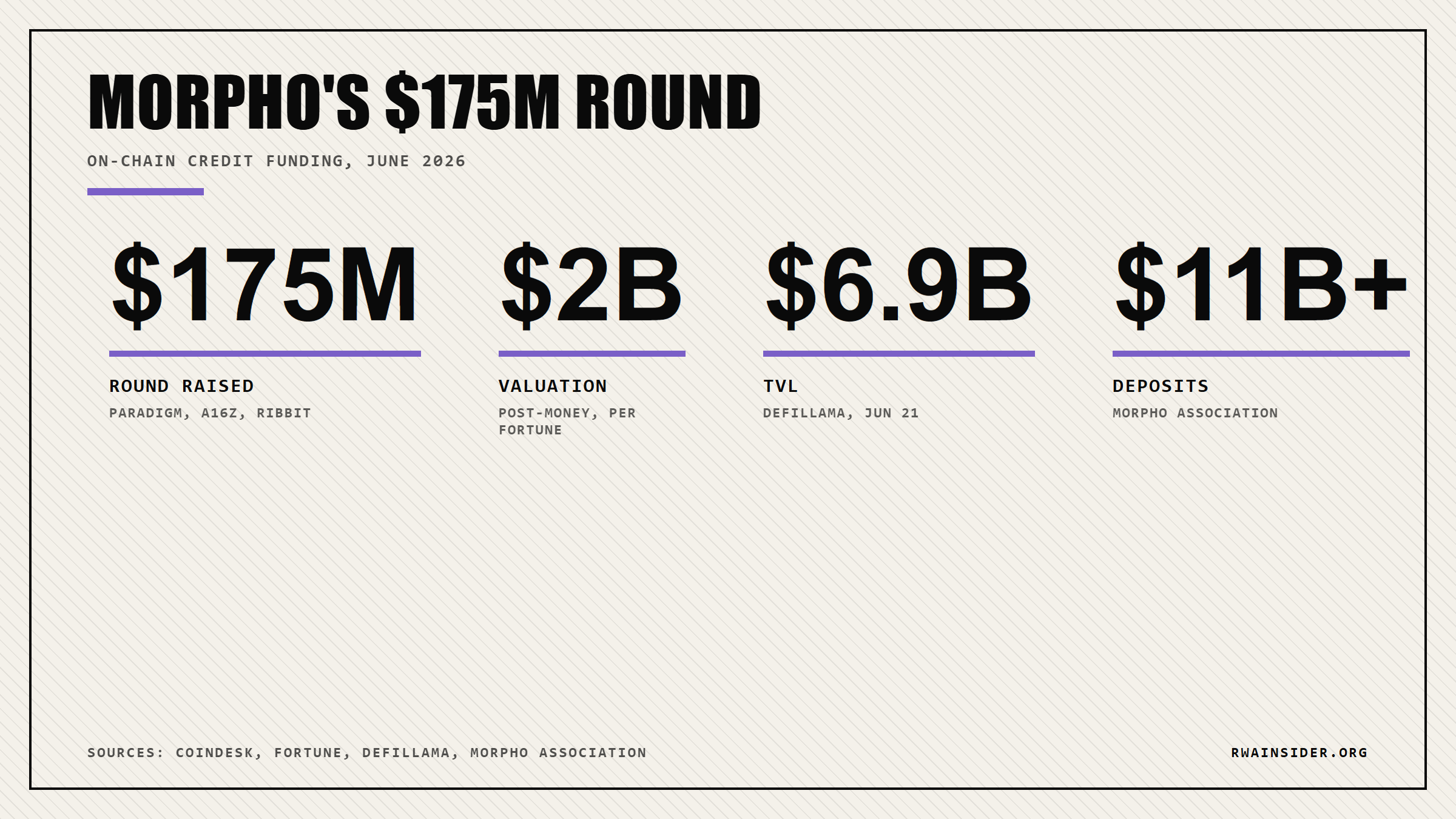
- Morpho raised $175 million in a round co-led by Paradigm, a16z crypto, and Ribbit Capital, with a post-money valuation discussed up to $2 billion.
- The open lending network holds about $6.9 billion in total value locked and more than $11 billion in deposits, per DeFiLlama and Morpho.
- A retail wallet can already lend and borrow in Morpho’s isolated, overcollateralized markets today without holding the MORPHO governance token.
Morpho, the open on-chain lending network, has raised $175 million in a round co-led by Paradigm, a16z crypto, and Ribbit Capital, a headline deal for decentralized credit even as DeFi liquidity has whipsawed. The Morpho Association, the nonprofit that stewards the protocol, says the network now carries “$11B+ in deposits” and counts Coinbase, Kraken, and Binance among its integrations. Crypto Daily, citing CoinDesk and Fortune, put the post-money valuation as high as $2 billion. For a wallet holder, the signal is the backing of rails you can already lend and borrow on without permission.
Paradigm, a16z Co-Lead Morpho’s $175M Round
The $175 million round closed on June 9, co-led by Paradigm, a16z crypto, and Ribbit Capital, with Apollo and VanEck among the backers named on the official funding page.
Morpho is not a bank or a fund. It is an open credit network: a set of permissionless lending markets where anyone can supply assets to earn yield or post collateral to borrow.
Third parties, not a single in-house risk desk, curate the parameters for each isolated market.
The raise gates nothing. The same markets that drew the institutional money are open to a $1,000 wallet today, with no application and no minimum.
Two things drew the capital now.
Morpho points to deposits flowing in through Bitwise, Galaxy, Anchorage Digital, Coinbase, Kraken, and Binance, and to a network that kept lending through the market’s recent squeezes.
Inside Morpho’s $6.9B Of Isolated Markets
DeFiLlama put Morpho’s total value locked near $6.9 billion on June 21, while the protocol reports more than $11 billion in cumulative deposits across its markets.
The two figures are not the same: deposits count gross assets supplied, while total value locked nets out what has been borrowed back.
The MORPHO token climbed 10 to 16 percent as the raise and valuation reports circulated, though price moves track attention, not the health of the underlying credit.
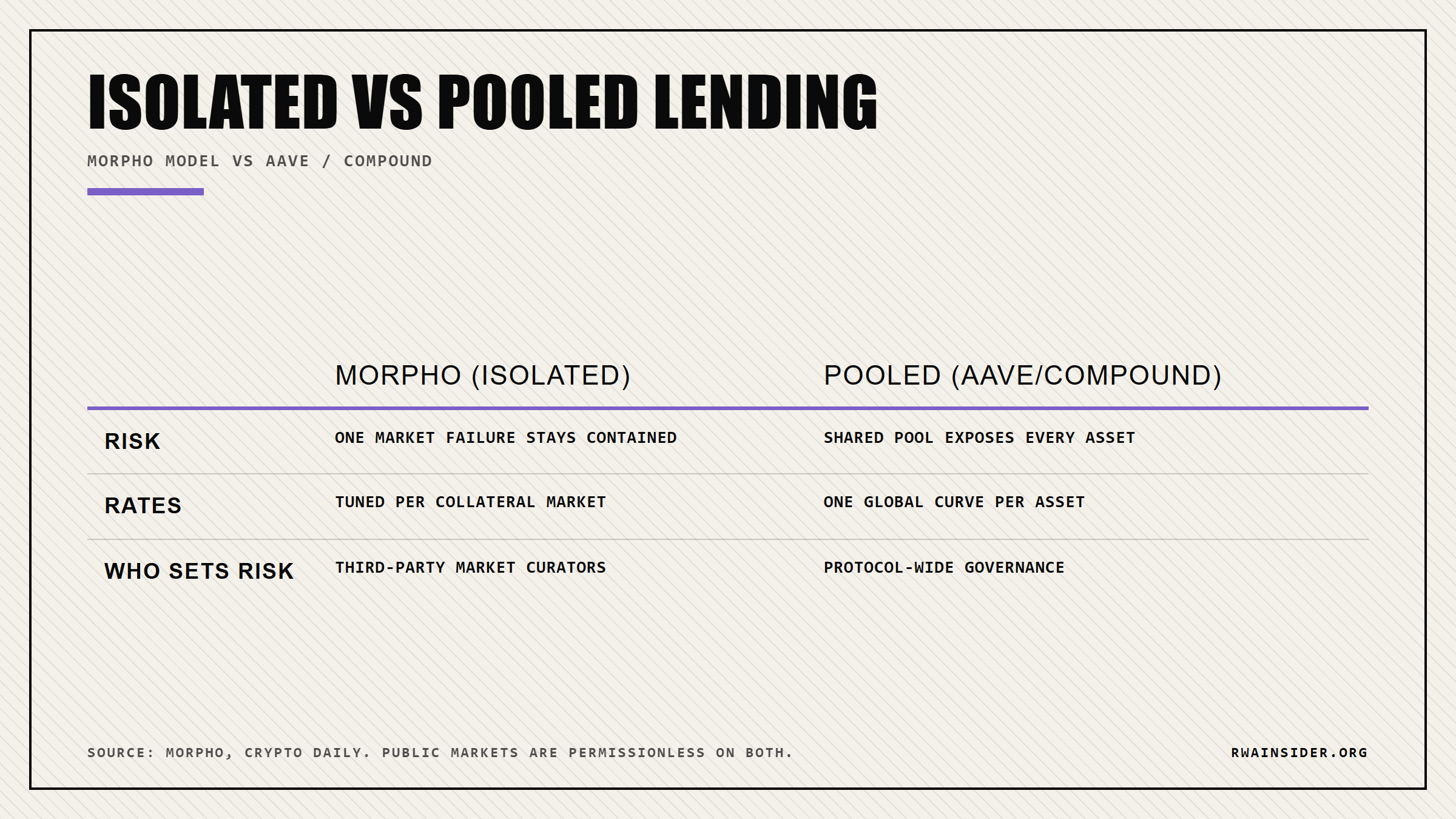
The design is the real story for a wallet holder. Where Aave and Compound pool every lender into shared risk, Morpho splits lending into isolated markets, so one failure cannot drain the rest.
Strip away the funding headline and this is really about who carries the risk: in Morpho’s model it sits with each market’s curator, not with the whole pool.
Rates are set per market, not by one global curve, so there is no single Morpho yield to quote. Supplying USDC to Aave, the usual permissionless benchmark, still pays in the low single digits.
For readers tracking these matchups, RWA Insider runs continuous coverage of the on-chain lending wars.
The $2B Valuation Bet And Curator Risk
The backers themselves are the loudest reaction.
Fortune framed the token-priced structure as a bet on Morpho’s long-term fee generation and network effects rather than short-term hype.
RWA Insider’s earlier breakdown of the modular-lending race made the same point about how isolated lending hands risk to market curators such as Gauntlet and Steakhouse, not a shared pool.
Token holders carry a separate risk, since a deal priced off the token’s monthly average can swing harder than the deposits if incentives and emissions drift from real protocol revenue.
What to watch now is whether that $6.9 billion in deposits proves sticky.
After a liquidity shock, capital chases venues with clean liquidations and transparent oracles, and it leaves just as fast when a market’s risk math looks thin.
Morpho’s pitch leans on where institutions already sit, custodians like Anchorage Digital and exchanges like Coinbase, Kraken, and Binance, the on-ramps that could keep deposits flowing.
The open markets need no KYC, but the regulatory questions over on-chain credit, around custody, disclosure, and who sits on the other side of a loan, have not gone away.
Whether that $6.9 billion stays put depends on how Morpho’s isolated markets behave the next time liquidity dries up. Paradigm and a16z have placed their bet; now the lenders who fund those markets will decide if it holds.
If you lend on-chain, the design under the deposits matters more than the funding headline, so read the market parameters before you supply.
Frequently Asked Questions
Do I need the MORPHO token to lend or borrow on Morpho?
No. The Morpho Association confirms users can lend and borrow in the protocol’s markets without holding the MORPHO token, which is used mainly for governance and incentives. Always check the parameters of the specific market you use.
Who led Morpho’s $175 million funding round?
Paradigm, a16z crypto, and Ribbit Capital co-led the round, with Apollo and VanEck among the named backers. CoinDesk reported the deal on June 9, and Fortune put the post-money valuation as high as $2 billion.
How is Morpho different from Aave or Compound?
Aave and Compound pool every lender into shared markets, so a single bad asset can affect the whole pool. Morpho splits lending into isolated markets curated separately, which contains a failure to one market but pushes risk decisions onto each curator.
Is it safe to lend on Morpho after the raise?
The raise does not change the underlying risk. Morpho markets are overcollateralized and isolated, but lenders still face oracle, liquidation, and smart-contract risk that varies by market. Fresh capital can fund more audits and tooling, not remove the risk.