
Aave V4 Wins 20% To Power Ether.fi’s Visa Card
Key Points
- Ether.fi filed a July 1 proposal to move its EtherFi Cash Visa card onto Aave V4, retiring its in-house Debt Manager engine.
- Aave would take 20% of the market’s Reserve Factor Income in return for the V4 code and an operating license.
- GHO becomes the card’s primary borrowable asset, and any wallet can already borrow GHO on Aave without waiting for the vote.
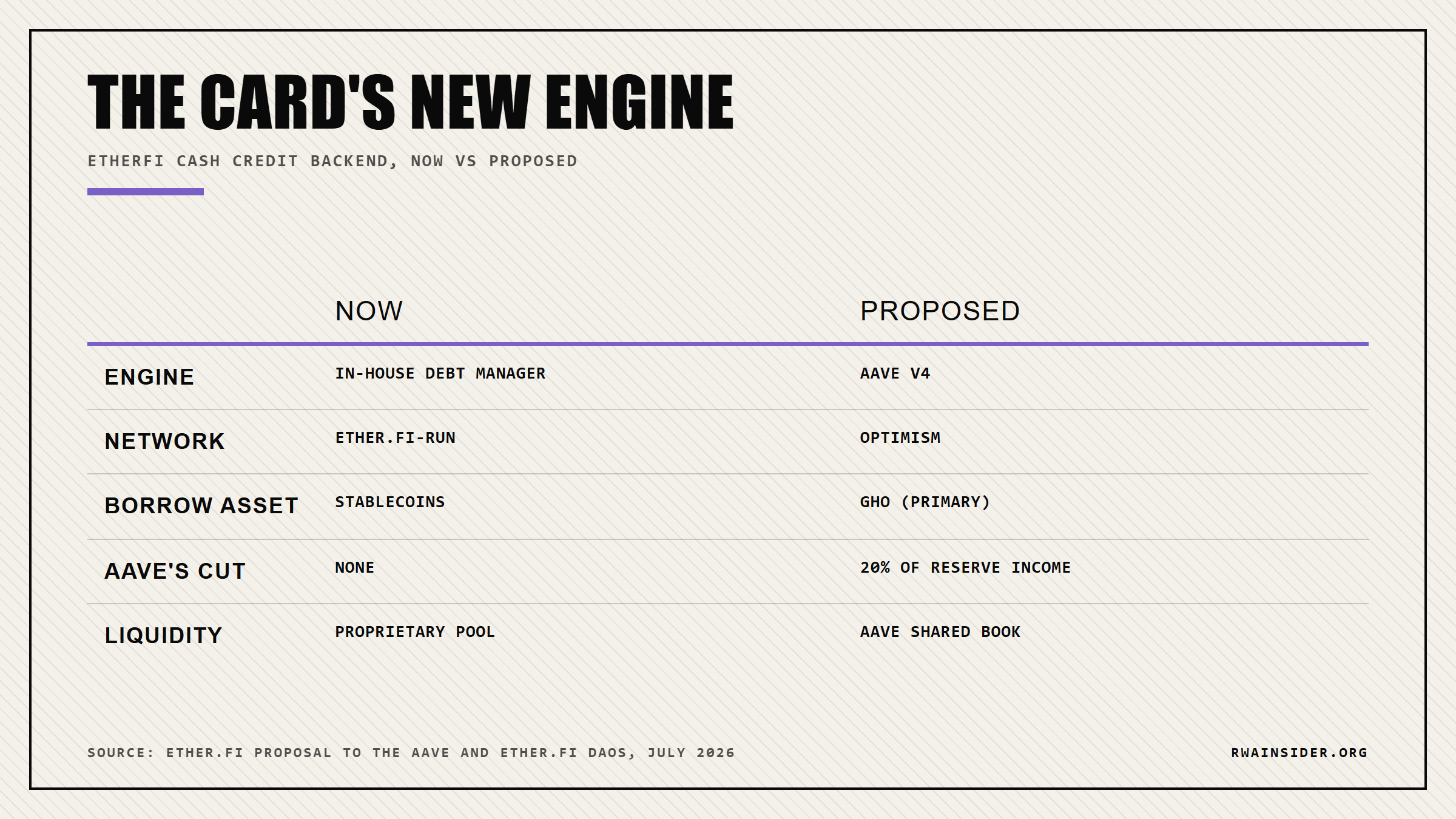
Ether.fi wants Aave to run the credit engine behind its Visa card. In a governance proposal filed to both the Ether.fi and Aave DAOs on July 1, the restaking protocol asked to scrap the in-house Debt Manager powering EtherFi Cash and rebuild it on Aave V4, deployed on Optimism. Ether.fi framed the switch as a way to shed “the increasing complexity and resource demands of operating its own lending engine.” For a wallet holder, it means the card that spends your staked ETH could soon borrow GHO on Aave’s rails.
Ether.fi Hands EtherFi Cash To Aave V4
Ether.fi, the Ethereum restaking protocol, filed the proposal to both DAOs on July 1. It wants to retire the proprietary Debt Manager that underwrites EtherFi Cash and rebuild the card’s credit backend on Aave V4, deployed on Optimism.
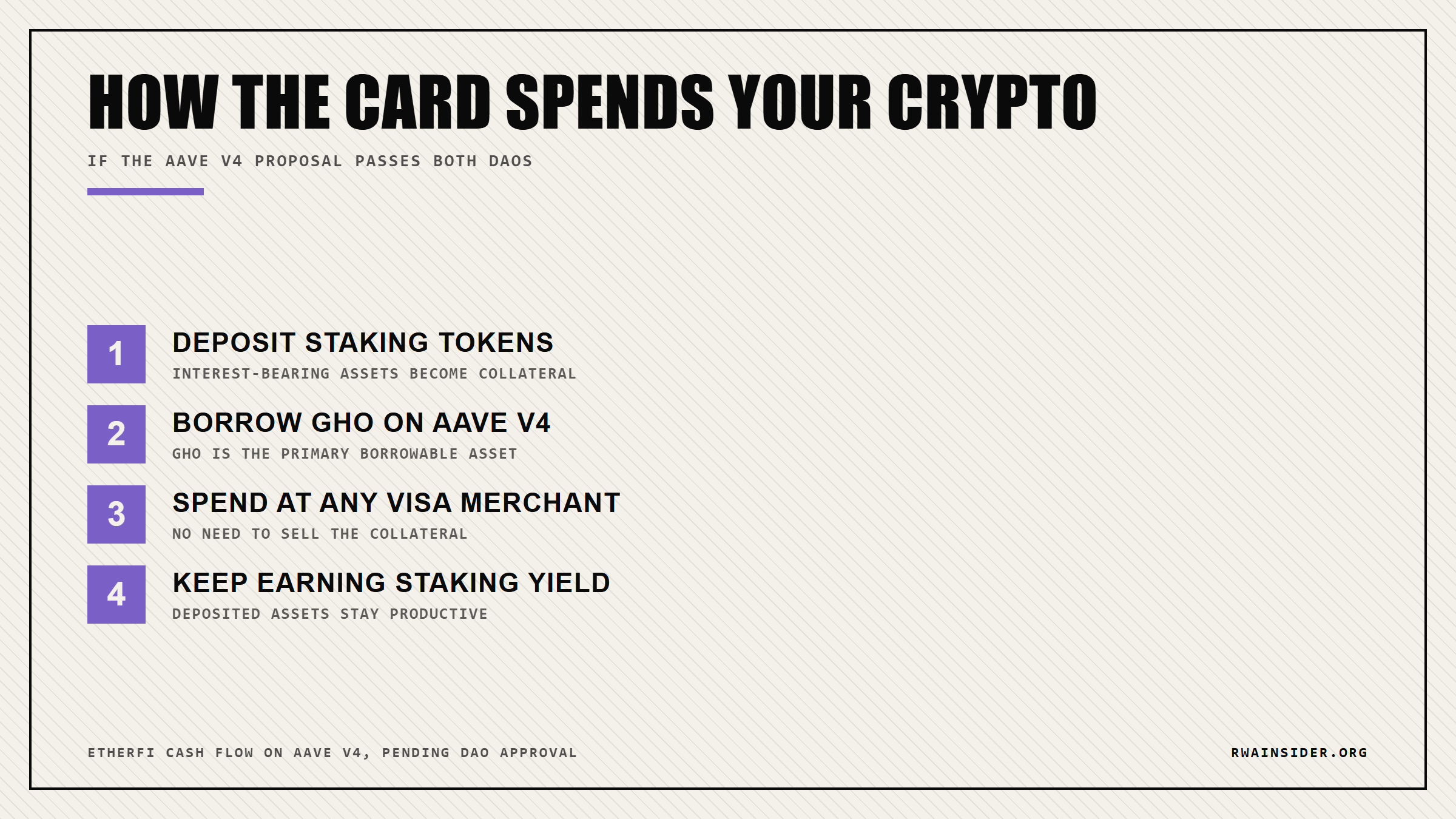
EtherFi Cash is a physical Visa card. Users deposit interest-bearing assets like liquid staking tokens, borrow stablecoins against them, then spend anywhere Visa is accepted without selling the collateral.
Ether.fi says the change is about focus, not cost-cutting. Running a bespoke credit system had grown into a heavy engineering job it would rather hand to a specialist.
Aave V4 only reached Ethereum mainnet recently, built around a hub-and-spoke design with dedicated lending spokes for restaking issuers like Ether.fi. Under the plan, GHO, Aave’s own stablecoin, becomes the primary borrowable asset, and both communities still have to vote it through.
GHO And A 20% Cut: The Deal Terms
The price of the switch is spelled out. In exchange for the V4 deployment source code and an operating license, Aave would collect 20% of the Reserve Factor Income the new market generates.
That is the toll Ether.fi pays to stop running its own lending engine and plug into Aave’s shared liquidity instead. EtherFi Cash already serves tens of thousands of cardholders.
Strip away the governance language and this is really about where your borrowing power comes from: a small in-house pool, or Aave’s much deeper book. GHO would sit at the center of the card, and later proposals could let holders spend GHO directly.
Borrow rates on Aave move with the whole market, so the card’s cost of credit would track Aave’s GHO market rather than a number Ether.fi sets by hand.
You do not have to wait for the card to use that liquidity either. Anyone can already borrow GHO on Aave, and track more DeFi-native coverage of the Aave ecosystem and its RWA markets through our ongoing reporting.
What Aave V4 Wins, And What Could Stall It
For Aave, this is a reach into everyday payments and, as the proposal itself notes, the real-world asset space. A consumer Visa card running on V4 sends a stream of borrowing demand and GHO usage straight into the protocol. It also anchors a marquee app to Optimism.
Stani Kulechov, Aave’s founder, has spent the past year positioning GHO as the network’s native stablecoin and V4 as its next-generation lending stack. A managed white-label market for Ether.fi fits that plan and mirrors the way Aave has been adding tokenized real-world collateral to its lending markets.
The risk is that none of it is settled. The proposal is a temperature check, not a final vote, and it needs approval from both the Ether.fi and Aave DAOs. Letting GHO become directly spendable on the card requires a separate Aave vote, and no timeline has been set.
Watch the Aave forum first. If delegates back the white-label market, the Ether.fi side is likely to follow.
Ether.fi made the first move by asking Aave to run its rails. Whether your card ends up borrowing GHO on V4 now depends on two DAO votes, and the next few weeks of governance will tell.
Keep an eye on both DAO forums before treating a GHO-powered card as a done deal.
Frequently Asked Questions
What is EtherFi Cash and how does the card work?
EtherFi Cash is a physical Visa card from Ether.fi. You deposit interest-bearing crypto such as liquid staking tokens, borrow stablecoins against that collateral, and spend at any Visa merchant without selling your holdings.
What does Aave get from powering EtherFi Cash?
Under the proposal, Aave would receive 20% of the Reserve Factor Income the new market generates, in exchange for the Aave V4 source code and an operating license. Aave’s GHO stablecoin would also become the primary borrowable asset.
Can I borrow GHO on Aave right now?
Yes. GHO is Aave’s native stablecoin and is already borrowable in Aave markets today, so you do not need the EtherFi Cash card or the vote to use it. The proposal would simply route the card’s borrowing through GHO on Aave V4.
Is the Aave V4 integration live yet?
No. It is a temperature-check proposal that still needs approval from both the Ether.fi and Aave DAOs. Making GHO directly spendable on the card would require a separate Aave vote, and no launch timeline has been set.