Cap Pays Up To 7%, Adds Franklin Templeton’s BENJI Fund
Key Points
- Cap cleared Franklin Templeton’s compliance review to support BENJI, a tokenized money market fund holding $2.5 billion onchain, as a deposit asset.
- Cap runs more than $4 billion in cumulative volume and over $350 million in deposits, paying 5 to 7 percent a year to dollar depositors.
- BENJI stays permissioned, so a $1,000 wallet cannot hold it, but Cap’s dollar deposits are the retail route to that 5 to 7 percent yield.
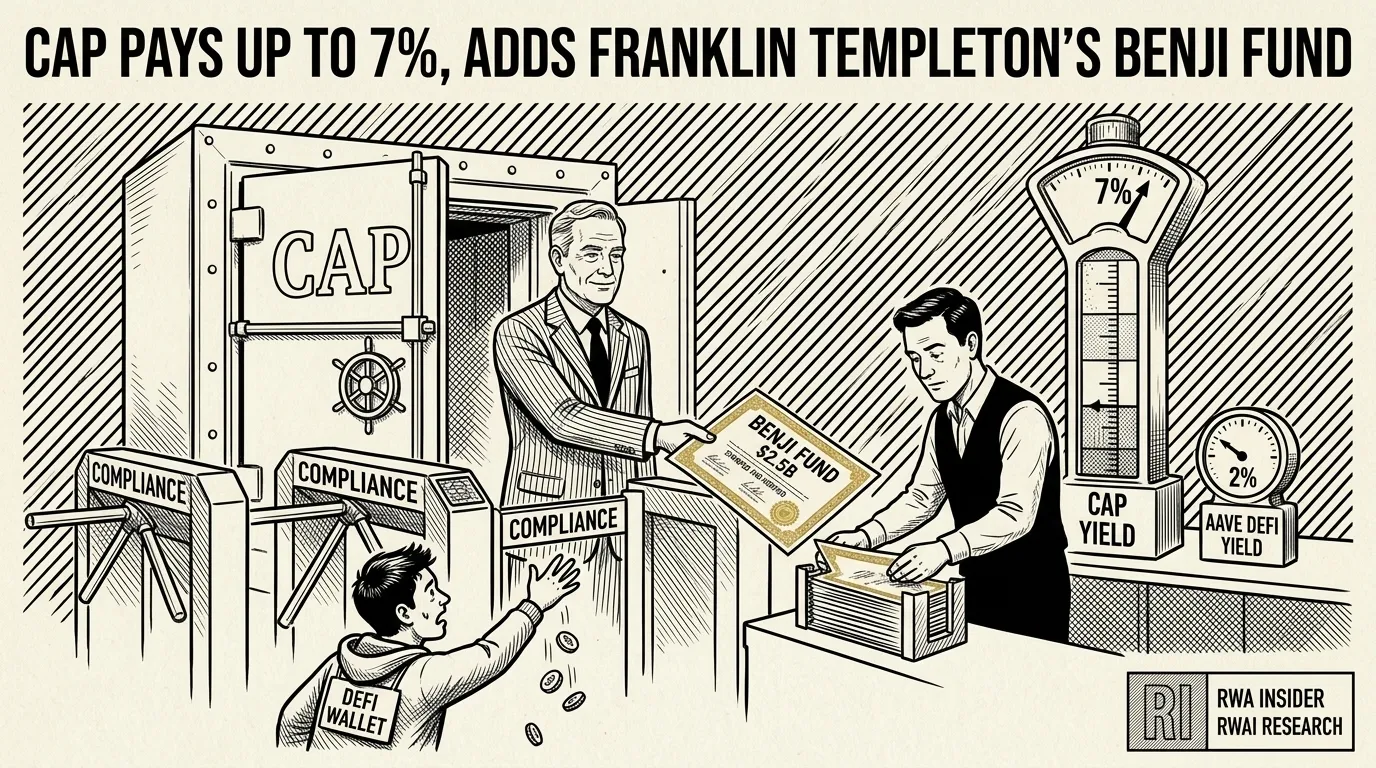
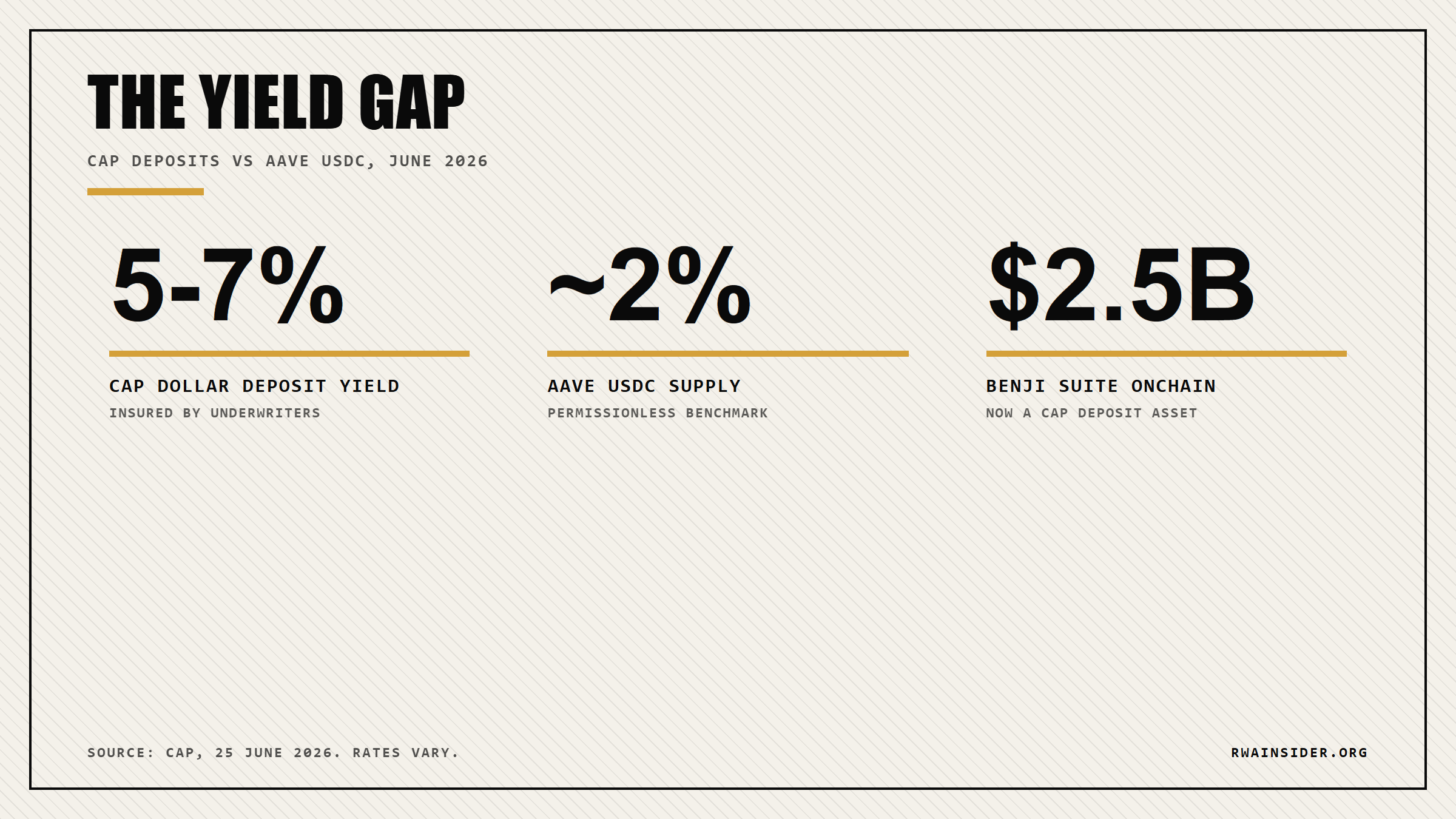
Cap, an onchain private credit platform, has been onboarded as a BENJI client, clearing Franklin Templeton’s full compliance review to support the asset manager’s tokenized money market fund as a deposit asset. The approval “reflects exactly the kind of institutional rigor Cap was built for,” said founder and chief executive Benjamin in a June 25 statement. For a wallet hunting yield, the real signal is not the permissioned fund but the rate Cap already pays dollar depositors: 5 to 7 percent, insured by its underwriters, against roughly 2 percent for supplying USDC to Aave.
Cap Clears Franklin Templeton’s BENJI Compliance Gate
Cap announced on June 25 that it has been onboarded as a BENJI client, the first step toward letting BENJI holders plug the fund into its onchain credit infrastructure.
Cap describes itself as a private credit platform backed by financial guarantees, built to fix the scale, fraud, and illiquidity problems that dog legacy private lending.
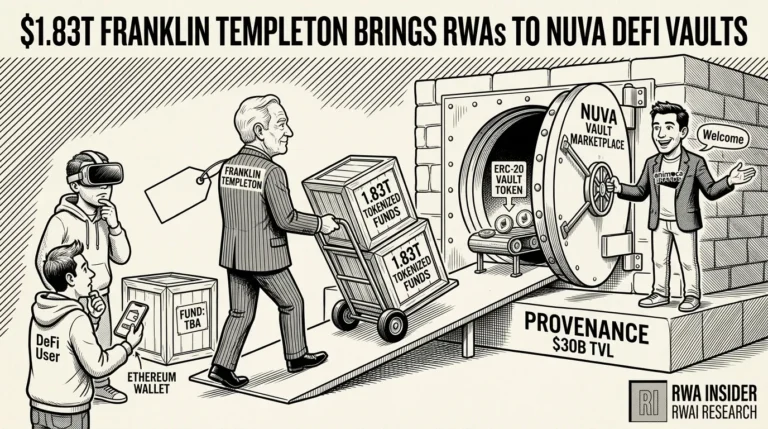
BENJI is Franklin Templeton‘s tokenized money market fund, launched in 2021 and the longest-running in its category. The broader BENJI suite now holds $2.5 billion onchain, with the flagship fund itself above $800 million.
BENJI is a permissioned asset. Every integration must be approved by Franklin Templeton Digital Assets directly, and Cap cleared a full compliance review to become an approved wallet holder.
For DeFi, the wall matters more than the badge. A $1,000 wallet still cannot hold BENJI, but Cap is a protocol retail users can reach, and it just wired itself to a regulated Treasury-yield asset.
Where Cap’s 5% To 7% Deposit Yield Comes From
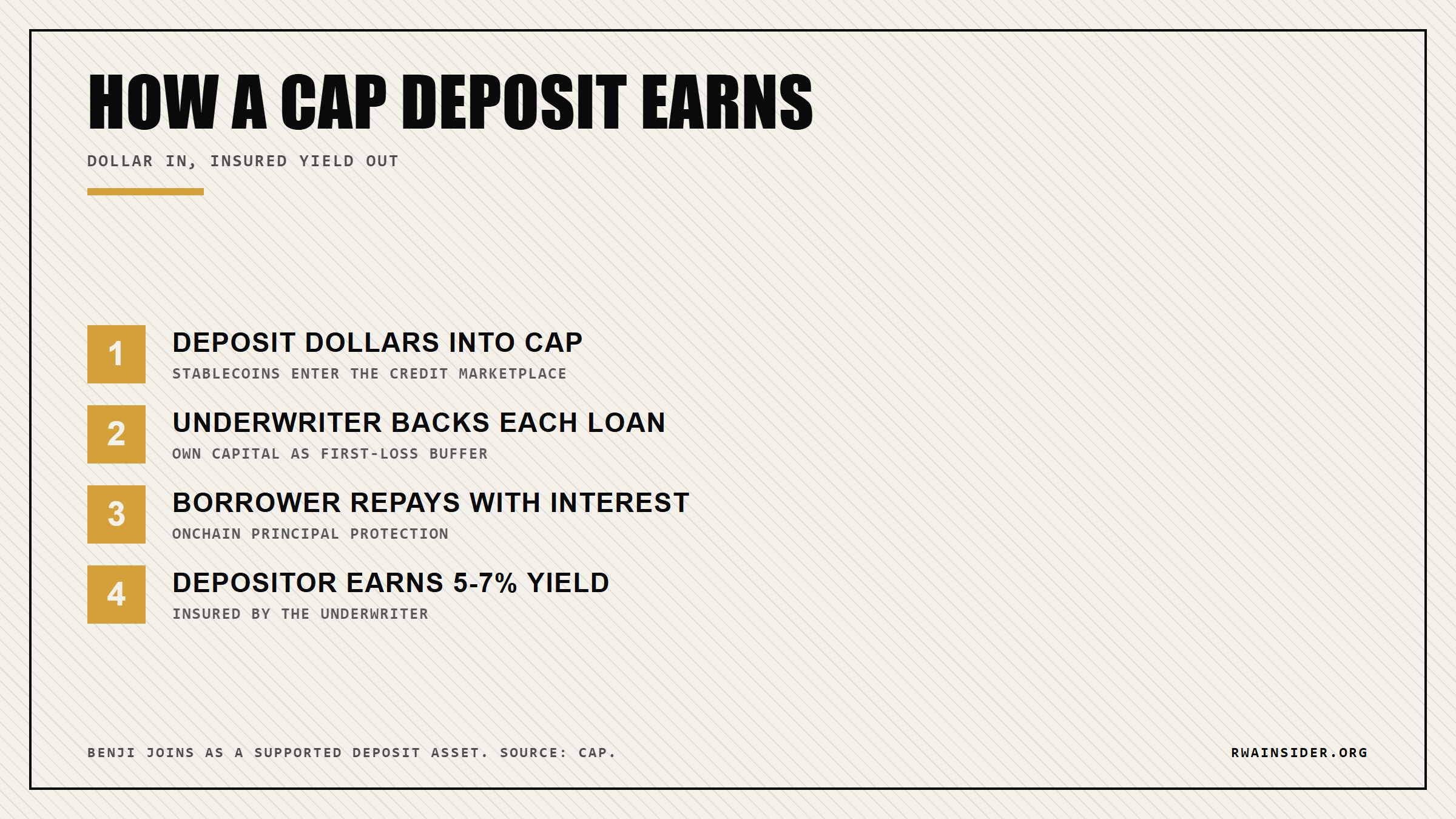
Cap runs an automated credit marketplace where every loan carries onchain principal protection and a dedicated underwriter who stakes their own capital behind the decision.
Dollar depositors sit on top of that structure. They earn a secured yield insured by the underwriters, which Cap currently pegs at 5 to 7 percent a year.
The scale is already real. Cap reports more than $4 billion in cumulative volume and over $350 million in deposits, with Franklin Templeton, Susquehanna, and IMC Trading among its backers.
That rate is the whole story for a yield hunter.
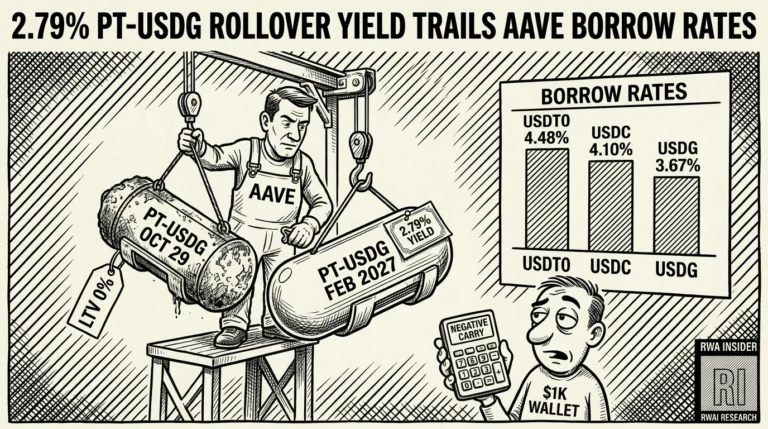
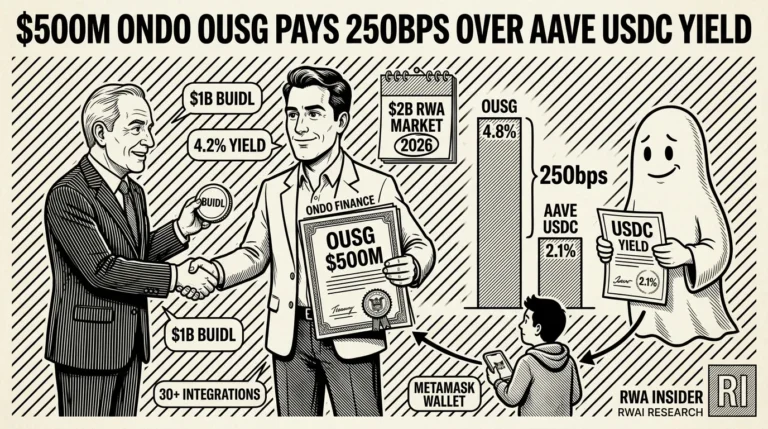
Supplying USDC to Aave pays close to 2 percent today, so Cap’s deposit yield runs three to five points higher in the same onchain push to turn regulated funds into usable DeFi yield.
Even tokenized Treasuries, the usual onchain yardstick, pay roughly 4 percent, so Cap is pitching a private-credit premium on top of the risk-free onchain rate, not just a better savings account.
Strip away the press release and this is really about a wallet earning 5 to 7 percent on dollars, with an underwriter’s capital as the first-loss buffer.
Why Franklin Templeton Seeded Cap, And What Comes Next
This is not a cold partnership. Franklin Templeton Digital Assets led Cap’s seed round in 2025 and has been building digital-asset infrastructure since 2018.
“We’re proud to deepen our work with a partner that has been investing in this infrastructure since the earliest days,” said Benjamin, Cap’s founder and chief executive, framing the BENJI approval as a shared bridge between traditional finance and DeFi.
The catch is that this is a first step, not a live market. The approval lets Cap service BENJI as a deposit asset, but BENJI holders still have to be onboarded before the fund’s Treasury yield actually moves through Cap.
Cap’s pitch is that honest underwriting becomes the dominant strategy when each underwriter has their own capital at risk, which is also what is meant to keep depositor yield insured rather than promotional.
Watch two things next: whether Cap opens this path to permissionless wallets rather than only approved BENJI holders, and how its underwriters price a regulated money-market fund as fresh collateral.
If Cap does open the door, the sharper question is which other onchain credit venues copy the move, since a Franklin Templeton compliance pass is a template other protocols will want.
Whether that 5 to 7 percent holds once BENJI flows in depends on how Cap’s underwriters price the new collateral, and the next deposit window will tell. Until the path opens to permissionless wallets, the regulated yield stays one approval away from the wallets chasing it.
Cap built that $4 billion engine on hard collateral long before this fund arrived; it is worth revisiting how tokenized gold became its first onchain backing and where the yield really comes from.
Frequently Asked Questions
What is Cap and how does it pay 5% to 7% on deposits?
Cap is an onchain private credit platform where each loan has a dedicated underwriter who stakes their own capital behind it. Dollar depositors earn a secured yield, insured by those underwriters, currently 5 to 7 percent a year. The platform reports over $4 billion in cumulative volume and more than $350 million in deposits.
Can I buy BENJI without KYC?
No. BENJI is a permissioned asset, and every integration must be approved by Franklin Templeton Digital Assets directly. A retail wallet cannot hold the fund freely, so Cap’s deposit product, not BENJI itself, is the retail-facing path to its Treasury yield.
How does Cap’s yield compare to Aave?
Supplying USDC to Aave pays roughly 2 percent right now, while Cap advertises 5 to 7 percent on dollar deposits, a three to five point spread. The extra return comes from underwritten private credit rather than money-market supply rates, so the tradeoff is credit and underwriter risk instead of Aave’s pooled liquidity model.
Is my deposit on Cap safe?
Cap says every loan is backed by onchain principal protection and a dedicated underwriter’s own capital as a first-loss buffer, with depositor yield insured by those underwriters. That shifts risk onto underwriter solvency and honest underwriting rather than removing it, so the 5 to 7 percent is a credit return, not a risk-free rate.