XAUm Gold Becomes First Collateral On $4B Cap
Key Points
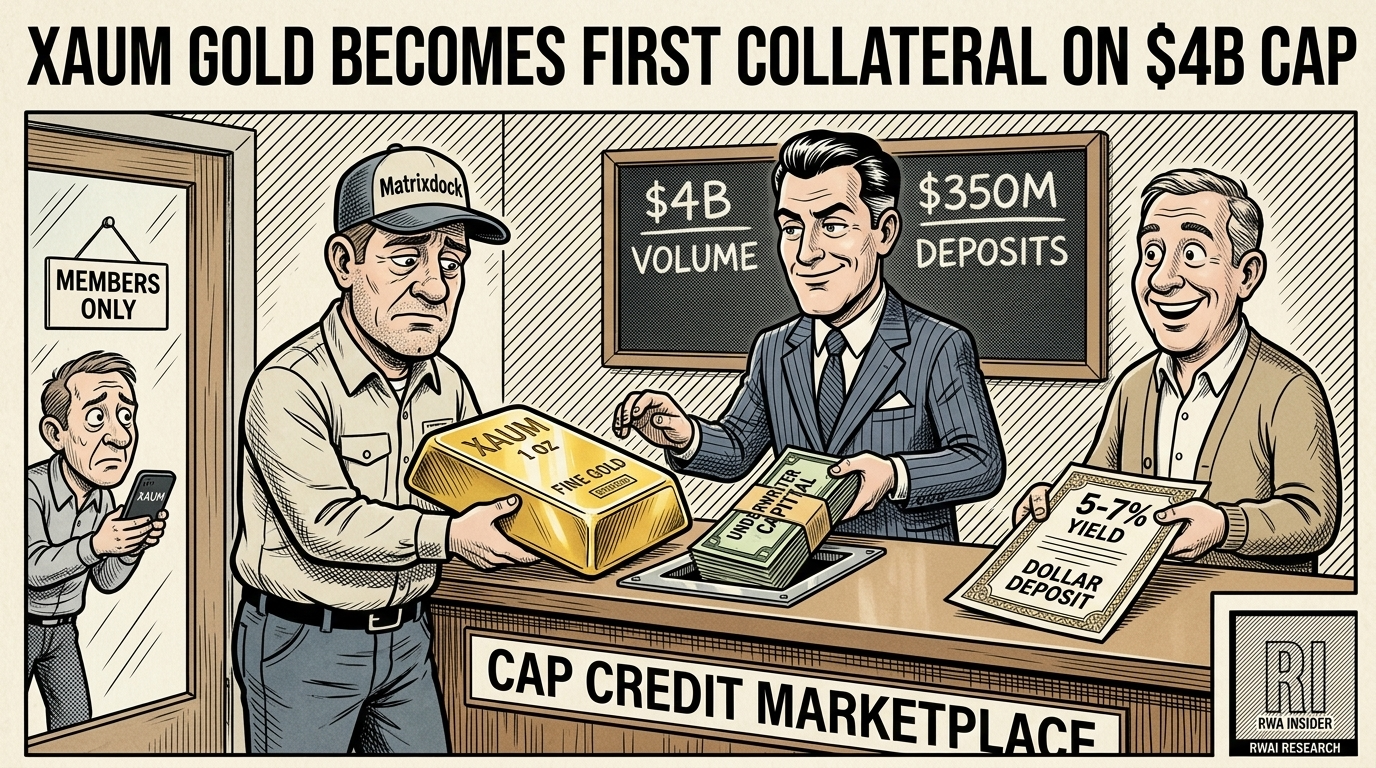
- Cap added Matrixdock’s XAUm tokenized gold as collateral on June 10, the first real-world asset its $4 billion credit protocol accepts to back a loan.
- Cap holds over $350 million in deposits and pays dollar depositors 5% to 7% annualized yield, insured by its named underwriters.
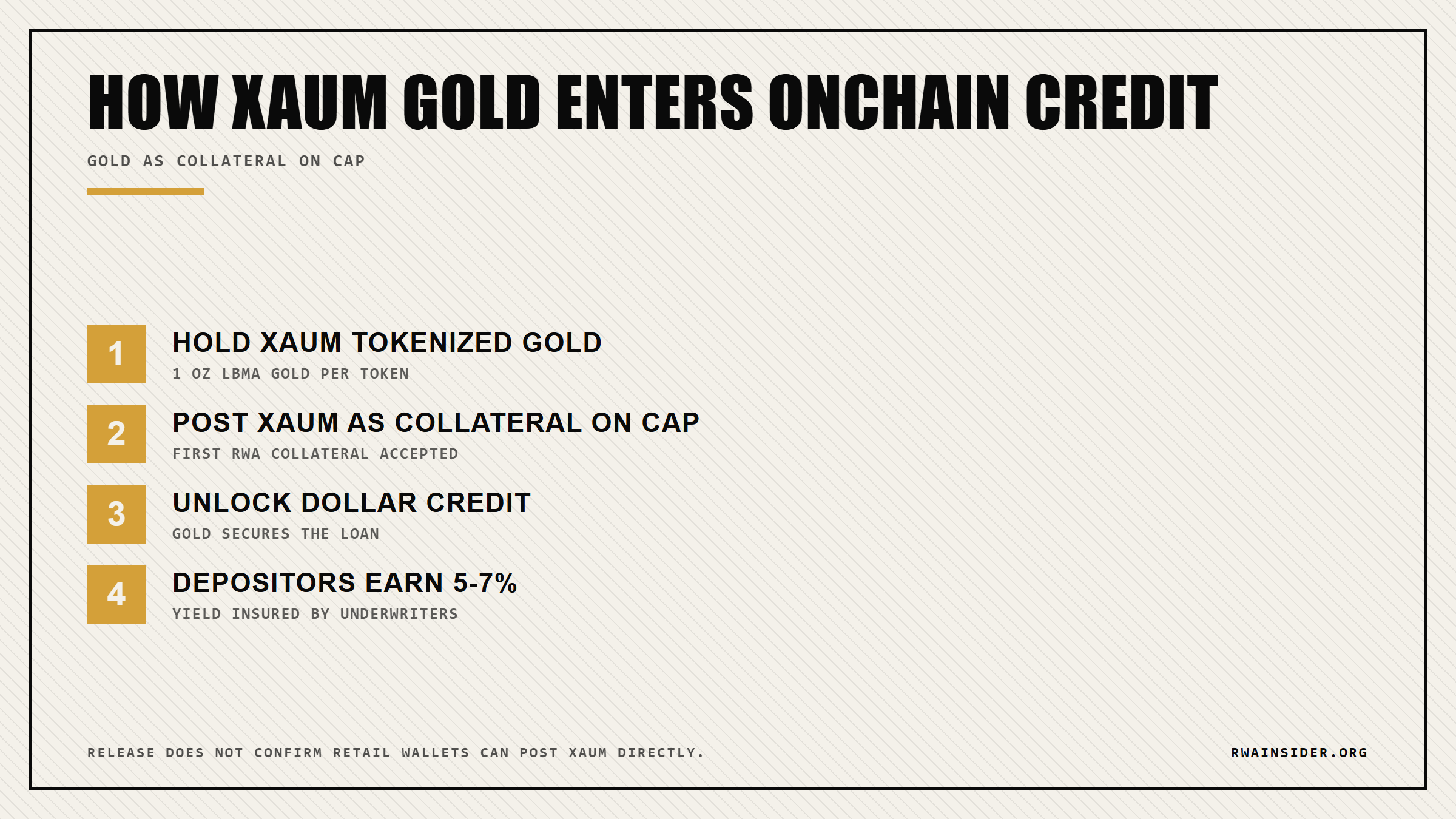
- A wallet holding XAUm, gold backed one-to-one by LBMA bars, can now put it to work in onchain credit instead of sitting idle.
Cap, a private credit platform with more than $4 billion in cumulative volume, added Matrixdock’s XAUm tokenized gold as collateral on June 10, the first real-world asset its protocol accepts to back loans. “Any high-quality asset should be able to support credit when backed by real, escrowed collateral,” said Benjamin Sarquis Peillard, founder and CEO of Cap. For a wallet holding a gold token that used to just sit there, this is the moment it starts doing work, the same path tokenized Treasuries took into DeFi collateral last year.
XAUm Becomes Cap’s First Gold Collateral
On June 10, Cap added XAUm as a supported collateral asset, the first tokenized real-world asset its private credit protocol accepts to back a loan.
XAUm is Matrixdock‘s tokenized gold.
Each token is backed by one troy ounce of 99.99% LBMA-accredited bullion in professional vaults, audited by Bureau Veritas and checked with onchain proof-of-reserves.
Matrixdock was the first issuer in Asia to bring tokenized US Treasury bills on-chain, and XAUm now ranks among the most widely held tokenized gold assets in the market.
The DeFi read is simple. A gold token that used to sit idle can now secure credit, the same shift that turned tokenized Treasuries into working collateral on Aave and Morpho.
One caveat keeps this honest. Cap is a private credit platform run by named institutional underwriters, not a permissionless money market.
The release does not confirm whether a self-custody wallet can post XAUm directly yet.
Where Cap’s 5% To 7% Yield Sits Vs Aave
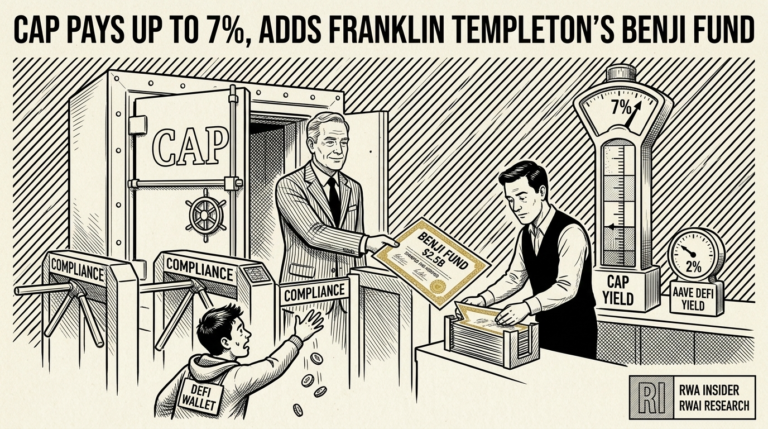
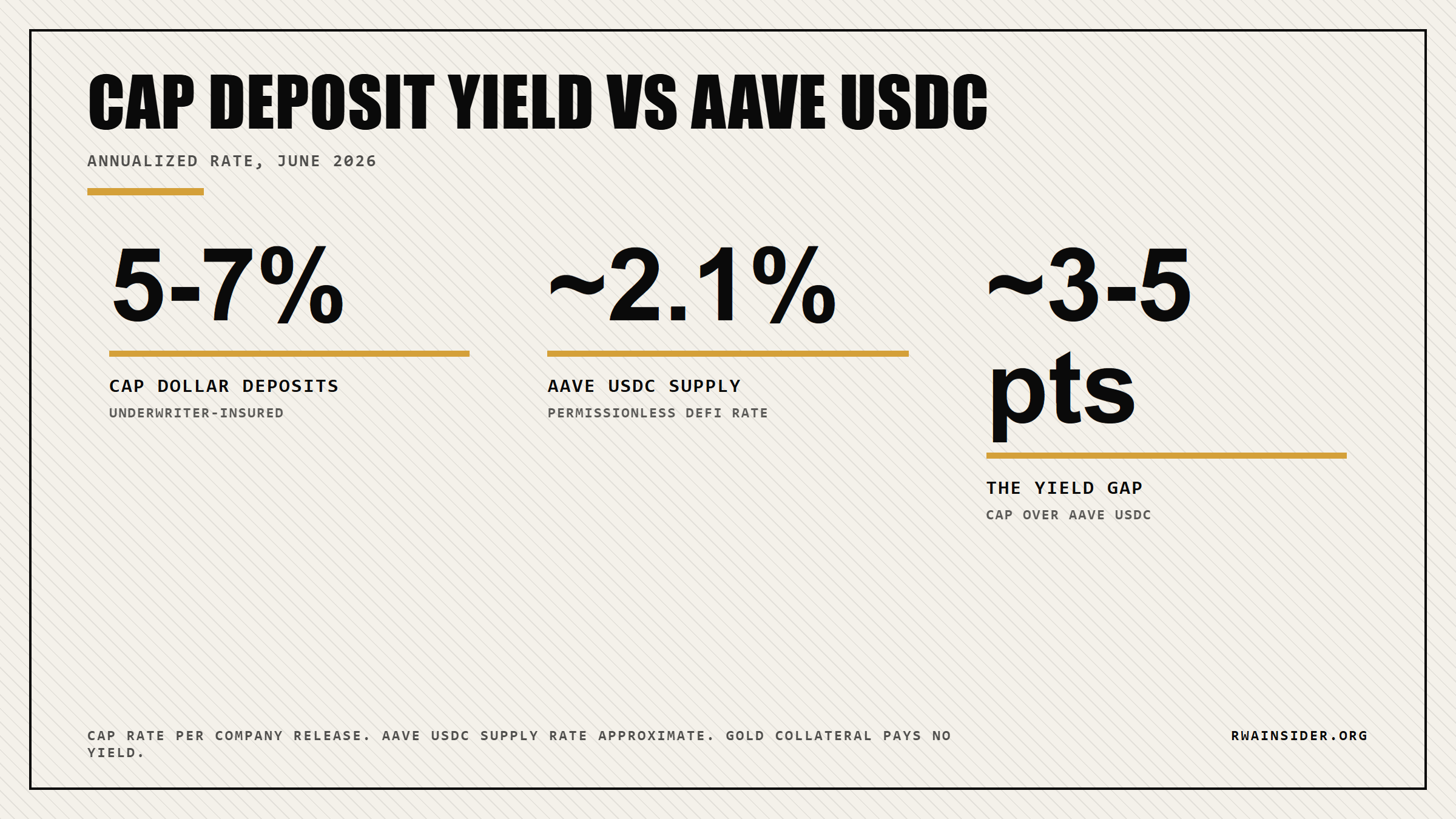
Cap reports more than $4 billion in cumulative volume, over $350 million in deposits, and 5% to 7% annualized yield on dollar deposits.
That $4 billion is lifetime platform volume, not the size of the gold deal, which neither company disclosed.
The yield comes from Cap’s underwriter model. Every loan carries a dedicated underwriter who puts their own capital behind the call, and depositors earn a secured rate the underwriters insure.
Set that against open DeFi and the spread is real. Cap’s 5% to 7% on dollars sits well above the roughly 2.1% a wallet earns supplying USDC on Aave.
Cap trades permissionless access for underwriter protection to get there. You can compare yields across tokenized RWA markets to see how wide that range runs.
Strip away the press release and this is really about gold finally earning its keep: not paying a coupon, but unlocking dollars a holder can redeploy.
What Gold Collateral Unlocks Next On Cap
Cap founder and CEO Benjamin Sarquis Peillard framed the move as gold waking up.
“Gold has served as a reserve asset for centuries,” he said. “Now it can actively participate in onchain credit markets.”
The backers give the claim weight. Cap counts Franklin Templeton, Susquehanna, and IMC Trading among its investors, names that rarely sit behind a one-off experiment.
For a wallet holder, the question that matters is access. XAUm already exists as an on-chain token, so the asset is reachable.
What is not yet clear is whether retail can post it on Cap, or whether that door stays open only to the platform’s underwriters.
Watch what Matrixdock plugs in next. The same issuer mints XAGm tokenized silver and STBT tokenized Treasuries, both obvious candidates to follow gold into Cap’s collateral set.
Whether a $1,000 wallet can post XAUm on Cap directly, or whether gold collateral stays an underwriter’s privilege, is the detail that decides if this reads as DeFi or as private credit wearing an onchain badge. The next assets Matrixdock connects will show which way it leans.
For the bigger picture on how tokenized gold moved from a niche wrapper to billions in on-chain volume, read our breakdown of gold tokens overtaking the ETF trade.
Frequently Asked Questions
What is XAUm and how is it backed?
XAUm is Matrixdock’s tokenized gold. Each token represents one troy ounce of 99.99% purity LBMA-accredited gold held in professional vaults. It is backed by independent audits from Bureau Veritas alongside onchain proof-of-reserves.
Can I use XAUm as collateral in DeFi?
After this integration, XAUm is accepted as collateral on Cap’s credit platform. The announcement does not confirm whether a retail self-custody wallet can post it directly, since Cap runs an underwriter-backed private credit model rather than an open money market.
How much yield does Cap pay on deposits?
Cap reports 5% to 7% annualized yield on dollar deposits, a rate its underwriters insure by putting their own capital behind each loan. The gold collateral itself pays no yield; it secures borrowing rather than producing income.
How does Cap’s yield compare to Aave?
Cap’s 5% to 7% on dollar deposits sits above the roughly 2.1% a wallet earns supplying USDC on Aave. The trade-off is access and risk: Cap is gated private credit with underwriter insurance, while Aave is permissionless and open to any wallet.