$5.8M Canton Unlock Skips Selloff On Burn-Mint Model
Key Points
- Canton released more than $5.8 million worth of its CC token into circulation over 24 hours, a supply unlock traders expected to pressure the price.
- CC trading volume climbed about $10 million in a week to roughly $73 million, yet the token avoided the selloff an unlock usually brings.
- Canton’s burn-mint model ties CC supply to real network usage, so holding CC bets on institutional RWA settlement, not a vesting calendar.
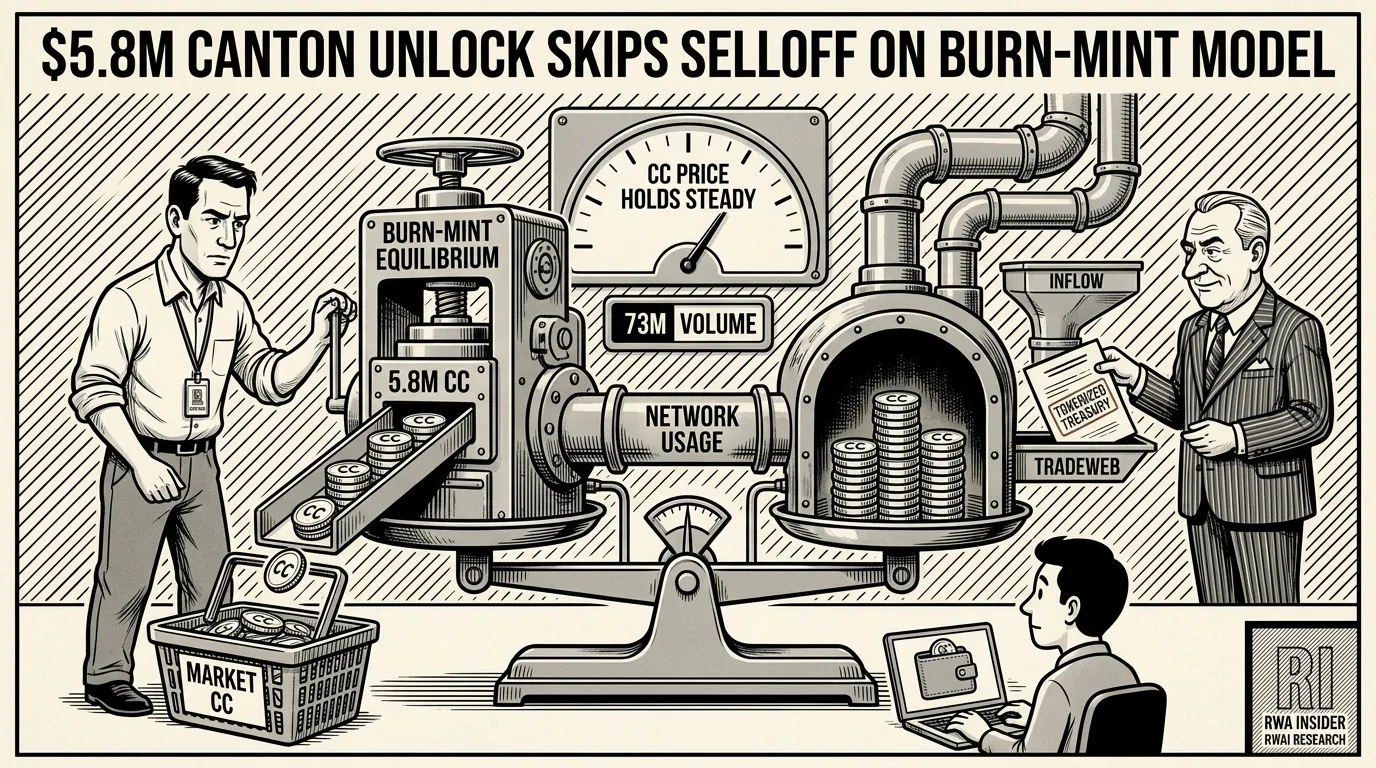
Canton released more than $5.8 million worth of its CC token into circulation in one 24-hour window on July 2, the kind of unlock that usually hands traders a reason to sell. AMBCrypto flagged the move using DefiLlama and Token Terminal data, as CC’s weekly trading volume was already climbing. Yet the price barely flinched, and the reason matters for anyone holding CC: Canton runs what its economics call a “burn-mint equilibrium” model that keeps token supply “aligned with real network activity,” so the more institutions settle real-world assets on the chain, the softer an unlock lands.
Canton’s $5.8M CC Unlock Lands Without A Selloff
Canton Network released more than $5.8 million worth of its CC token into circulation over a single 24-hour stretch on July 2, expanding the supply available to the market.
An unlock that size usually hands traders a script: front-run the new tokens, sell into the crowd, and wait for the price to sag. This time the script broke.
CC did not produce the aggressive selloff that many participants had positioned for ahead of the unlock. On-chain trackers DefiLlama and Token Terminal logged the fresh supply, but the price action stayed close to flat.
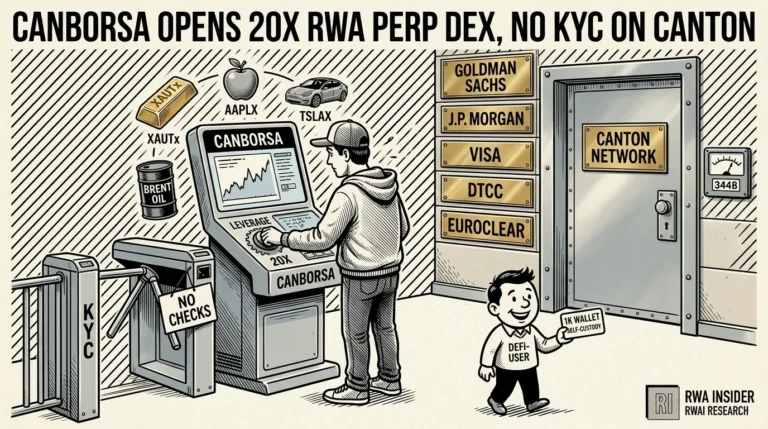
CC is the native token of Canton, a network built for regulated institutions to settle real-world assets on-chain. Holding it is a bet on that settlement flow, not on a meme.
For a wallet weighing whether to hold CC, the reason the unlock fizzled sits in Canton’s design, not in a chart pattern. The chain routes real institutional activity through the same token that just got diluted.

$73M Volume Meets Canton’s Burn-Mint Model
The data cut against the panic. CC’s trading volume climbed by about $10 million over the prior seven days, reaching a total near $73 million at press time.
Rising volume into an unlock, without a matching price drop, is unusual. It points to buyers absorbing the new supply rather than holders rushing the exit.
Canton’s economics run on a burn-mint equilibrium, a model built to keep token supply aligned with real network activity instead of a fixed vesting drip that only ever adds coins.
In plain terms, every time the network is used, that usage counterbalances freshly minted tokens. Unlocks still add supply, but activity quietly works the other side of the ledger.
Strip away the unlock panic and this is really about whether Canton’s real-world-asset settlement can burn tokens faster than the vesting schedule mints them. Our ongoing coverage of Canton’s real-world-asset rails tracks exactly that balance.

Tradeweb’s Treasury Deal And What CC Holders Watch
The bigger catalyst is institutional. Tradeweb recently facilitated a landmark on-chain U.S. Treasuries transaction that settled on the Canton Network, pairing a tokenized Treasury with tokenized cash.
That trade is the clearest example yet of the settlement volume Canton’s token model is built to capture, and it feeds directly into the burn side of the equation.
Yuval Rooz, who co-founded Digital Asset, the firm that built Canton, has long argued that the network’s value comes from regulated institutions moving real assets on-chain rather than from speculation. The scale of institutional capital already lining up behind Canton backs that thesis.
The move also marks progress toward DTCC’s Tokenization Services, scheduled to go live later this year, which would route far more settlement through the network.
The near-term chart stays cautious. CC’s long/short ratio sits near 51% bulls, close to dead even, while a Stochastic RSI in oversold territory hints at a possible relief bounce rather than a confirmed reversal.
Canton’s unlock passed without the usual damage because real settlement flows are quietly doing the burning. Whether that lasts depends on how fast Tradeweb, DTCC and the institutions behind them actually route volume onto the chain.
Watch Canton’s settlement volume, not just its vesting calendar, before deciding whether this CC unlock was a dip to buy or a warning to heed.
Frequently Asked Questions
What is a burn-mint equilibrium and how does Canton use it?
A burn-mint equilibrium ties a token’s supply to how much the network is actually used. On Canton, real activity offsets newly minted CC, so supply tracks demand instead of only rising on a fixed vesting schedule. That is why a $5.8 million unlock did not automatically flood the market.
Why didn’t the $5.8 million CC unlock crash the price?
Traders expected the new supply to trigger selling, but CC’s trading volume rose about $10 million in a week to roughly $73 million while the price held. Buyers absorbed the unlock, and Canton’s burn-mint model let network usage counterbalance the fresh tokens.
Can I actually buy and hold Canton’s CC token?
Yes. CC is Canton’s openly tradable native token, so any wallet can hold or trade it on secondary markets without joining Canton’s permissioned institutional rails. It stays a higher-risk position, with the long/short ratio near 51% and the broader trend still soft.
How does the Tradeweb Treasury trade affect Canton’s token?
Tradeweb settled a landmark on-chain U.S. Treasuries transaction on Canton, exactly the kind of institutional settlement the token model is designed to capture. More trades like it, plus DTCC’s planned Tokenization Services, would increase network usage that burns CC and supports the token.