2.79% PT-USDG Rollover Yield Trails Aave Borrow Rates
Key Points
- Aave is weighing a rollover on X Layer that swaps expiring PT-USDG-29OCT2026 collateral for a February token with a 2.79% implied yield.
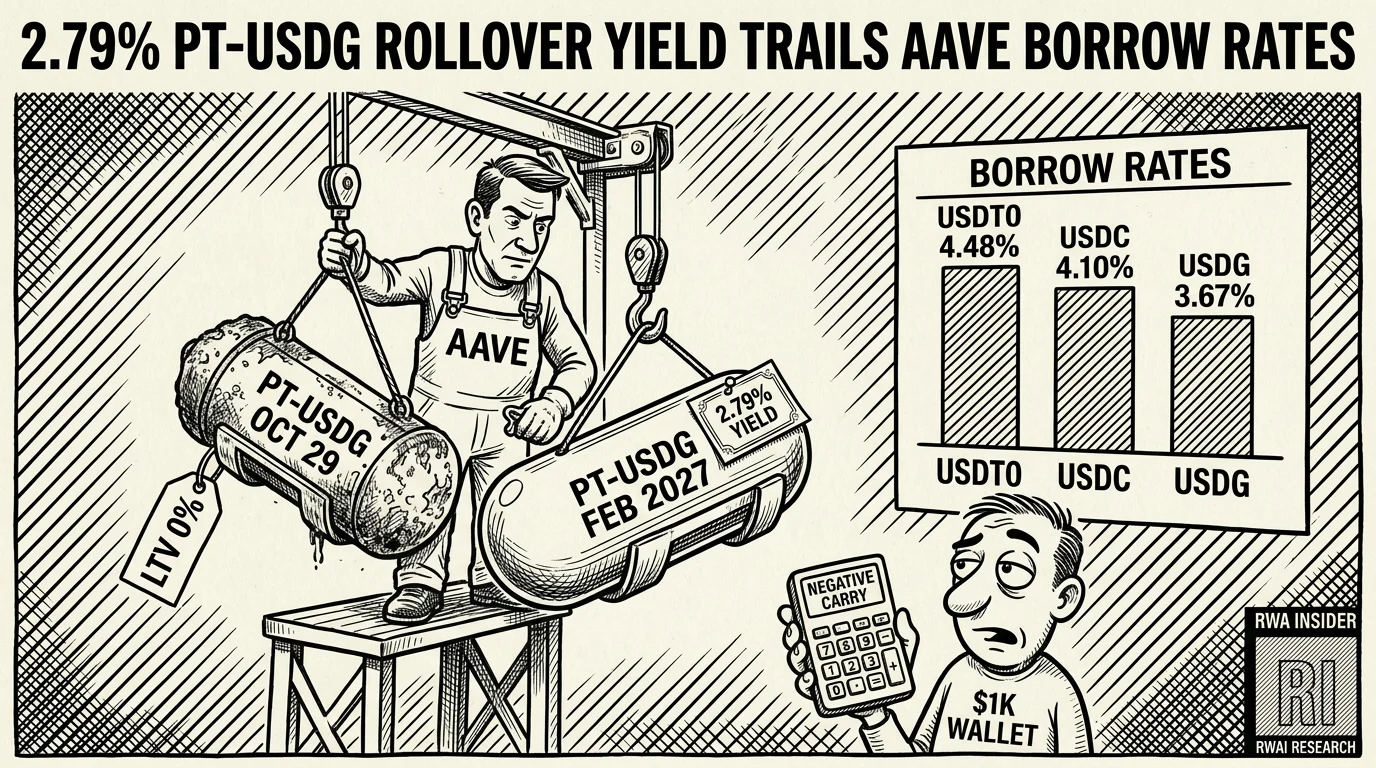
- In an Oct. 7 snapshot, Aave V3 X Layer charged 4.48% to borrow USDT0, 4.10% for USDC and 3.67% for USDG.
- If you loop PT-USDG on X Layer, the October token’s LTV drops to 0% after Oct. 29, so plan to roll or repay before then.
Aave is considering a collateral rollover on its X Layer market, but the replacement Pendle token carried a 2.79% implied yield, below most stablecoin borrowing rates there. TokenPost reported on Oct. 12, using an Oct. 7 snapshot, that the gap “would create negative carry for leveraged positions before incentives, fees, slippage and rate changes.” For your wallet, that means a looped PT-USDG position could cost more to borrow against than it earns, unless rewards close the gap, and those reward terms are not confirmed yet.
Aave Plans A PT-USDG Collateral Swap On X Layer
Pendle principal tokens, or PTs, are discounted claims on an asset that you can redeem at maturity.
Your return comes from the PT price rising toward that redemption value, which is why its yield is called implied.
On Aave V3 X Layer, the current collateral is PT-USDG-29OCT2026, which matures on Oct. 29, 2026.
About 66.03 million units of it were supplied as collateral in the Oct. 7 snapshot.
The proposal would list PT-USDG-25FEB2027, which matures Feb. 25, 2027, with a supply cap of 35 million PT.
Both maturities would sit in the same E-Mode. That lets you swap the expiring token for the new one while keeping your stablecoin debt open, through a planned flash-loan flow.
OKX would build that rollover integration separately.
The deadline is real. After maturity, the October token’s loan-to-value ratio falls to 0%, so it stops counting toward what you can borrow.
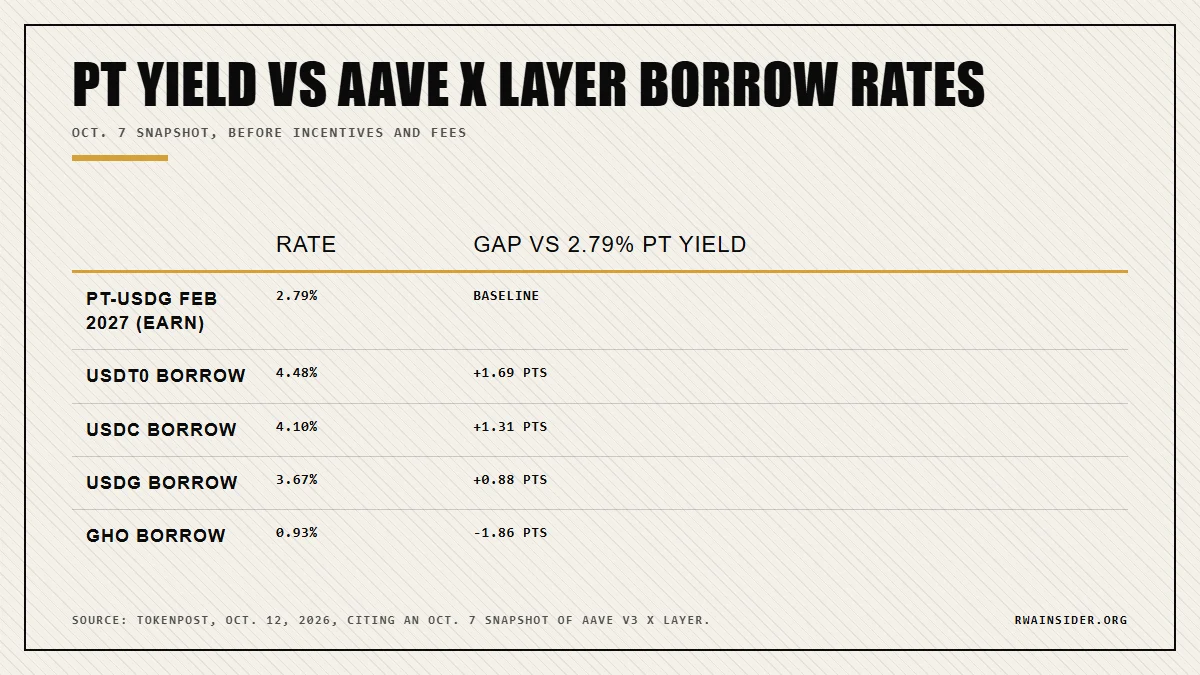
2.79% Yield Against A 4.48% USDT0 Borrow Rate
The February token’s implied yield was 2.79% in the Oct. 7 snapshot.
Borrowing on Aave V3 X Layer cost 4.48% for USDT0, 4.10% for USDC and 3.67% for USDG.
On a loop, you earn the PT yield and pay the borrow rate. At those figures, borrowing USDT0 costs about 1.69 percentage points more than the token earns.
USDT0 is what these loopers actually borrow. A Sept. 9 review found it made up 98.7% of the reviewed debt, or 55.1 million USDT0.
GHO was the exception at 0.93%, the only listed borrow rate below the PT yield.
The source does not say whether GHO can be borrowed inside the new E-Mode, so check before you plan a loop around it.
Strip away the governance detail and this is really about whether your loop keeps paying you after Oct. 29, or starts quietly charging you.
Margins are already thin. Top suppliers had a median health factor of 1.03, just above the 1.0 line where liquidation starts.
The proposed risk settings for the February token are a 91.48% loan-to-value ratio, a 93.48% liquidation threshold and a 2.62% liquidation bonus.
Before you roll, compare stablecoin yields and borrow rates across DeFi.
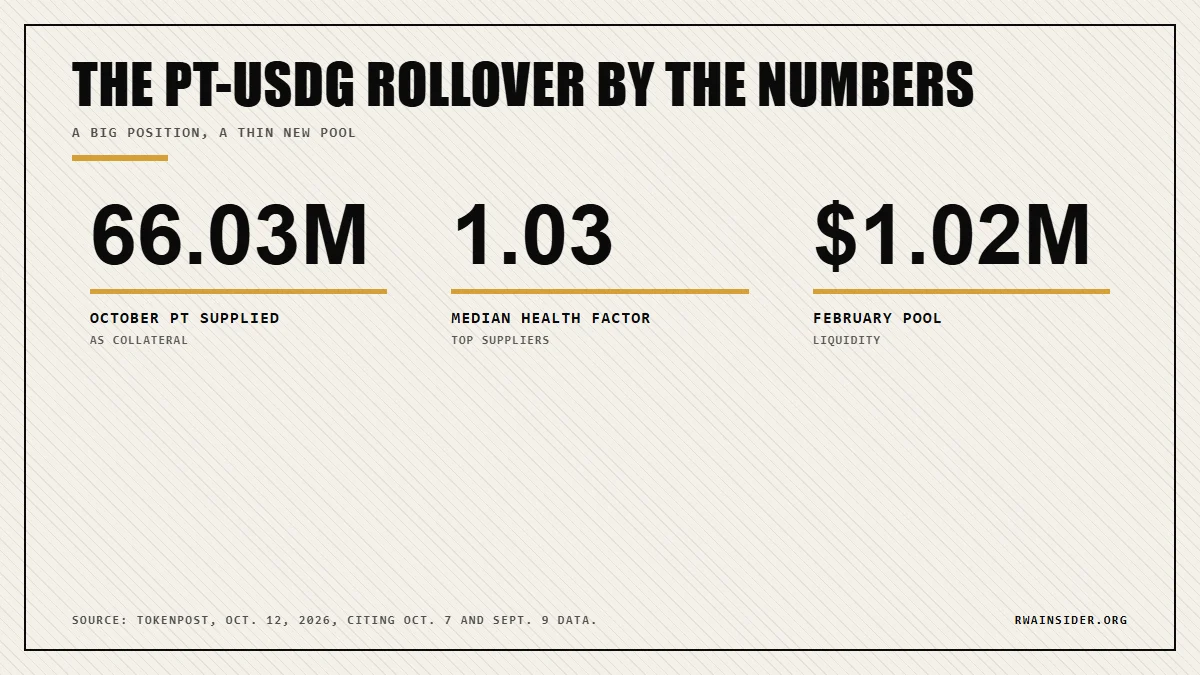
$1.02M February Pool Meets A 66M PT Rollover
The new token’s market is still small. The February pool held about $1.02 million in liquidity in the Oct. 7 snapshot.
That is a shallow pool next to 66.03 million October units posted as collateral, so slippage could bite if many holders swap at once.
The details are still moving. The proposal specifies E-Mode No. 7, while the risk recommendation calls for E-Mode No. 9, so the final setup is not confirmed.
Reward terms for the February PT are unconfirmed too. Incentives and rate changes are what could narrow the carry gap.
When USDG went native on Arbitrum, Brendan Ma, Head of Investment Strategy at the Arbitrum Foundation, said ecosystems had not previously shared in the growth and economics of stablecoins, as our report on USDG’s Arbitrum launch noted.
Rollovers like this one test whether USDG products can hold capital once the yield math tightens.
Watch three things: the final E-Mode number, the February reward terms, and whether borrow rates drift toward 2.79% before Oct. 29.
TokenPost summed up the trade-off: the replacement offers a path to keep collateral-backed positions, but its economics depend on yields, borrowing rates, liquidity and the final implementation.
Whether the PT-USDG loop still pays depends on February rewards and borrow rates, and the 17 days before Oct. 29 will tell.
Running a PT loop? The Yield Gap desk tracks every rollover and rate change that moves your carry.
Frequently Asked Questions
What happens to my PT-USDG-29OCT2026 collateral on Aave after Oct. 29?
Its loan-to-value ratio falls to 0% after maturity, so it stops supporting borrowing. The proposal would let you swap it for PT-USDG-25FEB2027 through a flash-loan flow while keeping your stablecoin debt. Plan your roll or repayment before that date.
What yield does the February PT-USDG token pay?
It carried a 2.79% implied yield in an Oct. 7 snapshot. That return comes from the token price rising toward its redemption value at the Feb. 25, 2027 maturity. It sits below the 3.67% to 4.48% USDG, USDC and USDT0 borrow rates on Aave V3 X Layer.
Is looping PT-USDG on Aave X Layer still profitable?
Not on the Oct. 7 numbers, unless rewards help. Borrowing USDT0 cost 4.48% against a 2.79% PT yield, which is negative carry before incentives, fees and slippage. February reward terms are not confirmed yet.
How much can I borrow against the new February PT?
The recommended settings are a 91.48% loan-to-value ratio, a 93.48% liquidation threshold and a 2.62% liquidation bonus. The final E-Mode setup is still open, since the proposal names No. 7 and the risk recommendation names No. 9.