$5.5T Tokenized By 2030: Citi Puts Ethereum At The Core
Key Points
- Citigroup’s new Tokenization 2030 report projects the tokenized asset market grows from $17 billion today to a base case of $5.5 trillion by 2030.
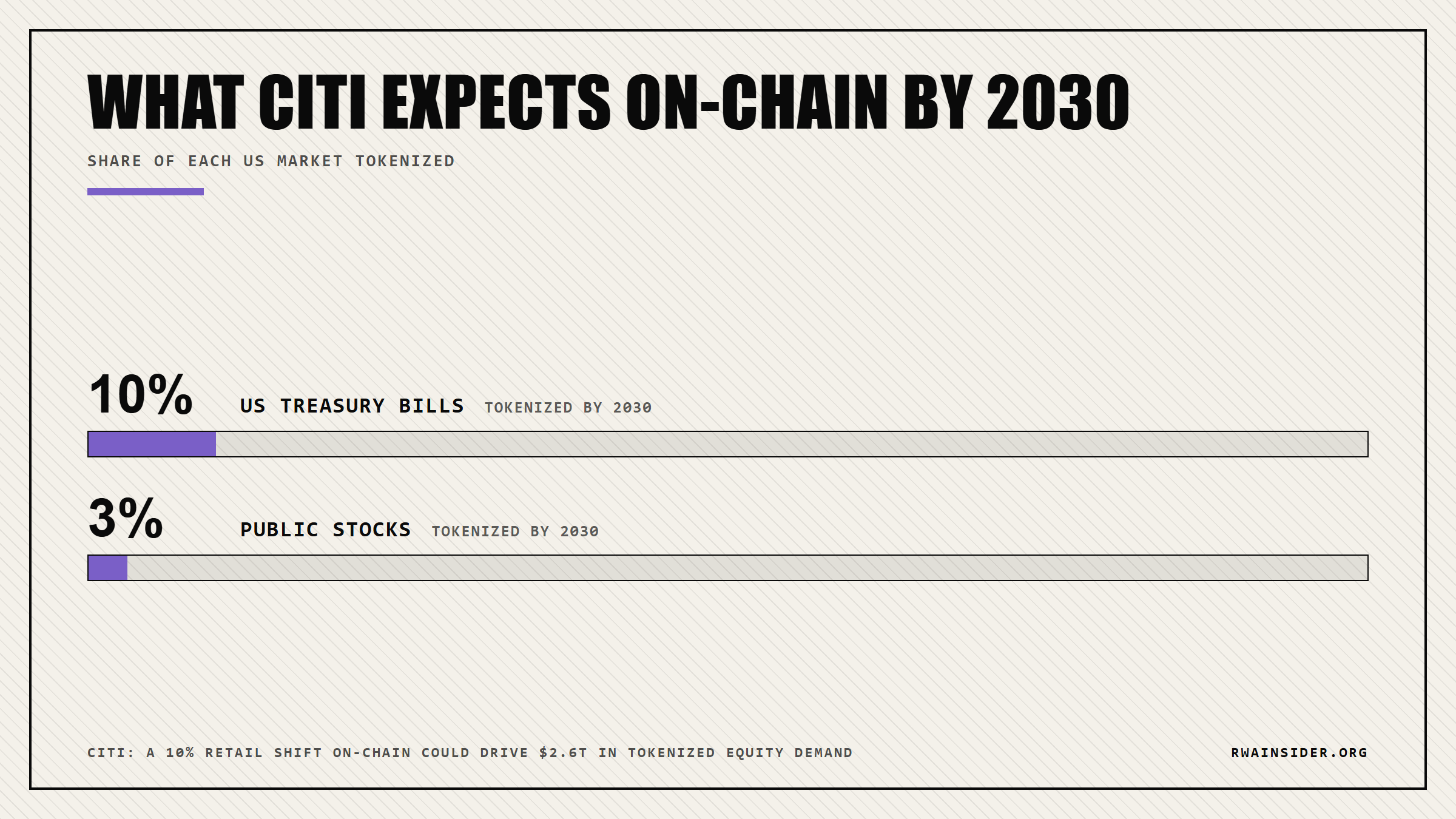
- Citi expects 10% of US Treasury bills and 3% of public stocks to move on-chain, a range worth $2.7 trillion to $8.2 trillion.
- A $1,000 wallet still cannot hold BUIDL directly, yet Citi sees 10% of US retail moving on-chain, driving $2.6 trillion of tokenized equity demand.
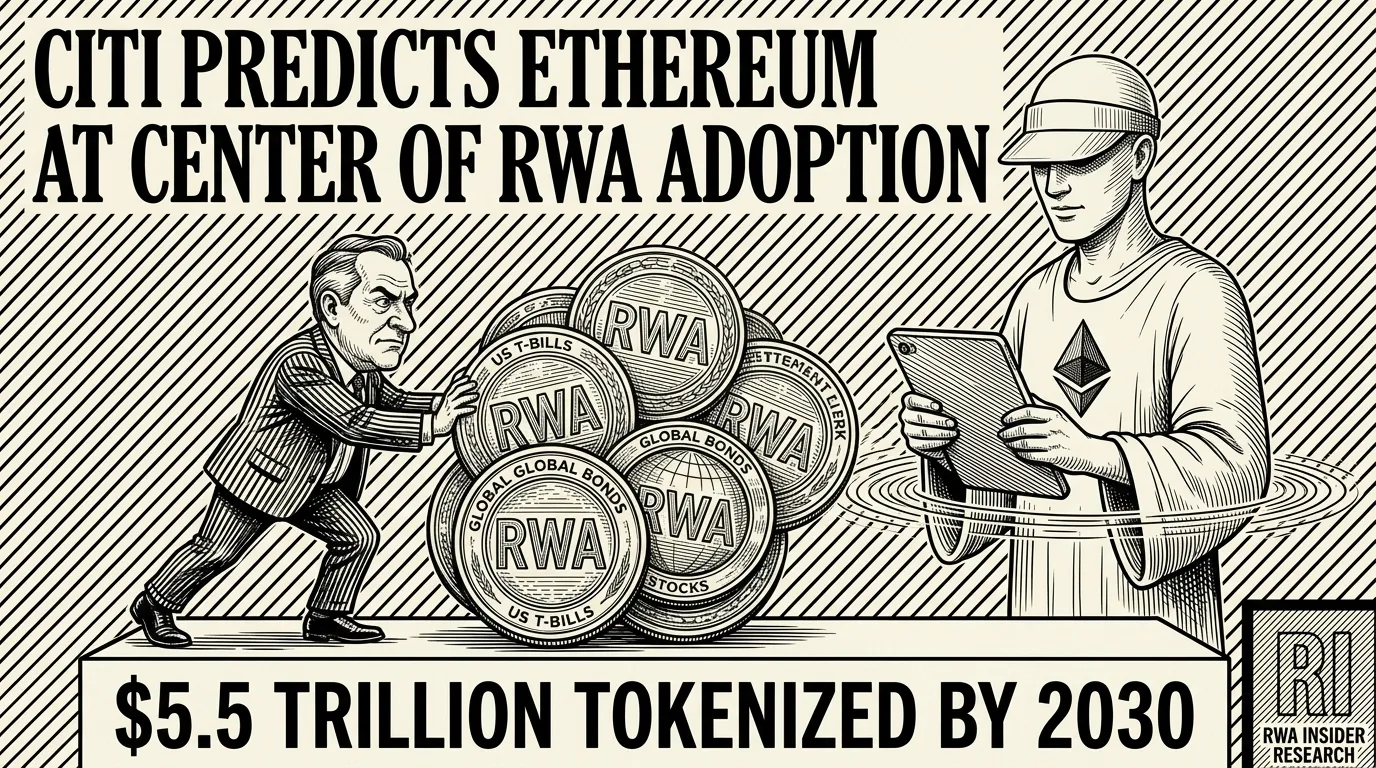
Citigroup just handed the tokenization crowd its biggest number yet. In a new report, the bank projected the tokenized asset market could climb from $17 billion today to $5.5 trillion by 2030, and it put Ethereum at the center of how that value moves. “Tokenized securities market could reach $5.5T by 2030,” the bank said in its Tokenization 2030: Wall Street On-Chain report. For a $1,000 wallet, the takeaway is the venue, not the verdict: most of this flow would settle on the same Ethereum your DeFi positions already use.
Inside Citi’s $5.5 Trillion Tokenization 2030 Report
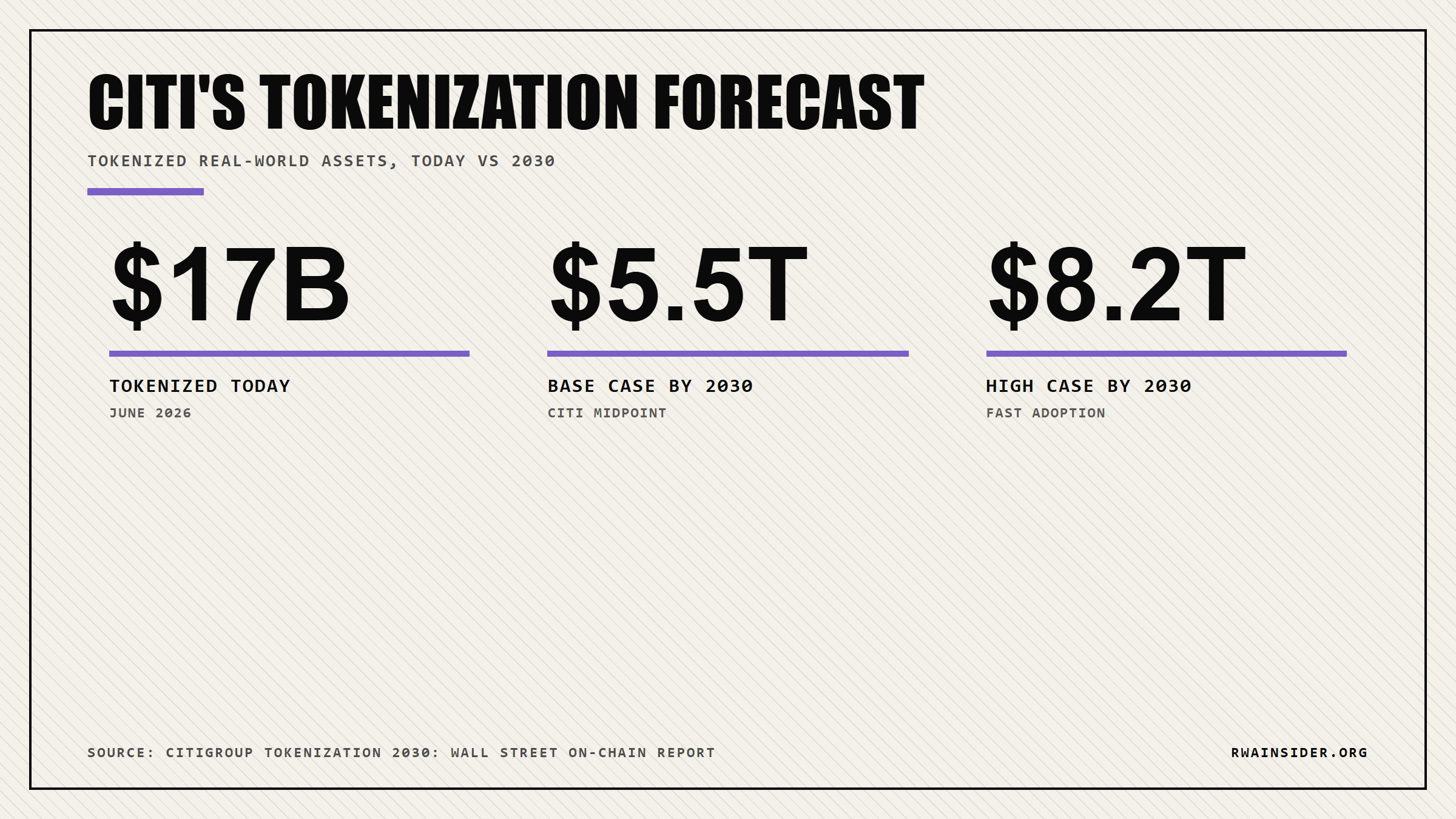
Citigroup laid out the case in its Tokenization 2030: Wall Street On-Chain report, pegging today’s tokenized asset market at $17 billion and a base case of $5.5 trillion by 2030.
The bank framed a wide cone of outcomes, from a low case of $2.7 trillion to a high case of $8.2 trillion, depending on how fast adoption spreads.
Citi pinned the timeline on 2030 across all three cases, treating tokenization as a structural shift rather than a quarter-to-quarter trade.
The forecast leans on US Treasury bills and public equities, settled with on-chain money and tokenized deposits.
For DeFi, the relevant detail is the venue: most of that settlement is expected to run on Ethereum, the chain your wallet already touches.
Citi called the shift gradual, with legacy systems and on-chain rails likely to run side by side for years.
Where The $2.6 Trillion Retail Demand Lands On-Chain
The report’s biggest single number is demand-side.
Citi estimated that if 10% of US retail investors shifted to on-chain trading, it would create about $2.6 trillion in demand for tokenized public equities.
That figure dwarfs the entire tokenized market as it stands today.
On the supply side, Citi sees roughly 10% of the US Treasury bill market and 3% of public stocks tokenized by 2030.
Strip away the forecast and the real story for a wallet holder is access: trillions in yield-bearing assets moving to chains where DeFi already lends, borrows, and swaps.
That is the bet Citi is underwriting.
Today most of that supply stays locked, since tokenized Treasuries like BlackRock’s BUIDL settle on Ethereum but sit behind allowlists.
So a $1,000 wallet cannot hold them directly, even as the asset class scales.
It is the same lockout RWA Insider has tracked across BUIDL, OUSG, and other tokenized funds: institutional yield on public chains, gated to permissioned addresses.
The chain-by-chain race to host this flow is where the next phase plays out, and you can follow how rival networks stack up for tokenized asset share as the numbers move.
What BlackRock’s BUIDL Signals For Ethereum
The report singled out Ethereum as the chain Wall Street already trusts, citing BlackRock’s BUIDL fund and the firm’s plan to tokenize money market funds on the network.
It was the only network named in the report’s adoption section, a signal that the tokenization race still runs through Ethereum first.
Markets did not celebrate, though.
ETH slipped below $2,000 the week the report landed, and roughly $84 million in leveraged long positions were liquidated on June 1 as price and narrative pulled apart.
For DeFi, that institutional footprint matters more than the dip.
Every BUIDL share on Ethereum deepens the collateral base that lending markets can eventually plug into.
Adoption still hinges on rules, the same regulatory clarity Citi assumes will arrive.
RWA Insider’s coverage of the OMFIF digital money summit caught former CFTC chair Timothy Massad pressing for clearer guardrails before tokenized markets reach retail at scale.
The open question is whether tokenized Treasuries shed their allowlists.
Until they do, the $5.5 trillion sits on Ethereum but stays out of reach for a permissionless wallet, and the gap between forecast and access is the trade to watch.
If Wall Street really moves $5.5 trillion on-chain by 2030, the wallets that win are the ones already native to where it settles. Whether that value arrives permissioned or permissionless is the variable that decides whether you can ever touch it.
Keep watching which chain the next tokenized fund picks, because that quiet choice decides where your next yield actually comes from.
Frequently Asked Questions
What is Citigroup’s Tokenization 2030 report?
It is a Citi research report projecting the tokenized real-world asset market grows from $17 billion today to a base case of $5.5 trillion by 2030. The range runs from $2.7 trillion to $8.2 trillion, centered on tokenized US Treasury bills and public equities.
Can a retail wallet buy tokenized Treasuries like BUIDL today?
Not directly. Funds like BlackRock’s BUIDL settle on Ethereum but restrict transfers to allowlisted addresses, so a $1,000 self-custody wallet cannot hold them. Access for now runs through KYC-gated wrappers rather than open DeFi.
Why does Citi expect tokenization to run on Ethereum?
Citi pointed to Wall Street firms already using Ethereum, including BlackRock’s BUIDL fund and its plan to tokenize money market funds on the network. That existing institutional footprint makes Ethereum the default settlement layer in the report.
How much new demand could tokenized stocks see by 2030?
Citi estimated that a shift of 10% of US retail investors to on-chain trading would create about $2.6 trillion in demand for tokenized public equities. The bank also expects roughly 3% of public stocks and 10% of US Treasury bills to be tokenized by 2030.