Canton Grabs 42% Of Chain Fees, $193M On RWA Bonds
Key Points
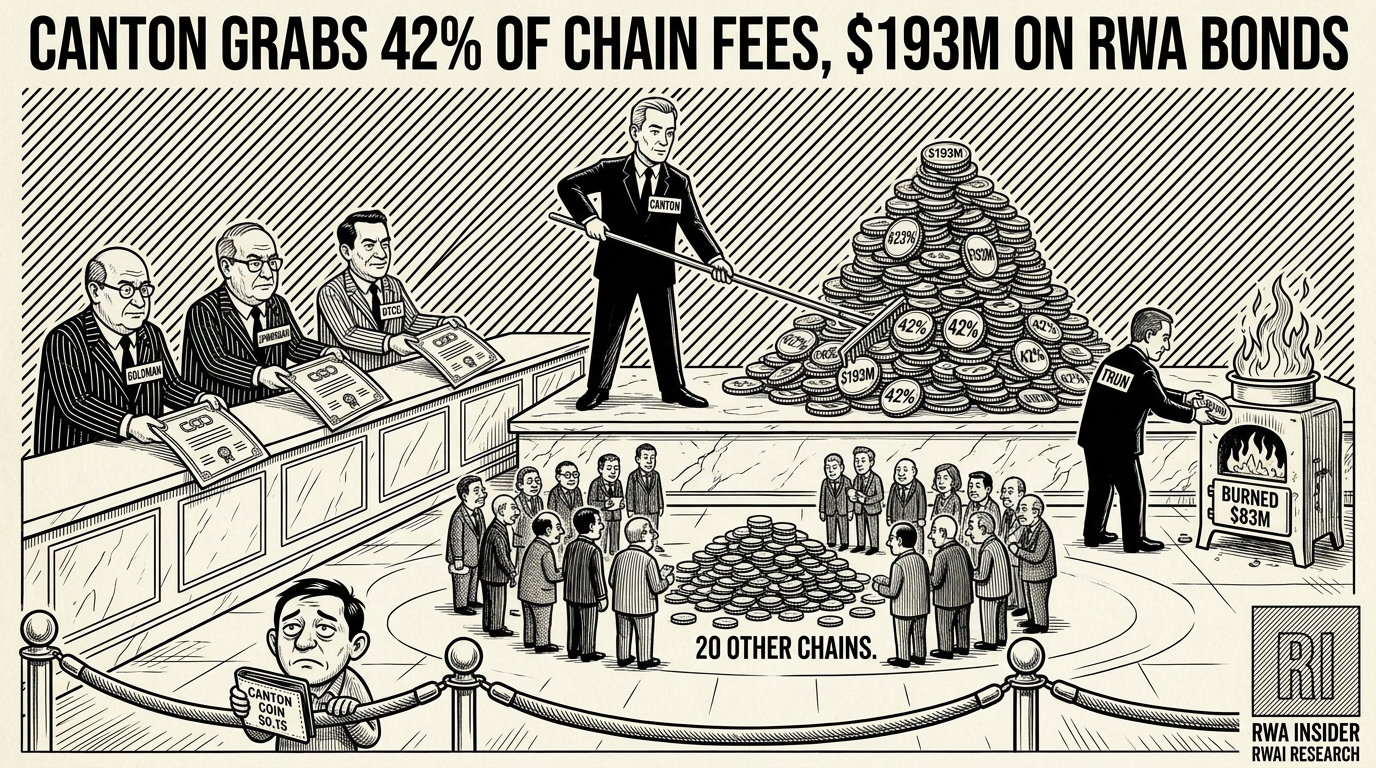
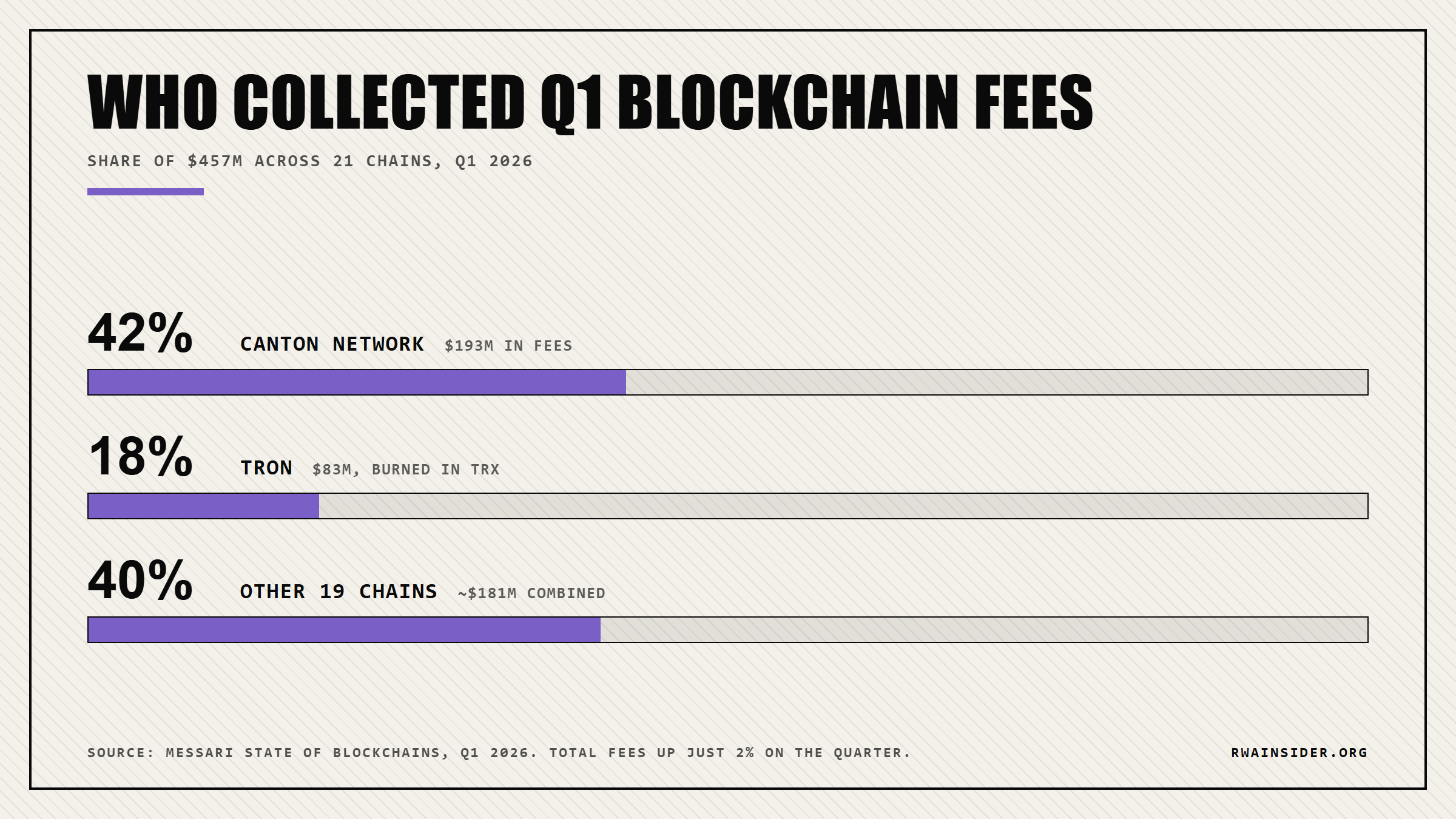
- Canton Network collected about $193 million in Q1 2026 fees, roughly 42% of the $457 million spent across the 21 blockchains Messari tracked.
- Total network fees rose just 2% for the quarter, yet Canton’s institutional bond, repo, and tokenized-deposit activity drove its outsized share.
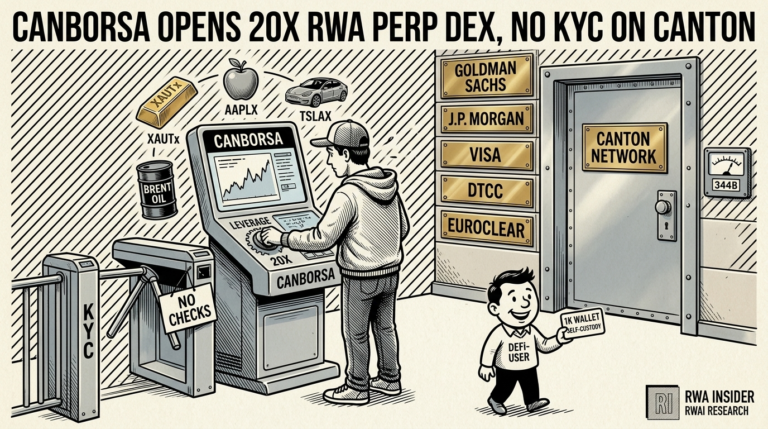
- A $1,000 wallet cannot touch Canton’s bank rails, but it can hold Canton Coin near $0.15 or trade RWA perps on Canborsa without KYC.
Canton Network, a layer-1 chain built for regulated banks, pulled in about $193 million in fees during the first quarter of 2026, roughly 42% of the $457 million spent across the 21 blockchains in Messari’s State of Blockchains report. “Even in a weak quarter, some blockchains managed to increase fees, stablecoin volumes, and the real-world asset tokenization sector,” Messari’s researchers wrote, with Canton leading the pack. For a $1,000 wallet, the catch is access: Canton’s fee engine runs on bank rails you cannot join, though Canton Coin and the no-KYC venue Canborsa offer a side door.
Canton Takes 42% Of Q1 Fees, $193M Of $457M
Canton Network topped the fee ranking compiled by Messari, collecting roughly $193 million while every other chain split the rest of the $457 million total.
That works out to about 42% of all fees, even as the combined figure across the 21 networks crept up just 2% for the quarter.
Canton is not a retail playground. It is a layer-1 built for regulated finance, launched by Digital Asset in 2023 with more than 30 banks and market firms.
The fees came from institutions, not traders. Tokenized bond transactions, repo markets, and bank deposit tokens like JPMorgan’s JPMD all settled on the chain.
So the honest read is that this is bank plumbing, not a wallet you open today. The DeFi touchpoint is narrower, and it runs through two doors covered below.
Where Canton Coin Sits Against $193M In Fees
The fee crown has not reached the token. Canton Coin traded near $0.15, down about 3% on the day, still parked in the market’s second tier.
That gap is the story for a wallet holder. Record fees signal real settlement demand, yet the asset you can actually buy has not repriced to match.
Strip away the institutional language and this is really about whether on-chain bank activity ever leaks value to the token retail can hold.
Two routes exist today. A self-custody wallet can hold Canton Coin as a liquid proxy on the network’s growth, accepting that it tracks sentiment more than fees.
Or it can trade tokenized real-world assets directly through a no-KYC perpetuals venue running on Canton, where a wallet can long or short stocks and gold without a broker.
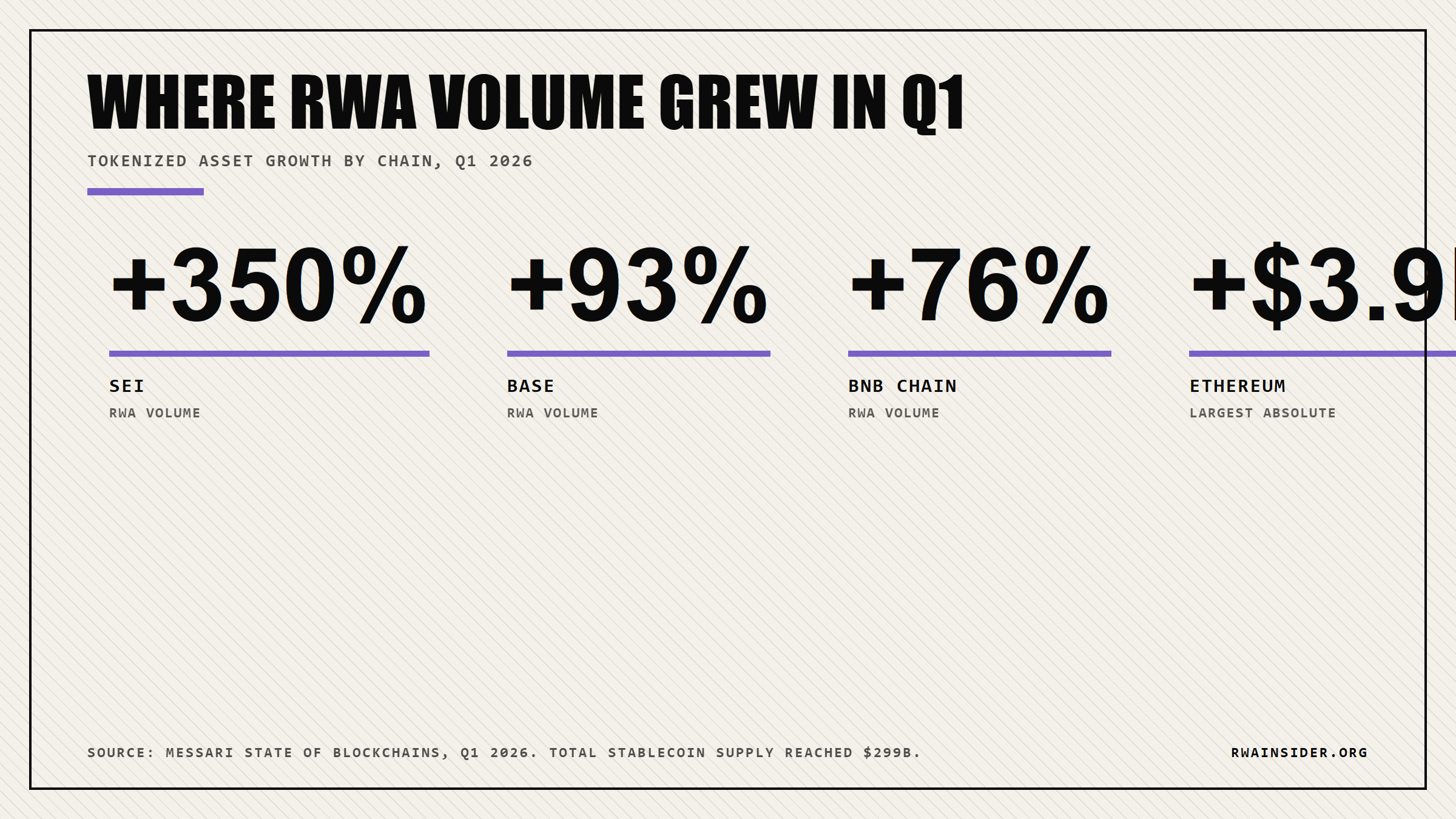
The wider RWA wave that drove these fees is moving unevenly. Sei tokenized volume jumped 350% in the quarter, Base added 93%, and Ethereum led in raw size with nearly $3.9 billion in new tokenized assets.
What JPMorgan, DTCC Do Next On Canton
Messari’s head of research operations, Luis Rincon, framed the quarter as a story of a few winners rather than a broad recovery.
“Canton took first place in fees, providing 42% of the total, or $193 million, amid rising institutional activity,” Rincon said, noting that the real-world asset tokenization segment kept expanding while other metrics fell.
The pipeline behind those fees is still filling. DTCC is working to tokenize the US Treasury bonds it holds in custody, and HSBC ran a tokenized-deposit pilot on the network in April.
For a wallet, the watch item is whether any of this opens up. You can track the chain-by-chain race for tokenized asset share as the next quarterly numbers land.
Canton’s lead rests entirely on banks choosing to settle on-chain. If that flow keeps growing, the case for holding Canton Coin or trading its RWAs strengthens. If it stalls, the fee crown means little to retail.
Whether Canton holds the fee crown comes down to whether banks like JPMorgan and HSBC keep moving settlement on-chain. The next Messari quarter will show if that institutional flow ever becomes something a wallet can actually own.
Watch which bank settles its next bond batch on Canton, because that quiet choice decides whether the fee king ever becomes an asset you can hold.
Frequently Asked Questions
What is the Canton Network and who runs it?
Canton is a layer-1 blockchain built for regulated financial institutions, launched by Digital Asset in 2023 with more than 30 banks and market firms. Its Global Synchronizer lets institutional platforms settle privately with one another, which is why firms like Goldman Sachs and BNP Paribas use it.
Why did Canton collect 42% of all blockchain fees in Q1 2026?
Canton generated about $193 million of the $457 million in total fees Messari tracked across 21 chains. The jump came from institutions running tokenized bonds, repo markets, and bank deposit tokens like JPMorgan’s JPMD on the network, not from retail trading.
Can a retail wallet buy into Canton without KYC?
Not the bank rails themselves. A self-custody wallet can hold Canton Coin, which traded near $0.15, as a liquid proxy, or trade tokenized stocks and gold on Canborsa, a no-KYC perpetuals venue running on Canton. Neither gives direct access to the institutional settlement that drove the fees.
How does Canton compare to Ethereum for RWA growth?
They led in different ways last quarter. Canton topped the fee table at $193 million, while Ethereum led in raw size, adding nearly $3.9 billion in new tokenized assets. Faster percentage growth came from smaller chains like Sei, up 350%.