apxUSD Hits $0.93, Apyx Says Depeg Is A Feature
Key Points
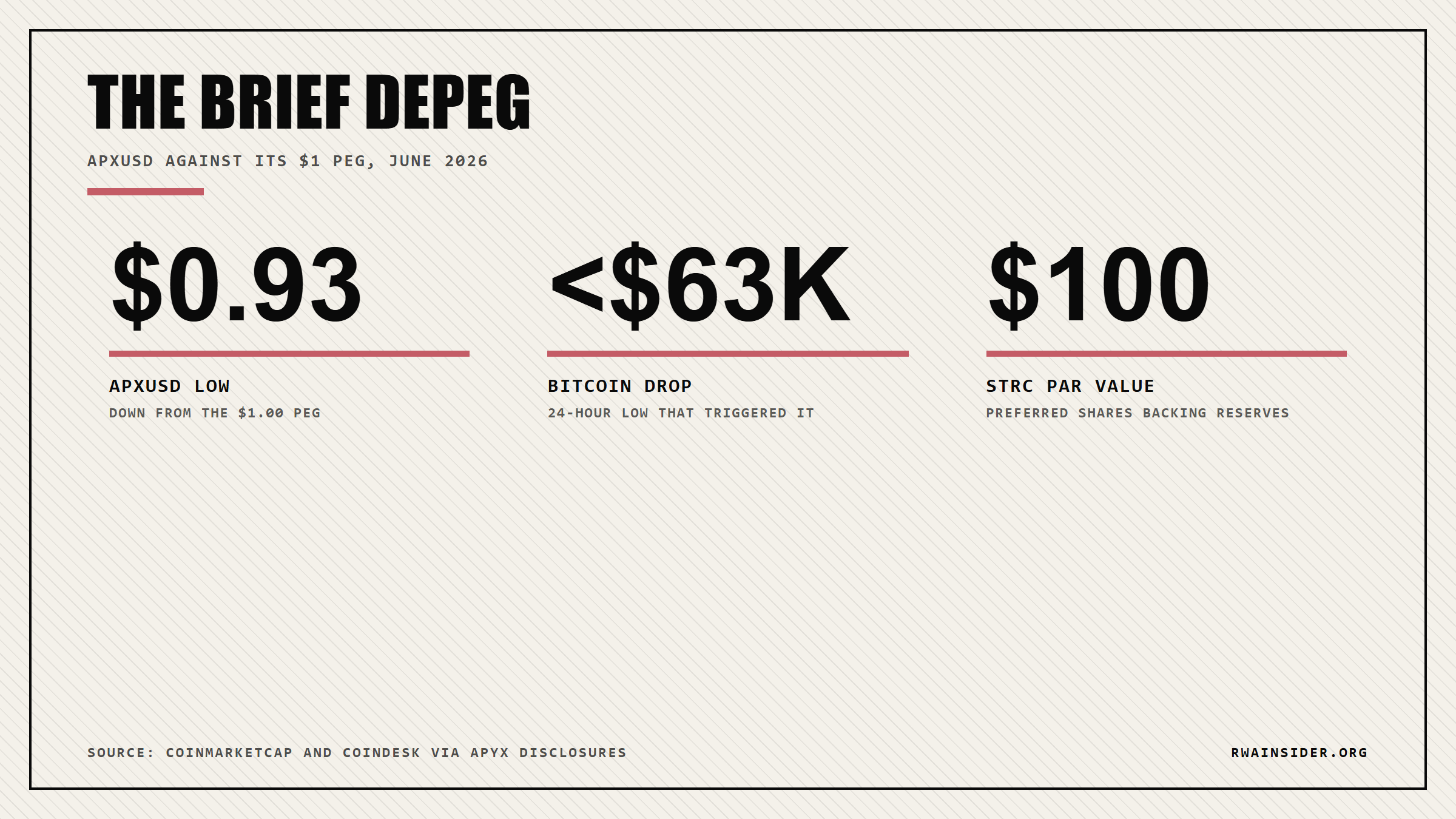
- Apyx’s apxUSD stablecoin briefly slipped to $0.93 as Bitcoin fell under $63,000, breaking its 1:1 dollar peg in secondary markets.
- STRC preferred shares back most of apxUSD’s reserves, carry a $100 par value, and have dipped below par four times since August 2025.
- Holders can track collateral against apxUSD supply in real time, and the Morpho lending market prices off dividend accrual, not STRC’s price, avoiding liquidations.
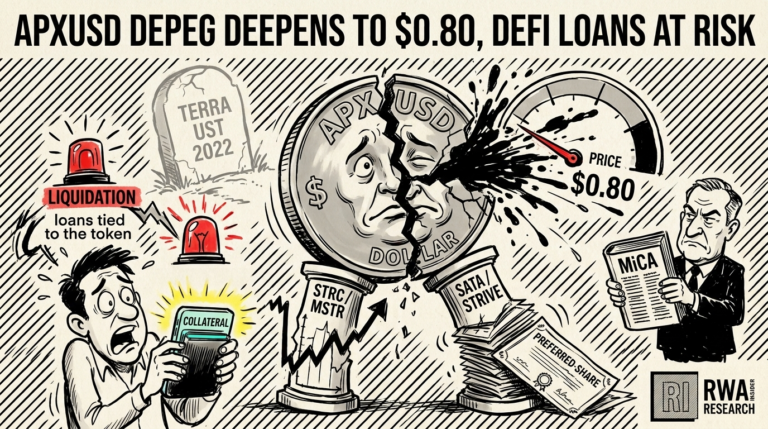
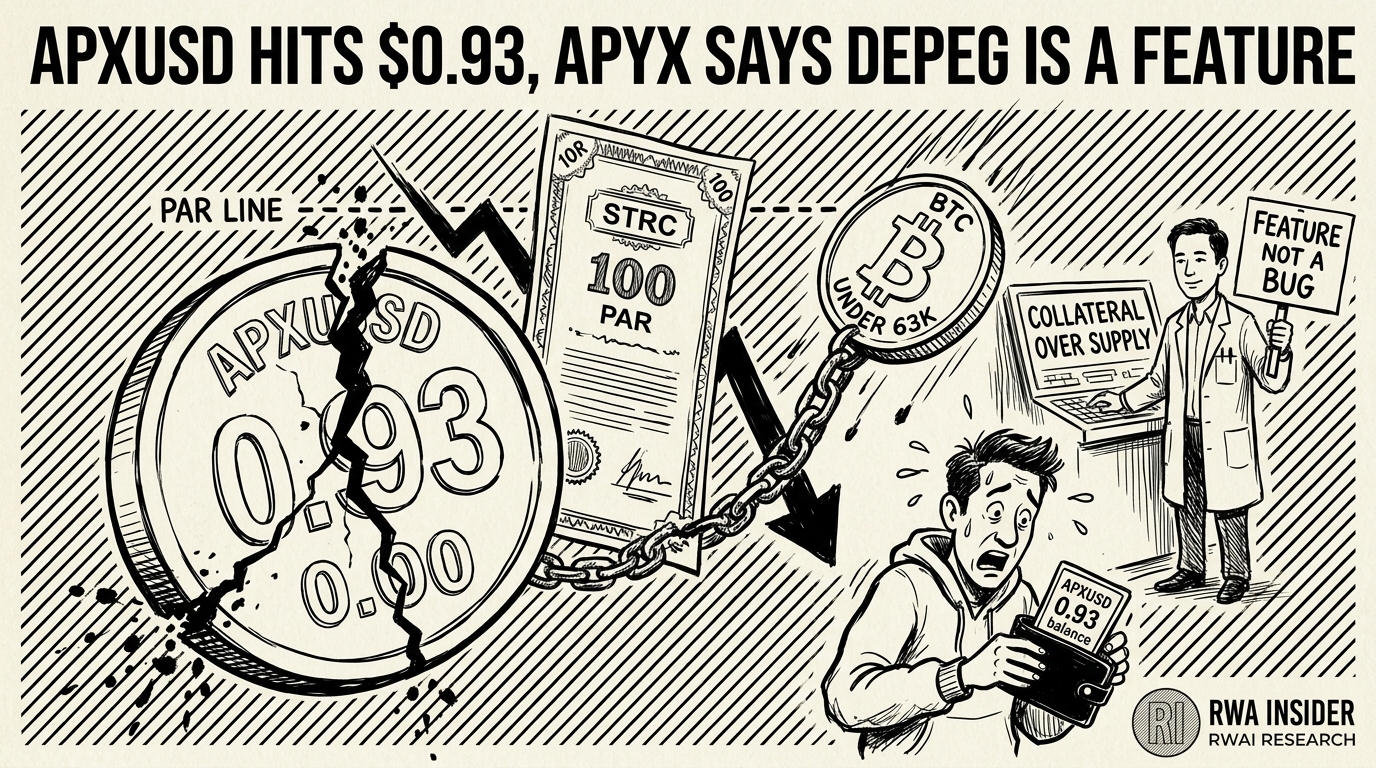
Apyx’s apxUSD stablecoin broke its dollar peg this week, sliding to as low as $0.93 as Bitcoin dropped under $63,000 and dragged down the preferred-equity shares backing it. The protocol pushed back fast, posting on X that the move was “not a bug, it is the expected behavior of a stablecoin backed by preferred equity rather than cash deposits.” For anyone holding apxUSD in a wallet, the question is sharper than the press line: a stablecoin that wobbles 7 cents when Bitcoin sneezes is not the dollar most DeFi users think they are holding.
apxUSD Slips To $0.93 As Bitcoin Drops
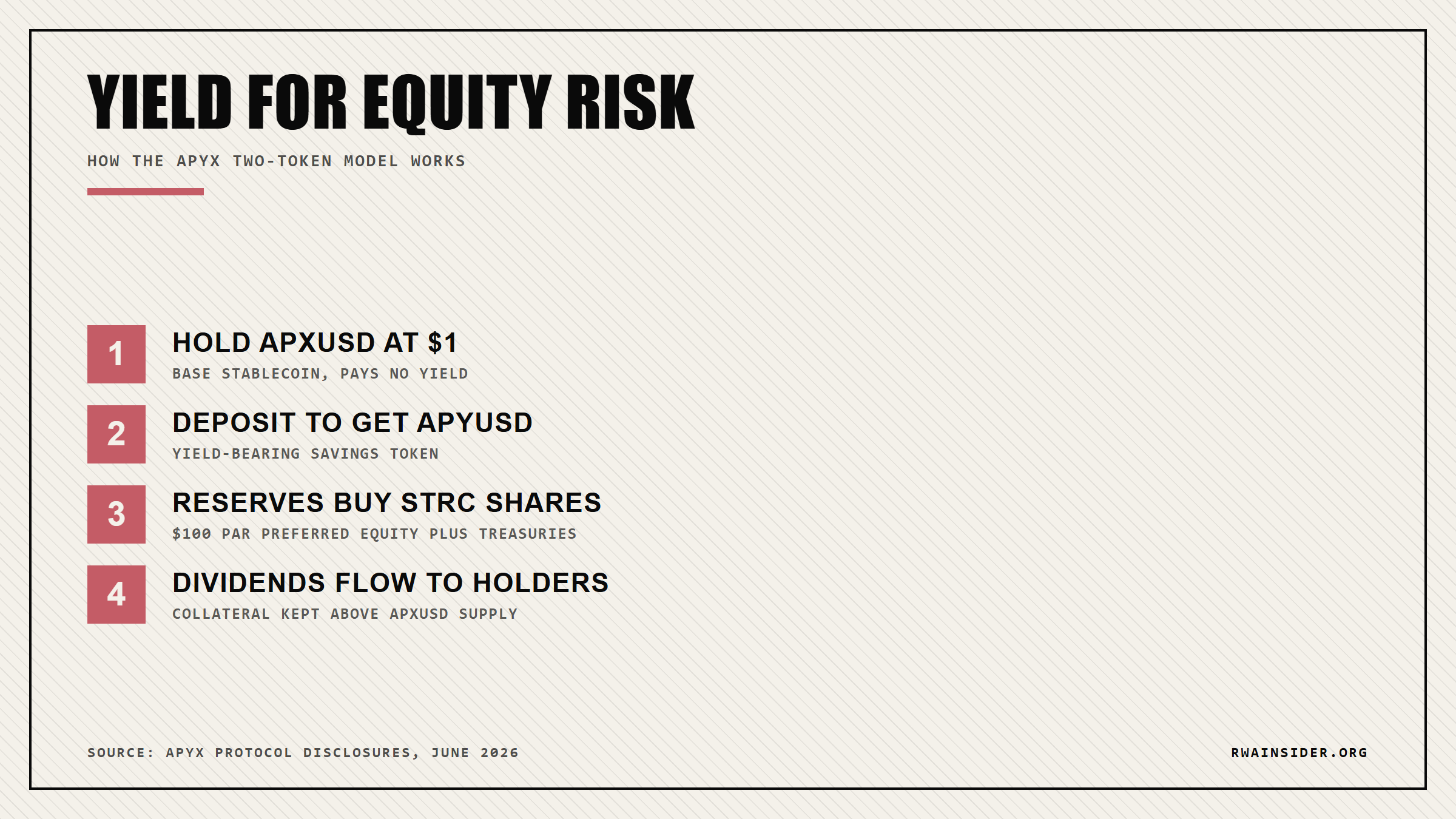
apxUSD is the base token of the Apyx protocol, a stablecoin designed to sit at $1 and, unlike the dollar in your bank, one that pays no yield on its own.
When Bitcoin fell sharply over 24 hours, touching lows beneath $63,000, apxUSD drifted to 93 cents on the open market, according to CoinMarketCap data.
The reason sits in the collateral. apxUSD is backed mainly by preferred equity, specifically the STRC shares issued by the digital-asset treasury firm Strategy.
Apyx buys those shares, collects the dividends they pay, and passes that yield to holders who lock apxUSD into a second token.
None of this is cash sitting in a vault, so when the shares move, the stablecoin moves with them.
Why STRC’s $100 Par Value Moves The Peg
Here is the mechanism that turned a stock dip into a stablecoin scare.
STRC carries a $100 par value, and when it trades below that, the market value of apxUSD’s reserves falls and the coin softens in secondary markets.
STRC has slipped below par four times since August 2025, and each time it climbed back to $100, helped by a structural lever: issuers can raise the dividend rate to pull demand back toward par.
For a DeFi user, this matters less as a stablecoin than as a leveraged claim on one company’s preferred stock staying near its par value.
The yield side makes that trade explicit. Deposit apxUSD and you receive apyUSD, a savings token that accrues the STRC dividend, a payout Apyx does not fix as a published rate.
Compare that with a cash-backed coin earning nothing in your wallet, or the roughly 2% that permissionless Aave USDC supply has paid across recent RWA Insider coverage, and the tradeoff is yield for equity risk.
Apyx says it holds collateral worth more than the circulating apxUSD supply, a buffer you can check against live tokenized-collateral data before deciding the spread is worth it.
Apyx’s Buffer And The Morpho Liquidation Fear
The slip drew a quick crowd. Market participants panicked over the brief de-peg, and some warned that repeated volatility could shake confidence in a coin marketed as a dollar.
The loudest fear was contagion: forced liquidations cascading through lending markets on Morpho, where apxUSD and apyUSD sit as collateral.
Apyx called that misplaced. It said its main apyUSD/apxUSD Morpho market prices off dividend accrual, not STRC’s spot price, so a wobble in the shares does not move the oracle or trip liquidations.
On the depeg itself, the protocol was blunt.
Holders who understand STRC’s risk profile “should view these episodes as the asset class working through its normal cycle, not as evidence of a broken peg,” Apyx wrote.
That line is the whole trade in one sentence. STRC has recovered to $100 every time it dipped since August 2025, but four data points are a thin record for a coin you are meant to treat as cash.
Whether apxUSD stays pinned to $1 depends on a single preferred stock mean-reverting on schedule, and the next sharp Bitcoin drawdown will test that assumption again. Until the buffer is proven in a deeper sell-off, treating apxUSD as idle dollar cash is a bet, not a given.
See how thin liquidity turned another euro and dollar stablecoin into a multi-day off-peg scramble, and weigh how much peg insurance your wallet actually wants.
Frequently Asked Questions
What is apxUSD and how is it backed?
apxUSD is the base stablecoin of the Apyx protocol, built to trade at $1. Most of its reserves are Strategy’s STRC preferred shares, topped up with short-term US Treasuries and cash, rather than the bank deposits behind coins like USDC.
Why did apxUSD drop to $0.93?
apxUSD slipped to as low as 93 cents when Bitcoin fell under $63,000 and dragged down STRC, the preferred stock backing most of its reserves. Because that stock can trade below its $100 par value, the stablecoin’s collateral value falls with it.
Can apxUSD trigger liquidations on Morpho?
Apyx says no for its main market. The apyUSD/apxUSD market on Morpho prices off dividend accrual rather than STRC’s spot price, so a temporary depeg does not move that oracle or force liquidations. Other markets that reference spot price could behave differently.
Is apxUSD safe to hold like a dollar?
It carries risk a cash-backed stablecoin does not. Its value tracks Strategy’s STRC shares, which have dipped below par four times since August 2025 before recovering to $100 each time. Apyx says it holds collateral worth more than the circulating supply as a buffer.