Invesco Files On-Chain Reserve Fund For $300B Stablecoin Market
Key Points
- Invesco, which manages about $2.3 trillion, filed with the SEC on June 24 to launch a tokenized money market fund built for stablecoin issuers.
- The fund holds cash, short-term Treasuries, and repos at a $1 NAV, with a 93-day maturity ceiling to meet the GENIUS Act reserve rule.
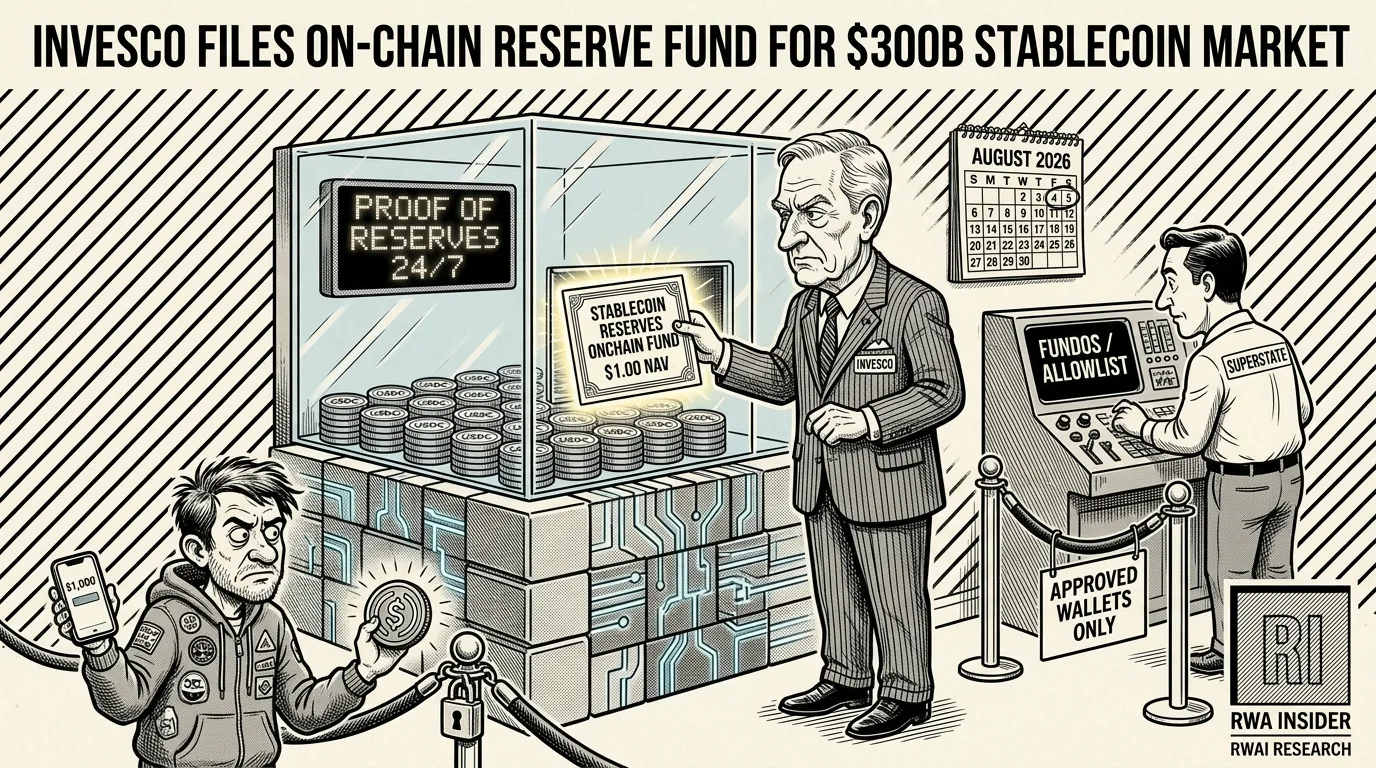
- Superstate’s FundOS tokenizes the shares on Ethereum or Solana, but an Allowlist blocks any retail wallet, so a $1,000 holder cannot buy in.
Invesco, the asset manager behind roughly $2.3 trillion in global assets, filed with the U.S. Securities and Exchange Commission on June 24 to register the Invesco Stablecoin Reserves Onchain Fund, a tokenized money market fund aimed squarely at stablecoin issuers. The fund is “built specifically for stablecoin issuers needing compliant, blockchain-native reserves,” according to the SEC filing relayed by Tech Times. For a wallet holding USDC, this is the plumbing under your dollar, the reserves behind GENIUS Act stablecoins moving on-chain where proof of reserves updates in real time instead of in a monthly PDF.
Invesco Files A Tokenized Reserve Fund On Superstate
Invesco filed the registration on June 24, and the fund is expected to take effect around late August 2026, pending SEC review.
It is built as a government money market fund under SEC Rule 2a-7, holding cash, short-term U.S. Treasuries, and repurchase agreements at a constant $1 per share.
The fund does not buy stablecoins or invest in their issuers. It serves those issuers as clients, managing the reserves that sit behind their tokens.
The part that matters for DeFi is the rails. Superstate, the infrastructure firm founded by Compound creator Robert Leshner, issues the fund shares as actual tokens on a public blockchain.
That makes the reserves programmable and visible on-chain, a clean break from the off-chain ledgers most reserve funds still run on.

The $300B Reserve Race And Superstate’s Allowlist Gate
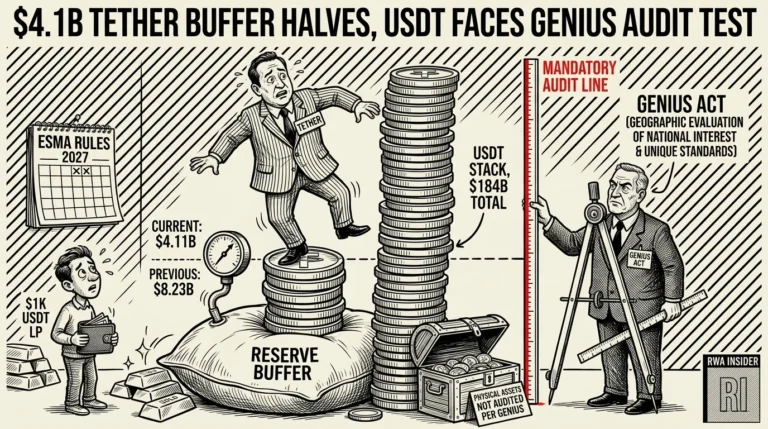
The GENIUS Act, signed in July 2025, forces stablecoin issuers to hold one-for-one reserves in cash, Treasuries maturing within 93 days, and repos.
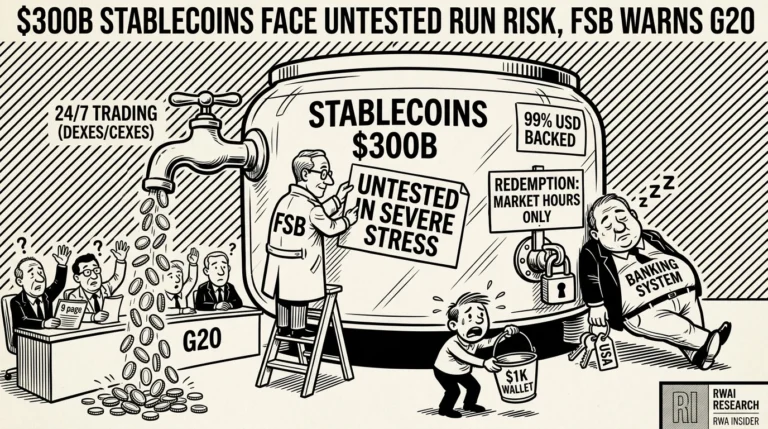
That rule created a market overnight. Stablecoins now total roughly $300 billion in issuance, and Citigroup projects the sector could reach $4 trillion by 2030.
Invesco manages about $2.3 trillion in total assets, but that is its global book, not the size of this fund, which has no ticker and no assets yet.
Its track record on these rails is the real signal. In March 2026 Invesco took over daily management of Superstate’s tokenized Treasury fund, the USTB, which held about $967 million at the time.
Here is the catch for a $1,000 wallet. Every address that can hold the new token must clear Superstate’s Allowlist, a KYC check wired straight into the smart contract.
Subscriptions and redemptions settle in dollars or USDC, so the fund speaks the same currency as the stablecoins it backs, even while retail stays locked out.
You can follow how tokenized reserves are reshaping stablecoin backing as more asset managers file.
Strip away the filing and this is really about who holds the reserves behind the dollar in your wallet, and how openly they prove it.

Why JPMorgan And State Street Got On-Chain First
Invesco is arriving late to a crowded race. JPMorgan put its JLTXX fund on public Ethereum on May 13 through its Kinexys platform, and State Street launched its SSCXX reserve fund on June 16.
Most rivals, including Goldman Sachs, BNY, and BlackRock’s Circle Reserve Fund, still keep their shares off-chain, where tokenization is more label than live ledger.
Superstate’s founders, led by Robert Leshner, argue that renting proven infrastructure lets a manager go on-chain without building blockchain plumbing from scratch.
When State Street stood up its own GENIUS Act reserve fund, the same pattern held: institutions get the on-chain rails first, and retail gets the stablecoin.
One detail is still open. The filing leans heavily on Ethereum risk disclosures but does not rule out Solana, so the chain is not yet locked.
There is also a quiet sting for holders. The reserves earn Treasury yield, but the GENIUS Act bars issuers from passing any of it to the people holding the stablecoin.
Whether the dollar in your wallet ends up with reserves you can audit on-chain depends on which issuers actually plug into funds like this one, and the next round of filings will tell. Until a stablecoin issuer names Invesco as a reserve partner, this is plumbing waiting for a customer.
If you hold USDC or any GENIUS Act stablecoin, the move is to watch which issuers adopt on-chain, verifiable reserves, not the filing headlines.
Frequently Asked Questions
What is the Invesco Stablecoin Reserves Onchain Fund?
It is a tokenized money market fund Invesco filed with the SEC on June 24, 2026 to give stablecoin issuers GENIUS Act-compliant reserves. It holds cash, short-term Treasuries, and repos at a $1 NAV and issues its shares as blockchain tokens through Superstate. It serves issuers as clients and does not invest in stablecoins itself.
Can a retail wallet buy the Invesco on-chain fund?
No. Every wallet must pass Superstate’s Allowlist, a KYC check built into the smart contract, so only approved institutional addresses can hold the token. A $1,000 retail wallet is locked out, though it can still hold the USDC the fund’s reserves help back.
How is a tokenized reserve fund different from a stablecoin?
A stablecoin is a digital dollar you spend or send. A tokenized money market fund is a regulated securities product whose shares happen to be blockchain tokens, holding Treasuries and repos. It is a reserve asset, not a payment rail, so it cannot replace USDC in your wallet.
Which blockchain will the Invesco fund use?
The SEC filing does not name one. Superstate has issued tokens on both Ethereum and Solana, and the filing references Ethereum risks heavily without ruling out Solana. A final decision is expected before the fund goes live around late August 2026.