

$120M Bitwise USCC Lands As Aave Horizon Collateral
Key Points
- Bitwise’s Crypto Carry Fund, ticker USCC, crossed $120 million in deposits on Aave Horizon, the protocol’s institutional real-world-asset lending market.
- USCC holds $269.43 million in assets, pays a 30-day yield of 5 percent, and charges a 0.75 percent management fee, per Superstate’s fund page.
- Retail wallets cannot hold USCC, yet anyone can supply USDC, RLUSD, or GHO into Horizon’s permissionless side, lending against the $120 million in USCC collateral.
Bitwise’s tokenized Crypto Carry Fund, ticker USCC, has crossed $120 million in deposits on Aave Horizon, the market Aave built for institutional real-world-asset collateral. Aave confirmed the milestone in a June 2 post on X, the same week Bitwise took over the fund’s investment management from Superstate. For a DeFi wallet, the story is not the institutional handoff but the 5 percent yield now sitting one permission layer from the stablecoins you already hold.
Bitwise Takes Over USCC As $120M Hits Horizon
On June 2, Aave wrote that “over $120 million USCC is already deposited on Aave Horizon,” a tokenized fund it said “earns yield through a market-neutral crypto basis strategy.”
The fund itself is not new. Superstate created USCC in 2024 and wired it into Aave Horizon in 2025.
What changed this week is the nameplate. Bitwise took over investment management and renamed the Superstate Crypto Carry Fund the Bitwise Crypto Carry Fund.
The ticker, smart contracts, and token address all stayed the same, and Superstate still runs the onchain infrastructure.
For Bitwise, the move pushes its tokenized-fund lineup past plain crypto index products and into yield-bearing collateral that DeFi can actually plug into.
For an on-chain user, the mechanics matter more than the rebrand. USCC is now live collateral inside a permissioned Aave market, not a press release about future plans.
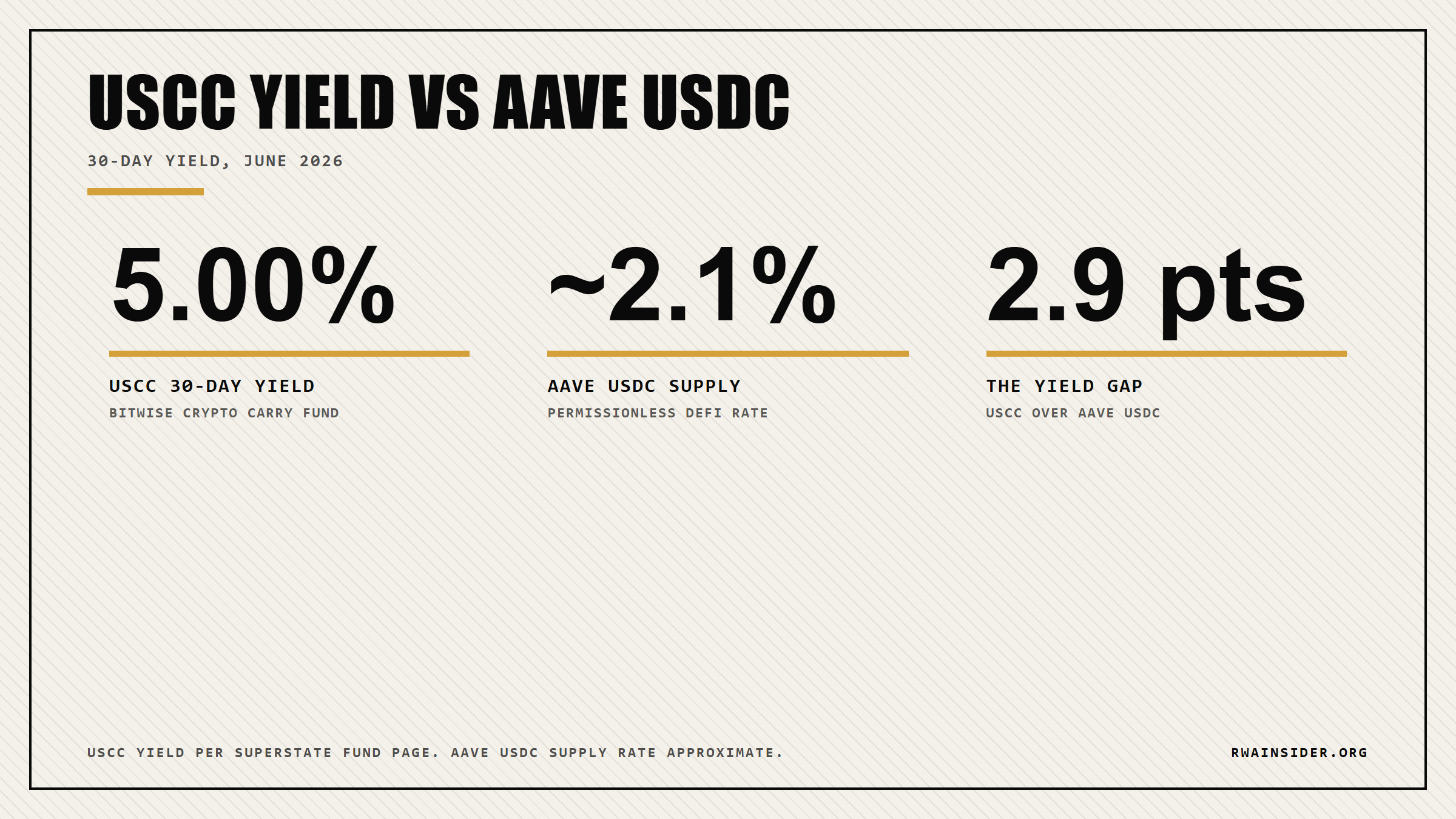
Where USCC’s 5% Yield Beats Aave USDC
USCC carries $269.43 million in assets under management and posts a 30-day yield of 5 percent against a 0.75 percent management fee, according to Superstate’s fund page.
About 10.49 million USCC shares, worth $121.59 million in total value, are now wired into Aave on Ethereum, close to half of the fund’s total assets.
That 5 percent is the number that matters. Aave’s permissionless USDC pool has paid suppliers closer to 2 percent lately, so USCC clears the most-used DeFi cash benchmark by nearly three points.
The yield is not a Treasury coupon alone. USCC runs a market-neutral crypto basis trade, capturing the gap between spot and futures prices, then parks the rest in U.S. Treasuries.
For Aave, the deposit hardens Horizon’s pitch as a venue for institutional RWA collateral rather than only crypto-native tokens.
Strip away the institutional framing and this is really about where idle stablecoins earn more without taking directional price risk.
The gap is worth watching as you compare yields across tokenized treasuries chasing the same retail capital.
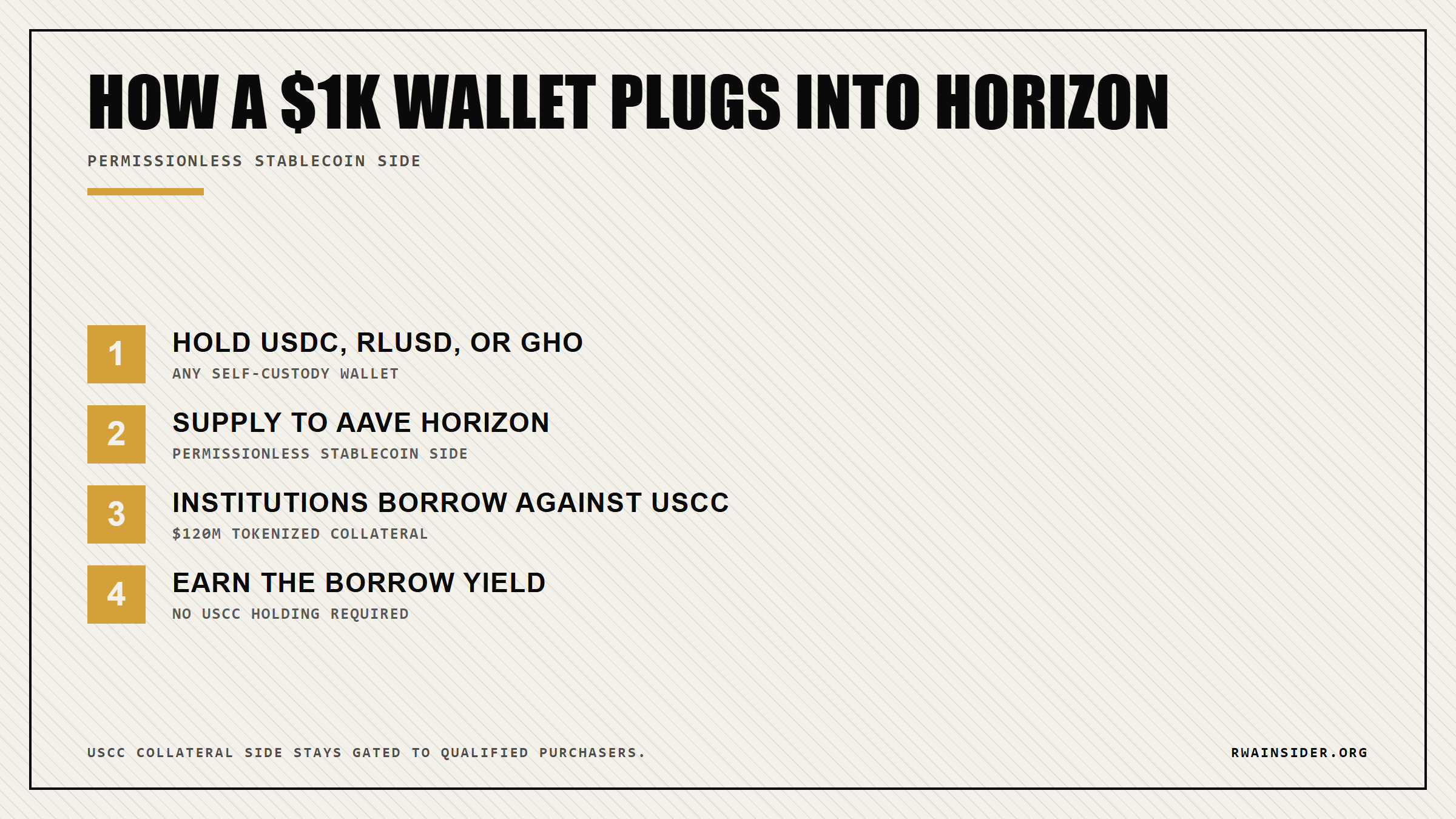
Why Horizon Keeps USCC Behind A Permission Wall
Aave Labs has said Horizon is built to let qualified investors tap 24/7 stablecoin liquidity while respecting issuer compliance rules, the polite way of saying the real-world-asset side stays gated.
Horizon lets permissioned collateral like USCC meet permissionless stablecoin liquidity in USDC, RLUSD, and GHO, so the two halves of the market run on different rulebooks.
That split is the whole story for a $1,000 wallet. You will not be cleared to mint or hold USCC.
But you can sit on the lending side and supply the stablecoins those qualified borrowers draw against, collecting yield set by their demand.
What to watch is whether Aave widens Horizon’s borrower set over the coming months or keeps USCC penned behind qualified-purchaser checks.
The 5 percent is only as useful as the number of wallets allowed to reach it.
If Aave opens Horizon’s collateral side to permissionless wallets, USCC’s 5 percent becomes a number any holder can chase. Until then, your stablecoins are the only way in.
Aave’s Horizon is not the first place tokenized funds hit a permission wall. See why more than $1 billion in Ethereum tokenized funds still leaves permissionless wallets locked out.
Frequently Asked Questions
What is the Bitwise Crypto Carry Fund (USCC)?
USCC is a tokenized fund, formerly run by Superstate and now managed by Bitwise, that earns yield through a market-neutral crypto basis strategy and U.S. Treasuries. It holds about $269 million in assets and is aimed at qualified purchasers, not standard retail wallets.
How much yield does USCC pay?
Superstate’s fund page lists a 30-day yield of 5 percent against a 0.75 percent management fee. That is roughly three percentage points above Aave’s permissionless USDC supply rate, which has hovered near 2 percent in recent months.
Can I buy USCC without KYC?
No. USCC is restricted to qualified purchasers, so a standard self-custody wallet cannot mint or hold it. You can still join the permissionless side of Aave Horizon by supplying USDC, RLUSD, or GHO that those qualified borrowers draw against.
What is Aave Horizon?
Aave Horizon is a lending market built by Aave Labs for institutional real-world-asset collateral. It lets permissioned tokenized assets like USCC interact with permissionless stablecoin liquidity, giving qualified investors 24/7 borrowing while keeping issuer compliance rules in place.