Bybit, Plume Open PIMCO Bond Yield To Idle Stablecoins
Key Points
- Bybit and Plume launched RWA Earn on June 15, 2026, letting Bybit’s roughly 80 million users move idle stablecoins into tokenized bond vaults.
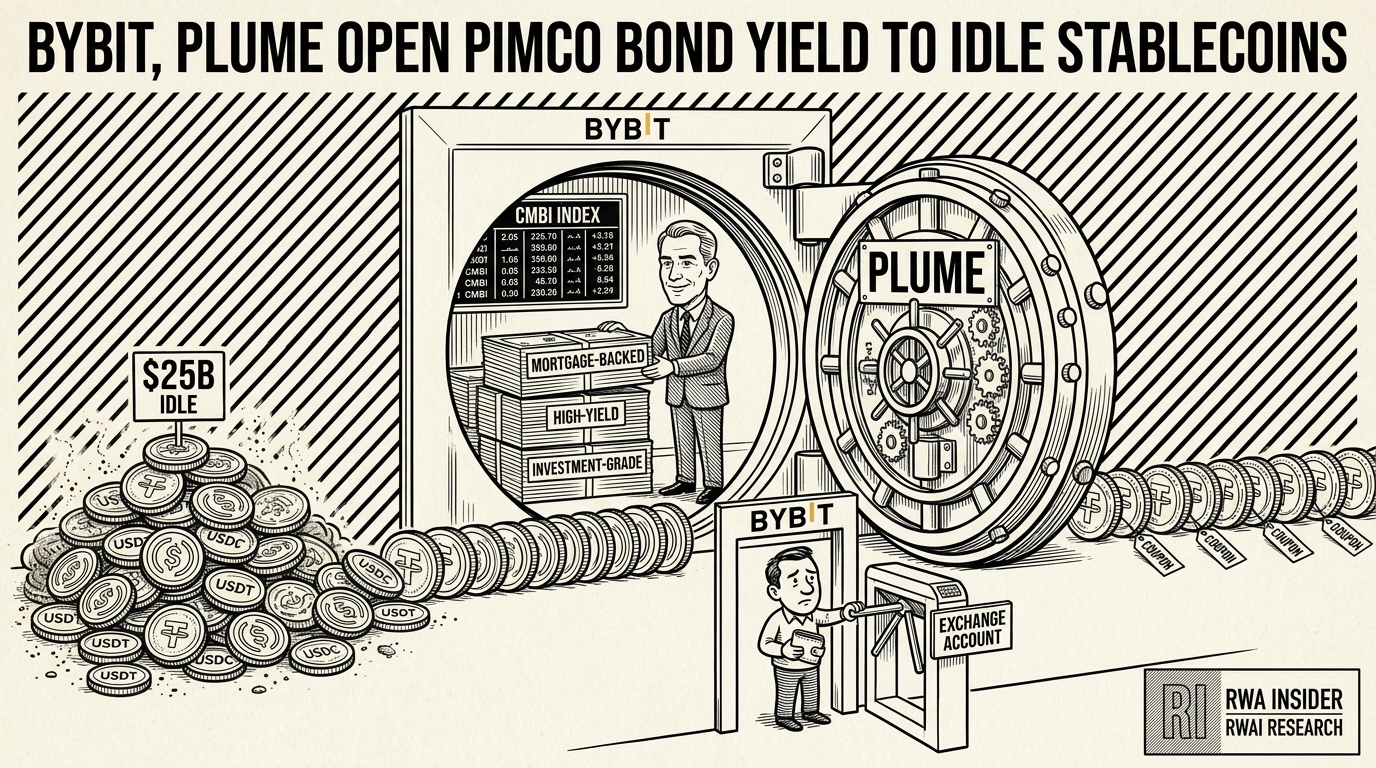
- The vaults hold PIMCO-managed bonds, mortgage-backed securities, and CMBI index debt, tapping the roughly $25 billion in stablecoins sitting idle on exchanges.
- RWA Earn stays inside Bybit, so a $1,000 wallet seeking permissionless bond exposure must look to onchain Plume vaults instead.
Bybit and Plume launched RWA Earn on June 15, 2026, and Bybit pitched it as “a new way to access tokenized real-world asset opportunities without leaving the Earn experience you already know.” The product lets Bybit users earn fixed-income yield on idle stablecoins without moving funds off the exchange. Plume supplies the vault infrastructure, while bond portfolios from PIMCO and the CMBI index sit underneath, built with tokenization partner DigiFT. For a wallet holding stablecoins, the pitch is plain: bond-market income that does not rise and fall with crypto prices.
How RWA Earn Routes Stablecoins Into PIMCO Bonds
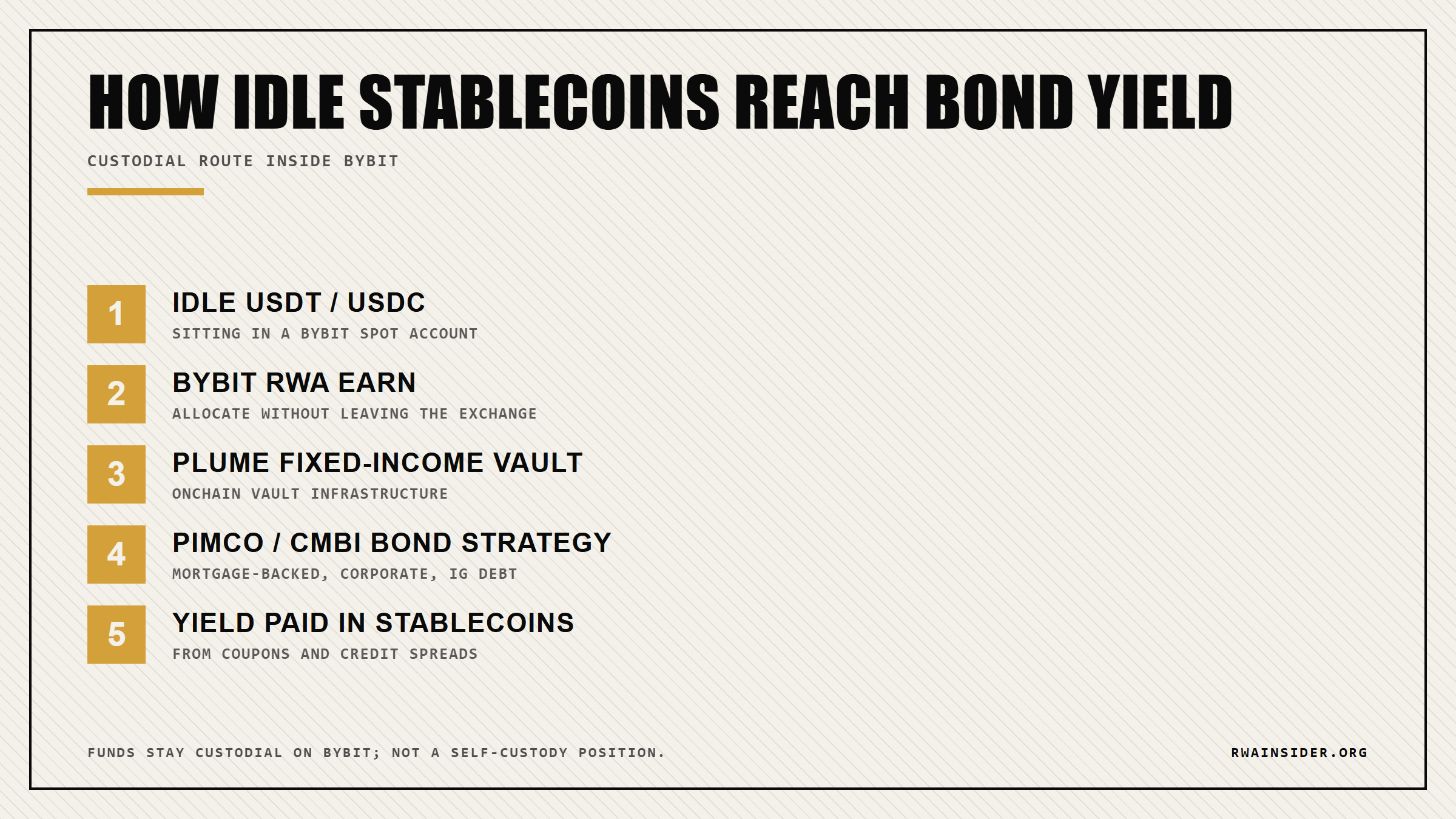
The mechanics look simple on the surface. A Bybit user moves idle stablecoins from a spot account into a curated vault, and the displayed balance stays denominated in stablecoins the entire time.
Behind that balance, Plume runs the vault infrastructure that connects the deposit to regulated bond strategies. PIMCO manages the portfolios, the CMBI index sets the benchmark, and DigiFT is named as a tokenization partner.
Here is where the DeFi translation matters. RWA Earn lives inside Bybit, not on an open chain.
The deposit is custodial and gated behind an exchange account, not a self-custody wallet you control with a seed phrase.
The assets underneath are ordinary securities: mortgage-backed bonds, high-yield corporate debt, and investment-grade paper across Asia-Pacific. Each vault targets a different mix of risk and return, the way a bank fixed-income desk would build one.
The yield is designed to track coupons and credit spreads from the bond market, not trading fees, lending demand, or token emissions.
What Bybit’s Bond Yield Pays Versus Aave USDC
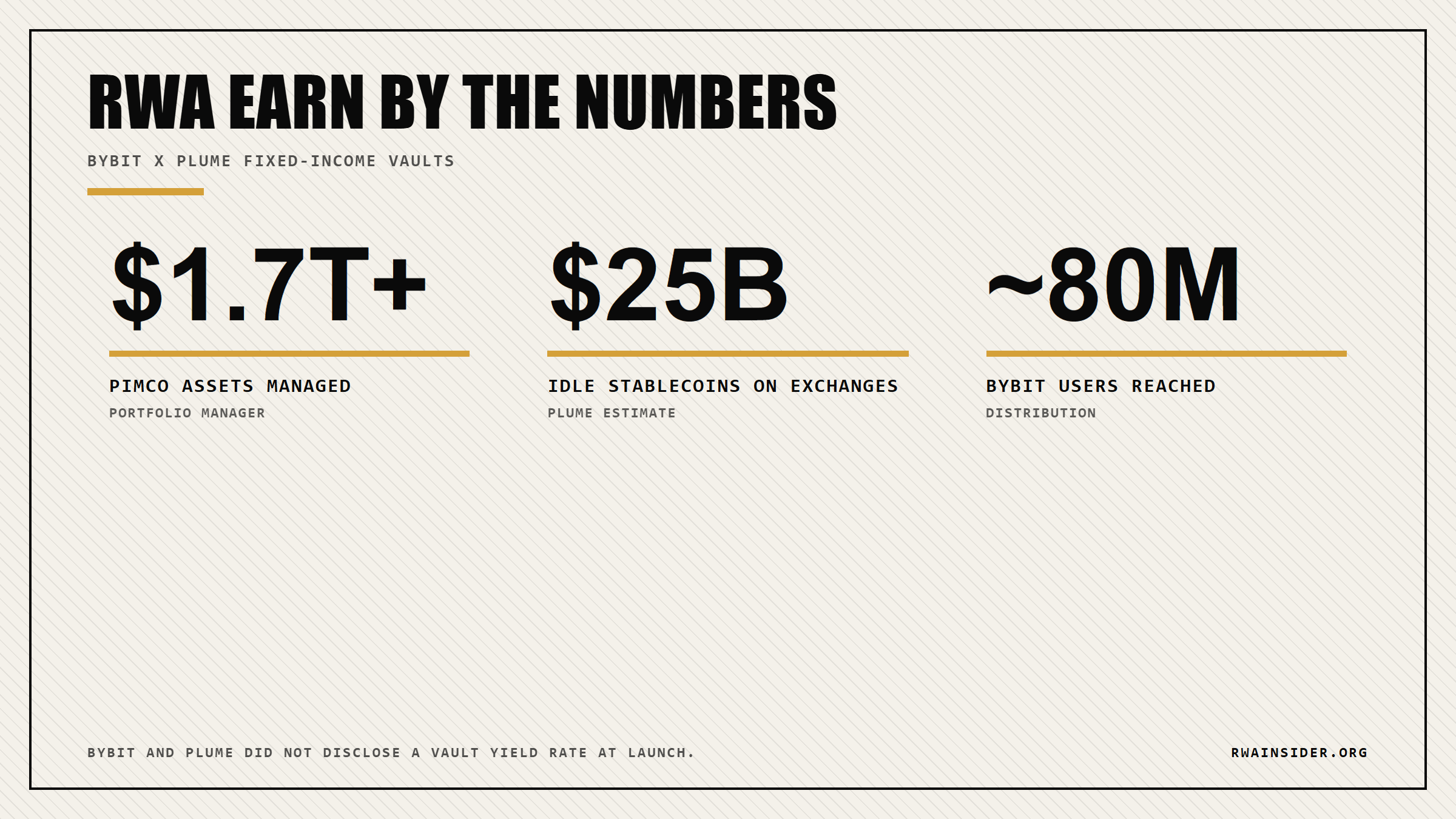
Neither Bybit nor Plume published a headline rate at launch, so treat any specific yield number with caution until the vault pages disclose one. That silence is itself worth noting for a product built around yield.
The comparison that matters is what those stablecoins do otherwise. Sitting idle in a spot account, they earn nothing at all.
Supplied to Aave on Ethereum, USDC pays roughly 2% today, with no lockup and no KYC. That is the permissionless floor this product is measured against.
PIMCO runs more than $1.7 trillion in assets, and the strategies feeding these vaults chase the coupons and credit spreads of regulated debt. That is a different risk profile from a DeFi lending pool, and a different counterparty set.
For a DeFi user, this matters less as a Wall Street partnership than as a way to park stablecoins in bond income without watching a token chart.
The catch is custody. The yield may be real, but the position is not yours to move, lend, or post as collateral on-chain.
Plume estimates roughly $25 billion in stablecoins sits idle across exchanges, the pool this product is built to activate.
How To Get Plume RWA Yield Without A Bybit Account
RWA Earn is a distribution win for Plume, but it is not the only door onto its rails. Plume also runs a public chain where tokenized real-world assets settle and trade permissionlessly.
That distinction is the core pitch from Plume co-founder and chief executive Chris Yin, who has argued through 2026 that real-world assets are crypto’s most durable sector. His reasoning is that the yield originates outside the token economy, so it holds up when crypto prices do not.
A self-custody wallet can hold Plume-based RWA tokens, route into onchain vaults, or follow the institutional capital already settling there. For how tokenized Treasuries and bonds stack up against DeFi lending rates, browse our running coverage of onchain yield.
The reaction online split along familiar lines: custodial convenience for most users, permissionless purity for the rest. Both can be true at once, and Bybit’s roughly 80 million users will decide which one wins.
The open question is whether exchange-gated products like RWA Earn keep liquidity in custodial yield, or act as an on-ramp that eventually pushes users onto permissionless chains.
If RWA Earn proves that exchange users will trade a sliver of control for steady bond income, every major venue will want its own version. Whether that money ever migrates to permissionless vaults is what decides if this is DeFi’s win or just Bybit’s.
Plume has run this play before. Earlier this year a major liquid-staking protocol wired nine figures into its vaults, and you can see how that $100 million bet on Plume’s RWA yield is landing for onchain wallets.
Frequently Asked Questions
What is Bybit RWA Earn and how does it work?
RWA Earn lets Bybit users put idle stablecoins into vaults built on Plume that hold bonds managed by firms like PIMCO. Funds stay denominated in stablecoins on the front end while the yield comes from regulated debt markets in the background.
Can I access Plume RWA yield without using Bybit?
Yes. Plume runs a public blockchain where tokenized real-world assets trade permissionlessly, so a self-custody wallet can hold Plume-based RWA tokens directly without an exchange account or the custody that comes with one.
How much yield does Bybit RWA Earn pay?
Bybit and Plume did not publish a headline rate at launch. The returns are designed to track bond coupons and credit spreads rather than crypto markets, so check the live vault pages for the current rate before depositing.
Is RWA Earn the same as holding stablecoins on Aave?
No. Aave is a permissionless lending pool paying around 2% on USDC with full self-custody. RWA Earn is custodial, gated behind a Bybit account, and backed by traditional bonds instead of onchain borrowers.