100% Of Weekend Gold Price Discovery Now Runs On-Chain
Key Points
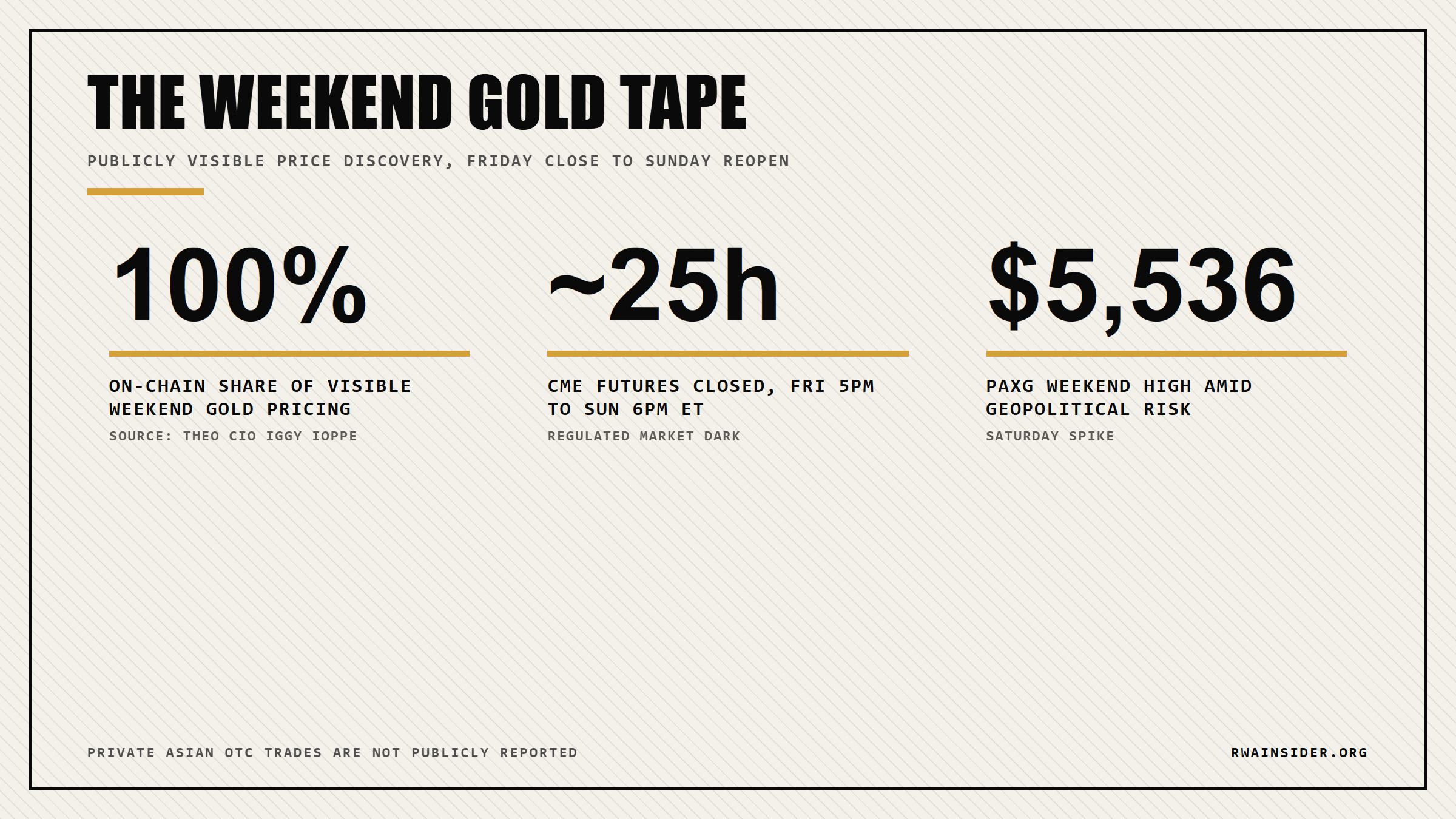
- When CME gold futures close from Friday to Sunday, on-chain tokens like PAXG and XAUT drive virtually 100% of publicly visible weekend gold price discovery.
- Tokenized gold’s market cap jumped 177% in a year to $4.4 billion, with sector trading volume near $178 billion across 2025.
- A $1,000 wallet can hold PAXG or XAUT, trade it on a DEX through the weekend, and post it as collateral while futures sleep.
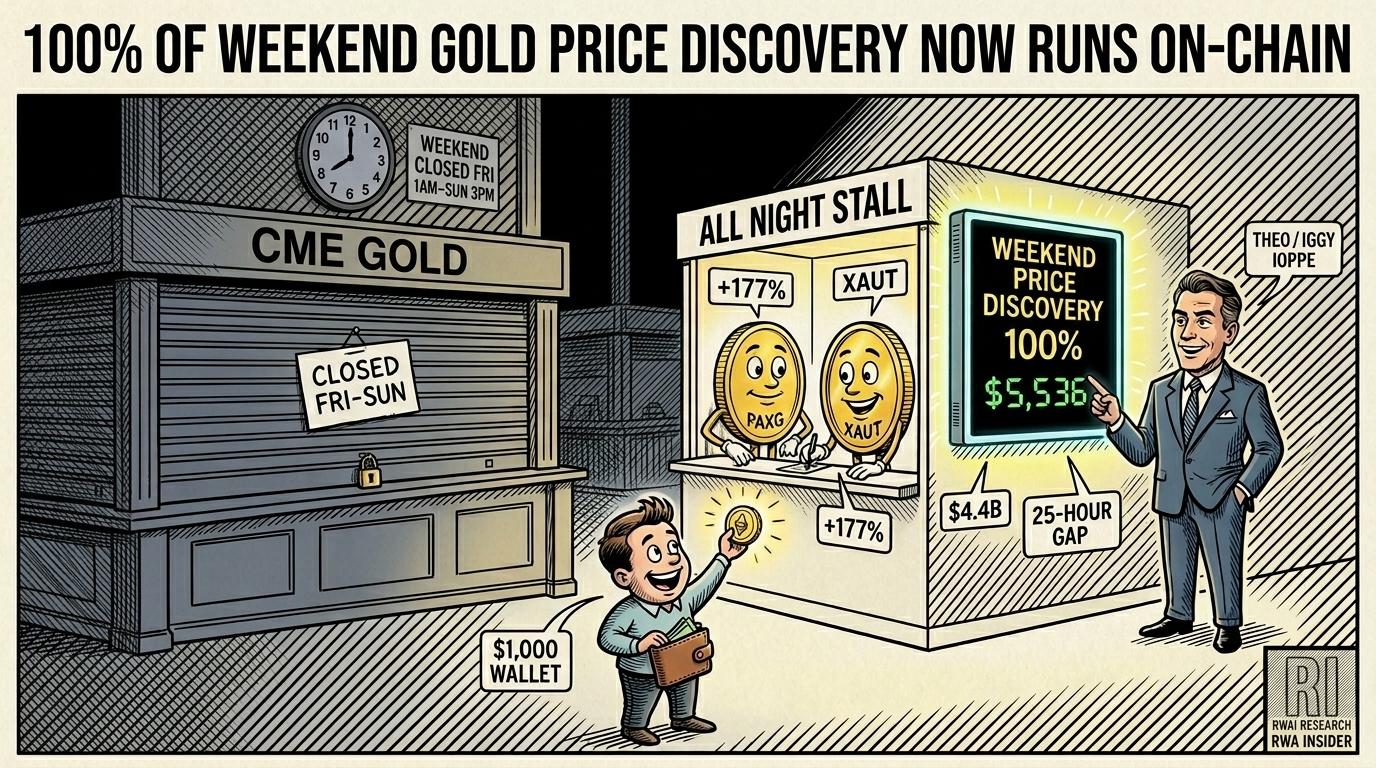
Tokenized gold now drives virtually all publicly visible weekend price discovery for the metal, according to Iggy Ioppe, former Credit Suisse investment chief and now CIO at liquidity firm Theo. “In terms of publicly visible price formation, on-chain markets are responsible for virtually 100% of weekend price discovery,” Ioppe told Cointelegraph, pointing to the 25-hour gap when CME gold futures sit closed from Friday to Sunday evening. For a wallet holder, the gold price moving on-chain through the weekend is not background noise; it is the live market, and it often sets the tone when traditional desks reopen.
Why The Weekend Belongs To PAXG And XAUT
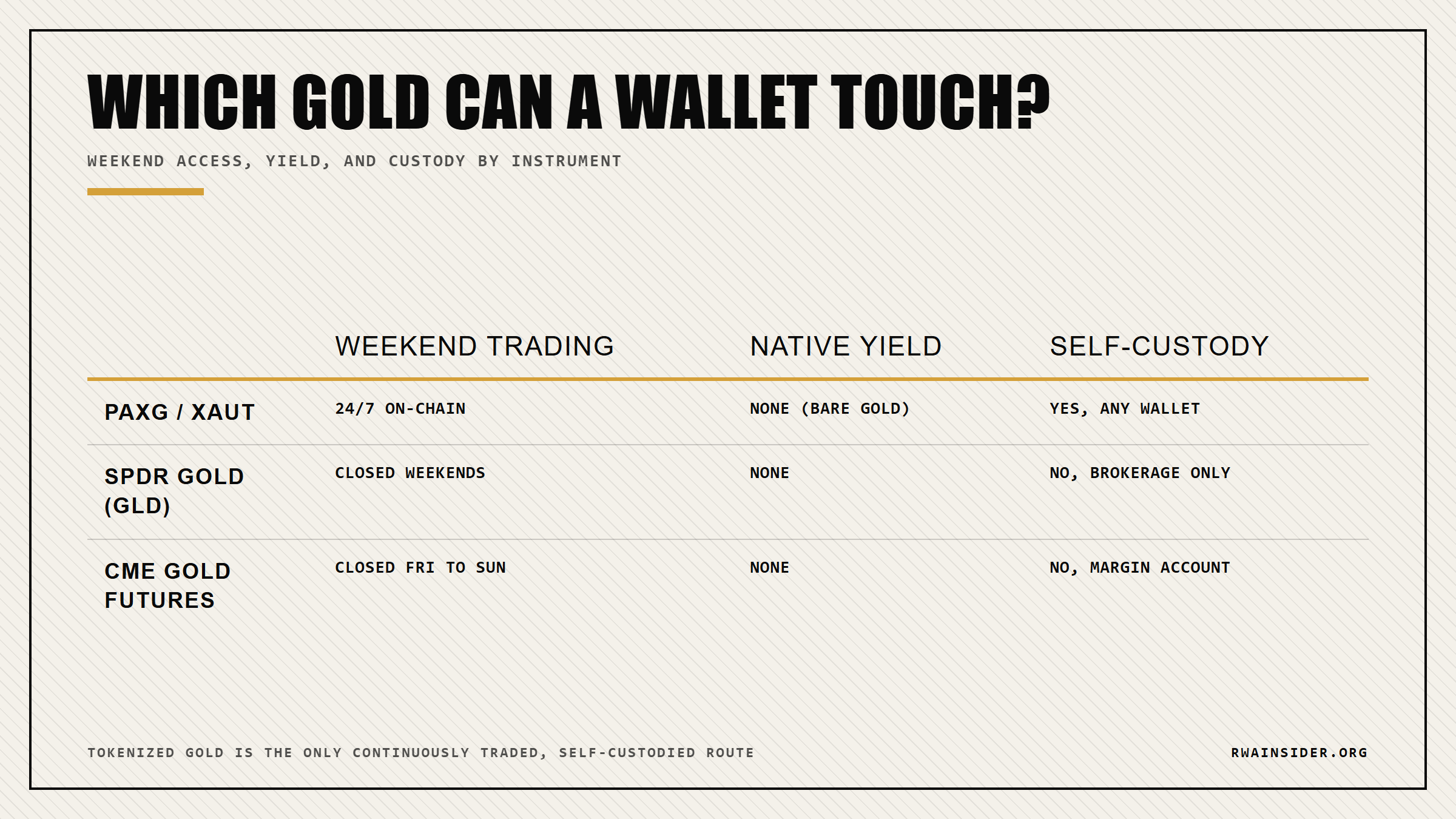
CME gold futures stop trading at 5:00 p.m. ET on Friday and do not reopen until 6:00 p.m. ET on Sunday.
That leaves a roughly 25-hour window when the most-watched regulated gold market is simply closed.
Private over-the-counter desks in Asia keep trading, but those prints are not public.
That hands the visible weekend tape to on-chain tokens like PAXG and XAUT, among the only gold instruments trading continuously where anyone can watch the price form.
The effect showed last Saturday as geopolitical tension escalated.
XAUT briefly pushed above $5,450 and PAXG neared $5,536 before trimming gains, even as Bitcoin and Ethereum fell over the same hours.
Any wallet could trade that move in real time. No broker, no market-hours gate, no waiting for Sunday’s reopen.
Tokenized Gold’s $4.4B Market Cap Jumped 177%
The weekend bid is not running on a niche asset anymore.
Tokenized gold’s combined market cap climbed from about $1.6 billion to $4.4 billion in a year, a 177% jump that outpaced the broader gold market and most spot gold ETFs.
Holders nearly tripled, adding more than 115,000 new wallets.
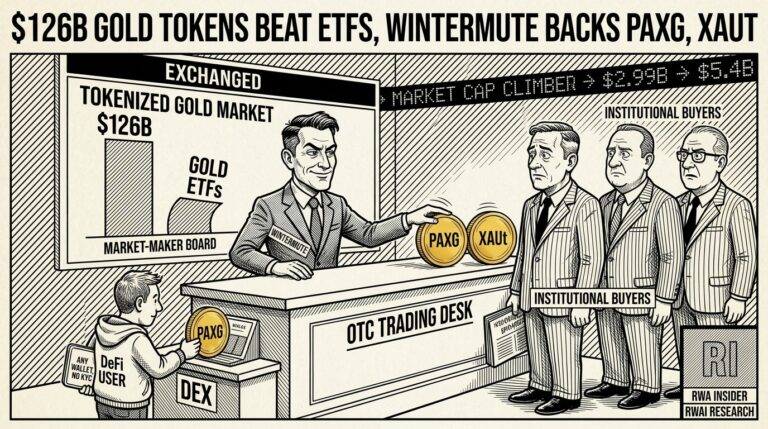
Trading volume hit roughly $178 billion in 2025 and topped $126 billion in the fourth quarter alone, enough to rank it second only to SPDR Gold Shares by volume.
The sector also pulled in about a quarter of all net inflows into real-world assets, more than tokenized stocks, corporate bonds, and non-U.S. Treasurys combined.
Strip away the institutional framing and this is really about which gold a wallet can touch at 2 a.m. on a Sunday: not a futures contract, not a share of GLD, but a token in self-custody.
On yield, be clear-eyed: PAXG and XAUT are bare claims on metal and pay no native yield.
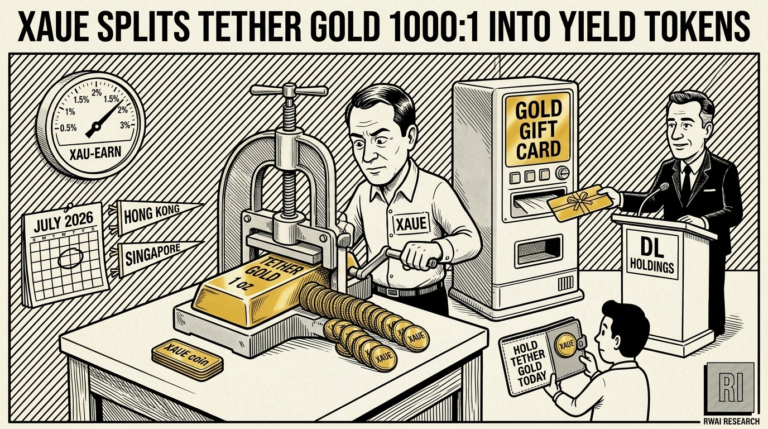
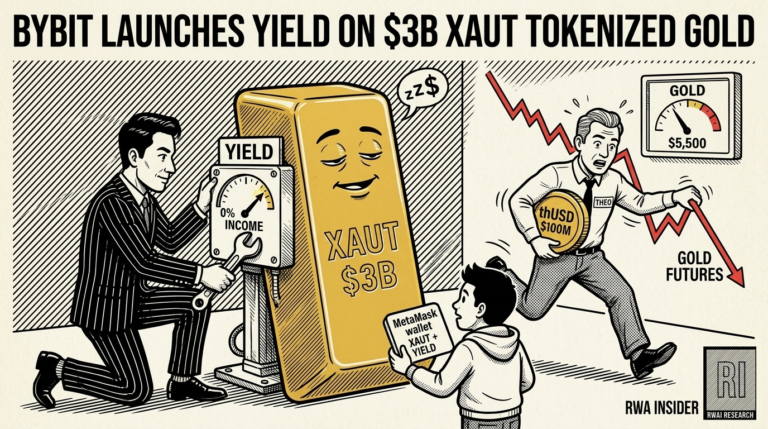
Tokenized Treasuries sit near 4%, so gold tokens are a hedge, not a carry trade, though new wrappers are starting to bolt yield onto the same tokens.
You can track every tokenized-gold and yield move we cover without leaving your wallet.
Thinner Liquidity Caps The 24/7 On-Chain Gold Bid
Institutions are watching, but carefully.
Ioppe said macro and cross-asset desks track weekend on-chain gold mainly to gauge gap risk before the CME reopen, treating it as information rather than a place to actively trade.
The gaps are real: thinner liquidity than futures or ETFs, plus fragmented custody, accounting, and capital rules across jurisdictions.
Iggy Ioppe, the former Credit Suisse CIO now running point at Theo, expects tokenized and traditional gold to run in parallel rather than converge, each serving a different desk.
For DeFi, the open question is depth. As gold-yield wrappers grow and more venues list PAXG and XAUT, the weekend bid that institutions only watch today could become one they actually trade.
Whether weekend on-chain gold stays a read-only signal or turns into a venue real money trades depends on liquidity deepening, and the next volatile weekend will test it. For now, the only gold market open when the world reacts is the one already sitting in your wallet.
The same tokens just powered a record quarter, so see how on-chain gold crossed a $126 billion trading milestone and what it means for your weekend exit liquidity.
Frequently Asked Questions
What is tokenized gold and how does it track the gold price?
Tokenized gold is a blockchain token where each unit represents ownership of physical gold, usually one troy ounce held in a vault. PAXG is issued by Paxos and XAUT by Tether Gold, and both trade on-chain at prices that move with spot gold around the clock.
Can I trade PAXG or XAUT on weekends without KYC?
Yes. On a decentralized exchange, any self-custody wallet can swap PAXG or XAUT 24 hours a day, including weekends, with no broker and no market-hours gate. Centralized venues that list the same tokens may still require KYC at signup.
Why does on-chain gold drive weekend price discovery?
CME gold futures close at 5 p.m. ET Friday and reopen at 6 p.m. ET Sunday, and private Asian over-the-counter trades are not publicly reported. That leaves PAXG and XAUT as the only continuously traded gold instruments where the price is visible to everyone.
Does tokenized gold like PAXG pay yield?
No. PAXG and XAUT are bare claims on metal and pay no native yield, unlike tokenized Treasuries that sit near 4%. Newer wrappers are beginning to add a yield layer on top of gold tokens, but the base token itself is a hedge rather than an income play.