$126B Gold Tokens Beat ETFs, Wintermute Backs PAXG, XAUt
Key Points
- Wintermute opened an institutional OTC desk for Pax Gold and Tether Gold as on-chain gold volume reached $126 billion in the fourth quarter of 2025.
- On-chain gold market cap climbed more than 80% in three months, rising from $2.99 billion to $5.4 billion.
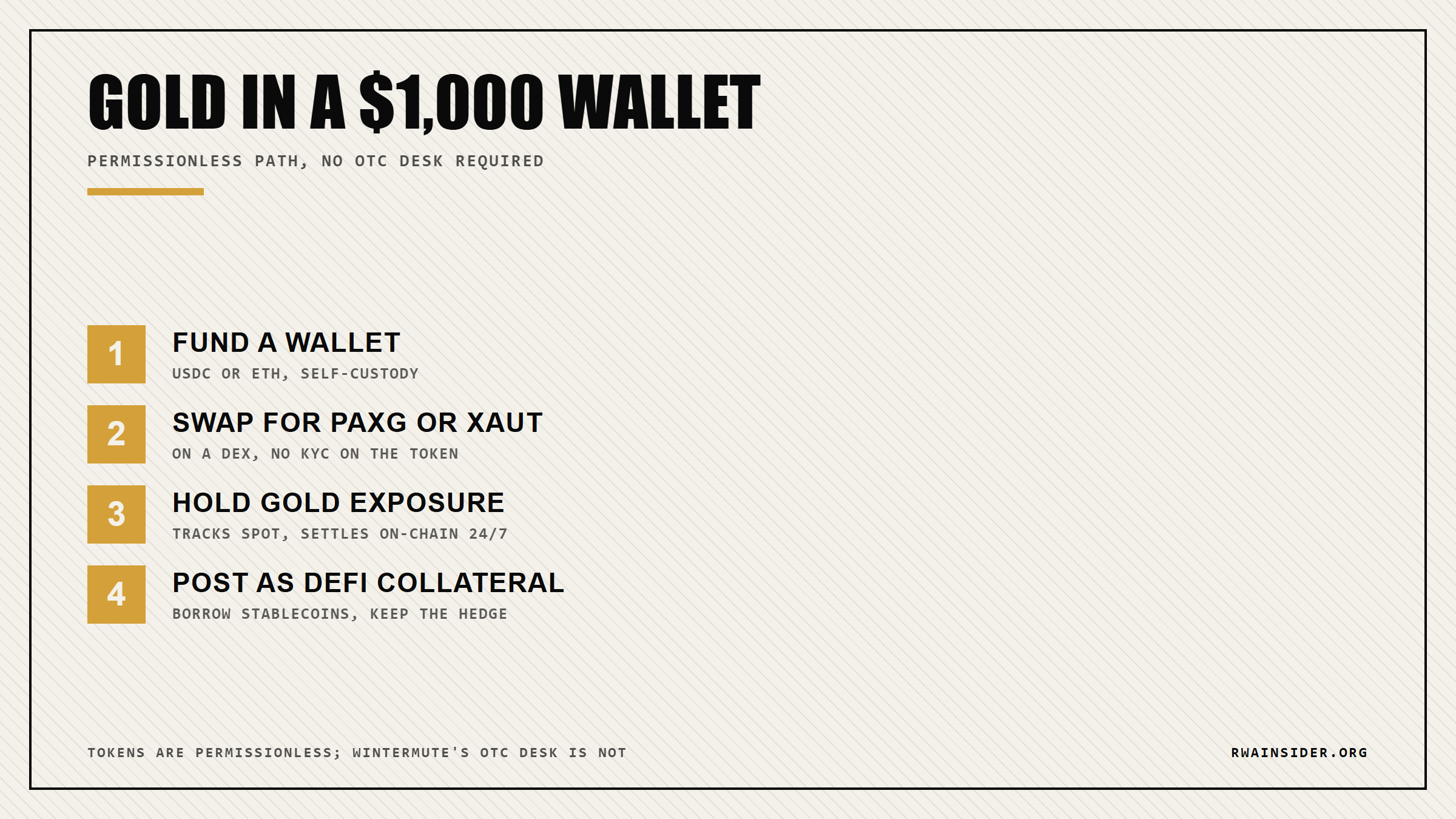
- A $1,000 wallet can hold Pax Gold or Tether Gold on Ethereum and post it as DeFi collateral, with no KYC on the token itself.
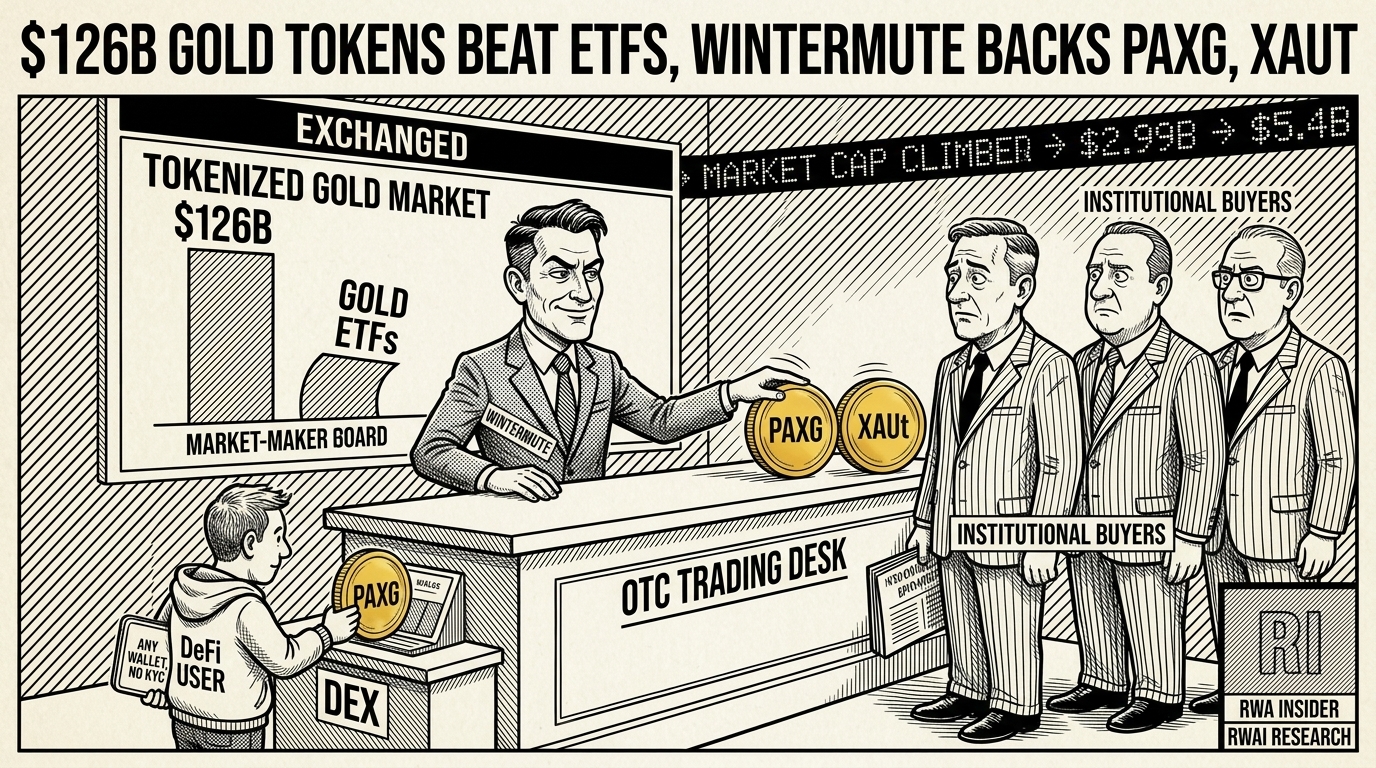
Wintermute, one of crypto’s largest market makers, opened an institutional over-the-counter desk for Pax Gold and Tether Gold, the two biggest tokenized gold tokens, after on-chain gold volume hit $126 billion in the fourth quarter of 2025 and beat five major gold ETFs. CEO Evgeny Gaevoy said the firm is “watching gold undergo the same infrastructure evolution that turned foreign exchange into the world’s largest market.” The desk is gated to institutions, but the tokens it quotes sit in any wallet, and a deeper market maker means tighter spreads on gold a $1,000 wallet can buy.
Wintermute’s OTC Desk Quotes PAXG, XAUt In USDT, USDC
Wintermute announced the launch on Monday, opening algorithmically priced spot trading for institutional counterparties that want gold exposure settled on-chain instead of through traditional bullion custody.
The desk quotes Pax Gold and Tether Gold against USDT, USDC, fiat, and major crypto assets, which lets trading desks hedge in real time and mobilize the position as collateral.
Demand is rising because investors want 24/7 liquidity and instant settlement, neither of which a gold ETF tied to market hours can offer.
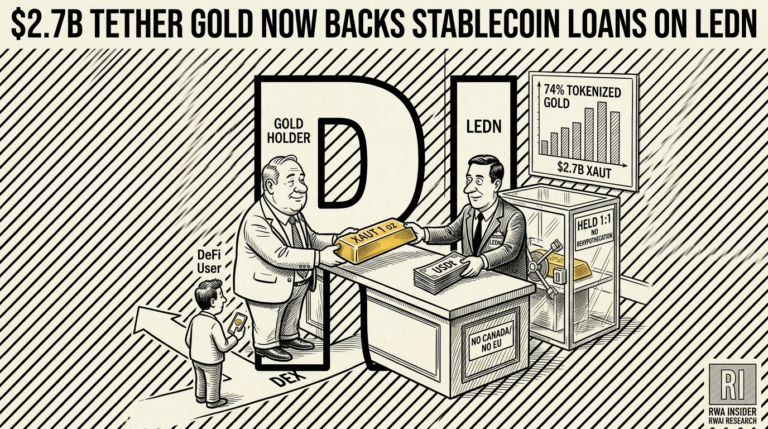
Here is the part that matters for DeFi. The OTC desk is KYC-gated and built for institutions, but PAXG and XAUt are ordinary tokens any self-custody wallet can hold on Ethereum.
Wintermute is not opening a new door for retail. It is deepening the liquidity behind a door that is already open.
$5.4B Of Gold Tokens, But Zero Native Yield
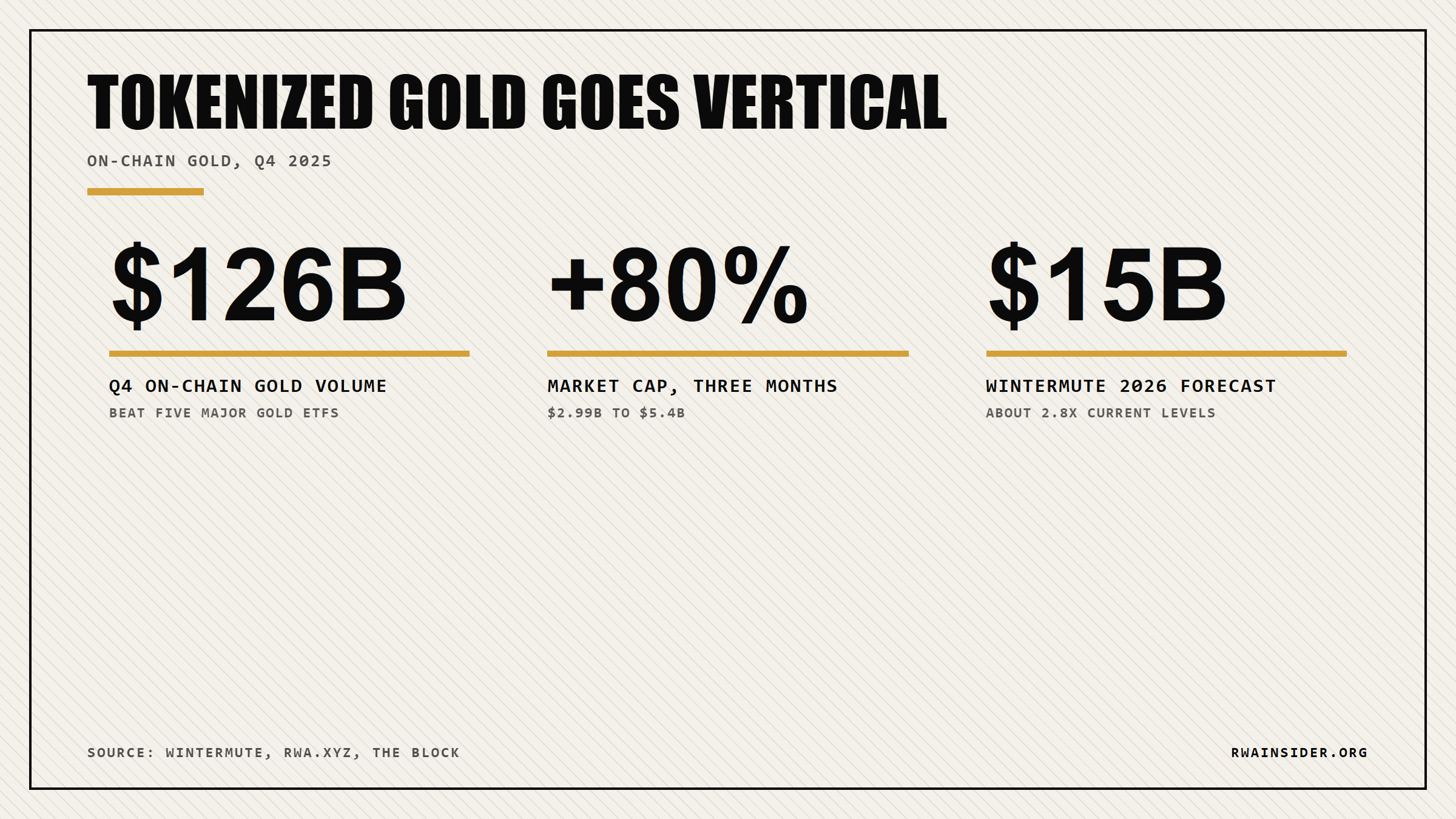
The data behind the move is steep. On-chain gold market cap jumped more than 80% in three months, from $2.99 billion to $5.4 billion.
Wintermute CEO Evgeny Gaevoy expects the market to reach $15 billion in 2026, roughly 2.8 times today’s level.
Tokenized public-market real-world assets tripled in 2025 to about $16.7 billion, and some estimates put the broader tokenized market anywhere from $24 billion to over $65 billion by mid-2026.
Stablecoins on Ethereum now top $175 billion, and that liquidity layer is the on-ramp and settlement rail for most of these trades.
Pax Gold and Tether Gold track the spot gold price and pay no native yield. That puts them on the opposite side of the yield gap from a tokenized Treasury paying around 4% to 5%.
Strip away the press release and the trade is simple: you give up the Treasury coupon for a hedge that settles on-chain and doubles as collateral.
Unlike a gold ETF, these tokens can be posted in DeFi lending markets, the capital-efficiency edge bullion cannot match.
You can compare yields across tokenized real-world assets to see exactly where a non-yield hedge fits.
Wintermute’s $15B Bet And The DEX Question
Wintermute frames this as the start of a much larger shift. Gaevoy projects the tokenized gold market reaching $15 billion in 2026.
He cites persistent macroeconomic uncertainty and de-dollarization as the demand drivers, with gold trading near record highs.
ARK Invest projects tokenized assets could top $11 trillion by 2030, and Standard Chartered sees $2 trillion by 2028.
BlackRock executives have called tokenization a structural shift for capital markets, the kind of institutional signal that pulls counterparties onto the same rails.
For a wallet holder, the open question is whether institutional OTC depth reaches the public order books.
Market makers arbitrage price gaps between their desks and on-chain pools, so tighter institutional spreads tend to pull DEX spreads in over time.
That arbitrage is the bridge between the institutional desk and the $1,000 swap, and it usually plays out over weeks, not days.
Collateral acceptance is the other thing to watch. PAXG already trades across major DeFi venues, and wider lending-market support would turn it from a passive hedge into a borrowing base.
For now, the tokens are permissionless and the desk is not. That gap is the story.
Wintermute just made the institutional market in tokenized gold deeper. Whether that depth reaches the wallet swapping $1,000 of PAXG on a DEX is what the next few quarters will settle.
For more on how metal-backed tokens are landing in DeFi, read our coverage of the on-chain rush into tokenized metals.
Frequently Asked Questions
What is Pax Gold and how does it work?
Pax Gold, or PAXG, is an ERC-20 token where each unit represents one fine troy ounce of London Good Delivery gold held in custody. It trades on-chain around the clock and tracks the spot gold price, so holders get gold exposure without storing bullion.
Can I buy tokenized gold without KYC?
The token itself is permissionless. Anyone can swap for Pax Gold or Tether Gold on a decentralized exchange and hold it in a self-custody wallet. Wintermute’s new OTC desk, by contrast, is KYC-gated and built for institutions, not retail wallets.
Does tokenized gold pay yield?
No. Pax Gold and Tether Gold track the spot gold price and pay no native yield, unlike tokenized Treasuries that pay a coupon. The upside is composability: you can post the tokens as collateral in DeFi lending markets and borrow against your gold.
Why does Wintermute entering the market matter for traders?
Wintermute is one of the largest crypto market makers. Its OTC desk adds depth to a market that hit $126 billion in quarterly volume, and tighter institutional spreads tend to pull on-chain DEX spreads in over time, which can lower trading costs for everyone.