$12.6T Repo Market Goes Onchain As HIFI Settles On Canton
Key Points
- HIFI and DRW completed an onchain repo on the Canton Network, settling cash against U.S. Treasuries in a market that averages $12.6 trillion daily.
- The cash leg moved from fiat to USDC and then USDCx, settling atomically, while 30% of institutions rank repo as their top tokenization priority.
- A $1,000 wallet cannot join an institutional repo, but it can hold USDC near 2% on Aave or trade Canton Coin, the network’s open token.
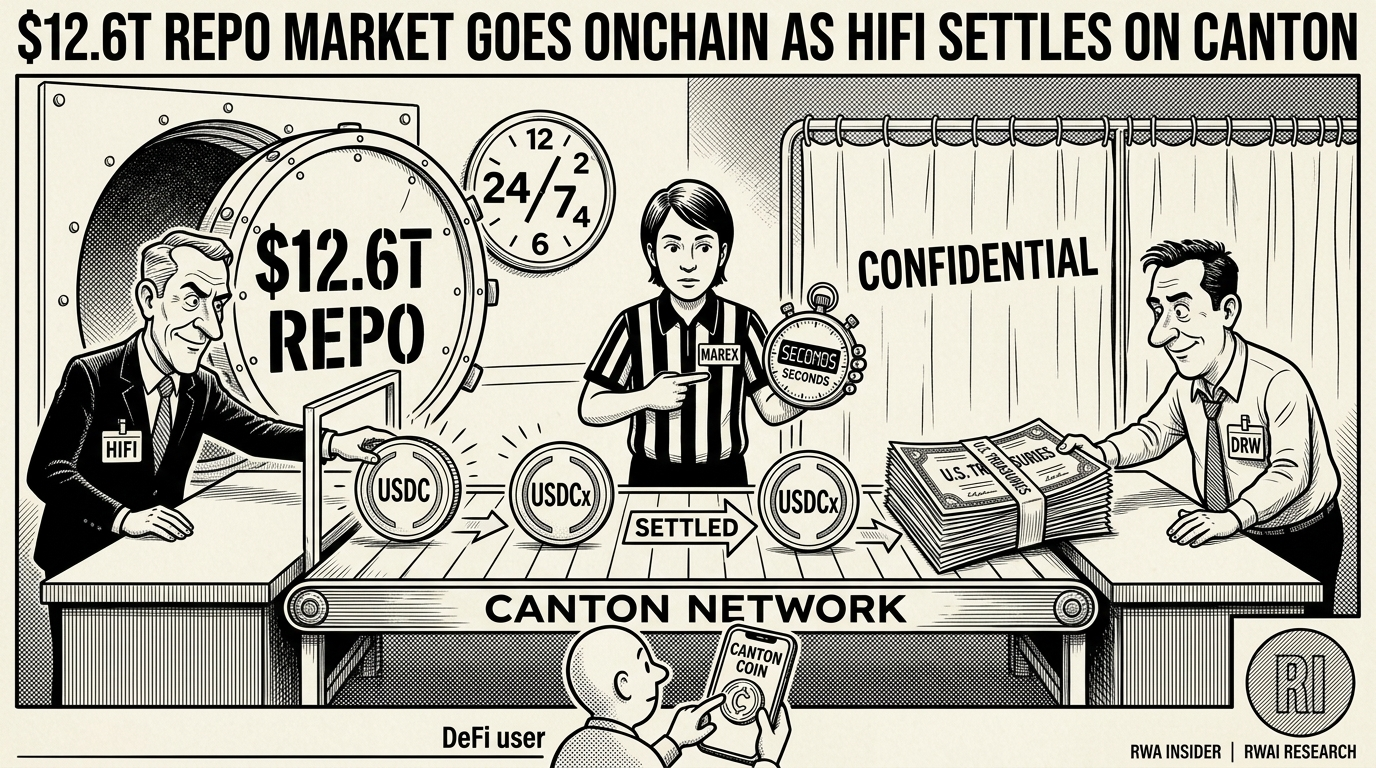
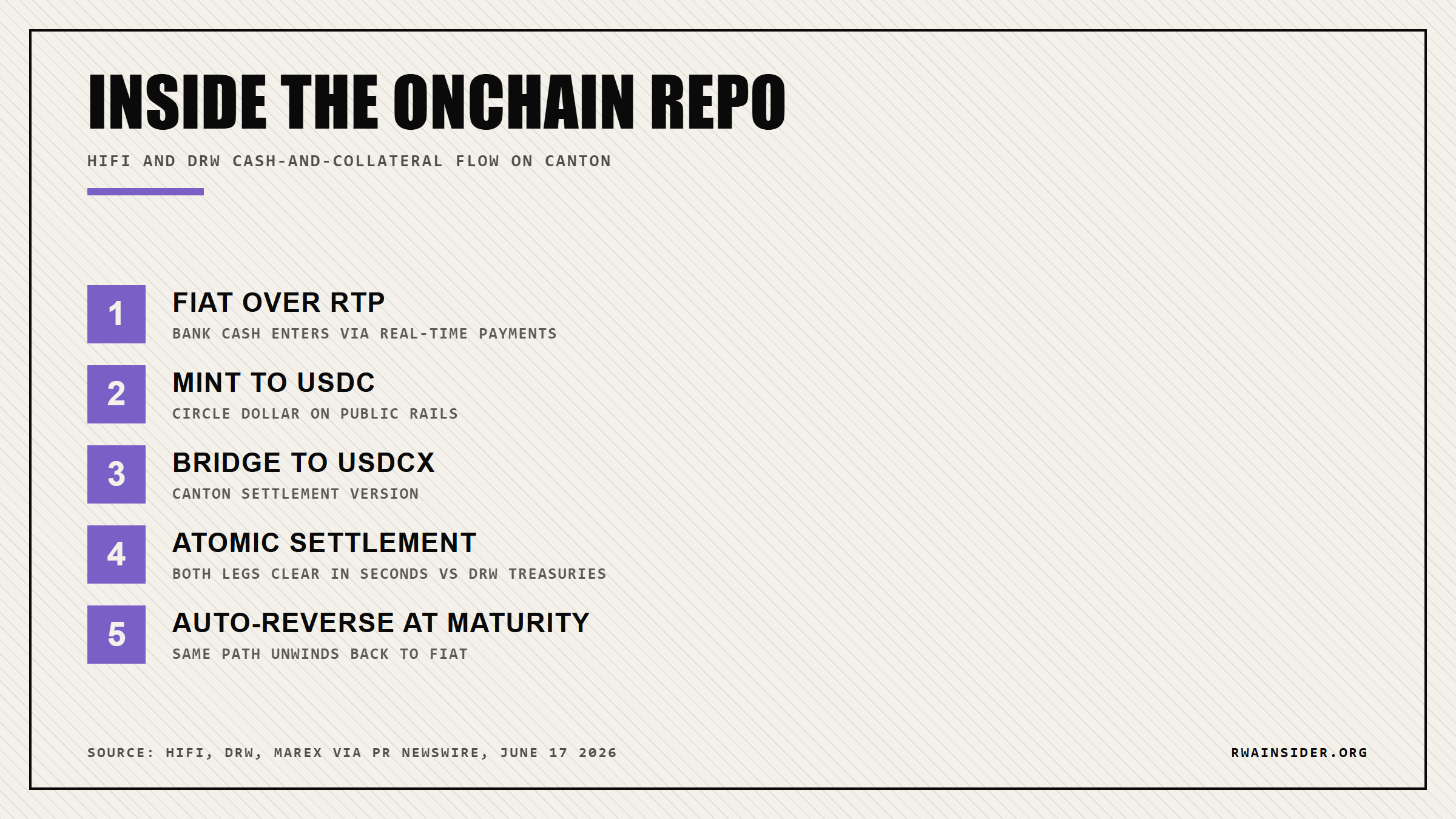
HIFI, a stablecoin infrastructure company, settled an onchain repurchase agreement with the trading firm DRW on the Canton Network, with Marex acting as prime broker. The June 17 deal, announced over PR Newswire, ran its cash leg from fiat into USDC and then USDCx, clearing both sides in seconds against U.S. Treasuries. “Cash moved from fiat rails into an onchain repo transaction and back again in real time,” said Mohamed Afifi, HIFI’s chief operating officer. For a wallet holder, the story is the dollar that powered it: the same USDC sitting in DeFi just cleared an institutional repo.
HIFI Routes The Cash Leg Through USDC On Canton
The mechanics are what make this trade matter. HIFI supplied the cash side, DRW posted U.S. Treasuries as collateral, and Marex sat in the middle as prime broker.
The order was priced on Tradeweb through a request-for-quote process, the same way dealers shop repo prices in traditional markets.
Here is the part a DeFi user should notice. The cash never stayed as plain bank money.
It moved from fiat into USDC, then into USDCx, the version of Circle’s dollar that settles on Canton. At maturity, the flow reversed automatically along the same path.
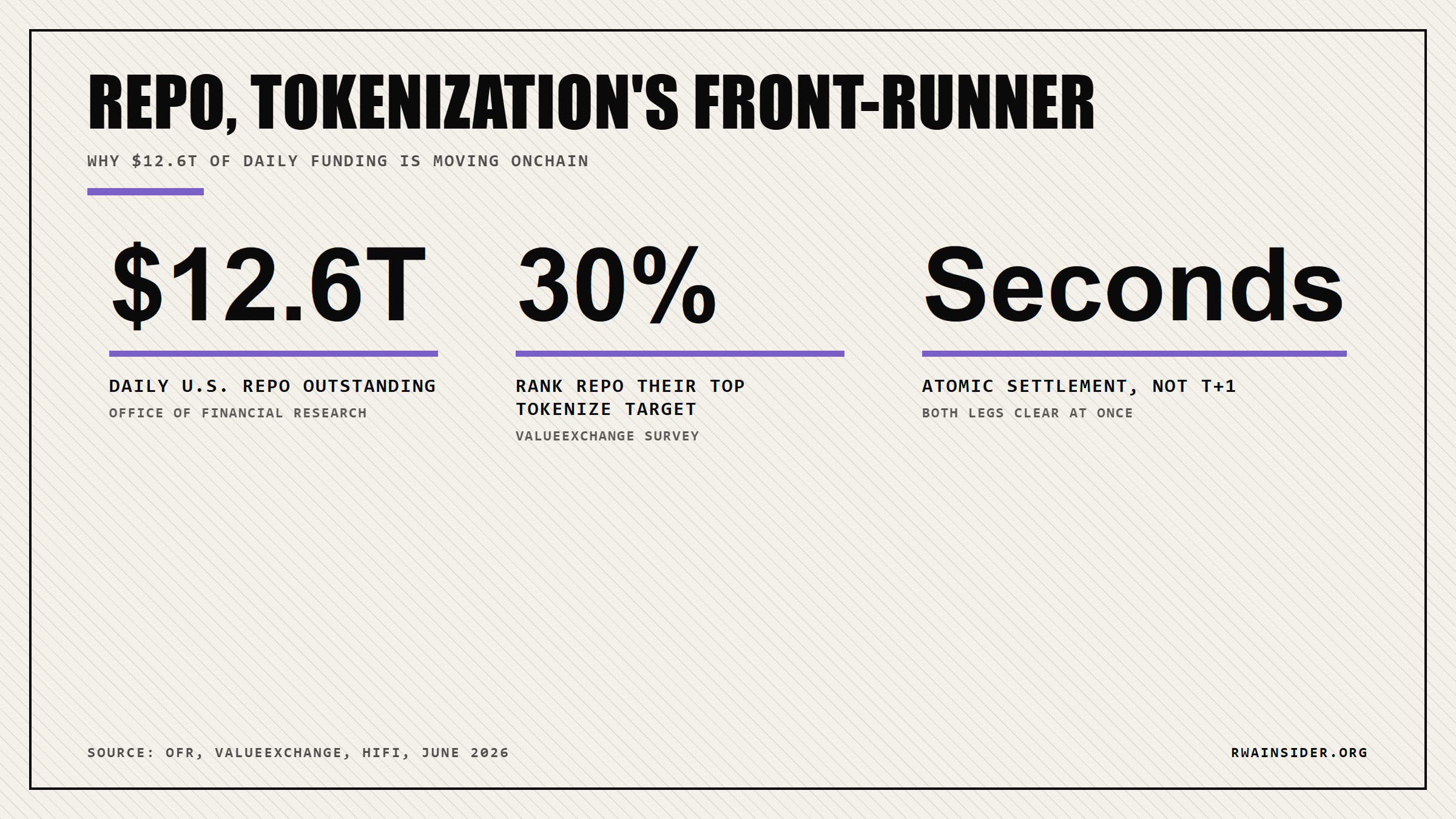
Both legs cleared at the same instant, with no window where one party sits exposed, and the funding landed in seconds rather than the next business day.
Why Repo Is Tokenization’s $12.6 Trillion Prize
Repo is the plumbing under U.S. capital markets, the short-term cash that keeps trading and settlement moving. It is also tokenization’s most wanted target.
The U.S. repo market averages $12.6 trillion in daily outstanding exposures, according to the Office of Financial Research.
In ValueExchange research, 30% of firms named repo as their highest-priority tokenization use case, ahead of derivatives margining and securities lending.
Strip away the press release and this is really about idle dollars and idle Treasuries finally earning around the clock instead of sleeping through nights, weekends, and closed market hours.
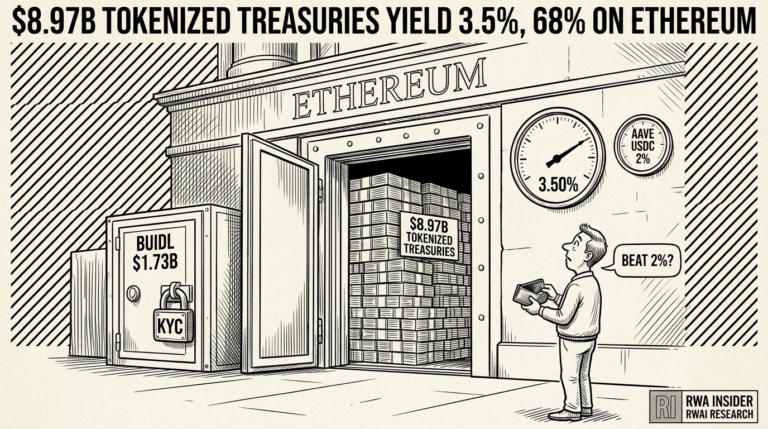
On the open side, that same dollar already has a job. USDC supplied to Aave earns roughly 2% with no KYC, the permissionless floor against which any institutional repo rate gets measured.
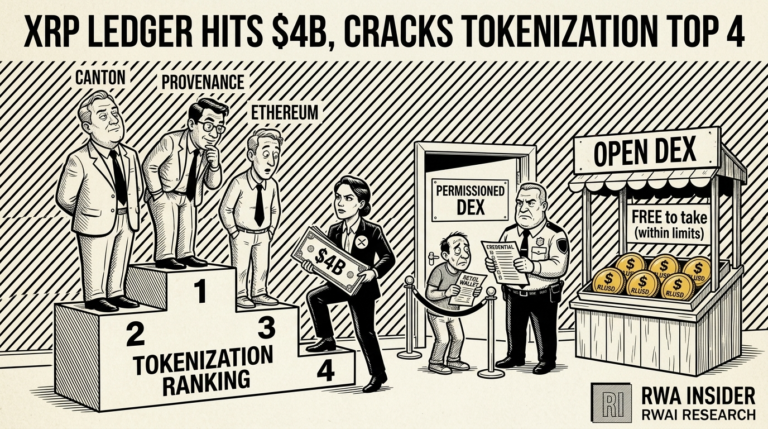
Canton itself is not open in that way. The Canton Network is permissioned and purpose-built for institutions, and you can compare how tokenized funding is reshaping onchain markets across the assets a retail wallet can actually reach.
Canton Coin Is The Only Open Door For Now
Not everyone gets to play in this market yet.
Kelly Mathieson, chief business development officer at Digital Asset, the company behind Canton, framed the win as a timing fix.
“Bringing these workflows onchain transforms repo from a scheduled liquidity tool into a real-time one,” she said, pointing to cross-border markets where currency and collateral location create friction.
For a retail wallet, the practical door is narrower. The repo itself is permissioned and KYC-gated, closed to a $1,000 balance.
What stays open is Canton Coin, the network’s native token, which trades freely and moves with how much real settlement flows across Canton.
The other open thread is USDCx. The more institutional cash that clears in it, the deeper its liquidity gets for the wallets that can already bridge in.
Onchain repo just proved it can settle a real institutional trade in seconds. Whether that plumbing ever reaches a self-custody wallet depends on how far Canton opens its doors, and the next round of deals will show the direction.
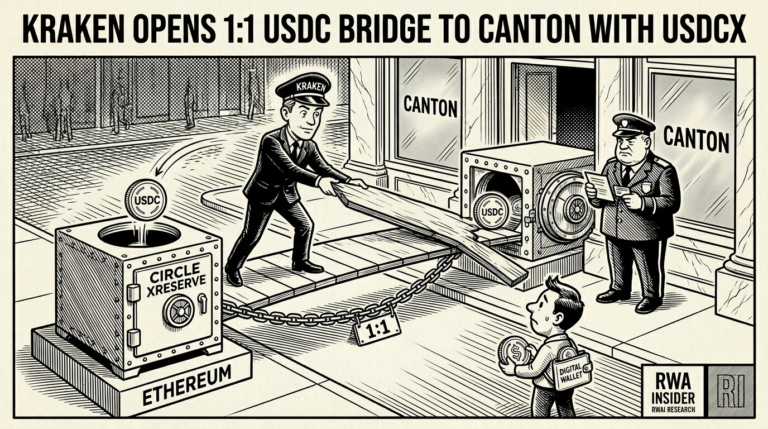
If you want the part you can act on today, look at the retail bridge that already moves USDC onto Canton one-to-one and decide whether the dollar in your wallet belongs there.
Frequently Asked Questions
What is onchain repo and how does it work?
A repurchase agreement, or repo, is a short-term loan where one party hands over cash and the other posts collateral, usually U.S. Treasuries, to buy back later. In this deal, HIFI supplied the cash in USDC, DRW posted the Treasuries, and both legs settled on Canton at the same moment.
Can a retail DeFi wallet use Canton without KYC?
Not for the repo itself, which is permissioned and institutional. The open layer is Canton Coin, the network’s freely traded native token, and USDCx, the Canton version of USDC that a wallet can bridge into through services like Kraken.
What is USDCx and how is it different from USDC?
USDCx is the representation of Circle’s USDC that settles on the Canton Network. HIFI converted fiat to USDC, then to USDCx, to clear the cash leg. It is meant to track USDC one-to-one, so the value matches the dollar you already hold.
How big is the repo market and why move it onchain?
The U.S. repo market averages $12.6 trillion in daily outstanding exposures, per the Office of Financial Research. Settling it onchain lets cash and collateral move in real time, freeing capital that would otherwise sit idle waiting for slower settlement windows.