$8.97B Tokenized Treasuries Yield 3.5%, 68% On Ethereum
Key Points
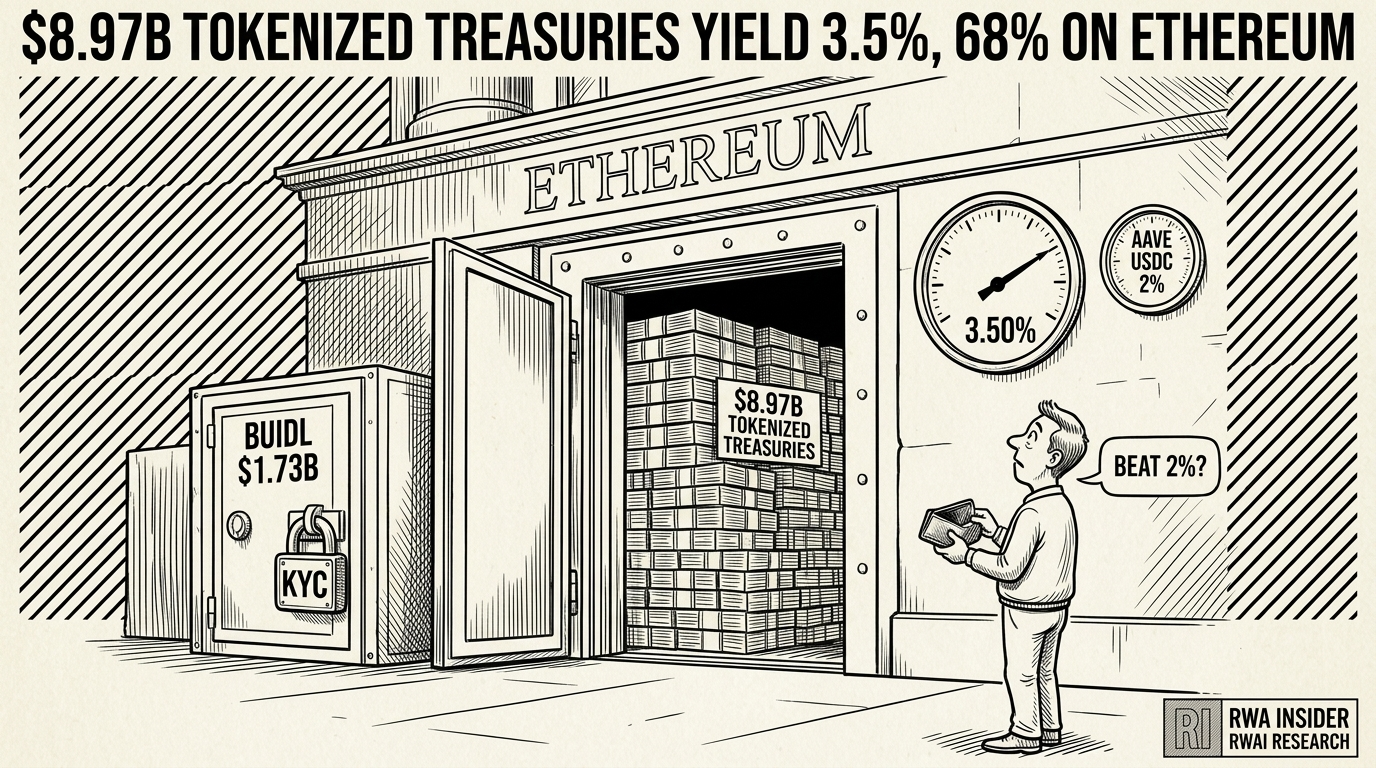
- Tokenized Treasuries reached $8.97B across 62 funds and 59,083 holders, with a 7-day average yield of 3.50%, according to RWA.xyz.
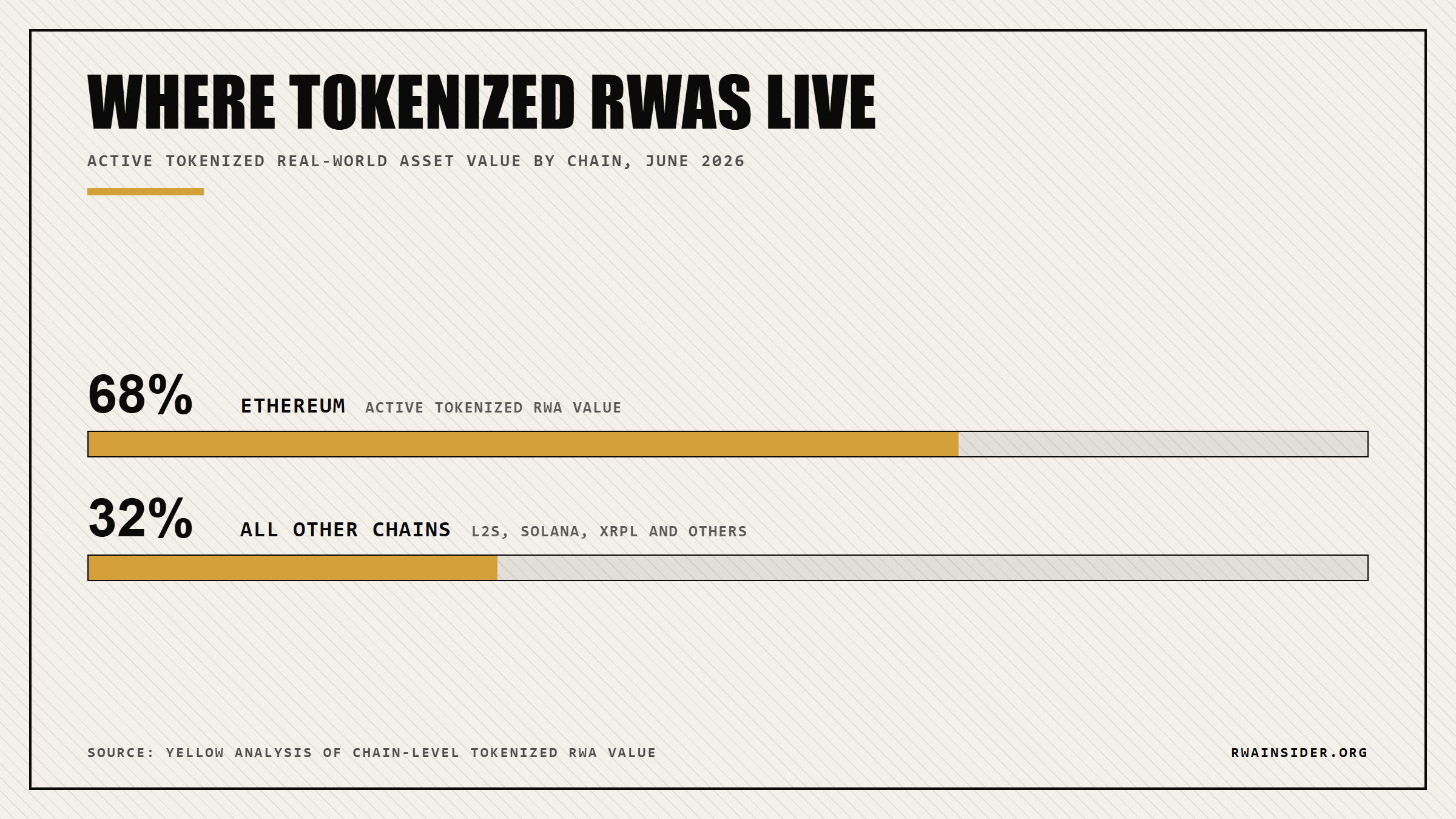
- Ethereum hosts roughly 68% of all active tokenized real-world asset value as of June 2026, led by BlackRock’s $1.73B BUIDL fund.
- A wallet earning about 2% on Aave USDC can rotate into tokenized Treasury wrappers like Ondo OUSG for the 3.50% rate after one KYC check.
Tokenized Treasuries just crossed $8.97 billion on-chain. The RWA.xyz Treasuries dashboard “shows $8.97B in tokenized Treasuries with 62 products and 59,083 holders,” at a seven-day average yield of 3.50%. Separate analysis from Yellow puts Ethereum’s share of active tokenized real-world asset value near 68% as of June 2026. For anyone parking stablecoins at roughly 2% on Aave, that 3.50% benchmark is the number that matters, even if the tokens themselves still sit behind a KYC gate.
$8.97B In Tokenized Treasuries Now Live On-Chain
Tokenized Treasuries package short-term US government debt into on-chain tokens issued by regulated firms. Holders clear KYC, then collect yield that accrues programmatically while custody and redemptions stay off-chain.
That structure now holds $8.97 billion across 62 funds and 59,083 holders, according to the RWA.xyz Treasuries dashboard. Yellow’s separate count puts the wider tokenized Treasury market near $9.6 billion as of May 30, 2026.
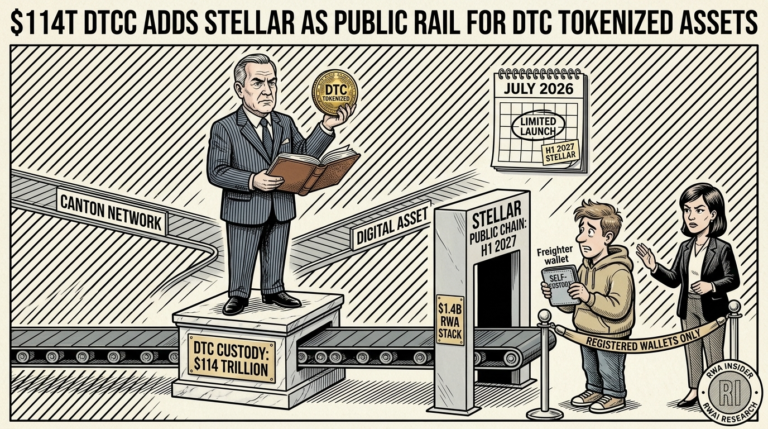
Most of it settles on Ethereum, which hosts about 68% of active tokenized real-world asset value and acts as the default rail for compliant funds.
The chain’s lead is not only storage. Issuance, redemptions, and any on-chain transfer route through Ethereum or its layer-2 rollups, where gas is paid in ETH and a slice of every fee is burned.
Holder counts tell the adoption story. Close to 60,000 wallets now sit in these funds, even though transfers between addresses are often restricted to approved parties under each fund’s rules.
Where The 3.5% Yield Beats Aave USDC
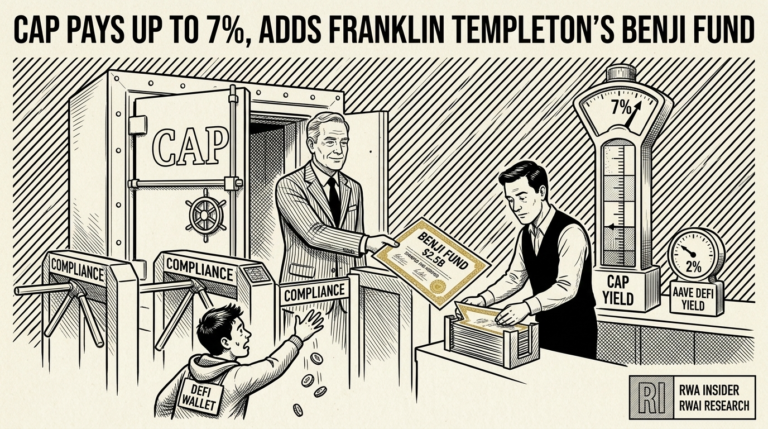
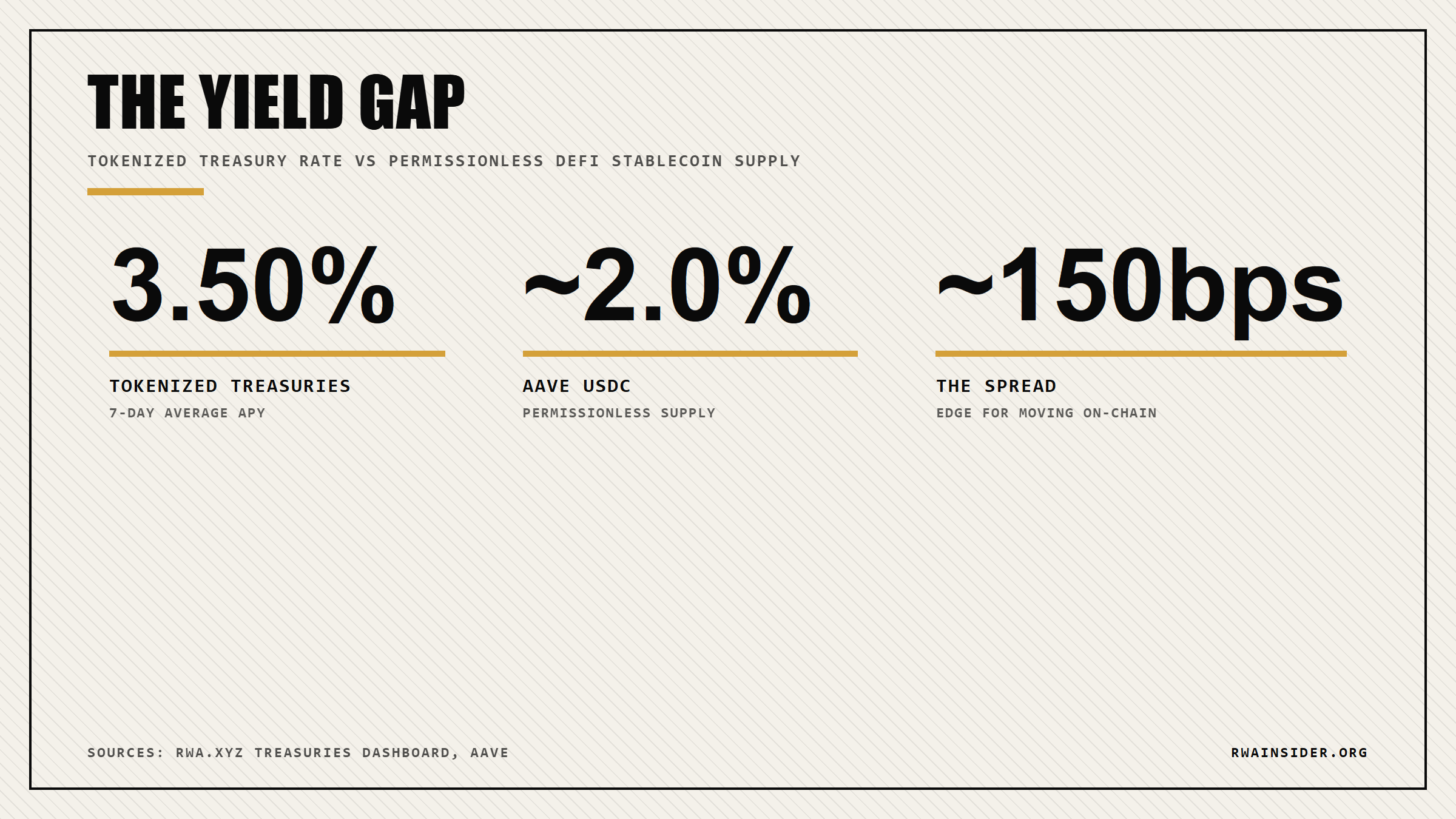
The seven-day average yield across these funds is 3.50%, per RWA.xyz. Supplying plain USDC to Aave pays closer to 2% on the permissionless side right now.
That spread is the whole point. A wallet sitting in stablecoins is leaving roughly 150 basis points on the table versus a tokenized T-bill wrapper paying the Treasury rate.
Strip away the talk of ETH price capture and the real story is simpler. Idle stablecoins now have a 3.50% on-chain benchmark to beat, set by Treasuries rather than by lending demand.
That 3.50% is not a protocol incentive that can switch off overnight. It tracks the US Treasury bill rate, so it moves with monetary policy rather than with token emissions or borrowing demand.
The numbers also separate scale from activity. A large share of this $8.97 billion sits parked as cash management, so the total can climb while transfers, and the fees that come with them, stay light.
For readers weighing the move, our running coverage compares yields across tokenized Treasuries in more depth.
Why $1.73B BUIDL Still Locks Out Your Wallet
Access is where the headline AUM meets reality. BlackRock’s BUIDL, the largest fund, shows about $1.73 billion on-chain, but its tokens are permissioned and cannot land in an ordinary wallet.
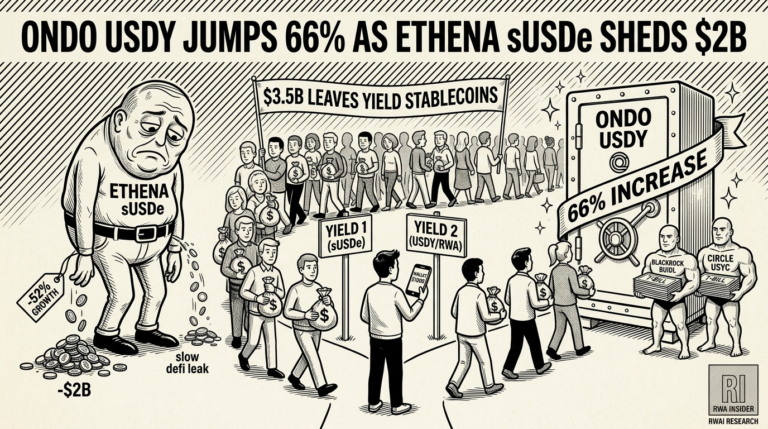
Wrappers close part of that gap. Ondo Finance repackages Treasury yield into OUSG and USDY for wallets that clear a one-time KYC, and tokens like these are increasingly accepted as collateral in DeFi lending.
Ian De Bode, chief strategy officer at Ondo Finance, has publicly framed tokenized Treasuries as the bridge that carries fund-grade yield to everyday on-chain users, a direction of travel that this data only reinforces.
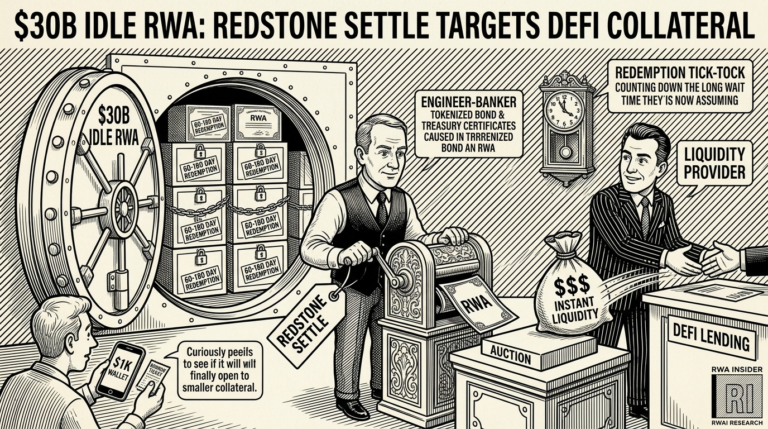
Permissioning still caps how much of this loops back into open DeFi. Whitelists and off-chain settlement keep secondary trading thin, which is why wrappers, not the funds themselves, are the route most wallets will take.
The clearest near-term catalyst is collateral. As more tokenized Treasury tokens are accepted on Morpho and Aave-style markets, the same yield starts compounding through borrowing and rollovers instead of sitting still.
Whether that 3.50% edge over Aave holds comes down to the Federal Reserve. If Treasury yields fall, the spread narrows, and the next rate decision is what your stablecoin allocation actually hinges on.
For the wallet-level mechanics, our breakdown of how Ondo’s OUSG pays a premium over Aave USDC walks the route step by step.
Frequently Asked Questions
What are tokenized Treasuries and how do they pay yield?
They are on-chain tokens that represent short-term US government debt, issued by regulated firms. Holders receive yield that accrues programmatically, currently a 7-day average of 3.50%, while custody and redemptions are handled off-chain.
Can I buy tokenized Treasuries without KYC?
Most tokenized Treasury funds are permissioned and require identity checks, and BlackRock’s BUIDL tokens cannot enter an ordinary wallet at all. Wrappers like Ondo’s OUSG open the same yield after a one-time KYC, while supplying USDC to Aave at about 2% stays fully permissionless.
How much more do tokenized Treasuries yield than Aave USDC?
Tokenized Treasuries average about 3.50% on a 7-day basis, while permissionless USDC supply on Aave pays closer to 2%. That is a spread of roughly 150 basis points for moving from a lending rate to the Treasury rate.
Why does Ethereum host most tokenized Treasuries?
Ethereum holds about 68% of active tokenized real-world asset value because issuers treat it as the default settlement layer, with gas paid in ETH across the network and its rollups. The largest fund, BlackRock’s BUIDL, alone shows around $1.73 billion on-chain there.