XAUE Splits Tether Gold 1000:1 Into Yield Tokens
Key Points
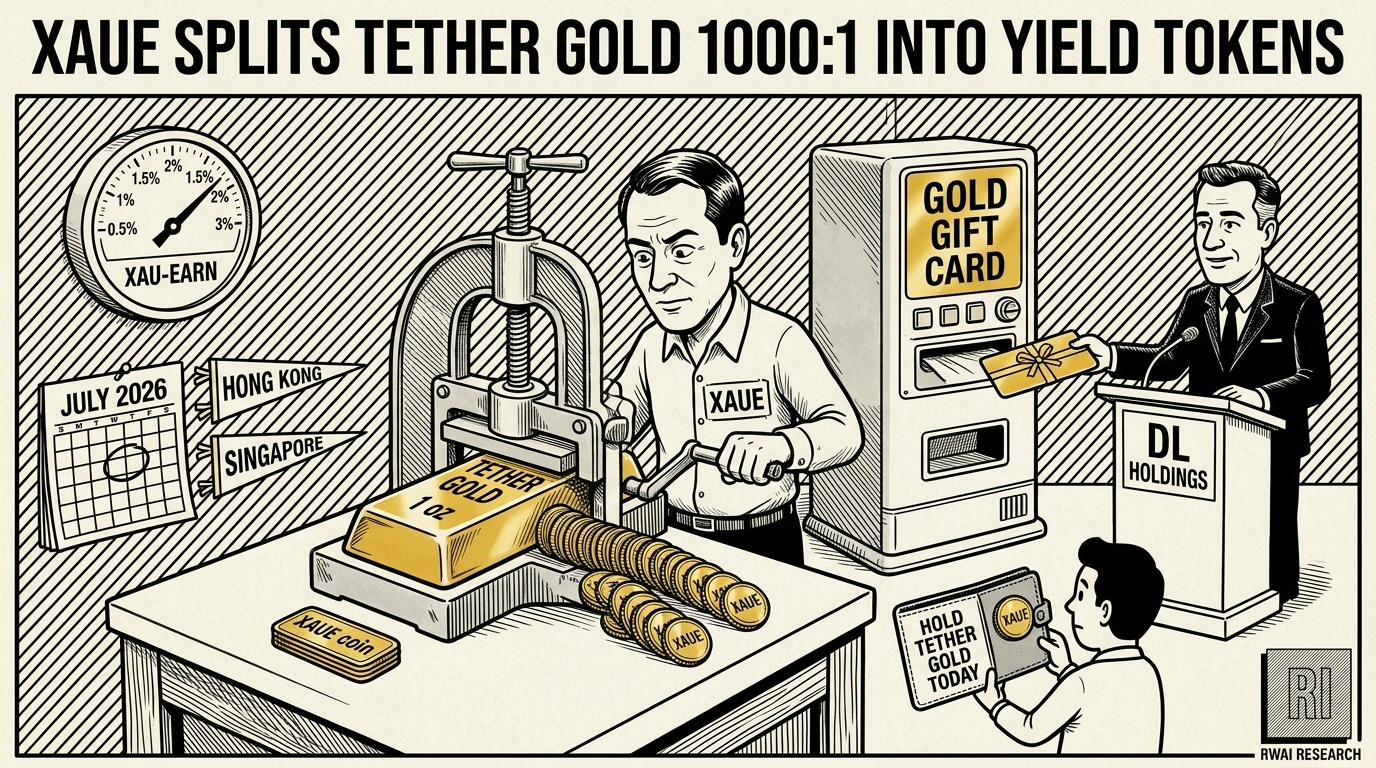
- XAUE launched a Gold Gift Card built on Tether Gold, splitting one troy ounce of gold into 1,000 fractional XAUE tokens on Ethereum.
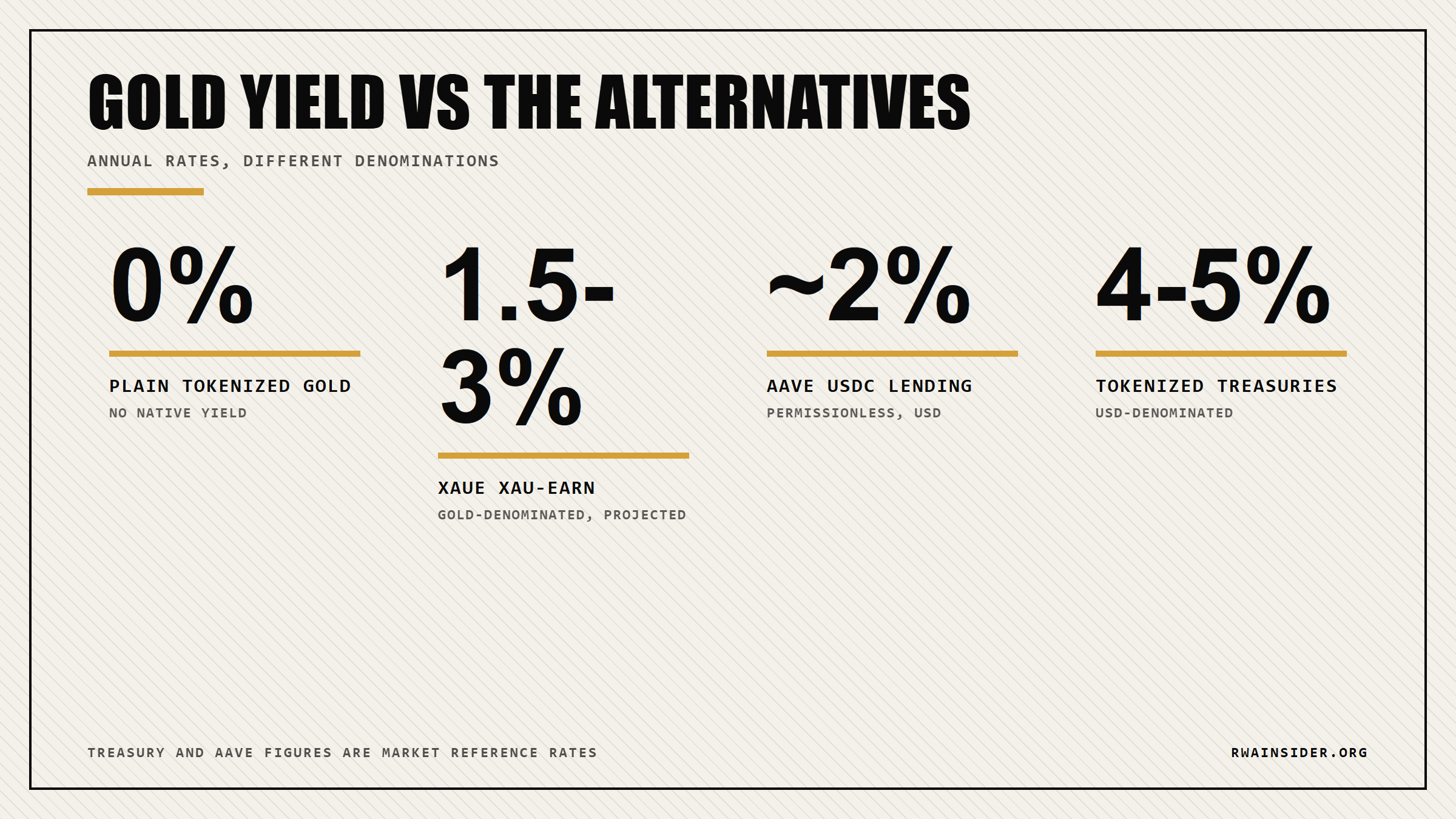
- Its new XAU-Earn product targets a 1.5% to 3% annual yield on gold, generated through quantitative trading and institutional lending.
- A $1,000 wallet cannot buy the gift card, but it can hold tradable Tether Gold on Ethereum today and track XAU-Earn for gold yield.
XAUE, a tokenized gold protocol based in Panama City, launched a Gold Gift Card that lets companies hand employees and clients physically backed gold instead of cash rewards. The product is built on Tether Gold and runs on Ethereum, where XAUE splits one troy ounce into 1,000 tradable tokens. For a wallet holder, the corporate wrapper is not the story. The signal is gold that finally pays a yield, sliced small enough to fit inside a $1,000 balance.
XAUE Wraps Tether Gold On Ethereum
“Gold has always been trusted as a store of value. Now imagine sending that value as a gift,” XAUE said in its launch statement, pitching the card as an enterprise alternative to standard corporate rewards.
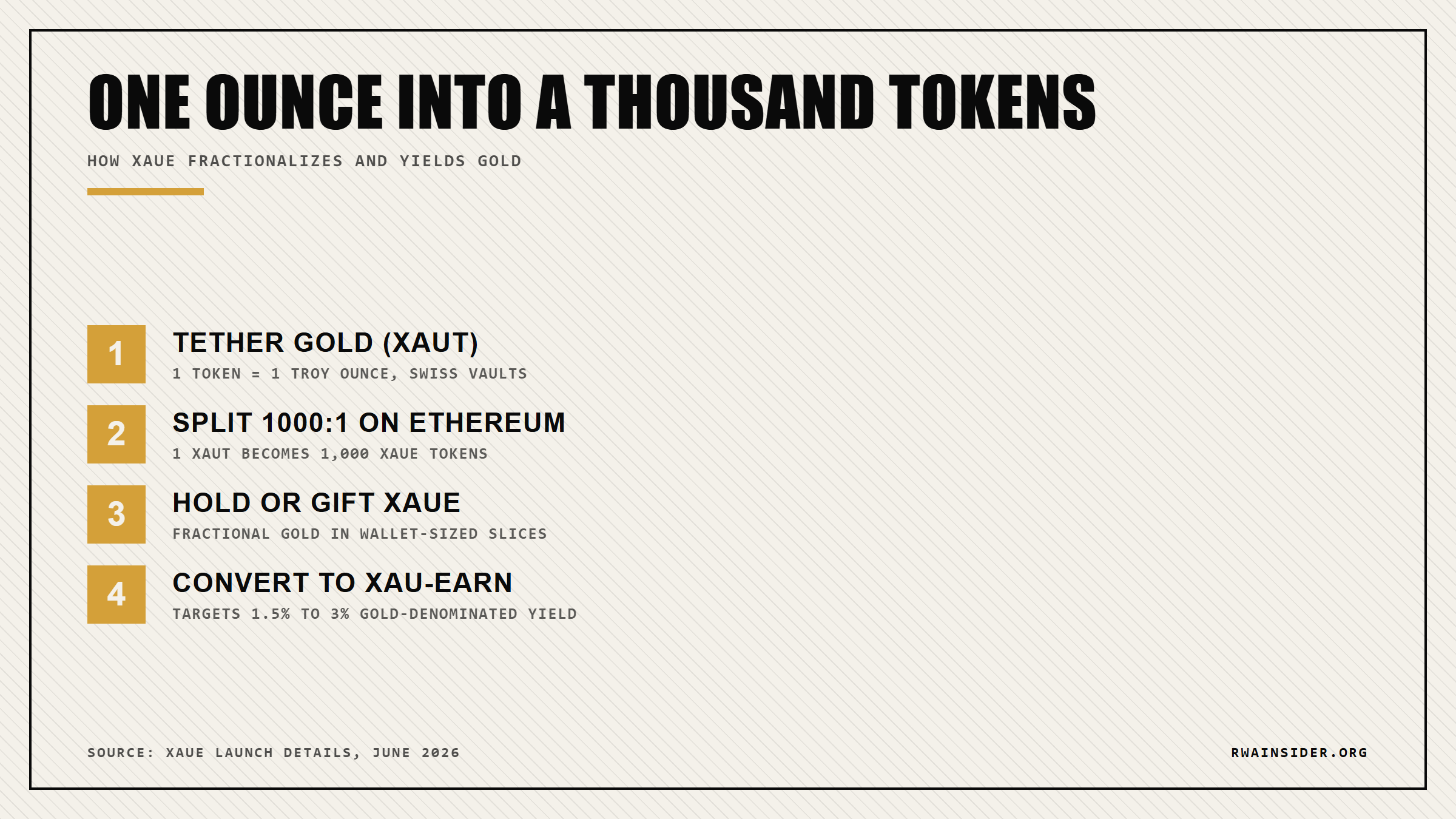
The mechanics matter more than the marketing. Each gift card is backed by Tether Gold, the token where one unit equals a single troy ounce of gold held to London Bullion Market Association standards in Swiss vaults.
On top of that, XAUE runs a treasury layer on Ethereum that breaks one Tether Gold token into 1,000 XAUE tokens. That 1000:1 split turns a full ounce of gold into pieces a small wallet can actually hold.
The gift card itself is corporate and gated. The asset underneath is not. Tether Gold is a standard token any wallet can already buy, and that is the part of this launch a $1,000 DeFi user can act on today.
Where The 1.5% Gold Yield Comes From
Gold has one famous weakness as an asset. It just sits there. XAUE’s answer is XAU-Earn, a version of the token built to grow the amount of gold backing each unit over time.
The company projects an annual yield of 1.5% to 3%, depending on market conditions. Instead of paying a coupon, the token’s exchange rate against gold rises, so holders can redeem for more metal later.
That rate sits below what tokenized Treasuries pay. Short-term US Treasury tokens currently run around 4% to 5%, and permissionless USDC lending on Aave sits near 2%. The difference is that XAU-Earn is denominated in gold, not dollars.
Strip away the gift-card packaging and this is really a bet that gold can earn like a bond without giving up its gold exposure. For anyone who wants to compare yields across tokenized real-world assets, the trade-off is exposure versus rate.
The yield is not free or guaranteed. XAUE says the returns come from quantitative trading strategies and institutional lending, which carry far more risk than the government debt behind a tokenized Treasury.
XAUE’s July 2026 Redemption Test
The launch has a clear next milestone. XAUE plans to switch on physical redemption in July 2026, starting in Hong Kong and Singapore, two hubs for both finance and physical precious metals.
Redemption is the real proof. Tokenized gold is only as good as the door back to the metal, and the cost and speed of that exit will decide whether anyone treats XAUE as more than a gift.
There is one early data point. DL Holdings Group handed out the Gold Gift Cards at a corporate event for nearly 400 guests, walking them through customization, distribution, and redemption inside a digital wallet.
XAUE is not first to this trade. Tokenized gold has become one of the most crowded corners of the real-world asset market, with established firms already selling gold tokens to both retail and professional investors across Asia.
The open question for a DeFi user is access. Right now the token reaches people through corporate cards, not an open market, so whether XAUE lists on a DEX where any wallet can trade it is the detail that matters next.
Whether XAUE becomes more than a corporate gift depends on a clean July redemption launch and an open market for the token, and the next quarter will tell.
See how the tokenized gold market crossed $126 billion as market makers piled in.
Frequently Asked Questions
What is XAUE and how is it different from Tether Gold?
XAUE is a treasury layer on Ethereum that splits one Tether Gold token, worth a single troy ounce, into 1,000 smaller XAUE tokens. Tether Gold is the underlying gold asset, while XAUE makes it fractional and adds an optional yield.
How much yield does XAU-Earn pay on gold?
XAUE projects an annual return of 1.5% to 3%, denominated in gold rather than dollars. The yield is a projection, not a fixed or guaranteed rate, and it comes from quantitative trading and institutional lending.
Can I buy XAUE without a corporate gift card?
The Gold Gift Card is aimed at companies, not retail buyers. A $1,000 wallet can hold tradable Tether Gold on Ethereum today, while wider access to the XAUE token and physical redemption is set to expand from July 2026.
Is XAU-Earn’s gold yield safe?
The income depends on active quantitative trading and institutional lending, which carry more risk than a passive tokenized Treasury. The gold backing sits in audited Swiss vaults, but the yield strategy is not principal-protected.