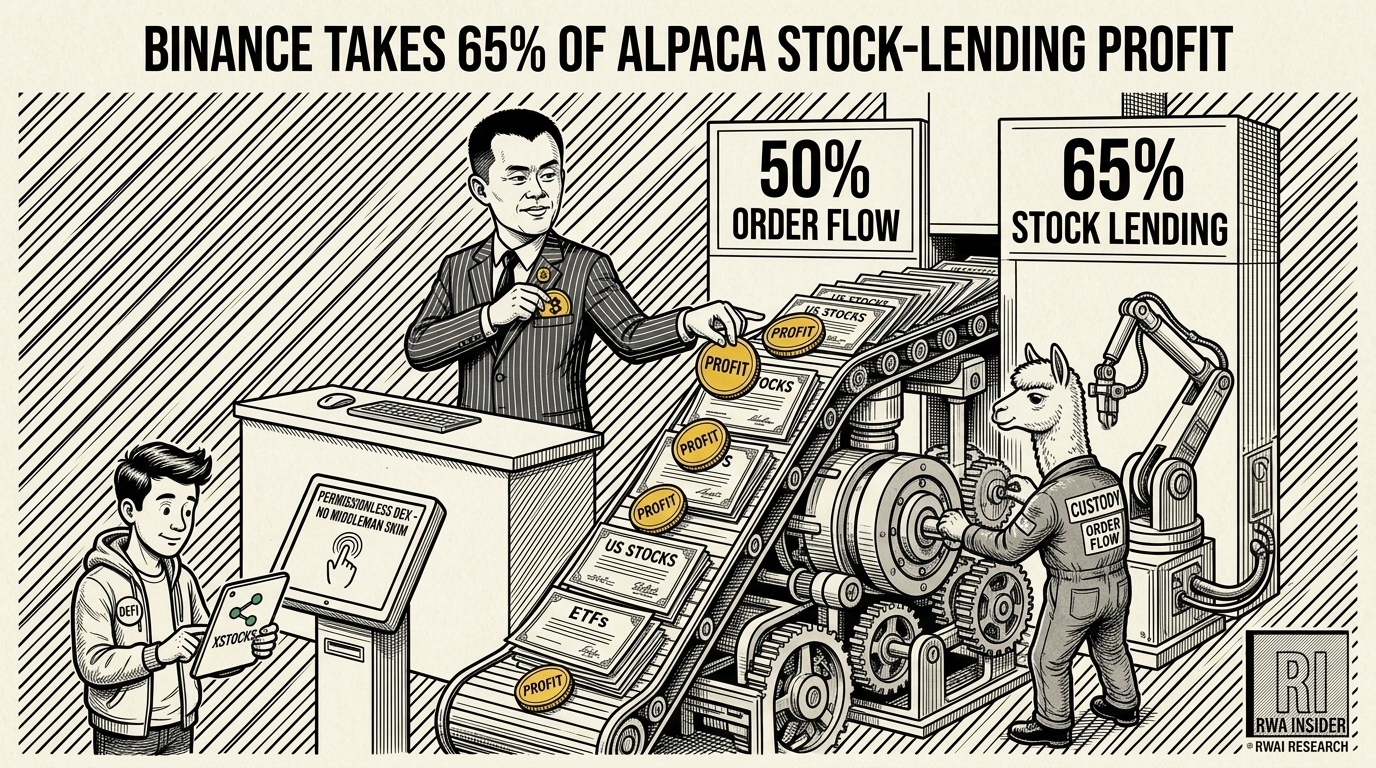
Binance Takes 65% Of Alpaca Stock-Lending Profit
Key Points
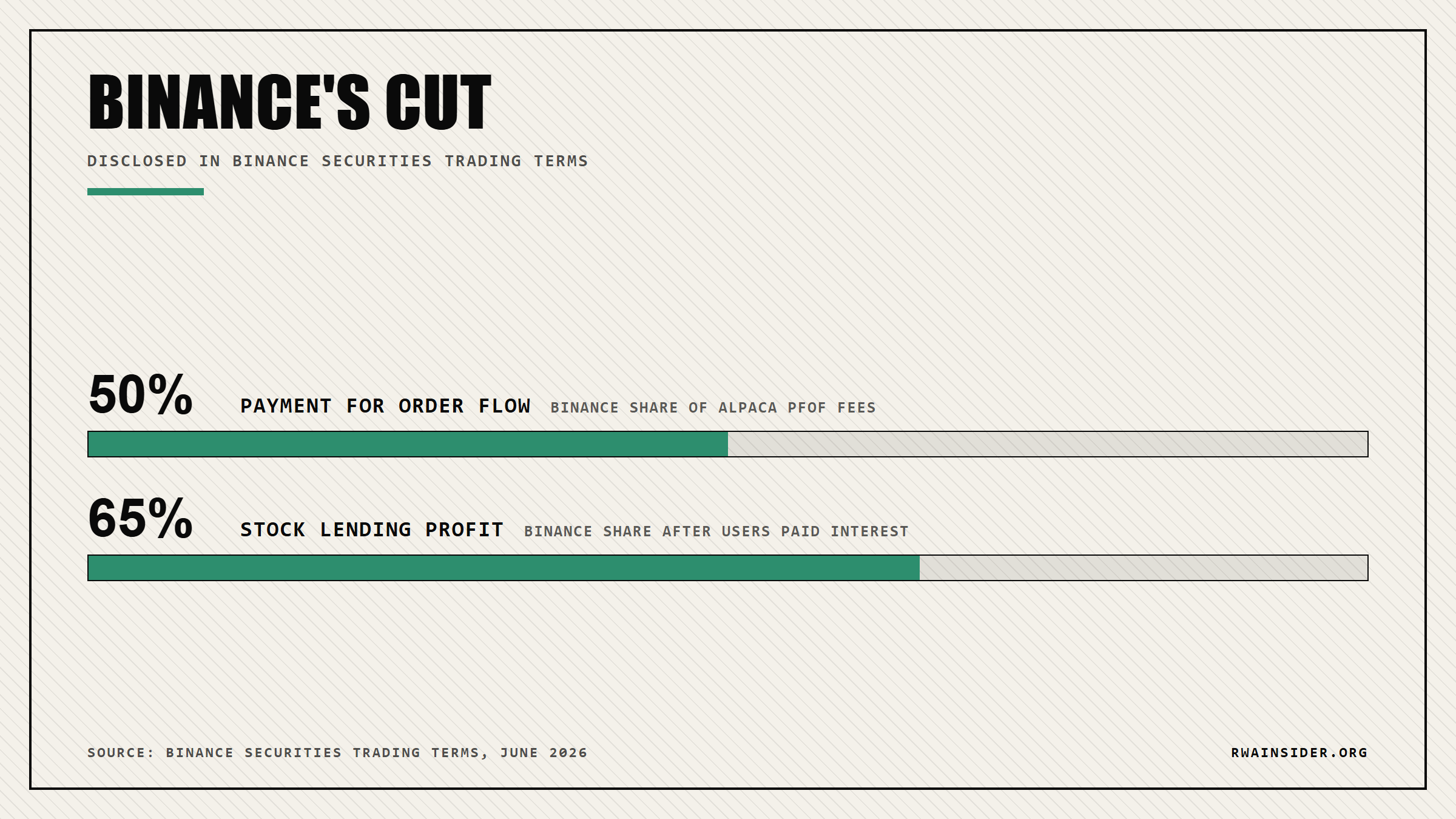
- Binance disclosed it will keep 50% of Alpaca’s payment-for-order-flow fees and 65% of profit from lending out user shares on tokenized stocks.
- Alpaca custodies $480 million in tokenized stocks, a 29% slice of the $1.62 billion market that grew 29% in the past 30 days.
- On a permissionless DEX, a self-custody wallet trading tokenized stocks like xStocks keeps the 50% and 65% cut Binance now collects through Alpaca.
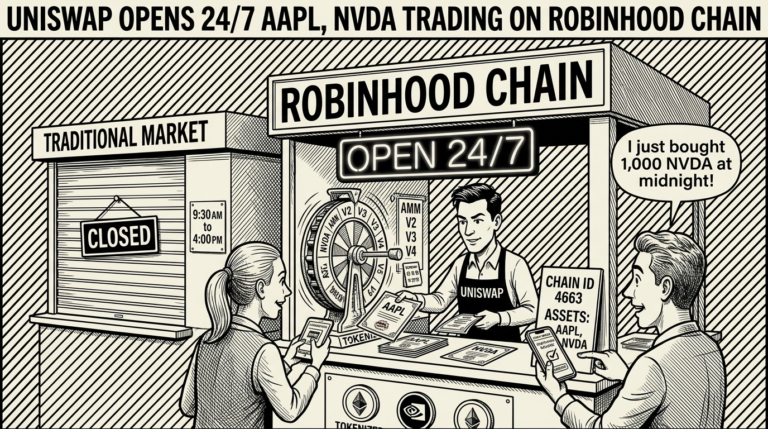
Binance will keep half of the order-flow fees and most of the stock-lending profit its tokenized stock business throws off, according to terms it disclosed this week. The exchange “will receive 50% of Alpaca’s payment-for-order-flow fees and 65% of remaining profit from user stock lending after users are paid interest,” the Binance Securities Trading Terms state. For a DeFi user, the disclosure is a price tag on convenience: the same tokenized stocks trade on permissionless DEXs, where a self-custody wallet, not Binance, keeps that spread.
Binance Keeps 50% Of Order Flow, 65% Of Lending
The arrangement surfaced in trading terms Binance published Tuesday.
Alpaca, a brokerage and custody API provider, runs the clearing and custody behind Binance’s stock product and now ranks among the largest infrastructure players in tokenized US stocks and ETFs.
The terms route 50% of the payment-for-order-flow fees Alpaca generates to Binance, plus 65% of the profit left from lending out user shares once holders are paid interest.
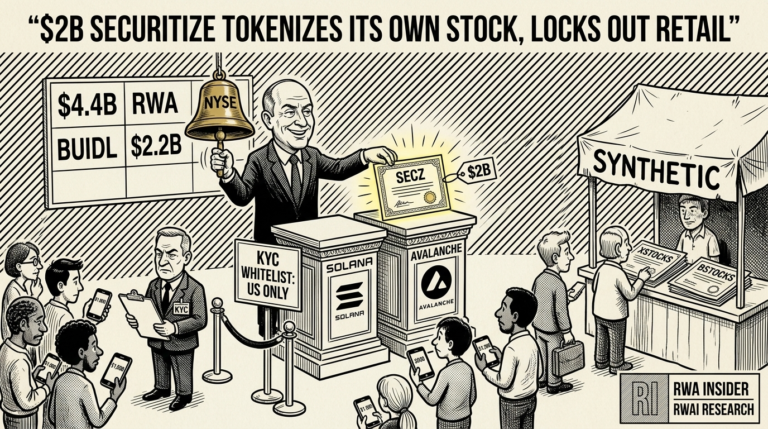
None of this is on-chain yet. Binance has opened access to more than 7,000 US-listed stocks and ETFs and teased a tokenized version called bStocks.
The trading still runs through a custodial brokerage stack, not a wallet, and the order-flow model it leans on is the same one US regulators have scrutinized for years.
Inside The $1.62B Tokenized Stock Market
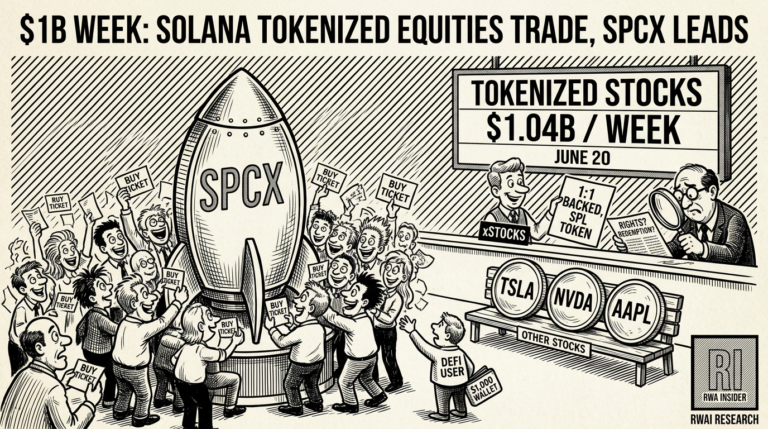
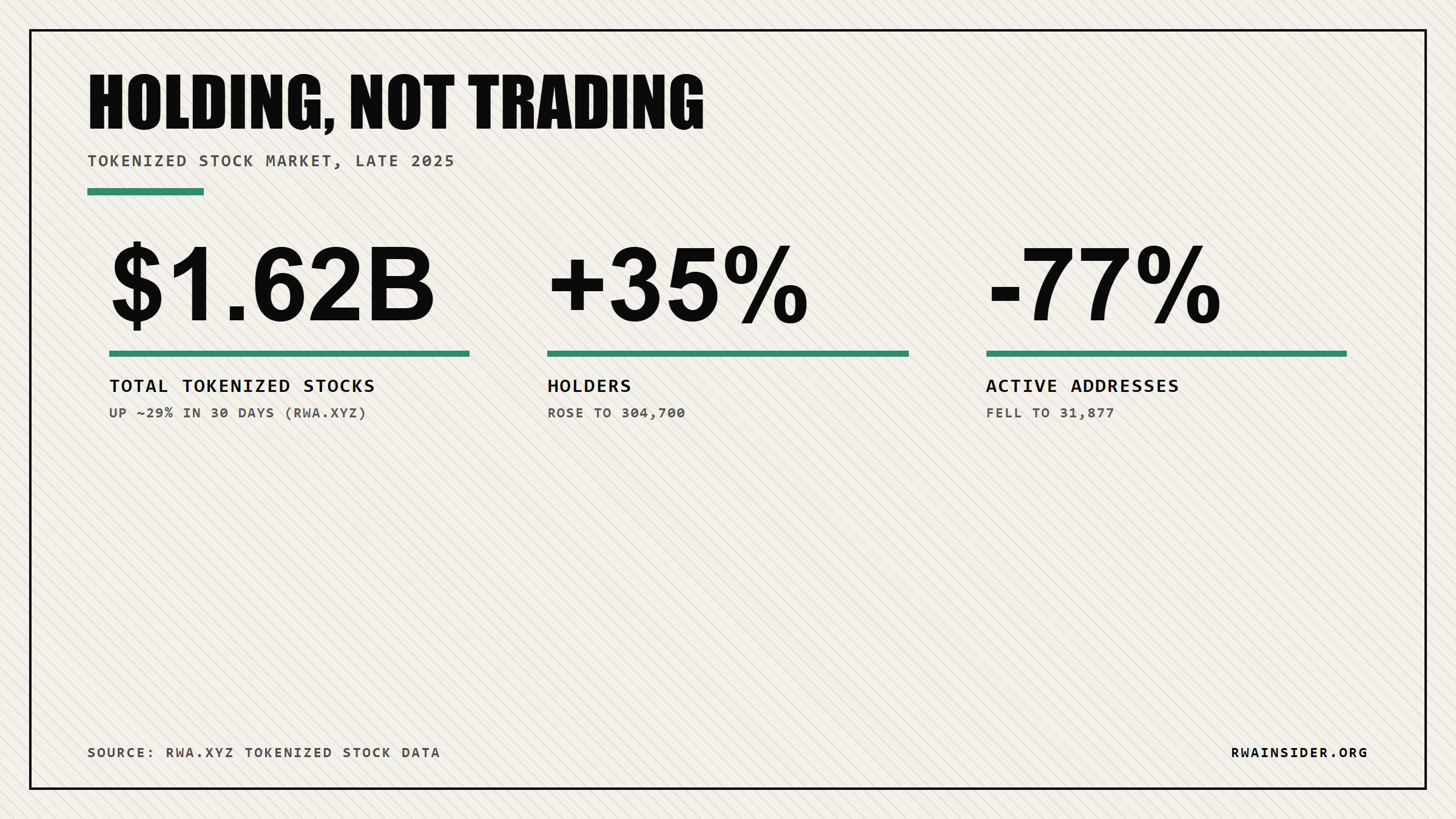
Alpaca reported $480 million in assets under custody as of December 2025, around 29% of the $1.62 billion in tokenized stocks tracked by RWA.xyz.
The market is expanding. Total value rose roughly 29% over the past 30 days, and the holder count climbed 35% to 304,700.
One figure cuts the other way. Monthly active addresses fell more than 77% to 31,877, a sign that holders are parking these tokens rather than trading them.
Strip away the press release and this is really about who captures the spread on assets that sit idle: in the Binance stack, the exchange does.
On a permissionless DEX, the math flips.
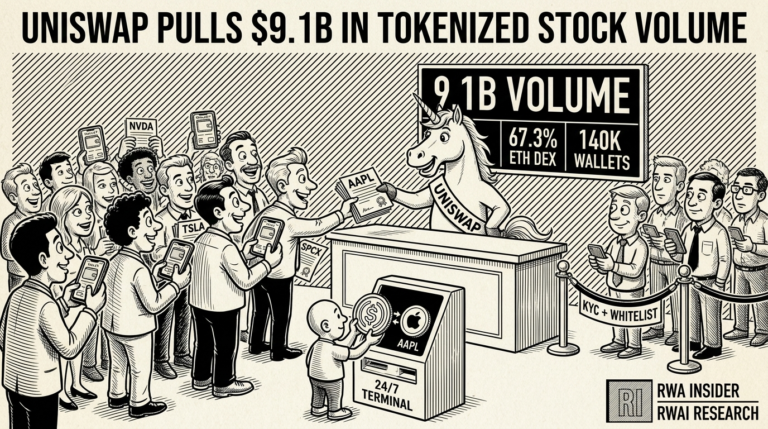
A self-custody wallet trading tokenized equities such as xStocks routes its own order flow and can lend the position out directly, keeping the fees Binance and Alpaca split between them.
You can weigh the access tradeoffs across tokenized-asset venues before moving any capital, because the spread you keep depends entirely on where the trade settles.
Kraken’s 11,000 Stocks And The CeFi Land Grab
Binance is not the only exchange chasing this. A wave of platforms is bolting US equities onto crypto rails as retail demand for blockchain-based trading climbs.
Kraken launched 11,000 US-listed stocks and ETFs with commission-free trading in April 2025, calling it an effort to bring “equities and digital assets together” under one platform as part of a “phased national rollout.”
Vienna-based Bitpanda said in January it was adding about 10,000 stocks and ETFs, and Bitget rolled out a SpaceX pre-IPO proxy in April.
Binance launched its own SpaceX-linked pre-IPO futures weeks later.
For a wallet holder, the open question is whether any of this becomes composable. Today these tokens mostly sit in custodial accounts, not in lending markets where they could back a loan.
Whether tokenized stocks stay walled inside custodial apps or flow into permissionless venues is the line that decides who keeps the yield.
If bStocks launches as a true on-chain token that any wallet can lend and post as collateral, the 65% Binance now keeps gets much harder to defend. Until then, the cut is the cost of letting someone else hold your stocks.
See how the same equities already trade permissionlessly on-chain and decide which side of the fee split your wallet belongs on.
Frequently Asked Questions
What is the Binance and Alpaca revenue-sharing deal?
Binance disclosed trading terms that route it 50% of the payment-for-order-flow fees Alpaca earns and 65% of the profit from lending out user shares. Alpaca provides the brokerage, clearing and custody behind Binance’s tokenized stock product.
Can I buy tokenized stocks without going through Binance?
Yes. Tokenized equities such as xStocks trade on permissionless DEXs, where a self-custody wallet keeps the order-flow and lending spread instead of handing it to an exchange. Access still depends on your region and the venue’s rules.
How big is the tokenized stock market right now?
It sat near $1.62 billion in late 2025 according to RWA.xyz, up about 29% in 30 days. Holders rose 35% to 304,700, though monthly active addresses fell more than 77% to 31,877.
What is bStocks and is it on-chain yet?
bStocks is the tokenized stock product Binance has previewed but not fully launched. For now its 7,000-plus US equities trade through a custodial brokerage stack, not a wallet, so they cannot yet be posted as DeFi collateral.