49% Uniswap Rally Follows CLARITY Act Loss, Bitwise Says
Key Points
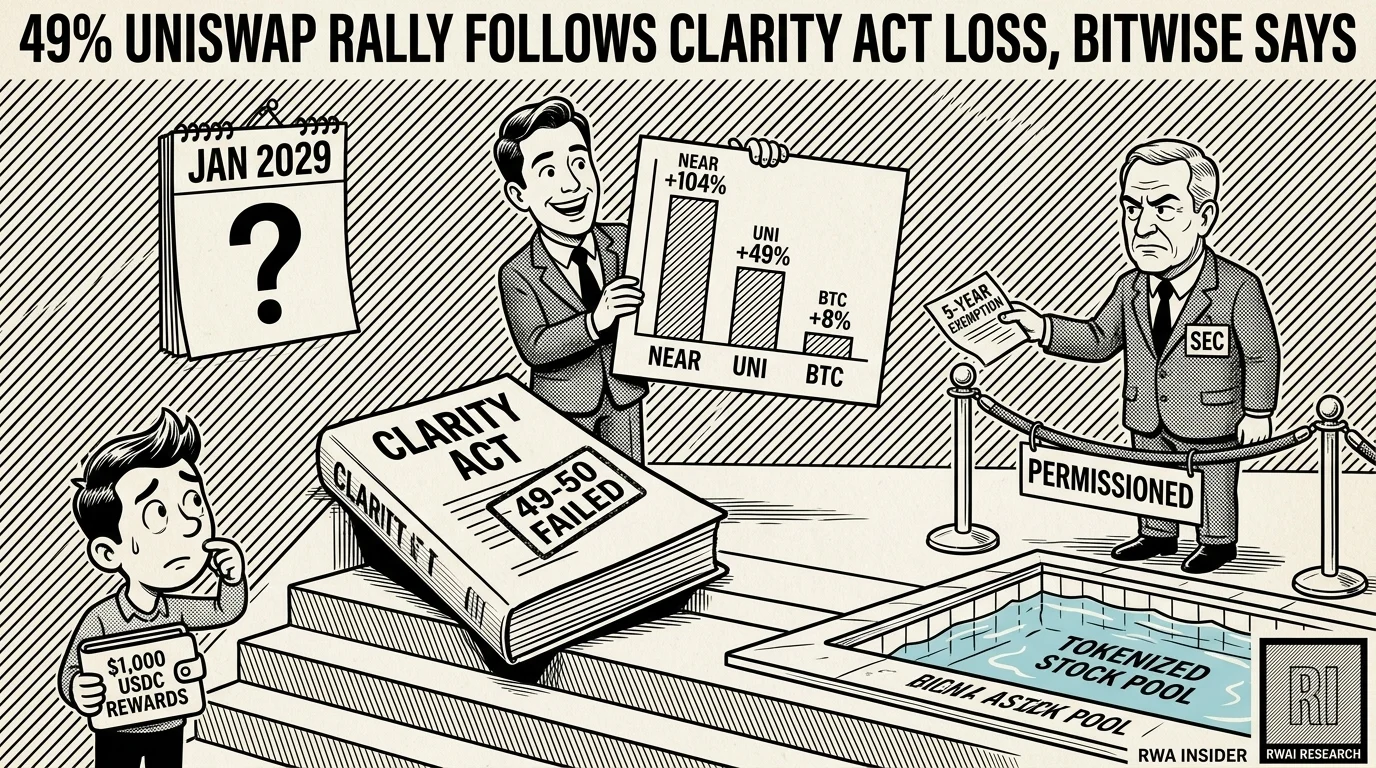
- Bitwise CIO Matt Hougan tied crypto gains to the CLARITY Act’s 49-50 Senate defeat, with NEAR up 104% and Uniswap up 49% by Sep. 30.
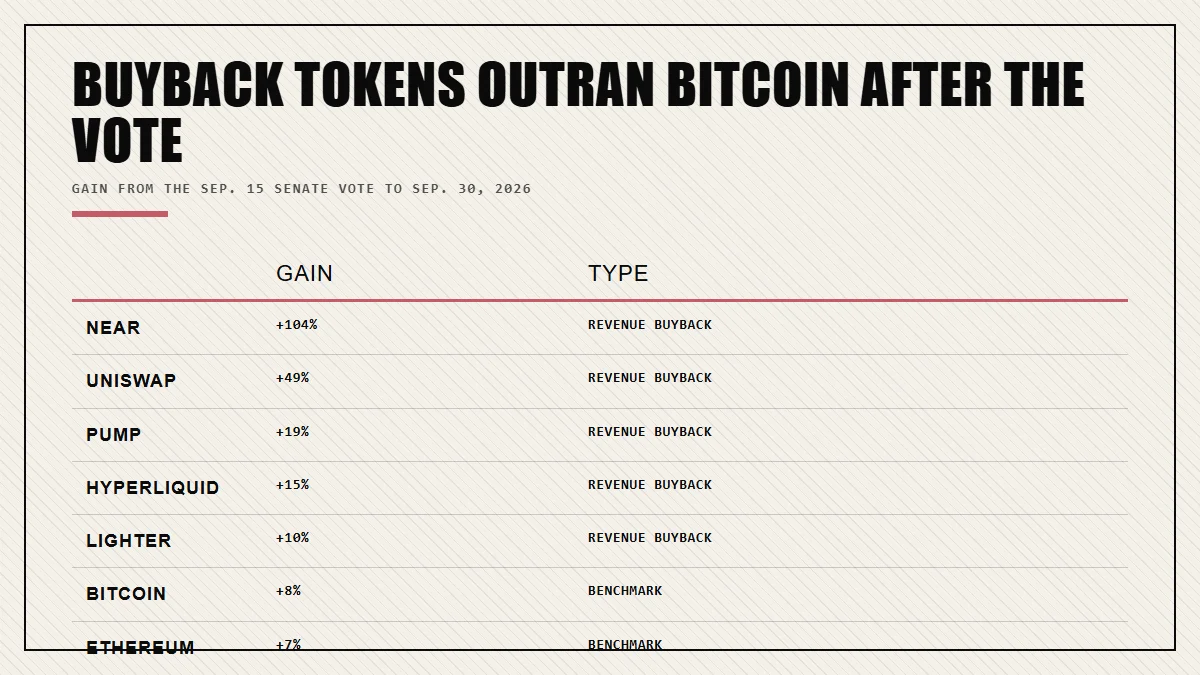
- Bitcoin gained 8% and Ethereum 7% over the same window, while the stalled bill’s $5 million per-violation stablecoin yield penalty never became law.
- For a $1,000 wallet, exchange stablecoin rewards survive for now, while the SEC’s tokenized stock AMM pools run permissioned under a five-year exemption.
Tokens that use platform revenue to buy back supply far outran the market after the CLARITY Act stalled in the Senate, with NEAR up 104% and Uniswap up 49% through Sep. 30 against Bitcoin’s 8%. Bitwise chief investment officer Matt Hougan laid out the case in a Sep. 30 memo reported by crypto.news: “Crypto sacrificed long-term certainty and got better rules, faster.” For a DeFi wallet, that trade kept stablecoin rewards and buyback tokens in play, but on agency rules a future regulator can rewrite.
Bitwise Ties The CLARITY Act Loss To Faster Rules
The Senate failed to advance the CLARITY Act in a 49-50 procedural vote on Sep. 15. Two weeks later, Bitwise CIO Matt Hougan argued the industry came out ahead.
His Sep. 30 memo names four winners: stablecoin platforms, established exchanges, tokenization businesses and tokens that earn revenue.
Over his measurement window, Bitcoin rose 8% and Ethereum 7%. Revenue-sharing tokens did far better.
Hougan’s logic runs like this. The industry lost the legal certainty it had bargained for, but it also escaped the restrictions it had accepted to get there.
Regulators then moved without Congress. The SEC granted a tokenized stock exemption two days after the vote, and its staff issued token buyback guidance on Sep. 25.
None of this is a new vault you can deposit into today. It changes the rules around tokens and rewards you may already hold.
Stablecoin Rewards And Uniswap Buybacks Survive The Vote
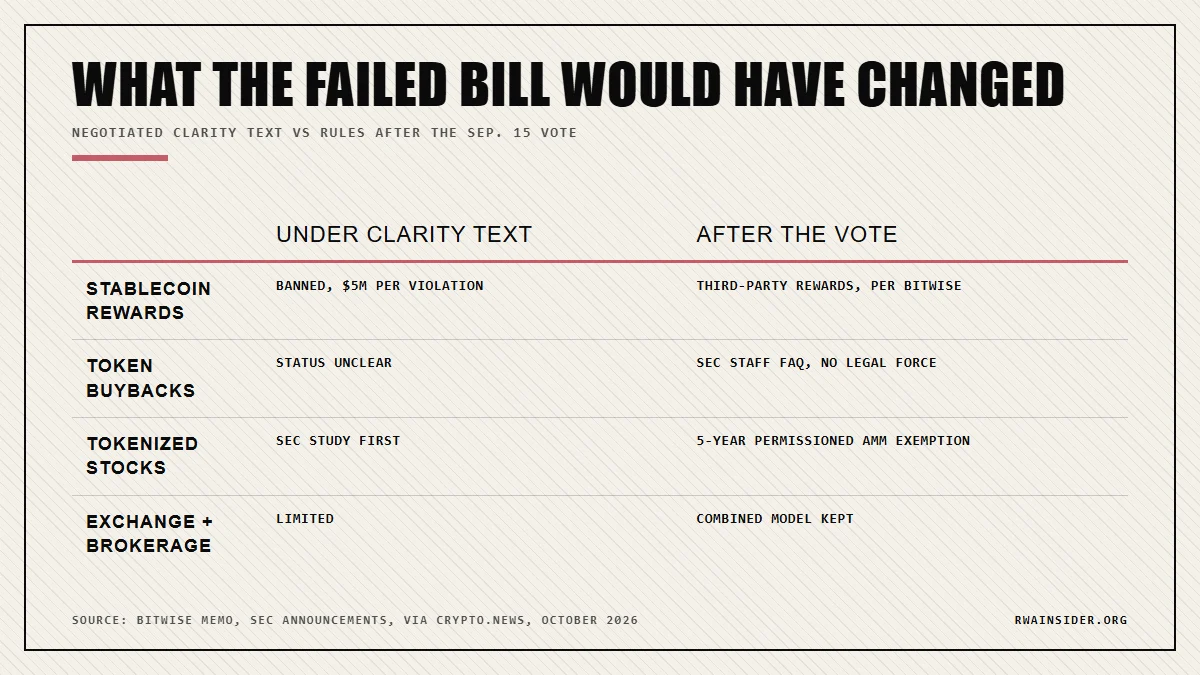
Hougan said the final negotiated CLARITY text would have barred platforms from paying stablecoin interest or yield in any form.
Penalties would have reached $5 million per violation.
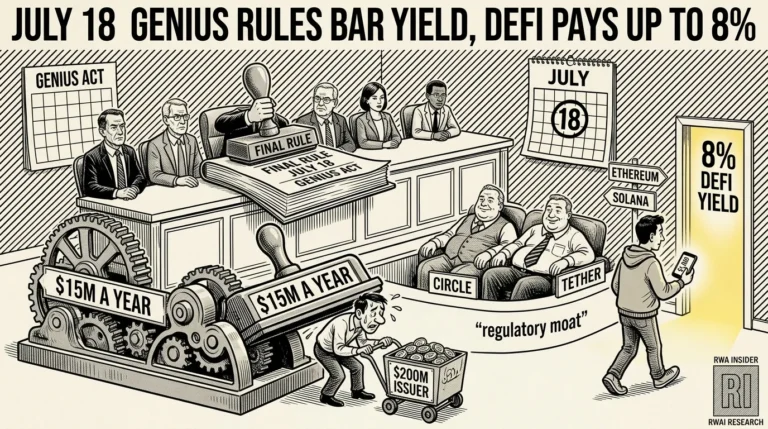
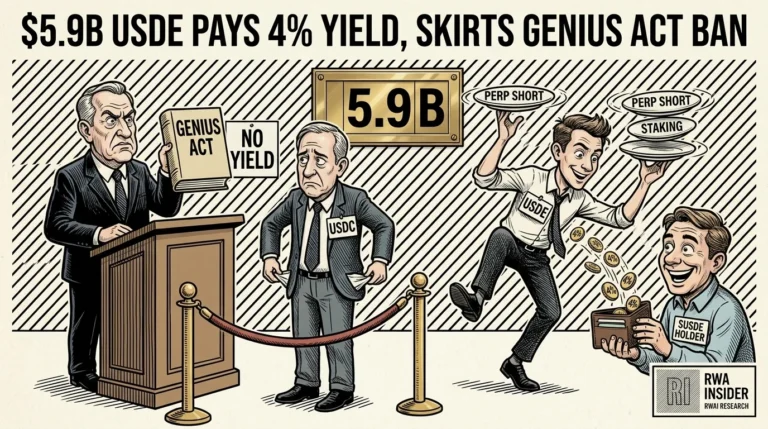
The GENIUS Act, enacted July 18, 2025, already stops issuers from paying yield just for holding a payment stablecoin. Hougan reads that as room for exchanges to pay third-party rewards.
He named Coinbase the largest beneficiary, since it uses stablecoin rewards to win customers. RWA Insider has tracked how Coinbase’s USDC reward slipped past the GENIUS issuer ban since May.
Strip away the Senate drama and this is really about one thing: whether your idle USDC can still earn a reward on an exchange.
Banks pushed the other way. Before the vote, the American Bankers Association and 76 state banking associations urged senators to tighten reward rules to protect community bank deposits.
Then come the buyback tokens. Hougan reported gains of 104% for NEAR, 49% for Uniswap, 19% for Pump, 15% for Hyperliquid and 10% for Lighter as of Sep. 30.
SEC staff now say a buyback announcement is not a promise of managerial work if the network is functional and has no central party.
Those FAQs carry no legal force.
SEC’s 5-Year Tokenized Stock Pools Stay Permissioned
For tokenization, Hougan contrasted the bill’s proposed SEC study with the exemption the agency issued on Sep. 17.
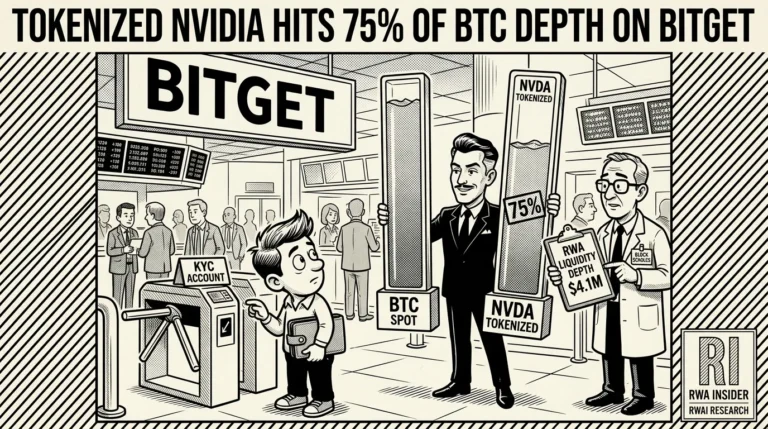
Under that order, eligible tokenized U.S. stocks can trade through permissioned automated market makers and liquidity pools.
The relief lasts five years and caps eligible symbols and trading volume. It also requires equivalent shareholder rights and trading pauses that track the stock’s primary exchange.
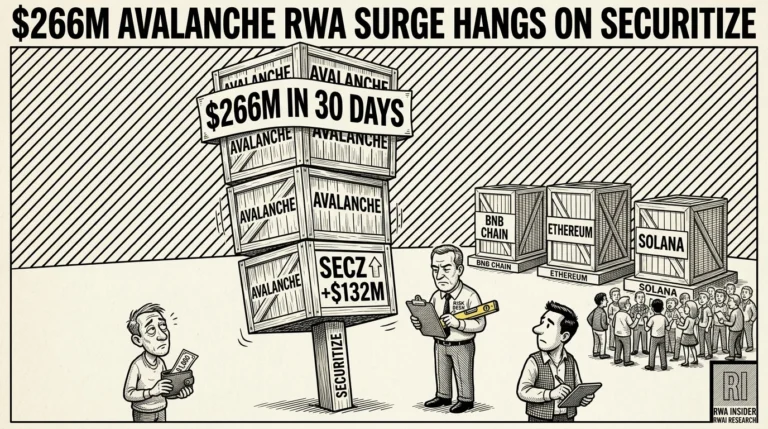
Hougan named Securitize a winner, citing its tokenization work for BlackRock, Apollo and KKR and its role as transfer agent for BlackRock’s BUIDL fund.
Not every token fits. Robinhood crypto chief Johann Kerbrat said existing trading activity could run into the framework’s caps.
Robinhood’s current Stock Tokens are debt securities from its Jersey entity and remain unavailable to U.S. users, so they sit outside the exemption.
Before you assume a pool is open to your wallet, compare tokenized stock venues across chains.
The bigger risk is durability. Hougan warned that a new administration in January 2029 could appoint tougher SEC and CFTC leaders, since agency decisions protect less than legislation.
He expects banks’ growing blockchain work to make that reversal less likely. Seven Senate Democrats who opposed the motion have also pledged to keep negotiating.
Whether stablecoin rewards and tokenized stock pools hold depends on agency rules rather than statute, and the January 2029 handover will tell.
Before you park USDC for an exchange reward, check whether the rule behind it is a law, a final rule or a staff view.
Frequently Asked Questions
What did Bitwise say about the CLARITY Act failing?
Bitwise CIO Matt Hougan wrote in a Sep. 30 memo that faster agency action and fewer business restrictions helped explain crypto’s gains after the Sep. 15 Senate vote. He put Bitcoin’s gain at 8% and Ethereum’s at 7% over that period, with revenue-sharing tokens rising far more.
Can exchanges still pay rewards on USDC after the vote?
The GENIUS Act bars issuers from paying yield solely for holding a payment stablecoin, and Hougan reads that as leaving room for exchanges to pay third-party rewards. The stalled CLARITY text would have banned stablecoin yield in any form, with penalties up to $5 million per violation. Treat Hougan’s view as analysis, not a legal ruling.
Can I trade tokenized stocks in the SEC’s new liquidity pools?
Only through qualifying venues. The SEC’s Sep. 17 order lets eligible tokenized U.S. stocks trade through permissioned automated market makers and liquidity pools for five years, with caps on symbols and trading volume. Permissioned means the venue controls who gets in, so a self-custody wallet is not automatically eligible.
Is the SEC’s token buyback guidance safe to rely on?
It is staff guidance with no legal force, and the Commission has neither approved nor disapproved it. It says a buyback announcement is not a promise of managerial work if the network is functional and has no central party. Hougan also warned a new administration in January 2029 could take a tougher line.