Ondo’s $3.7B Monthly Volume Shows RWAs Are Moving On-Chain
Key Points
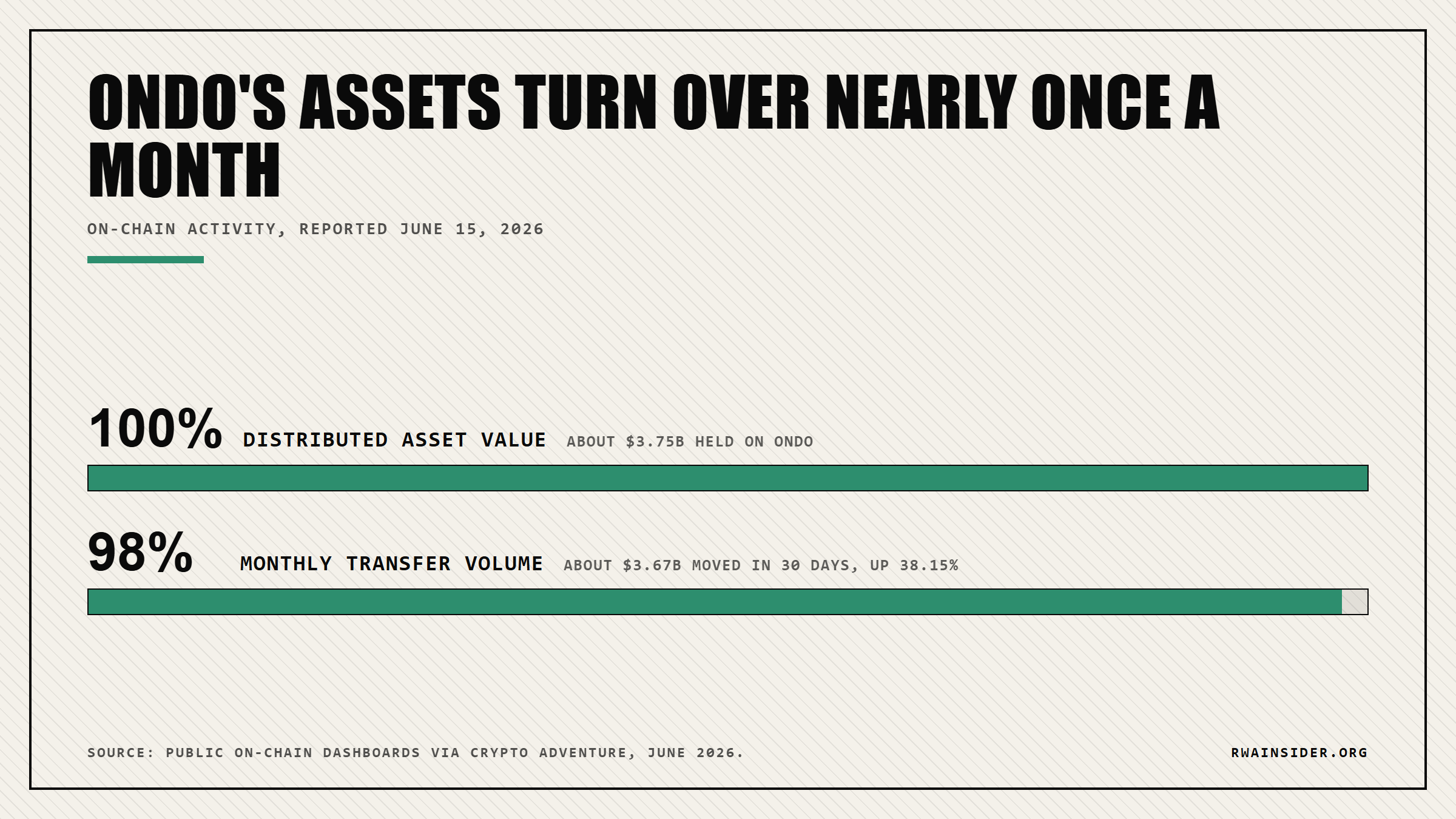
- Ondo Finance processed about $3.67 billion in monthly transfer volume, up 38.15% from 30 days earlier, a fresh usage record for the RWA platform.
- Distributed asset value now sits near $3.75 billion, held across more than 142,000 wallets that ran 80,550 monthly active addresses.
- Eligible non-US wallets can hold yield-bearing USDY, OUSG and tokenized stocks across Ondo’s 267 products, assets built to move on-chain rather than sit idle.
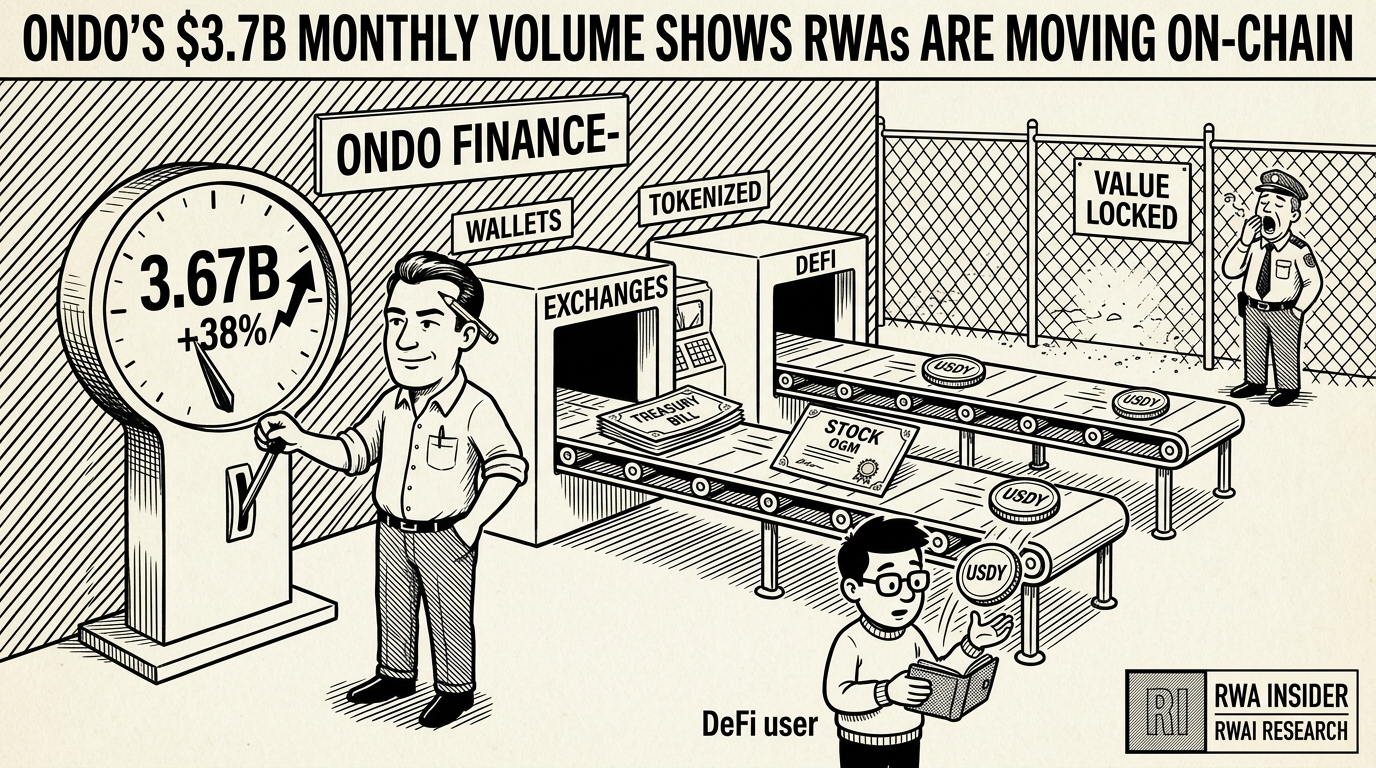
Ondo Finance processed about $3.67 billion in on-chain transfer volume over the past month, up 38.15% from 30 days earlier and a record for the real-world asset platform. The figures, drawn from public on-chain dashboards and reported on June 15, 2026, sit alongside a distributed asset value near $3.75 billion across 267 tokenized products. As the report framed it, real adoption depends on “whether assets actually move between wallets, exchanges, settlement flows, collateral systems and DeFi strategies,” not on headline value locked.
Ondo Transfer Volume Hits A $3.67B Record
Ondo Finance moved about $3.67 billion in tokenized assets over the trailing 30 days, a 38.15% jump that set a fresh monthly record for the platform.
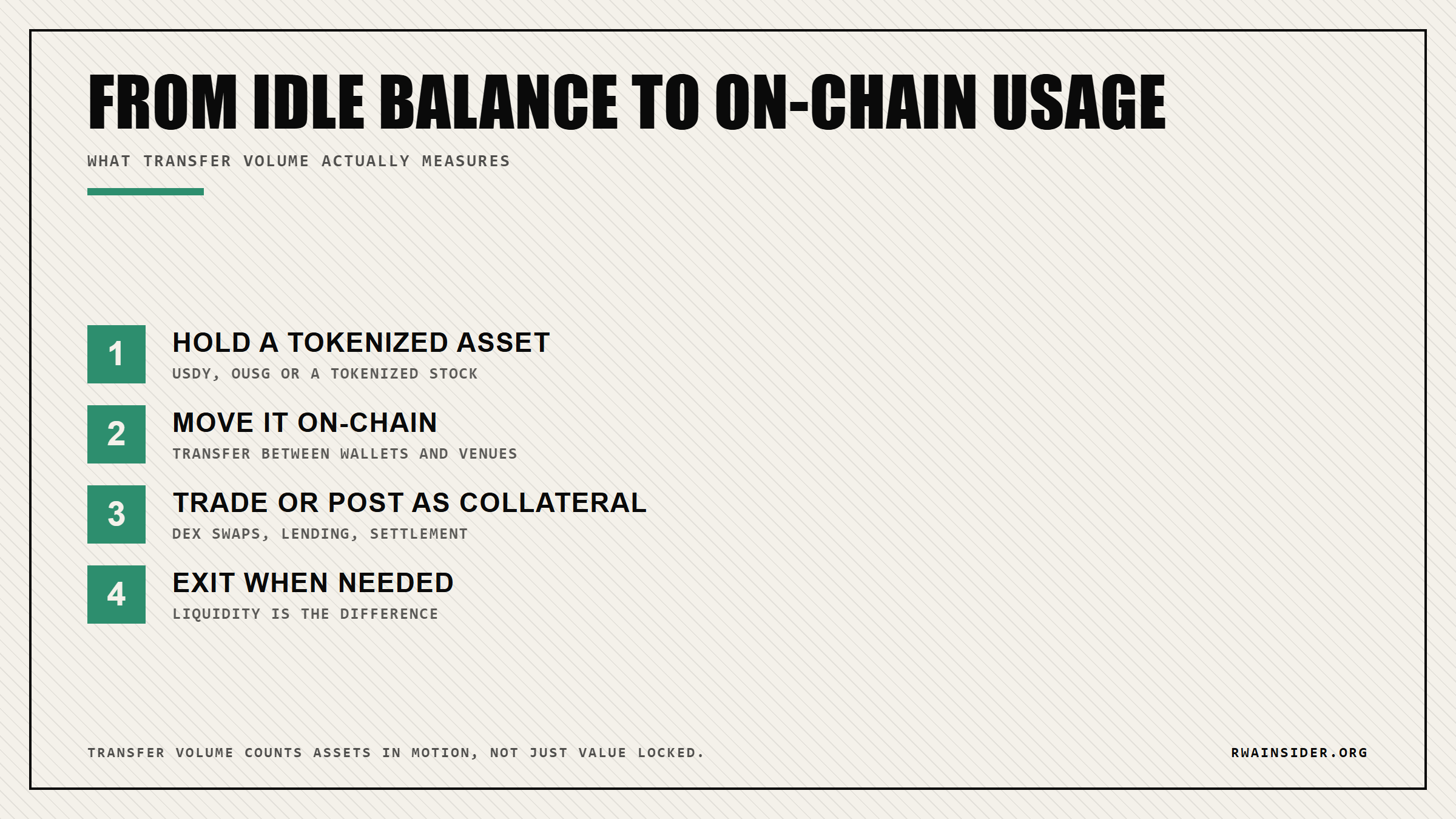
Transfer volume measures the dollar value of on-chain token transfers, so it tracks assets in motion across wallets, exchanges and DeFi strategies rather than capital sitting still.
That distinction is the whole story. A wallet can see a tokenized Treasury or stock listed, but it only counts if the token can leave, trade and settle without friction.
The activity looks broad rather than concentrated. Monthly active addresses reached 80,550, a sign the movement is real usage and not a few large rebalances inflating one dashboard.
For Ondo, whose product stack runs from cash-like tokens to tokenized equities, that spread of activity is the point it has been trying to prove all year.
Why Ondo’s $3.67B In Motion Beats Locked Value
Tokenized real-world assets are usually ranked by value locked, a static snapshot of what issuers have parked on-chain. Transfer volume flips that lens to what users actually do.
At roughly $3.67 billion moved against a $3.75 billion asset base, Ondo’s holdings turn over almost once a month. That is closer to a working payment rail than a parking lot.
The breadth shows up in the user base. More than 142,000 wallets now hold Ondo products, and the platform tracks 267 distinct tokenized assets across its lineup.
Strip away the dashboard and this is really about exit options: a token that moves is a token you can sell, lend or post as collateral when you need to.
That is where the DeFi comparison bites.
Yield-bearing USDY and OUSG put idle dollars to work at Treasury rates, well above what the same stablecoins earn sitting in a lending pool on Aave, but only if holders can move in and out cheaply.
Ondo’s stack spans tokenized Treasuries, USDY, OUSG and Ondo Global Markets, the equity arm that already crossed $1 billion in TVL.
We track how RWA secondary-market liquidity is deepening on-chain as those products compete for the next wave of capital.
Ondo’s Tokenized Stock Push Has A KYC Catch
The growth is real, but the access rules are not uniform.
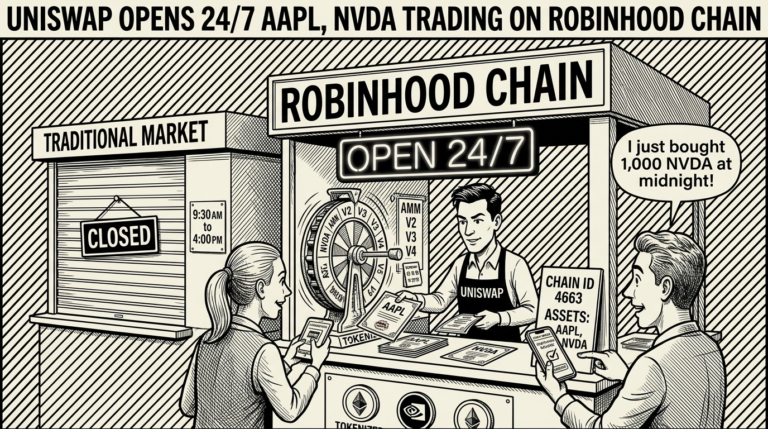
Ondo’s tokenized stocks and ETFs give eligible non-US users economic exposure to public equities, not the shares themselves, with no voting rights and a thinner legal profile than broker-held stock.
That gate shapes who can actually use the $3.67 billion in flow. A US wallet is largely locked out of the equity products, while USDY and OUSG stay the more openly accessible pieces of the stack.
Its newer equity perpetuals push aims to make tokenized stock exposure useful inside active trading, not just buy-and-hold, which is exactly the kind of movement transfer volume captures.
The institutional signal is hard to miss. Ondo recently hired John Hoffman, a former Invesco ETF executive, to build tokenized portfolio products, a sign it is chasing traditional asset-management distribution rather than crypto-native users alone.
The ONDO token rode the same narrative, trading near $0.386 with more than $200 million in daily volume as RWA tokens caught a broader bid.
What to watch is whether that transfer volume keeps climbing once the current rally cools, and whether the equity arm ever opens wider than its non-US gate.
If transfer volume holds above $3.5 billion through a flat market, Ondo’s usage story stops being a rally artifact and starts being a moat. The next monthly dashboard is the one worth checking.
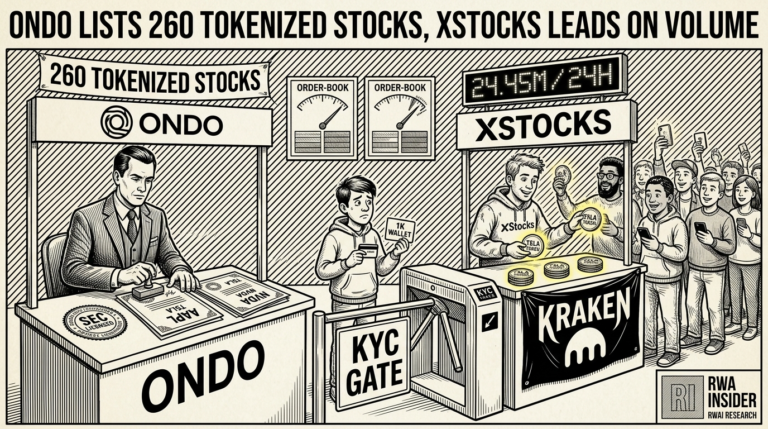
For a closer look at what is actually moving, Ondo’s 260-plus tokenized stocks already show where the trading volume concentrates.
Frequently Asked Questions
What is Ondo’s monthly transfer volume and why does it matter?
Ondo Finance processed about $3.67 billion in on-chain transfer volume over the past 30 days, up 38.15%. Transfer volume tracks how much value actually moves between wallets and venues, which is a sharper read on real usage than static total value locked.
Can a US resident buy Ondo’s tokenized stocks?
Ondo’s tokenized stocks and ETFs are built for eligible non-US users and give economic exposure rather than direct share ownership, with no voting rights. US wallets are largely restricted from the equity products, though USDY and OUSG are more widely accessible.
How many holders and products does Ondo have?
Public dashboards show Ondo with more than 142,000 holders and 267 tracked RWA products as of June 2026, alongside roughly $3.75 billion in distributed asset value. Monthly active addresses stood at 80,550.
Where can I use USDY or OUSG in DeFi?
USDY and OUSG are yield-bearing tokenized cash and Treasury products that can be held, traded and in many cases posted as collateral on supported chains. Because they are designed to move on-chain, the practical test before sizing a position is how deep the secondary-market liquidity is for each token.