KRWQ Adopts Chainlink Proof Of Reserves For Won Stablecoin
Key Points
- KRWQ became the first Korean won stablecoin to wire Chainlink Proof of Reserve into its backing, adding automated on-chain reserve verification on June 16.
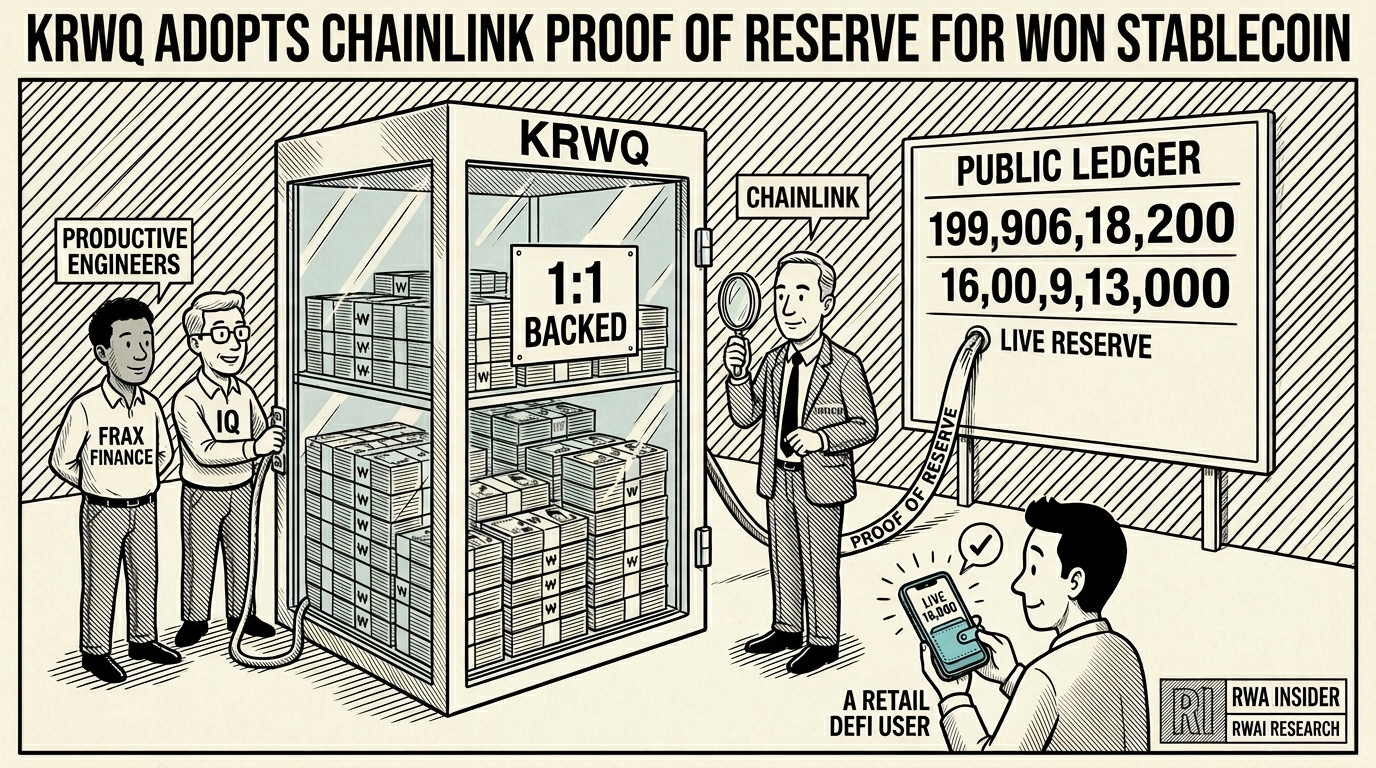
- Built by Frax Finance and IQ, the fully reserved, 1:1-backed KRWQ now streams its won reserves on-chain through a Chainlink Data Stream, replacing manual self-reporting.
- Any wallet can verify KRWQ’s reserves on-chain before holding it, turning a trust-me peg into one a DeFi user can check for depeg risk.
KRWQ, billed as the world’s largest Korean won stablecoin, has become the first won-pegged token to wire Chainlink’s Proof of Reserve into its backing. “Stablecoins must demonstrate their backing of real off-chain assets,” said Johann Eid, chief business officer at Chainlink Labs, on the integration announced June 16. For a wallet holder, the point is the receipt, not the press release: you can now check whether the won reserves are actually there before you touch the token, the difference between trusting a peg and verifying one.
Inside KRWQ’s Chainlink Proof Of Reserve Switch
KRWQ is a won-pegged stablecoin built by Frax Finance and the IQ team, and it just became the first Korean won token to plug into Chainlink Proof of Reserve.
Proof of Reserve is an oracle service. It pulls the value of assets held off-chain, here the won backing KRWQ, onto the blockchain where anyone can read it.
The old model was manual. An issuer publishes a reserve report on a schedule and asks holders to trust it until the next update lands.
KRWQ now runs a dedicated Chainlink Data Stream that tracks those reserves automatically, so the backing is checked continuously instead of self-reported in batches.
For an on-chain user, that turns the reserve figure from a press-release claim into a live data feed a wallet or a contract can query directly.
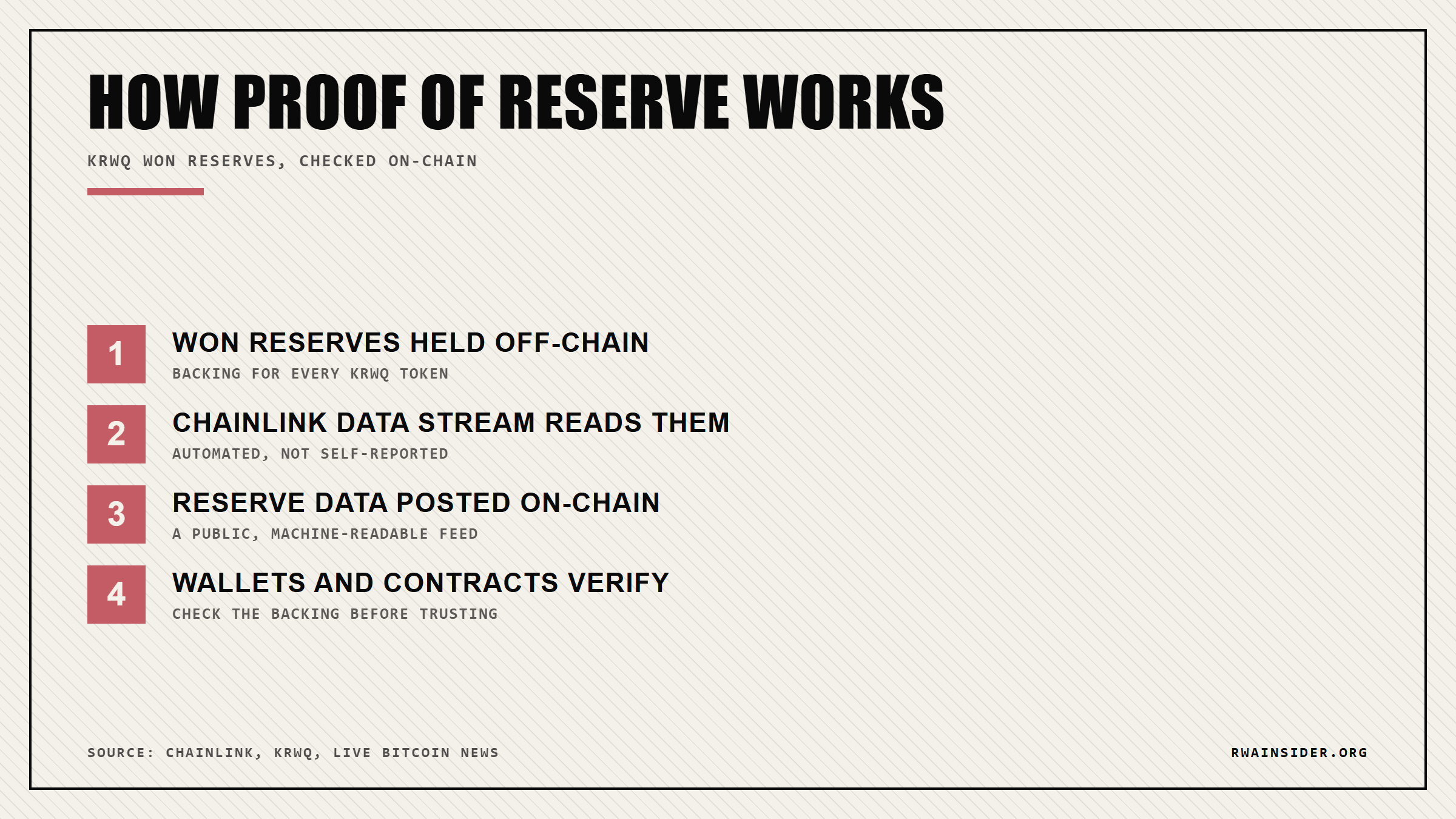
What Chainlink Proof Of Reserve Changes For A Wallet
There is no yield to chase in this story. The number that matters is not a rate, it is the gap between a reserve you can see and one you cannot.
Most stablecoin depegs live in that gap. Holders usually learn the reserves were thin or missing only after the price has already broken.
Strip away the regulatory language and this is really about shrinking the window where a wallet is trusting a figure it cannot independently check.
The Frax Finance connection raises the stakes.
KRWQ is not an isolated regional experiment but a stablecoin from a protocol DeFi users already recognize, which makes on-chain reserve proof more than a compliance checkbox.
Before holding or providing liquidity for KRWQ, a wallet can pull the reserve feed and confirm the backing is intact, the same check institutions run before they touch a digital asset.
You can track how reserve transparency is reshaping stablecoin risk across DeFi-native coverage.
That is a different edge from yield. It is risk you can measure on demand, without waiting for a quarterly attestation to confirm what the chain could have told you in real time.
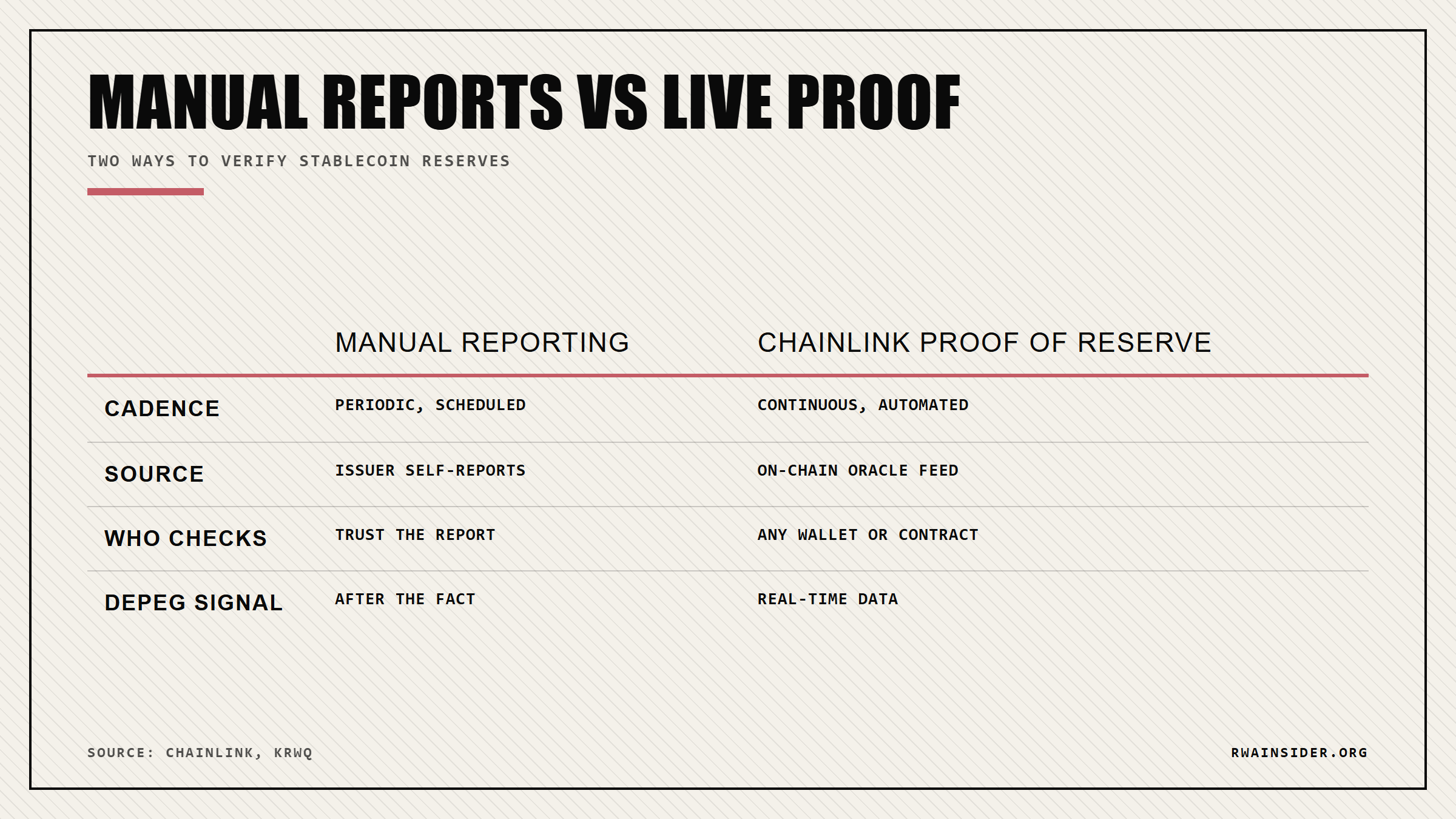
KRWQ’s Next Test And The Reserve Risk To Watch
Johann Eid, chief business officer at Chainlink Labs, framed the integration as a way to make KRWQ “more transparent and accessible,” and argued that reliable reserve verification is what lets on-chain finance reach beyond crypto-native collateral.
His point cuts both ways for a wallet. Proof of Reserve is a feed, not a guarantee.
It reports what the issuer sends to the oracle. It does not audit the bank or custodian holding the won.
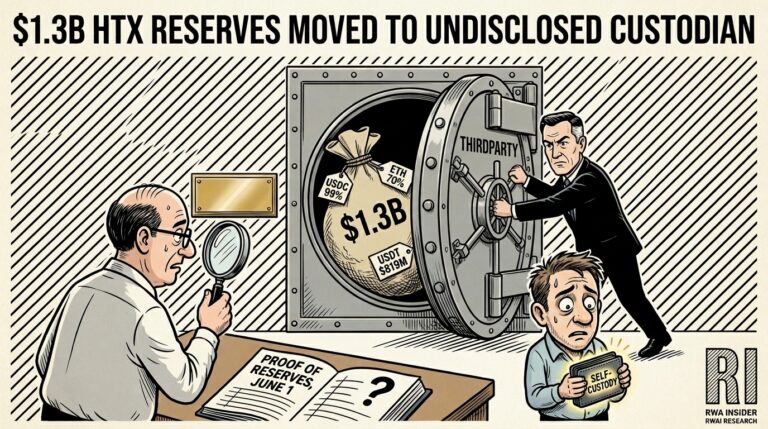
RWA Insider has covered the opposite case, when an exchange shifted more than a billion dollars in reserves to an unnamed custodian and left holders guessing.
A live, on-chain feed is built to close exactly that blind spot.
The token itself sits on-chain and the reserve data is public, so the verification is permissionless even if the won market behind it stays niche.
The real tests come next: whether other regional stablecoins copy the model, and whether the feed stays live and accurate the day a peg actually comes under pressure.
Whether KRWQ’s proof of reserve becomes the standard other regional stablecoins copy depends on how the feed holds up the first time a peg is genuinely under pressure, and that test has not arrived yet.
Before KRWQ goes near your wallet, pull the reserve feed and read the backing yourself, because a peg you can verify beats one you have to take on faith.
Frequently Asked Questions
What is KRWQ and who built it?
KRWQ is a stablecoin pegged to the Korean won, built by Frax Finance and the IQ team. It is described as the largest won-backed stablecoin and now uses Chainlink Proof of Reserve to verify its backing on-chain.
What does Chainlink Proof of Reserve actually do?
Proof of Reserve is a Chainlink oracle service that pulls the value of off-chain reserves onto the blockchain. For KRWQ, it streams the won held in reserve so the backing can be checked automatically and continuously, instead of through periodic self-reported statements.
Can I check KRWQ’s reserves before holding it?
Yes. The point of the Chainlink integration is that the reserve data is posted on-chain, so any wallet or smart contract can read whether the won backing is intact before touching the token. That lets you gauge depeg risk yourself rather than trusting a press release.
Does Proof of Reserve mean KRWQ cannot depeg?
No. Proof of Reserve shows what reserves the issuer reports to the oracle, but it does not audit the custodian or guarantee the peg under stress. It shrinks the blind spot that causes many depegs, yet a wallet should still watch secondary-market depth and how the feed behaves when the price moves.