$121M State Street Fund Backs Stablecoin Reserves Under GENIUS Act
Key Points
- State Street launched its $121 million SSCXX money market fund on June 16, the fourth major manager to back stablecoin reserves under the GENIUS Act.
- The fund holds US government securities and repos yielding 3.51%, serving a global stablecoin market that now sits near $300 billion.
- A $1,000 wallet cannot buy SSCXX, but holding native USDC and lending it on Aave near 2% keeps reserves you can verify yourself.
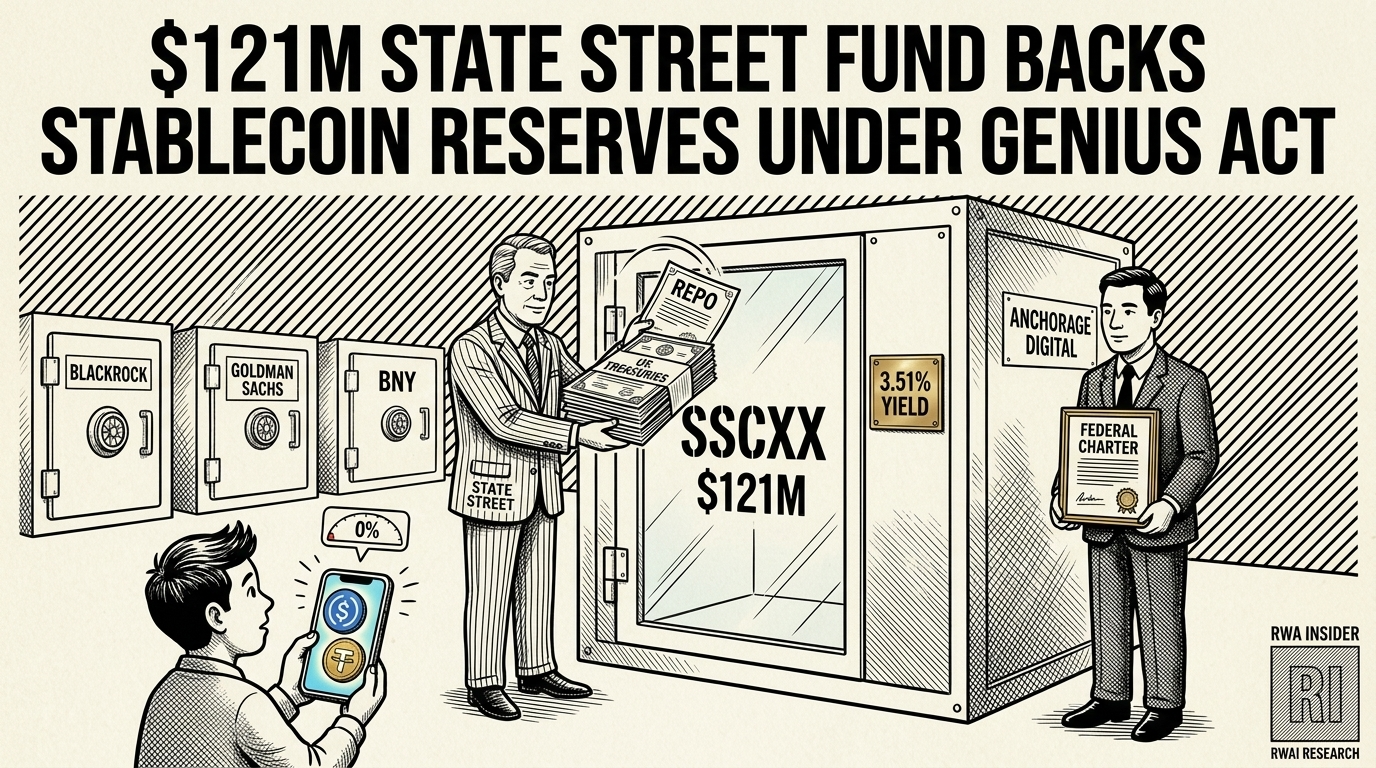
State Street Investment Management launched the State Street Stablecoin Reserves Money Market Fund, ticker SSCXX, on June 16 with roughly $121 million in assets and a 3.51% yield, becoming the fourth major asset manager to build a dedicated reserve vehicle under the GENIUS Act. “With the GENIUS Act, a clear framework has been established for how stablecoin reserves can be invested,” said Yie-Hsin Hung, president and CEO of State Street Investment Management. For anyone holding USDC or USDT, this fund is not something you buy. It helps decide whether the dollar in your wallet stays a dollar.
State Street’s SSCXX Joins The GENIUS Act Reserve Race
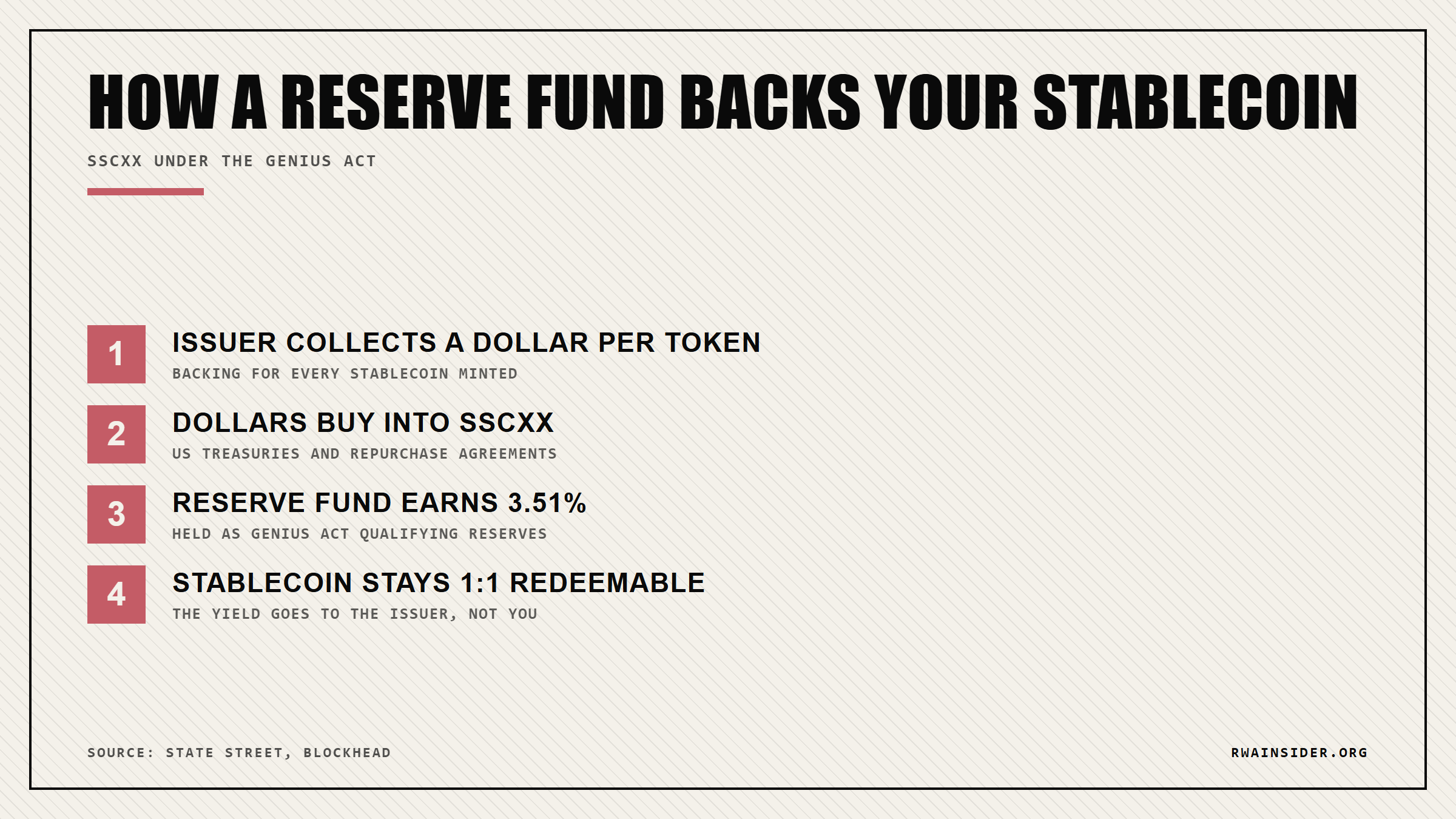
SSCXX is a Rule 2a-7 government money market fund from State Street Investment Management, the firm’s first product built specifically to back payment stablecoins.
It holds US government securities and repurchase agreements, the exact assets the GENIUS Act names as qualifying reserves for stablecoin issuers.
The seed investors are State Street Bank and Trust Company and Anchorage Digital, holder of the first federally chartered crypto bank licence in the United States.
Here is the translation for an on-chain user. You cannot buy SSCXX from a wallet.
It is built for the issuers behind the stablecoins you already hold, which means it helps decide what actually sits under tokens like USDC and USDT.
Where The 3.51% Yield Goes, And Why Not To You
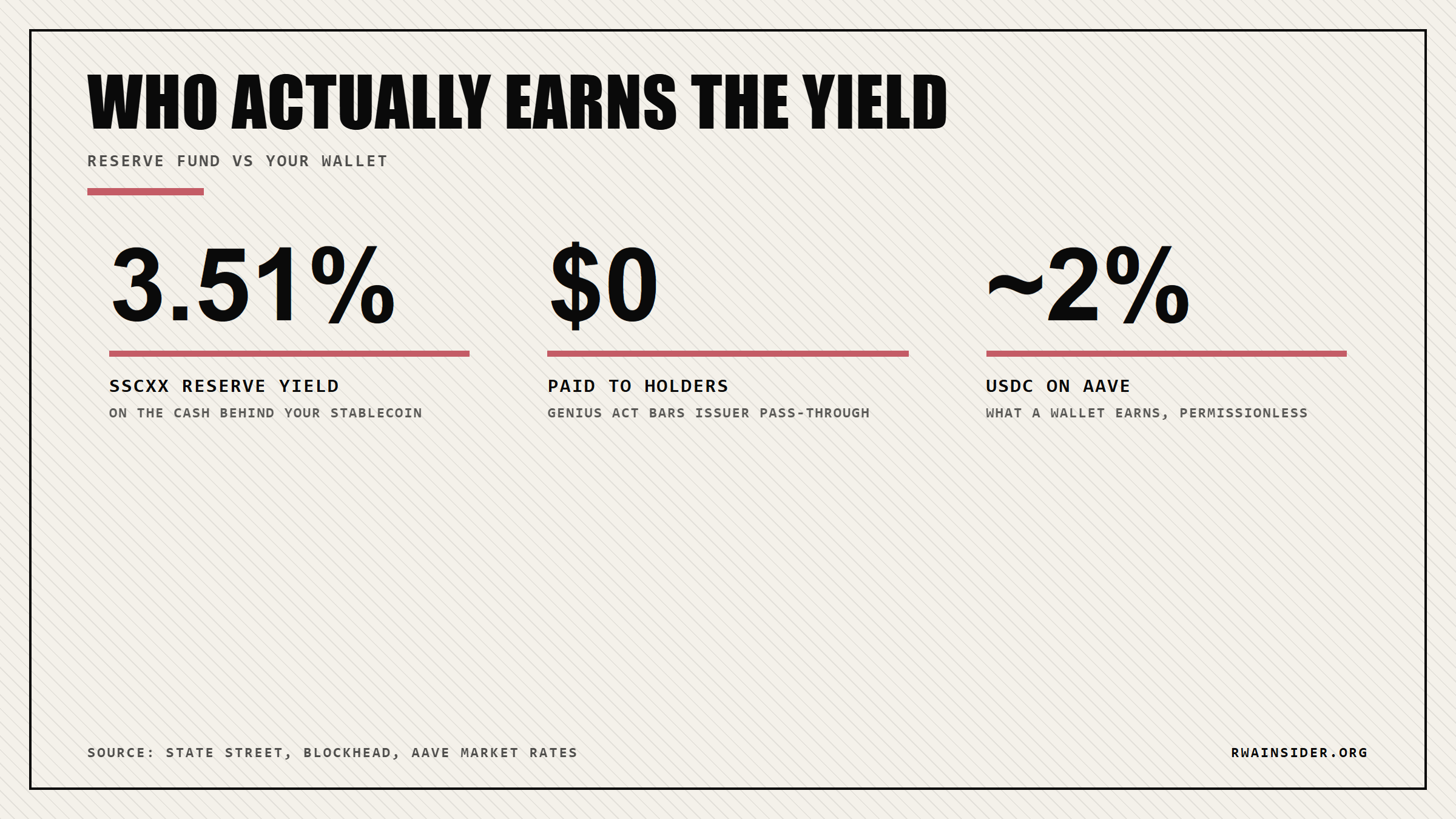
Start with the rate. SSCXX yields 3.51% on the cash it holds.
A wallet supplying USDC to Aave earns closer to 2%, so the reserve fund out-earns the open lending market by more than a full point.
Strip away the launch language and the real question is who collects that 3.51% on the cash behind your stablecoin, and under the GENIUS Act it is not the holder.
The law lets issuers park reserves in funds like this one, but it bars them from paying that reserve yield back to the people holding the coin.
The prize explains the rush. The global stablecoin market sits near $300 billion, with Tether around $186 billion and USDC about $75 billion.
You can follow how tokenized reserves keep reshaping stablecoin safety across DeFi-native coverage.
Citi Institute projects stablecoin issuance could reach $1.9 trillion to $4 trillion by 2030, the reserve pool every asset manager now wants to run.
Four Wall Street Giants Now Circle The Reserve Pool
Nathan McCauley, co-founder and CEO of Anchorage Digital, called stablecoins “core financial infrastructure” and framed the fund as “a more resilient, institutional-grade foundation for stablecoin reserves.”
Institutional-grade, in plain terms, means the reserves run like a bank’s cash book, government paper under regulated custody rather than a mixed bag of assets.
State Street is the fourth name in the queue.
BlackRock launched a Circle Treasury Reserves fund and filed two more tokenized money market funds, Goldman Sachs Asset Management filed its own reserve fund, and BNY moved first.
For a wallet, that concentration cuts both ways.
Deeper, regulated reserves lower the odds of a sudden depeg, yet they also hand a few Wall Street managers control of the cash behind most of DeFi’s dollars.
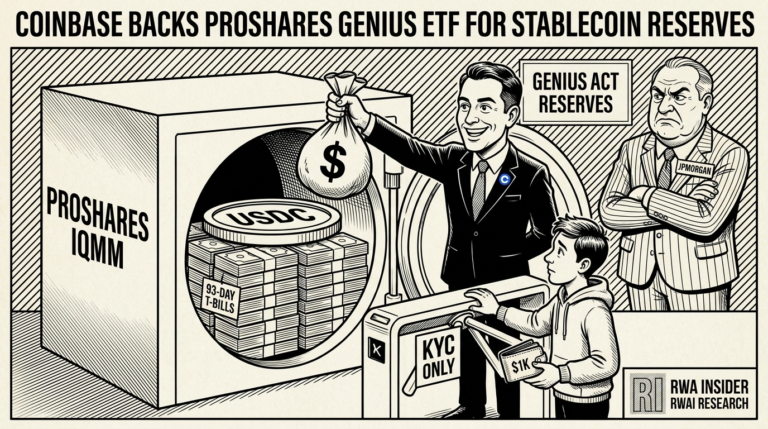
RWA Insider saw the same playbook when an exchange backed a GENIUS Act ETF built to hold stablecoin reserves.
The one on-chain thread to pull is the State Street Galaxy Onchain Liquidity Sweep Fund, a tokenized product that already moves cash 24/7 through stablecoins.
Whether this makes your stablecoin safer depends on the one thing the launch did not promise, putting those reserves on-chain where a wallet can read them. Until then the backing is stronger, but you are still trusting a report rather than the chain.
Before you treat any stablecoin as cash, ask who runs its reserves and who keeps the yield, because right now the answer to both sits on Wall Street’s books.
Frequently Asked Questions
What is the State Street SSCXX fund and what does it hold?
SSCXX is the State Street Stablecoin Reserves Money Market Fund, a Rule 2a-7 government money market fund holding US Treasuries and repurchase agreements. It launched on June 16 with roughly $121 million and a 3.51% yield, built to back stablecoin reserves under the GENIUS Act.
Can a retail wallet buy into SSCXX?
No. It is an institutional reserve vehicle for stablecoin issuers, not a retail product. The closest permissionless option for a $1,000 wallet is holding native USDC or USDT and supplying it to a lending market like Aave for around 2%.
Do stablecoin holders earn the 3.51% yield?
No. The GENIUS Act lets issuers invest reserves in funds like SSCXX but bars them from passing that yield to holders. The reserve earns 3.51%, while your idle balance earns nothing unless you put it to work yourself in DeFi.
Does a State Street reserve fund make my stablecoin safe from depeg?
It helps but does not guarantee it. Government-paper reserves and regulated custody lower depeg risk, but the reserves still sit off-chain. Until they are verifiable on-chain, you are trusting a report, so watch reserve disclosures and secondary-market depth.