$2.01B Solana RWA Grows 43% As DeFi TVL Falls To $6.16B
Key Points
- Solana’s real-world asset market cap rose 43% quarter-over-quarter to $2.01 billion in Q1 2026, per Messari, even as on-chain liquidity thinned.
- DeFi total value locked on Solana fell 22% to $6.16 billion that quarter, a drop Messari ties mostly to SOL’s 33% price slide.
- A $1,000 wallet can buy SOL or tokenized assets on Solana now, yet RWA settlement deepens DeFi liquidity more than $1.06B of ETF inflows.
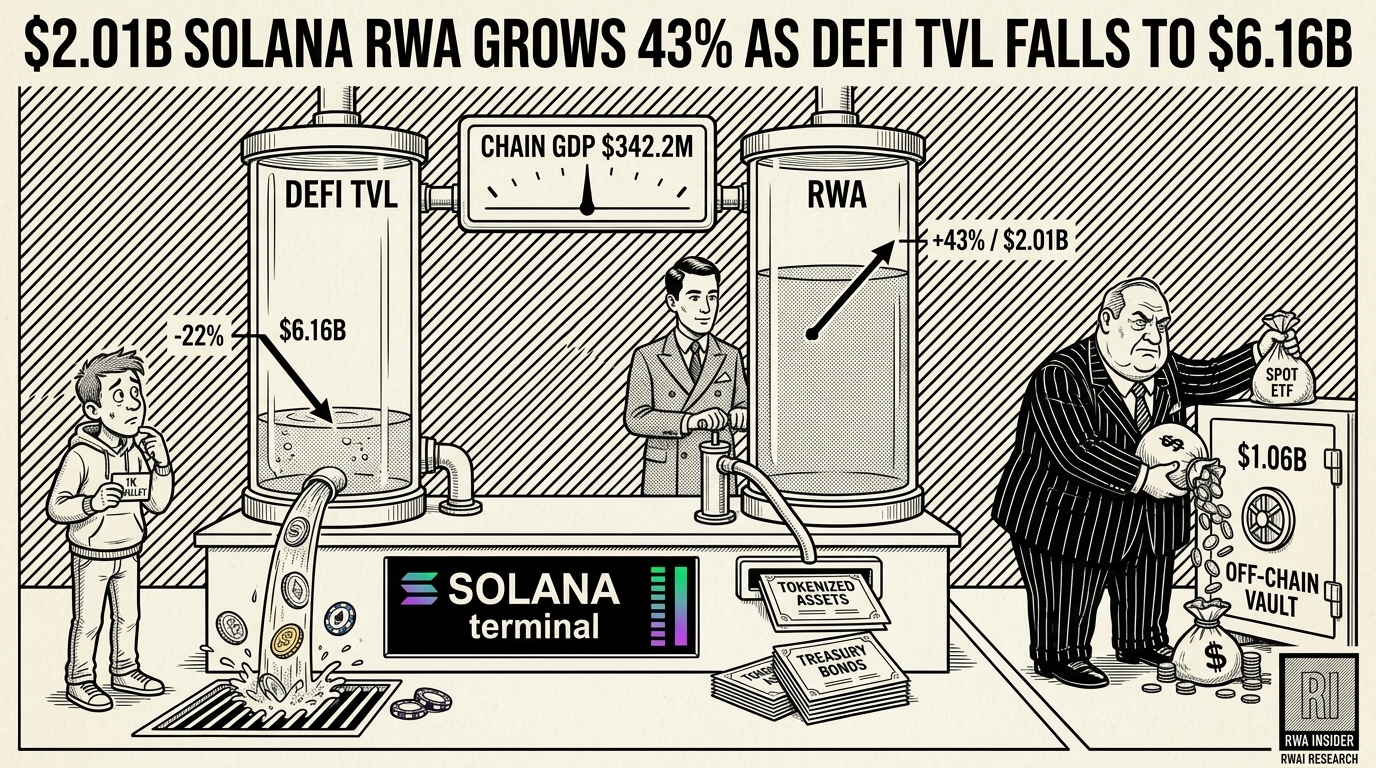
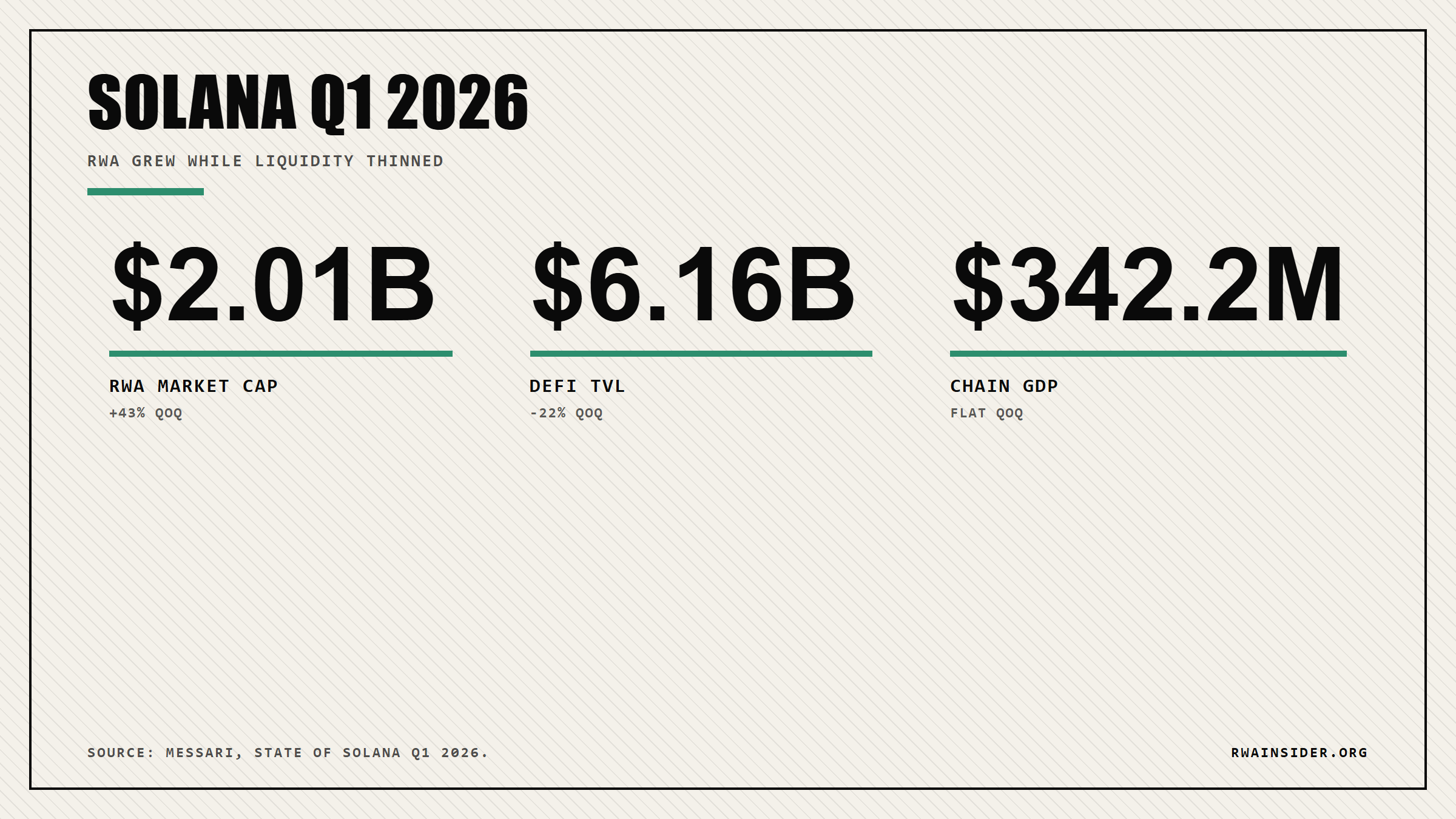
Solana’s on-chain economy split in two directions last quarter. Real-world asset value on the chain grew 43% to $2.01 billion in Q1 2026, while DeFi total value locked fell 22% to $6.16 billion, according to Messari’s State of Solana report. Messari tied the liquidity drop “largely to SOL’s 33% QoQ price decline rather than mass protocol exits.” For a wallet deciding whether to bridge back into Solana DeFi, that split is the signal: the speculative money thinned out, but the tokenized-asset rails kept filling.
Solana’s $2.01B RWA Lane Split From Falling DeFi TVL
The number most traders watched last quarter was the drop. Solana DeFi total value locked fell 22% to $6.16 billion in Q1 2026, and SOL itself slid 33% over the same stretch.
The figure that matters more for where capital goes next moved the other way. Real-world asset value on the chain rose 43% quarter-over-quarter to $2.01 billion, according to Messari.
That split is the DeFi story. The speculative, memecoin-heavy flows that inflate TVL in a rally are exactly the flows that drained when the market turned risk-off.
Tokenized assets behaved differently. Issuance, settlement, and redemptions on Solana kept growing through the drawdown, the signature of demand that does not evaporate the moment token incentives stop.
Where The $1.06B In ETF Inflows Actually Goes
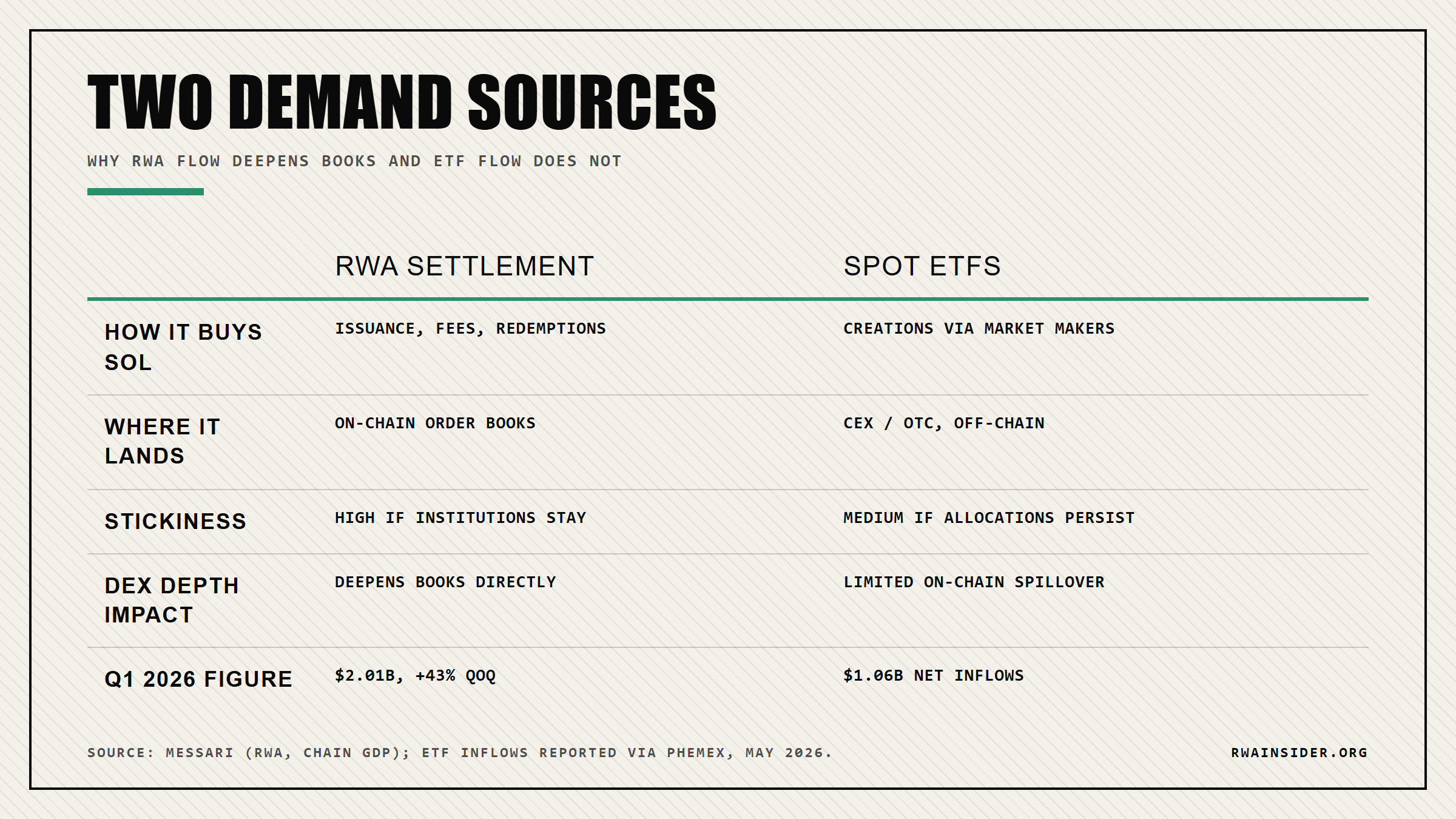
Spot Solana ETFs brought a structurally new buyer to the table. Cumulative net inflows reached about $1.06 billion by late May 2026, with Bitwise’s BSOL accounting for roughly $861 million.
That bid absorbs supply and can cushion the price. It does not automatically deepen the order books a wallet actually trades against.
ETF market makers source SOL across centralized exchanges and OTC desks to meet creations, then recycle tokens back to those venues on redemptions. Most of that flow never touches a Solana DEX.
Strip away the price chart and the real story is which demand source actually deepens the order book a $1,000 wallet trades into.
On that test, on-chain real-world assets score higher. When a tokenized fund settles redemptions or pays fees on-chain, it routes recurring, two-sided activity through the same pools retail uses.
The health check is whether ETF absorption shows up alongside rising application revenue and deeper liquidity. So far it has not. Chain GDP, Solana’s total application revenue, stayed flat at $342.2 million for the quarter, so you can track how RWA value is shifting across chains before the demand picture turns.
What The 43% RWA Growth Means For Your Wallet
The near-term risk is concentration, not collapse. On-chain analysts at Lookonchain flagged Pump.fun-linked wallets depositing about 174,408 SOL to Kraken and selling roughly 117,877 SOL, near $9.96 million, in mid-May.
Large ecosystem wallets moving size to exchanges thin liquidity fast and widen spreads. That is the kind of air pocket a leveraged long gets caught in.
Messari’s State of Solana Q1 2026 report frames the fix plainly: durable demand comes from users paying to use applications, not from points or airdrops, and real-world assets are the clearest live example of that on Solana today.
Solana’s strengths still apply. Low fees and high throughput keep on-chain trading viable, so the open question after the reset is depth and the durability of capital, not cost.
For a wallet, the read is practical. SOL and most Solana DeFi venues stay permissionless, so you can buy, stake, or provide liquidity now without a gatekeeper.
The basic checks still hold before bridging back: audited contracts, reliable oracles, and enough DEX top-of-book depth to clear your trade size without moving the price.
The patient move is to watch tighter DEX spreads and Chain GDP climb together before committing size, because thin books still mean real slippage on a large order.
Whether Solana closes its liquidity gap depends on whether tokenized-asset settlement keeps compounding faster than the speculative flows that left, and the next quarterly print will tell. Until on-chain fees and DEX depth climb together, the $2.01B RWA lane is the part of the story a portfolio can actually lean on.
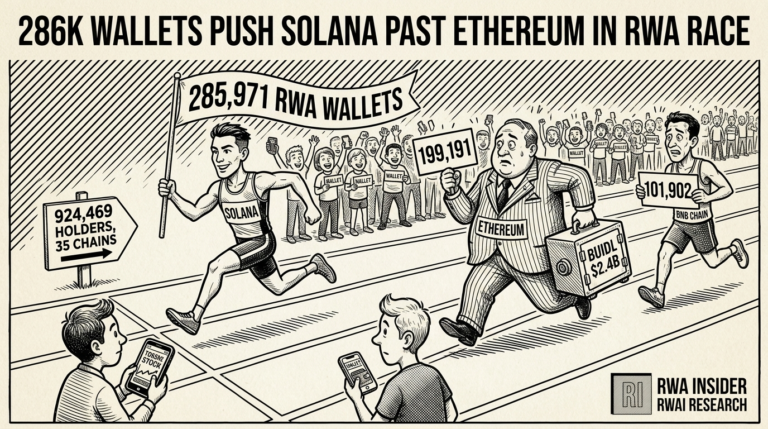
RWA Insider mapped how Solana’s RWA niche compares to Ethereum and XRP’s specialized lanes the last time the chains divided the tokenization market.
Frequently Asked Questions
What is Solana’s RWA market cap and why did it grow in Q1 2026?
Solana’s real-world asset market cap is the on-chain value of tokenized assets like treasuries, funds, and commodities issued on the network. Messari put it at $2.01 billion in Q1 2026, up 43% quarter-over-quarter. The growth came from continued issuance and settlement even while SOL’s price and DeFi TVL fell.
Can I buy tokenized real-world assets on Solana without KYC?
It depends on the asset. SOL and most Solana DeFi venues are permissionless, so any wallet can trade, stake, or provide liquidity. Many tokenized treasuries and funds, however, gate access behind KYC and securities rules, so check each issuer before assuming open access.
Why did Solana DeFi TVL fall to $6.16 billion?
DeFi total value locked on Solana dropped 22% quarter-over-quarter to $6.16 billion in Q1 2026. Messari attributes most of the decline to SOL’s 33% price drop rather than users exiting protocols, since TVL is measured in dollars and falls when the underlying token falls.
Do Solana ETF inflows improve on-chain liquidity?
Not directly. Spot Solana ETFs drew about $1.06 billion in cumulative net inflows by late May 2026, but creations are filled by market makers sourcing SOL on centralized venues. That absorbs supply and supports price without automatically deepening DEX order books or raising application revenue.