$716M RWA Inflows Hit Solana, Mastercard Adds USDC Rail
Key Points
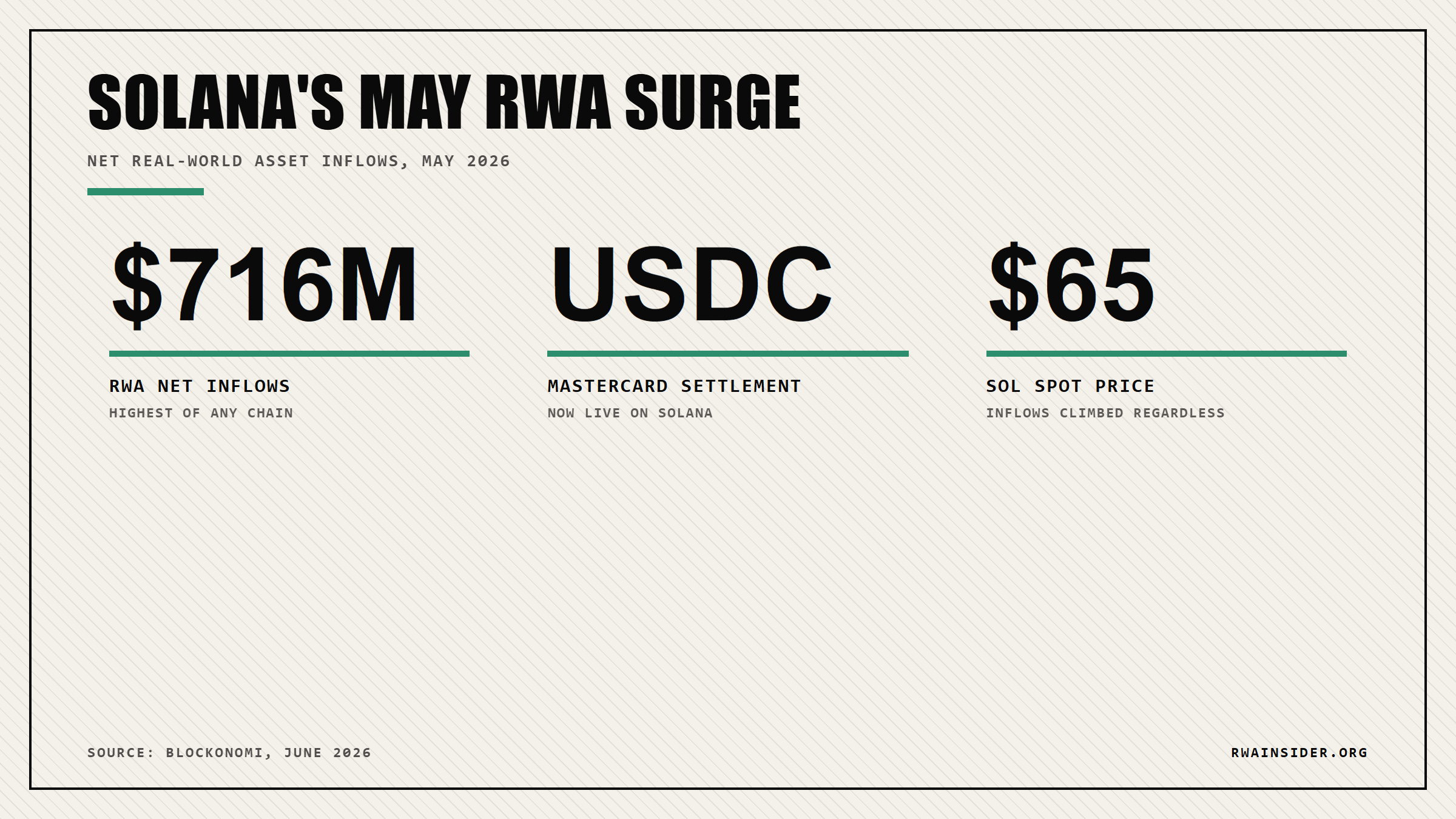
- Solana drew $716 million in real-world asset net inflows during May, the highest total across every blockchain that month.
- Mastercard switched on always-on USDC settlement on Solana, while Raydium crossed $2 billion in cumulative tokenized equity volume.
- A wallet with $1,000 can already trade tokenized stocks on a Solana DEX like Raydium, with no broker account and no exchange signup required.
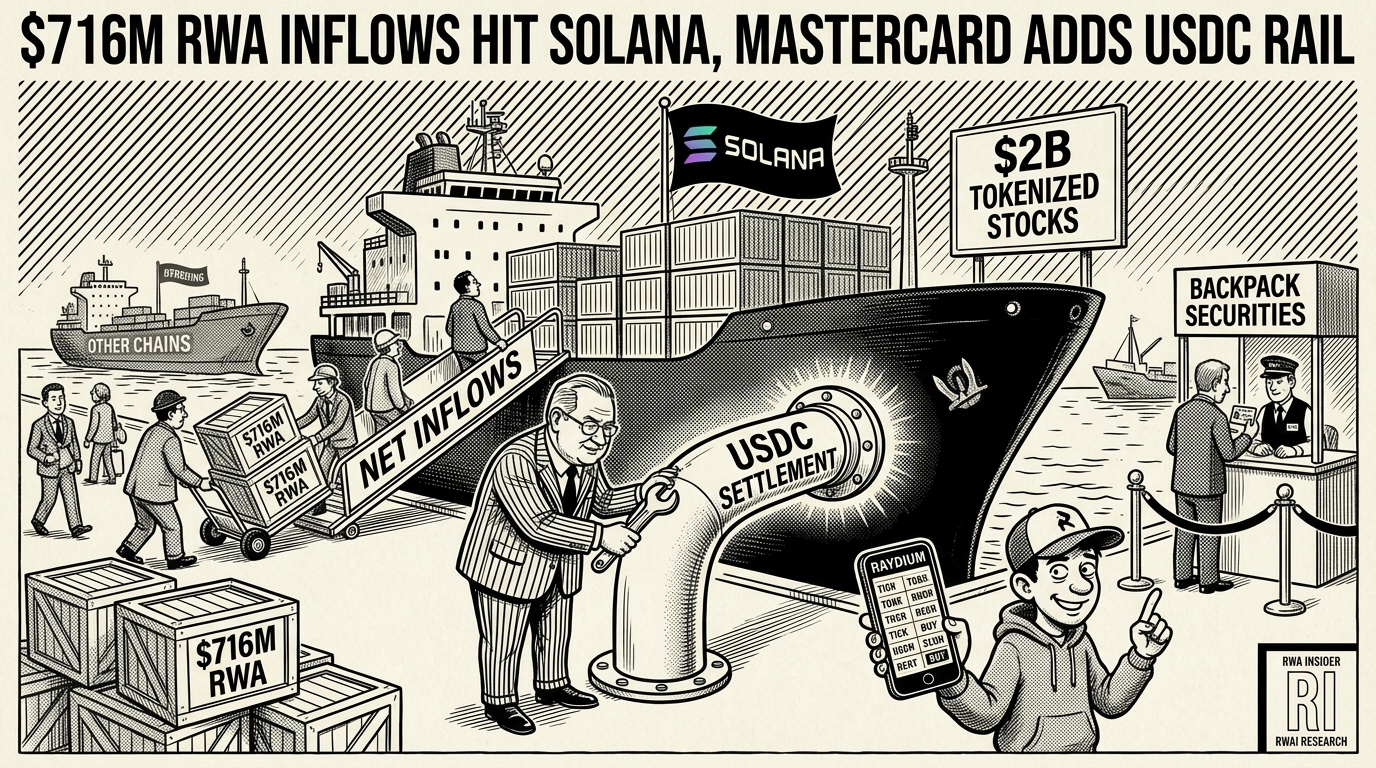
Solana pulled in $716 million of real-world asset net inflows during May, more than any other blockchain that month. Solana’s official account confirmed the run on June 7, posting that “$716M of RWA capital flowed in last month, more than any other network,” alongside a new Mastercard stablecoin rail and a tokenized brokerage from Backpack. For a wallet holder, the headline is not the institutional money itself but the fact that the tokenized stocks and stablecoins those firms are wiring in are already tradable from a self-custody wallet on the same chain.
Solana’s $716M RWA Inflows Lead All Chains
In May, Solana recorded $716 million in net real-world asset inflows, the highest figure of any blockchain that month, according to Blockonomi’s ecosystem review.
The capital did not arrive on its own. Mastercard switched on always-on USDC settlement directly on Solana, putting a global payments network onto a public chain in live, operational form.
Backpack followed with Backpack Securities, a US-regulated brokerage that merges standard stock trading with Solana-native tokenization.
Both moves point the same way: traditional finance is wiring assets onto the network, not just talking about it.
For an on-chain user, the detail that matters is where those assets land. The stablecoins Mastercard settles and the tokenized stocks moving in sit on the same rails a self-custody wallet already touches.
Raydium Crosses $2B In Tokenized Stocks
The trading data shows the demand is already live, not theoretical.
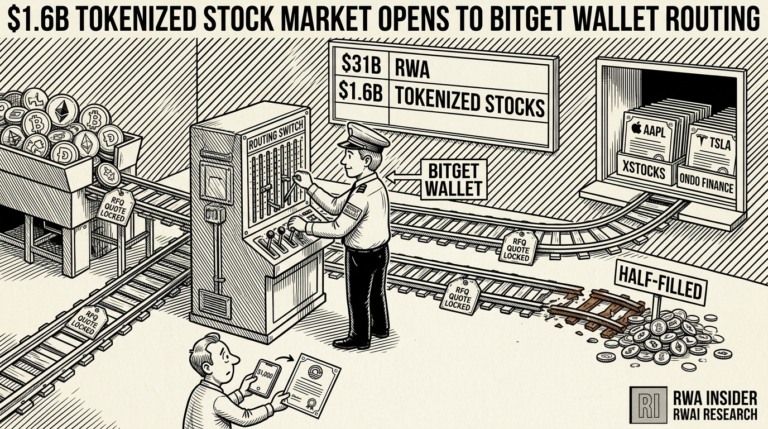
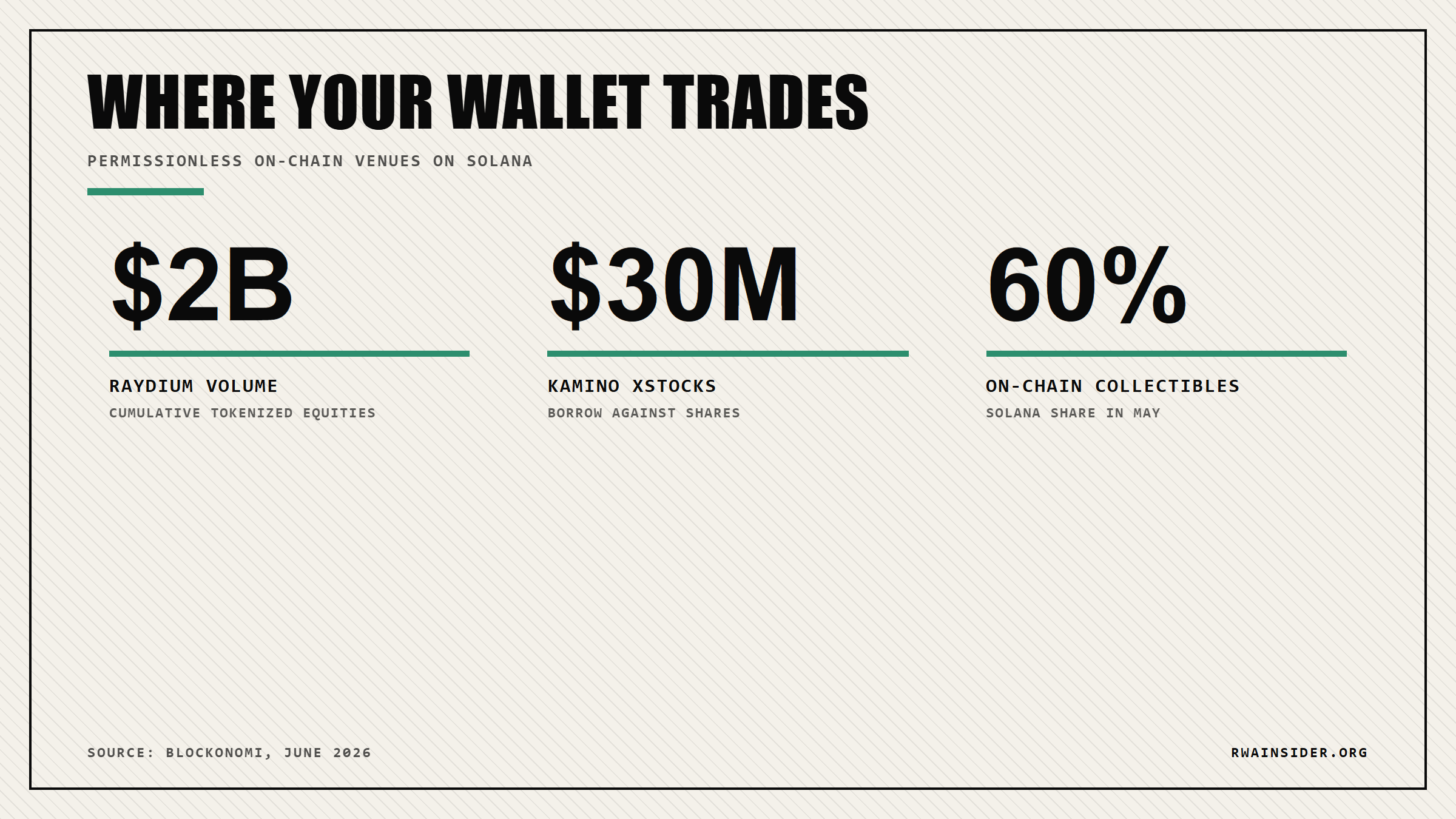
Raydium, Solana’s largest decentralized exchange, has crossed $2 billion in cumulative tokenized equity volume, proving that on-chain stock trading has real flow behind it.
On the lending side, Kamino’s xStocks market passed $30 million in total size, letting holders borrow against tokenized shares instead of only holding them.
Solana also captured roughly 60% of all on-chain collectibles volume in May, even as SOL itself traded near $65, a reminder that activity climbed while the token price did not.
Strip away the institutional headlines and this is really about access: a wallet holder gains around-the-clock stock exposure on a DEX, not a fatter yield.
These tokens do not pay DeFi yield the way a tokenized Treasury does, so the draw is liquidity and 24/7 trading rather than an APY you would line up against Aave.
If you want to track how tokenized assets reach self-custody wallets, the Solana stack is now one of the deepest venues for it.
What Mastercard’s USDC Rail Means For Your Wallet
The split worth watching is between the regulated front doors and the open ones.
Backpack Securities runs as a US-regulated brokerage, which means identity checks and eligibility limits before you can use it.
Trading the same tokenized stocks as tokens on a Solana DEX stays permissionless, so the access path you choose decides whether KYC ever applies to your wallet.
RWA Insider flagged this same pattern last month, when Solana’s RWA stack pushed past $2 billion even as on-chain liquidity thinned, and the inflows kept climbing regardless of SOL’s price.
Mastercard’s always-on USDC settlement is the piece with the longest reach. If it opens to consumer payment flows, the stablecoins a wallet holds could clear against a card network without ever touching a bank.
The wider builder wave backs the trend: Axelar went live for cross-chain transfers, and Lava Card shipped a zero-fee Visa debit tied to Solana balances.
For now, the practical move is simple. A $1,000 wallet can hold USDC on Solana and trade tokenized equities on Raydium today, while the institutional rails are still being wired.
Whether Solana’s $716 million month becomes a durable trend depends on whether Mastercard’s rail and Backpack’s brokerage open past their gated front doors. Until they do, the tokenized stocks already trading on Raydium are the part your wallet can act on right now.
See how the same network stacked tokenized value while liquidity tightened in our look at Solana’s $2 billion RWA run.
Frequently Asked Questions
How much real-world asset capital did Solana attract in May 2026?
Solana drew $716 million in net real-world asset inflows, the highest of any blockchain that month, per Blockonomi. The figure tracks capital moving into tokenized assets on the network, not SOL’s spot price, which sat near $65.
Can I buy tokenized stocks on Solana without a broker account?
Yes, on the secondary market. Tokenized equity tokens trade on Solana DEXs like Raydium, which has crossed $2 billion in cumulative volume, so a self-custody wallet can trade them without a brokerage. Minting or redeeming the underlying may still require KYC.
What did Mastercard launch on Solana?
Mastercard switched on always-on USDC stablecoin settlement on Solana, connecting its payments network to the chain in live operation. It signals that card-network flows could one day clear against stablecoins a wallet already holds.
Is Backpack Securities open to everyone?
No. Backpack Securities is a US-regulated brokerage, so it applies identity checks and eligibility rules. The permissionless route to the same tokenized stocks is trading the tokens directly on a Solana DEX.